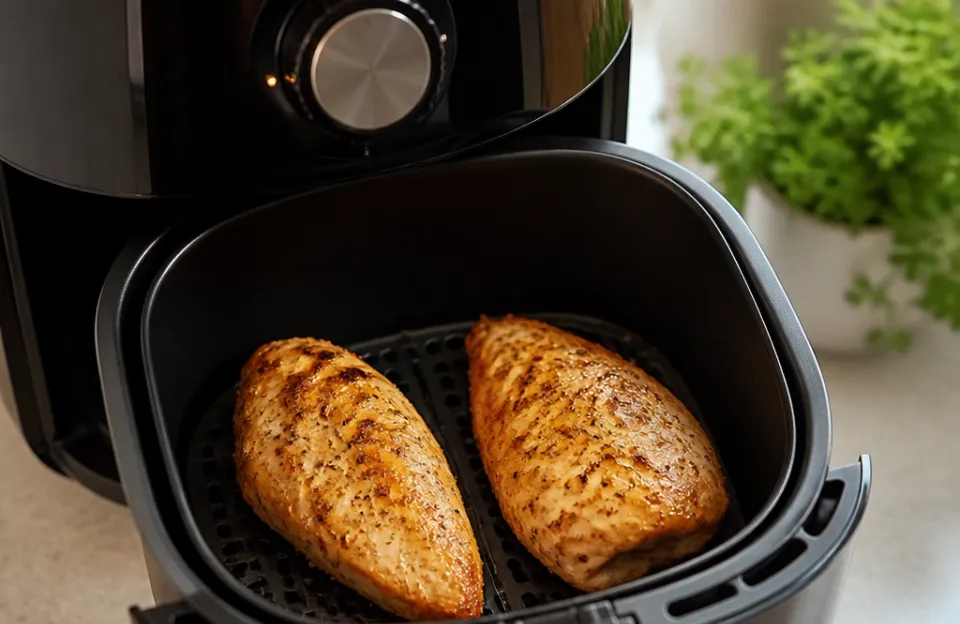
Air fryer chicken cooks fast, stays juicy inside, and gets a crispy outside without a vat of hot oil. You can make wings, breasts, thighs, or even a whole bird using the same basic principles: dry the surface, add fat and seasoning, and give the hot air room to move. That is the short version of what makes air fryer chicken recipes work so well for weeknight dinners.
This guide covers the core cooking tips that apply to every cut of poultry you put in the basket. You will find exact temperatures, timing baselines, prep methods for better browning, and answers to the most common problems people run into when they first start cooking chicken this way.
How Rapid Air Circulation Cooks Poultry
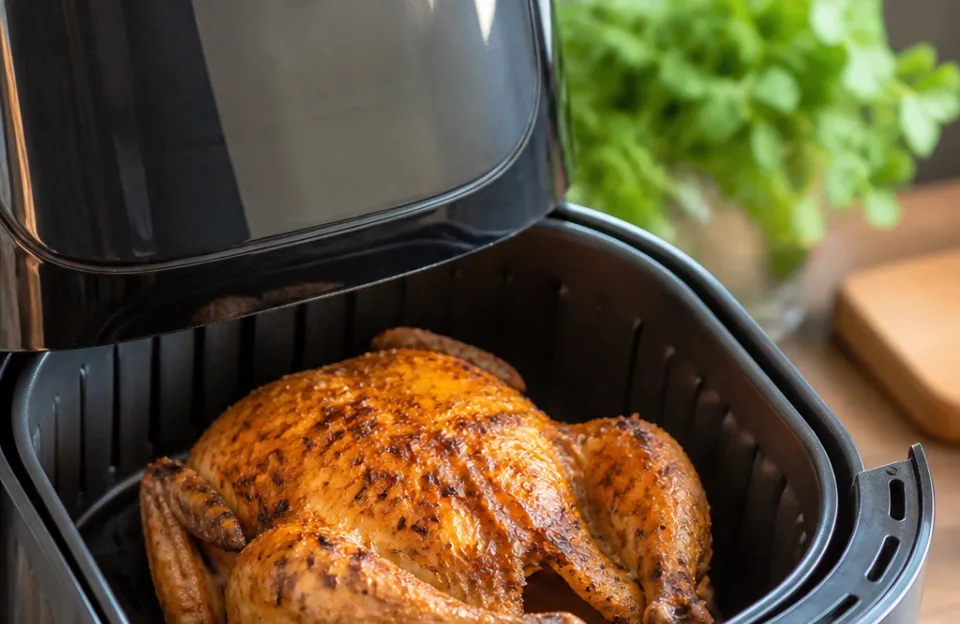
An air fryer is a small convection oven with a very powerful fan close to the food. The heating element sits right above the basket. When you turn it on, the fan pushes superheated air down through the food and back up the sides in a tight loop.
This constant movement strips away the thin layer of cooler moisture that normally surrounds raw meat in a standard oven.
Because that moisture barrier disappears quickly, the surface temperature of the chicken rises much faster. Proteins on the outside coagulate and brown rapidly. Fat under the skin renders out and fries the skin from the bottom up.
The result is a texture similar to deep frying, achieved with only a tablespoon or two of oil.
The tradeoff is speed. Things happen fast in an air fryer. A boneless breast that takes 25 minutes in a conventional oven might finish in 14 minutes here.
If you walk away or guess the time, the outside will burn before the center reaches a safe temperature. Knowing your machine's specific airflow pattern matters because some models blow hotter near the back wall than the front.
Why Surface Moisture Ruins the Crisp
Water is the enemy of browning. The Maillard reaction, which creates that golden crust and savory flavor, does not start until the surface hits about 300°F. Water boils at 212°F.
As long as there is water on the outside of your chicken, the surface temperature cannot rise above 212°F. The meat steams instead of roasting.
Patting the chicken completely dry with paper towels before adding oil or spices changes the final texture entirely. Leaving the seasoned pieces uncovered on a wire rack in the fridge for a few hours dries the skin further. This step is especially useful if you want a shatteringly crisp bite on wings or drumsticks.
Choosing Between Cuts for the Basket
Dark meat handles the intense heat of an air fryer better than white meat. Chicken thighs have more fat and connective tissue. They stay moist even if you leave them in a minute too long.
Bone-in pieces take longer to cook through, but the bone acts as a heat sink that protects the meat closest to it from drying out.
Boneless, skinless chicken breasts are lean. They go from perfectly cooked to dry and stringy in about two minutes. If you prefer breasts, pounding them to an even thickness prevents the thin end from overcooking while the thick center finishes.
Keeping the portions uniform means everything pulls out at the same time.
Temperatures and Timing for Every Cut
Poultry must reach an internal temperature of 165°F to be safe to eat, according to FDA food safety standards. Where you measure that temperature matters just as much as the number itself. Push the probe into the thickest part of the meat.
Avoid hitting bone, because bone conducts heat differently and gives a false high reading.
A fast-reading tool saves you from leaving the basket open too long. Having a reliable instant-read probe ready means you lose less heat during the check. For larger birds or thick bone-in cuts where you want to monitor progress without opening the drawer, a wireless dual-probe setup lets you watch the temperature climb from your phone.
Here is a baseline chart for standard air fryers set between 375°F and 400°F. These times assume the chicken starts at refrigerator temperature, not frozen.
| Cut | Temperature | Approximate Time | Notes |
|---|---|---|---|
| Boneless breasts (6 oz) | 375°F | 14 to 18 min | Flip halfway. Pound flat for even cooking. |
| Bone-in thighs | 390°F | 22 to 26 min | Skin side down first, then flip. |
| Boneless thighs | 380°F | 12 to 15 min | Toss halfway through. |
| Wings (whole or split) | 400°F | 18 to 24 min | Shake basket every 8 minutes. |
| Drumsticks | 390°F | 20 to 25 min | Arrange in a single layer. |
| Whole chicken (3 to 4 lbs) | 360°F | 50 to 65 min | Breast side down first, flip at 30 min. |
Always treat these numbers as starting points. Your specific model, the exact size of the chicken pieces, and how full the basket is will shift the timing. Start checking two or three minutes before the lower end of the range.
Pulling the Meat Early for Carryover Cooking
Meat continues to cook after you take it out of the heat. This is called carryover cooking. In a traditional oven, a large roast might jump 10 degrees while resting.
In an air fryer, the pieces are smaller, so the jump is usually 3 to 5 degrees.
If you pull a chicken breast exactly at 165°F, it will likely hit 168°F or 170°F while sitting on the cutting board. At that point, the proteins tighten and squeeze out moisture. Pulling white meat at 160°F and letting it rest loosely tented with foil for five minutes allows it to coast to 165°F safely while staying juicier.
Dark meat benefits from going slightly higher, around 175°F, to fully render the fat and soften the collagen.
Prep Methods That Change the Final Texture
How you treat the chicken before it hits the hot air dictates whether you get a sticky glaze, a craggy crust, or bare roasted skin. There are three main approaches for air fryer chicken recipes: wet marinades, dry rubs, and light coatings.
Wet marinades add flavor and tenderize through acid or enzymes. However, excess liquid drips through the basket grate and can cause smoking if it hits the hot base plate. Always shake off the excess liquid before cooking.
If you want maximum flavor penetration without the mess, soaking the pieces ahead of time in a well-balanced wet mixture works best when you pat them mostly dry afterward.
Dry rubs are the easiest path to a good crust. Salt, pepper, garlic powder, paprika, and a little oil mixed directly onto dry skin will blister and brown beautifully. Sugar-heavy rubs burn fast in an air fryer.
If your spice blend has brown sugar or honey powder, drop the cooking temperature by 15 to 20 degrees to prevent charring.
Light flour or starch coatings mimic fried chicken. Tossing pieces in seasoned flour, cornstarch, or baking powder creates a micro-layer that dehydrates instantly. Spritzing the coated chicken lightly with cooking spray before closing the drawer helps the dry spots hydrate and brown evenly.
A light dusting approach yields a texture closer to pub-style wings than naked skin does. Baking powder specifically alters the pH of the skin, breaking down proteins faster for better crunch.
Managing Fat Drippings and Smoke
Chicken skin releases a lot of grease. When that fat drips onto the 400°F metal base of the air fryer, it smokes heavily. This is the most common complaint people have when cooking fatty cuts like wings or thighs.
Place a small amount of water, about two tablespoons, in the bottom drawer beneath the basket. The dripping fat hits the water instead of bare metal, cooling instantly and preventing smoke. Alternatively, line the bottom with a piece of parchment paper designed for air fryers.
Never block the entire airflow path, or the machine will overheat. Just cover the solid base where the grease lands.
Adapting Recipes for Meal Prep and Batch Cooking
Air fryers excel at making dinner for tonight, but their limited capacity makes batch cooking tricky. The basket needs empty space for the air to circulate. Stacking chicken pieces results in steamed, pale, soggy meat on the inside layers.
If you are cooking for the week, work in sequential batches rather than cramming everything in at once. Keep finished pieces warm on a wire rack set over a baking sheet in a 200°F oven. This keeps the bottoms from getting soggy while you finish the rest.
Planning your portions carefully ensures you get consistent results when prepping lunches ahead of time.
Reheating pre-cooked chicken in the air fryer is far superior to microwaving. Set the machine to 350°F and heat the pieces for three to four minutes. The circulating air re-crisps the skin or coating without drying out the interior.
Microwaves excite water molecules, turning crispy edges into rubber.
Tracking Nutrition Across Different Methods
People often choose air fryer chicken to reduce calorie intake compared to deep frying. The difference is significant. Deep-fried wings absorb oil like a sponge.
Air-fried wings render their own fat out, and you only add a fraction of a tablespoon of oil for browning.
However, the sauces and coatings you add change the math quickly. A heavy honey glaze adds sugar calories. A thick flour dredge adds carbohydrates.
If you are monitoring your intake closely, calculating the totals based on your specific preparation method helps keep things accurate. Weighing the chicken raw before seasoning gives you the most precise baseline for tracking.
Flavor Profiles That Work Best Under High Heat
Some flavors thrive in the aggressive environment of an air fryer, while others break down. Hard herbs like rosemary and thyme hold up well. Woody spices like cumin, coriander, and smoked paprika bloom in the hot fat.
Garlic powder behaves better than fresh minced garlic, which tends to burn and turn bitter before the chicken is done.
Sweet sauces require a two-step process. If you toss raw chicken in barbecue sauce or teriyaki and put it in at 400°F, the sugars will carbonize into black, bitter ash within six minutes. Cook the chicken naked or with a dry rub until it is almost done.
Then brush the sauce on during the last two to three minutes of cooking. The sauce will bubble, caramelize, and stick without burning.
Savory cheese coatings also need care. Grated parmesan mixed with garlic and butter applied halfway through the cook time melts into a rich crust. Adding it at the beginning causes the dairy solids to scorch.
Finishing the pieces with a garlic-forward topping right after they come out of the basket lets the residual heat melt the cheese perfectly. Similarly, tossing hot wings immediately in a sticky sweet glaze coats them evenly before the sauce seizes up. Pairing these finished pieces with a bright acidic dip cuts through the rendered fat.
Mistakes That Lead to Dry or Unevenly Cooked Meat
Skipping the preheat cycle is the most frequent error. Putting raw chicken into a cold basket drops the ambient temperature drastically. The meat spends its first five minutes slowly warming up instead of searing.
Preheat the empty air fryer for three to five minutes at your target temperature before adding the food.
Overcrowding the basket guarantees uneven cooking. The pieces touching each other create dead zones where air cannot flow. Those spots remain pale and undercooked while the exposed edges dry out.
Leave at least half an inch between every piece. Cook in batches if necessary.
Flipping too early tears the skin. When chicken first hits the hot grate, the proteins bond to the metal. If you try to turn it after two minutes, the skin rips off and stays stuck.
Wait until the halfway point. By then, the crust has formed and releases easily. Lightly oiling the basket grates beforehand helps, though many modern baskets have nonstick coatings that handle this well.
Ignoring the size variance within a single package of chicken parts causes frustration. If you buy a pack of bone-in breasts, one might weigh 8 ounces and another 14 ounces. Put them in together, and the small one dries out while the large one remains raw near the bone.
Sort your pieces by size. Cook similar weights together, or stagger when you add them to the basket.
Relying solely on visual cues instead of measuring the internal temperature is risky. Air fryers brown the outside aggressively. A piece of chicken can look deeply golden and perfectly done at minute 12 while still sitting at 140°F in the center.
Color indicates the Maillard reaction, doneness requires a thermometer.
Frequently asked questions
Can you cook frozen chicken directly in an air fryer?
Yes, you can cook frozen chicken in an air fryer, but it requires adjustments. Lower the temperature by about 20 degrees compared to fresh chicken, and increase the cooking time by roughly 50 percent. The outside will cook much faster than the frozen center, so separating pieces that are frozen together in a solid block halfway through cooking is necessary for even heat distribution.
Is air fried chicken healthier than deep fried chicken?
It contains significantly less added fat. Deep frying submerges the meat in oil, causing the breading and skin to absorb a large amount of it. An air fryer uses rapid hot air and typically requires only a light spray or a single tablespoon of oil to achieve browning.
The caloric reduction depends heavily on the breading and sauces used, but the base cooking method introduces far less fat.
Why did my chicken skin turn out chewy instead of crispy?
Chewy skin happens when moisture remains trapped against the surface during cooking. This usually means the skin was not patted dry before cooking, the basket was overcrowded, or the temperature was set too low. To fix it, thoroughly dry the skin, ensure space between pieces, and use a temperature of at least 380°F for dark meat.
Do I need to add oil to chicken that already has skin on it?
You do not strictly need to add oil to skin-on chicken, because the skin contains enough natural fat to render and crisp on its own. However, lightly rubbing or spraying the skin with a neutral oil helps conduct heat more evenly across the surface and promotes faster, more uniform browning. It also helps dry spice rubs adhere to the skin before cooking begins.
What is the best way to stop the air fryer from smoking when cooking thighs?
Smoke comes from rendered fat dripping onto the exposed heating element or the hot base plate. Pouring one or two tablespoons of water into the bottom drawer beneath the basket catches the dripping grease and cools it instantly. Placing a slice of bread in the bottom drawer also absorbs the fat, though the water method is easier to clean up afterward.
Can I use wet batter for air fryer chicken like I would for deep frying?
Standard wet batters made of flour and liquid drip straight through the air fryer basket grates before they can set, creating a massive mess and failing to coat the meat. If you want a battered texture, use a dredging method instead: coat the chicken in flour, dip it in egg wash, then press it into panko breadcrumbs or crushed cornflakes. The solid outer layer stays in place while the hot air crisps it.
Worth remembering
Cooking air fryer chicken comes down to managing moisture, giving the hot air room to move, and pulling the meat at the right temperature. Once you get in the habit of patting the skin dry and keeping the basket uncrowded, the results become predictable every time. Keep a thermometer nearby, adjust your sauces for the high heat, and you will rarely need to turn on the main oven for poultry again.