Air fryer chicken wings meal prep means cooking a large batch of wings in your air fryer, letting them cool properly, and dividing them into containers so you have ready-to-eat protein for the week. You can prep plain seasoned wings or sauced ones depending on how you plan to eat them later.
This method saves time on busy nights and keeps you from ordering takeout. The rest of this article covers exactly how to cook the wings, store them safely, reheat them without losing that crisp texture, and adjust the process for different diets.
Why the air fryer changes weekly wing prep
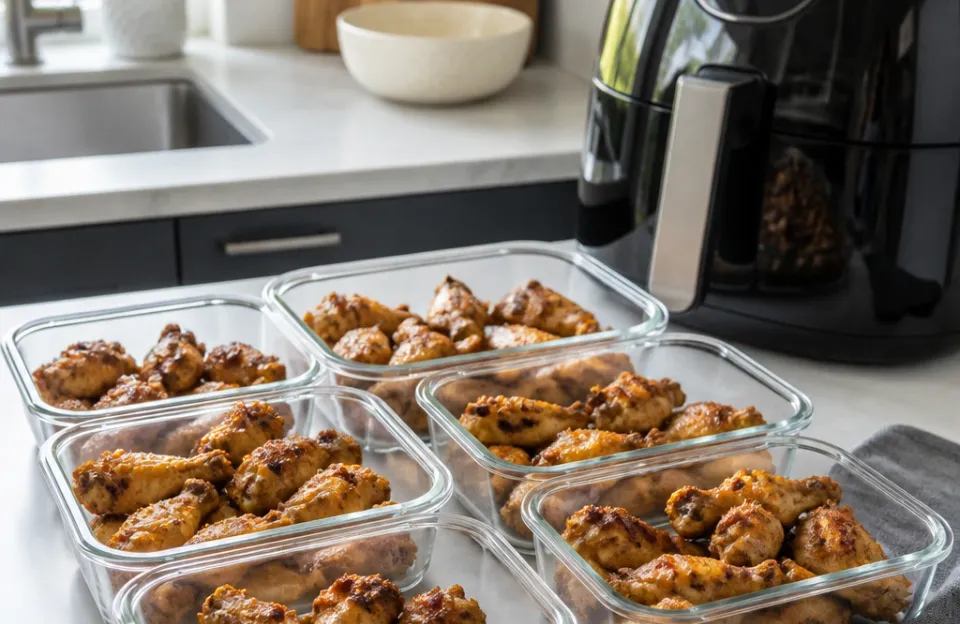
Cooking chicken wings in an air fryer gives you crispy skin without submerging them in oil. The machine circulates hot air rapidly around the food. This renders the fat under the skin efficiently.
A standard basket-style air fryer handles about two pounds of wings at a time, which is enough for three or four days of meals for one person.
Batch cooking in an oven takes longer and heats up the whole kitchen. Deep frying creates a mess you have to clean up immediately. The air fryer sits on the counter, finishes a batch in roughly 25 minutes, and leaves minimal grease splatter.
That speed makes it practical to cook several batches back-to-back on a Sunday afternoon.
You also get consistent results. Once you find the right temperature and time for your specific model, every batch comes out the same. Consistency matters when you are prepping meals for the week because you need to know exactly how much space and time each round requires.
Picking the right wings for batch cooking
Buy whole wings or party wings based on your preference. Party wings are already separated into flats and drumettes. They cook more evenly because the pieces are similar in size.
Whole wings are cheaper per pound, but the tips often burn before the thick joint near the body cooks through. If you buy whole wings, cut off the tips and save them for stock.
Look for fresh wings rather than frozen if possible. Frozen wings release extra water as they thaw. That moisture steams the skin instead of letting it crisp up.
If you only have access to frozen wings, thaw them completely in the refrigerator overnight. Pat them extremely dry with paper towels before seasoning.
Check the sell-by date. Since you are prepping these to last several days, start with the freshest poultry you can find. The USDA recommends cooking raw poultry within one to two days of purchase.
For safe poultry handling, keeping everything cold until it hits the hot air fryer basket prevents bacterial growth.
Seasoning strategies that hold up in the fridge
Dry rubs work best for air fryer chicken wings meal prep. Wet batters drip through the basket grate and make a mess. Sauces applied before cooking tend to burn because of their sugar content.
Stick to salt, pepper, garlic powder, smoked paprika, onion powder, and maybe a little cayenne. Toss the dried wings in a bowl with a small amount of neutral oil, then add the spices. The oil helps the rub stick and promotes browning.
If you want sauced wings, apply the sauce after reheating. Buffalo sauce, teriyaki, or barbecue glaze will stay bright and flavorful if tossed with hot wings right before eating. Pre-sauced wings stored for four days turn soggy and the flavors dull out.
Keep your base seasoning simple so it pairs well with whatever sauce you choose later in the week.
Salt draws out moisture over time. If you season your wings and leave them in the fridge overnight before cooking, the salt penetrates the meat. This dries the surface slightly, which actually improves crispness.
Just don't leave them uncovered for more than 24 hours, or the meat itself starts to dry out too much.
Cooking temperatures and timing for multiple batches
Set your air fryer to 380°F for the first 15 minutes. This cooks the meat through gently. Then increase the heat to 400°F for the final 5 to 10 minutes.
That blast of high heat crisps the skin. Flip or shake the basket halfway through the initial lower-temperature phase.
Don't overcrowd the basket. Wings need space for the air to circulate. If they are stacked on top of each other, the touching sides stay pale and rubbery.
Cook in single layers. It takes more rounds, but the quality difference is massive. Two pounds usually fit comfortably in a standard 5-quart basket.
When cooking consecutive batches, the air fryer is already hot. Your second and third batches might finish two or three minutes faster than the first one. Keep an eye on them.
Chicken wings must reach an internal temperature of 165°F. Using a quick digital thermometer lets you check the thickest drumette without guessing. Insert the probe away from the bone for an accurate reading.
| Batch Number | Initial Temp / Time | Final Temp / Time | Notes |
|---|---|---|---|
| First (cold unit) | 380°F for 15 mins | 400°F for 8 mins | Shake halfway through |
| Second (hot unit) | 380°F for 13 mins | 400°F for 6 mins | Check temp early |
| Third+ (hot unit) | 380°F for 12 mins | 400°F for 5 mins | Watch closely for burning |
Cooling cooked wings without trapping steam
This step ruins more meal prep than bad seasoning. When you pull hot wings out of the air fryer, they are releasing steam. If you put them directly into a sealed plastic container, that steam turns into condensation.
The water drips back down onto the skin. By the next day, your crispy wings are soft and wet.
Spread the cooked wings out on a wire cooling rack set over a baking sheet. Leave them at room temperature until they stop steaming completely. This usually takes 30 to 45 minutes.
Don't leave them out longer than two hours total, as bacteria multiply rapidly in the danger zone between 40°F and 140°F.
Once they are cool to the touch, transfer them to your storage containers. If you want extra insurance against sogginess, place a folded dry paper towel at the bottom of the container to absorb any residual moisture. Change the paper towel if you notice it getting damp during the week.
Storage containers that keep the skin intact
Glass containers with snap-lock lids are ideal. They don't absorb odors or stains from heavy spice rubs. Plastic containers work fine too, but heavily spiced wings can leave a lingering smell in softer plastics.
Avoid flimsy takeout boxes or zip-top bags for long-term storage. Bags press against the skin and flatten the crust you worked hard to build.
Arrange the wings in a single layer if your containers are wide enough. If you have to stack them, place a piece of parchment paper between the layers. This stops them from sticking together and tearing the skin when you pull one out later.
Label the containers with the date you cooked them. Properly cooled and stored air fryer chicken wings meal prep lasts four days in the refrigerator. If you need them to last longer, freeze them.
Freezing works well for plain dry-rubbed wings. Sauced wings do not freeze as nicely because the sauce separates upon thawing.
Reheating methods that bring the crunch back
Never microwave your prepped wings if you care about texture. The microwave excites water molecules inside the meat, turning the skin into a chewy, rubbery mess. It heats fast, but the result is disappointing.
Put the wings back in the air fryer. Set it to 375°F for 4 to 6 minutes. Since they are already fully cooked, you are just warming the meat and re-crisping the exterior.
No need to flip them if they are in a single layer. This method restores about 90% of the original crunch.
A conventional oven works too. Spread them on a wire rack over a baking sheet and heat at 400°F for 8 to 10 minutes. It takes longer than the air fryer but handles larger quantities at once.
If you track temperatures frequently, a reliable instant-read tool confirms they've reached 165°F again after reheating.
For those who prefer monitoring the heat remotely while doing other prep tasks, a Bluetooth-enabled probe connected to your phone alerts you the moment the wings hit the safe zone. Alternatively, a Wi-Fi-connected dual system tracks multiple trays simultaneously if you're reheating alongside other proteins.
Toss the reheated wings in your chosen sauce immediately. The hot skin absorbs the flavor better than cold skin does.
Scaling the process for a full week of lunches
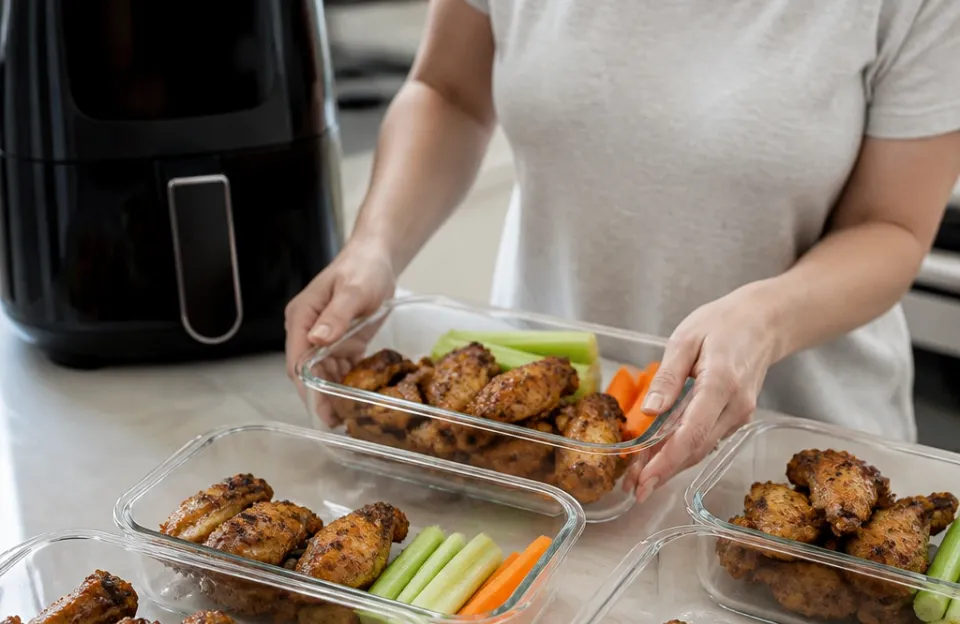
If you eat wings five days a week, you need about 1.5 to 2 pounds per person for daily lunches, assuming you pair them with sides. That means cooking 7 to 10 pounds in one session. Doing this requires managing your time and your equipment's capacity.
Start by prepping all your raw wings at once. Trim, dry, and season the entire batch in a very large bowl or a clean cooler. Work through your air fryer cycles systematically.
While one batch cooks, arrange the previous batch on the cooling rack. Wash the air fryer basket quickly between batches if excessive grease builds up. Too much pooled fat at the bottom can smoke at high temperatures.
Divide the cooled wings into individual daily portions right away. Grabbing a single container each morning is much easier than digging through a massive tub of wings and disrupting the others. Pair each container with a small separate cup for dipping sauce so the wings stay dry during transit.
Mixing up flavors without cross-contamination
Eating the exact same dry rub for five days gets boring. You can prep multiple flavors in one session by dividing your raw wings into separate bowls before seasoning. Make one batch garlic parmesan, another spicy cajun, and a third lemon pepper.
Cook the mildest flavors first. If you cook the heavily spiced cajun wings first, the residual spices left in the basket will transfer to the milder lemon pepper batch. Wipe the basket out with a damp paper towel between distinctly different flavor profiles.
Keep the flavored batches in clearly labeled containers. When everything looks like browned chicken wings, it's easy to grab the wrong lunch. Write the flavor on the masking tape label along with the date.
Handling fats and grease buildup during prep sessions
Rendering chicken fat is what makes the wings crispy. But cooking 10 pounds of wings generates a lot of liquid grease. Most air fryers have a drip tray or a catch pan at the bottom.
Empty this between batches. If the grease level gets too high, it touches the heating element and produces thick white smoke.
Line the bottom of the outer basket with a small piece of parchment paper to catch drips, but never cover the entire bottom. Blocking the airflow defeats the purpose of the appliance. Only cover the solid areas where air isn't meant to pass through.
Dispose of the cooled fat properly. Pour it into an old jar or can and throw it in the trash. Don't pour chicken fat down the sink drain.
It solidifies as it cools and causes severe plumbing clogs. After your massive prep session, give the air fryer a deep clean. Removing baked-on grease prevents off-flavors in future meals, and knowing how to scrub the heating elements safely extends the life of your machine.
Dietary adjustments for specific meal plans
Keto and carnivore diets rely heavily on chicken wings since they contain zero carbohydrates naturally. Just watch your dry rub ingredients. Many commercial spice blends include sugar or maltodextrin as fillers.
Mix your own spices using pure salt, pepper, and herbs.
For lower sodium requirements, reduce the salt in the rub and rely on acid and heat for flavor. Lemon zest, vinegar powder, and chili flakes add punch without raising blood pressure. Remember that sauces added later often contain significant sodium, so factor that into your daily totals.
If you need higher protein density without the fat, chicken breast strips can be cooked using the same method. However, lean meat dries out much faster than wings. Reduce the cooking time significantly and use a fast-probe thermometer to pull the breast pieces the exact second they hit 165°F.
Overcooking lean poultry by even two minutes ruins the texture for meal prep.
Common mistakes that ruin prepped wings
Even experienced cooks make errors when scaling up a recipe. Here are the most frequent problems people run into with air fryer chicken wings meal prep:
- Skipping the drying step. Water is the enemy of crisp skin. If you rinse your wings or pull them straight from a wet marinade into the basket, they will steam. Always pat them thoroughly dry with paper towels before applying oil and spices.
- Saucing before storage. As mentioned earlier, wet sauces turn the skin to mush in the fridge. Always store plain or dry-rubbed wings. Keep sauces in separate small containers and combine them only after reheating.
- Overcrowding the basket. Trying to rush the process by stuffing too many wings in at once results in uneven cooking. Some pieces will be raw near the bone while others burn. Stick to a single layer with visible gaps between each piece.
- Sealing containers while hot. Trapping steam inside a plastic box guarantees soggy wings. Let them cool completely on a wire rack before putting the lids on.
- Ignoring the grease trap. Failing to empty the bottom drawer between large batches leads to smoking kitchens and bitter-tasting food. Check the drip tray after every two pounds of wings.
Quick-reference table for weekly planning
Knowing how much to buy and how long it takes helps you schedule your prep day accurately. Use this baseline for standard party wings in a 5-quart air fryer.
| Metric | Amount / Time | Notes |
|---|---|---|
| Raw weight per person (5 days) | 7 to 10 lbs | Yields roughly 1.5 to 2 lbs cooked daily |
| Capacity per batch | 2 lbs | Single layer only |
| Total active cook time (10 lbs) | ~2.5 hours | Includes flipping and swapping batches |
| Cooling time required | 30 to 45 mins | Must reach room temp before sealing |
| Refrigerator shelf life | 4 days | Store at 40°F or below |
| Freezer shelf life | 3 months | Best for plain dry-rubbed wings |
| Reheat time (air fryer) | 4 to 6 mins | At 375°F from refrigerated state |
Frequently asked questions
Can I prep frozen wings directly in the air fryer?
You can, but the texture suffers. Frozen wings release excess water as they thaw in the heat, which steams the skin. They also require about 5 to 8 extra minutes of cooking time.
For meal prep where quality matters, thaw them in the refrigerator overnight first.
How do I know when the wings are fully cooked without cutting them open?
Use a meat thermometer. Insert the probe into the thickest part of a drumette, avoiding the bone. The reading must show 165°F.
Cutting them open releases juices and dries out the meat, which is especially bad for food you plan to reheat later in the week.
Do the wings stay crispy after four days in the fridge?
They lose some crispness during storage due to ambient humidity inside the container. However, reheating them in the air fryer at 375°F for a few minutes drives off that moisture and restores the crunch. They won't be identical to fresh-out-of-the-fryer wings, but they remain highly enjoyable.
Is it safe to reheat chicken wings more than once?
It is best practice to only reheat the portion you plan to eat immediately. Repeatedly heating and cooling the entire batch pushes the meat through the temperature danger zone multiple times, increasing the risk of bacterial growth. Divide your prepped wings into single-serving containers so you only warm up what you need.
What if my air fryer smokes heavily during prep?
Smoke usually means accumulated grease is hitting the heating element. Pause your cooking, let the unit cool slightly, and wipe out the bottom drawer. Adding a tablespoon of water to the very bottom of the drip pan (below the basket) can also prevent grease from smoking during subsequent batches.
Can I use this method for boneless wings?
Yes, but boneless wings are essentially chicken breast chunks. They cook much faster and dry out easily. Reduce your cooking time to about 12 to 15 minutes total at 380°F.
Check them early. Boneless pieces don't hold up to four days of refrigeration quite as well as bone-in wings because the lack of fat and connective tissue makes them prone to drying out upon reheating.
Planning your next prep session
Getting air fryer chicken wings meal prep right comes down to patience during the cooling phase and discipline with portion sizes. Don't rush the cooling process, and don't skip checking the internal temperature just because you're tired after cooking ten pounds of poultry. The upfront effort pays off every single time you open your fridge on a Wednesday afternoon and find a high-protein lunch waiting for you.
Keep your sauces separate, maintain your equipment, and your weekly routine will run smoothly.




3 thoughts on “Crispy Air Fryer Chicken Wings for Easy Meal Prep”