The right air fryer chicken wings dipping sauce changes a good batch of wings into a great one. Air frying gives you crispy skin and juicy meat without the mess of deep oil, but that dry heat leaves the surface ready for moisture and flavor. A solid dip provides exactly that.
This guide covers why certain sauces pair better with air-fried wings than others, breaks down the main categories of dips people use, explains how texture and temperature affect the pairing, and walks through matching specific wing seasonings to the right bowl. You'll also find notes on storing leftovers and fixing common mistakes when mixing your own dips at home.
Why the cooking method changes what you dip in
Air fryers cook by circulating very hot air around the food. The USDA recommends cooking all poultry to an internal temperature of 165°F, which applies whether you use a conventional oven or a countertop air fryer. Checking doneness accurately is easier when you measure the thickest part of the wing near the joint.
Reaching that safe temperature in an air fryer renders out a significant amount of fat from the skin.
That rendered fat leaves the exterior of the wing dry, crisp, and slightly porous. Deep-fried wings retain more surface oil, which makes heavy, oil-based sauces slide off. Air-fried wings grip thick sauces much better because there is no competing grease layer on the skin.
Because the skin is drier, you need a dipping sauce with enough body to coat the meat. Thin, watery sauces tend to soak straight into the crust and make it soggy before you even take a bite. The best options have some viscosity.
They cling to the ridges of the wing and deliver flavor evenly across the whole piece.
How dry heat affects flavor concentration
Air frying concentrates the savory, roasted notes in the chicken. Without the diluting effect of frying oil soaking into the meat, the natural umami of the poultry stands out more. This means your air fryer chicken wings dipping sauce doesn't need to fight through a wall of grease to reach your palate.
You can get away with subtler flavors when pairing with air-fried wings. A delicate herb yogurt dip might vanish behind a deep-fried wing, but it holds its own perfectly against the clean, roasted profile of an air-fried one.
Thick creamy bases that cling to crispy skin
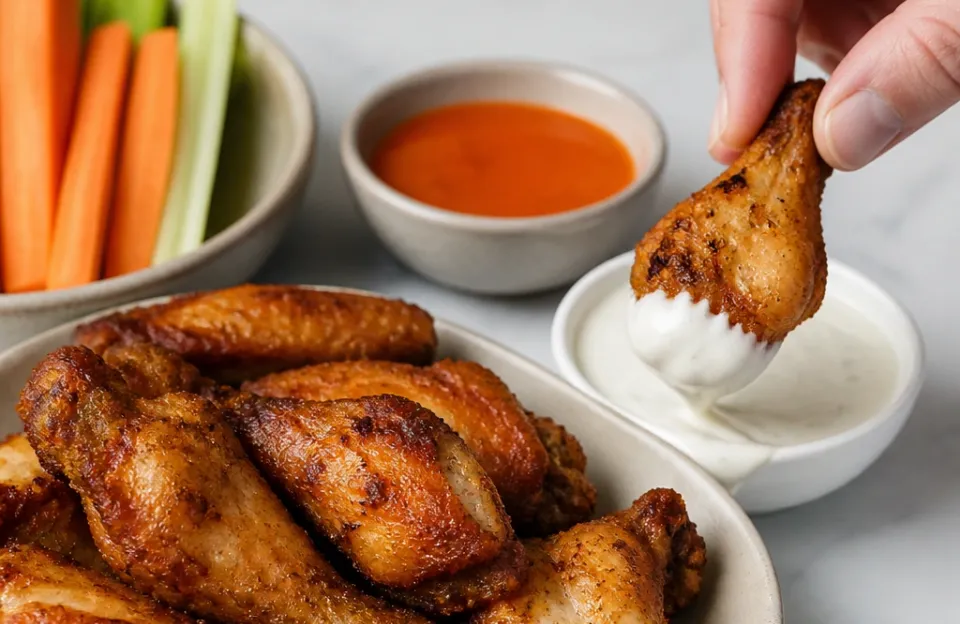
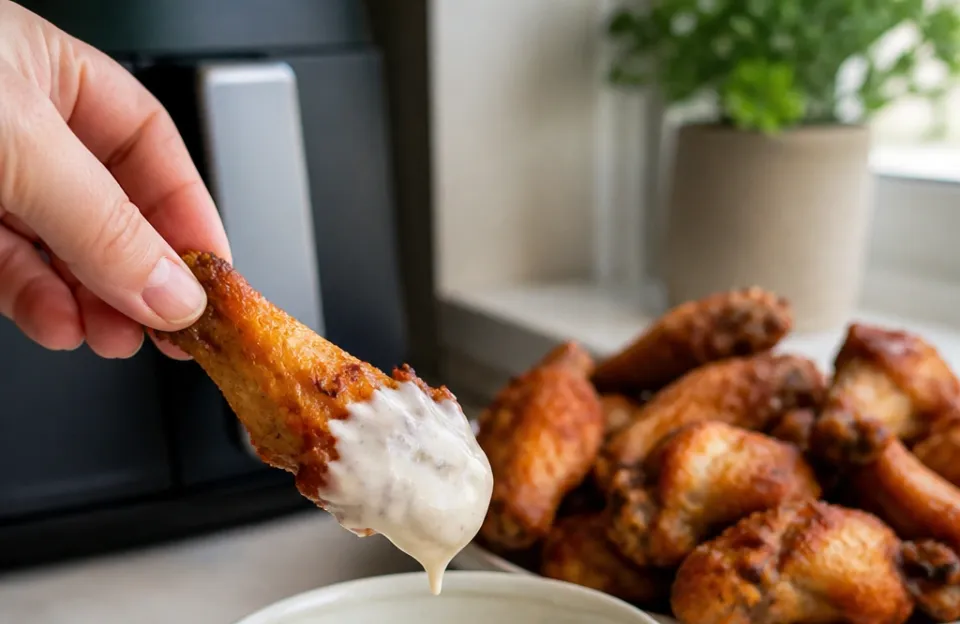
Creamy dips are the most popular choice for air-fried wings because their density matches the crunch of the skin. When you bite into a crispy wing coated in a thick sauce, the contrast between the shatter of the skin and the smooth dip is immediate.
Ranch dressing remains the standard. The combination of buttermilk, mayonnaise, garlic, onion powder, and fresh herbs like dill and chives provides a cooling effect. If you season your wings heavily with salt and pepper before they go into the basket, a rich dairy base balances that aggressive seasoning.
Blue cheese dressing works on a similar principle, though it introduces a sharp, pungent note. The crumbles of blue cheese suspended in a sour cream or mayonnaise base add texture. This style pairs well with plain salted wings or those tossed in a mild hot sauce after cooking.
Garlic aioli is another strong option. It relies on emulsified oil, egg yolk, and roasted or raw garlic. Because aioli is heavier than ranch, it coats the wing thoroughly.
It fits best with wings seasoned with Mediterranean spices like oregano, lemon zest, or smoked paprika.
For a lighter creamy option, whipped feta or Greek yogurt mixed with cucumber and mint cools down spicy wings. Dairy proteins bind to capsaicin, the compound that makes peppers hot, washing it off your tongue faster than water or thin sauces ever could.
| Sauce Base | Primary Ingredients | Best Wing Pairing | Texture Profile |
|---|---|---|---|
| Ranch | Buttermilk, mayo, herbs | Salt and pepper, garlic powder | Smooth, medium-thick |
| Blue Cheese | Sour cream, mayo, cheese crumbles | Plain, mild buffalo | Chunky, thick |
| Aioli | Oil, egg yolk, garlic | Lemon pepper, smoked paprika | Dense, glossy |
| Yogurt | Greek yogurt, herbs, citrus | Spicy chili, jerk seasoning | Light, fluffy |
Tangy vinegar-forward sauces for cutting through fat
Even though air frying uses less oil, chicken wings still contain plenty of natural fat. Acidic sauces cut through that richness and reset your palate between bites.
Classic Buffalo sauce is technically a mixture of hot sauce and melted butter. When used as a dip rather than a toss, it delivers sharp vinegar heat followed by a fatty finish. The vinegar base comes from aged cayenne pepper mash.
This tanginess is what makes Buffalo sauce so addictive alongside fried poultry.
Carolina-style mustard barbecue sauce leans heavily on yellow mustard, apple cider vinegar, and brown sugar. It lacks the heavy tomato paste found in Kansas City styles. That absence of thick tomato makes it thinner, but the high acid content punches through the savory notes of the chicken.
Alabama white sauce is a lesser-known regional staple built on mayonnaise, vinegar, and black pepper. It bridges the gap between creamy and tangy. The high ratio of apple cider vinegar to mayo keeps it loose enough to drizzle but thick enough to scoop.
It was originally designed for smoked chicken, but it translates perfectly to the air fryer.
If you want pure acid without heat, a simple malt vinegar reduction works. Boiling malt vinegar down with a pinch of sugar and salt creates a syrup that clings to the wing instead of running off it. This is a common approach in British chip shops and applies just as well to air-fried poultry.
Sweet glazes that caramelize without burning
Sugar burns fast in an air fryer. The heating element sits close to the food, and the fan pushes intense heat directly onto the surface. Applying a sweet sauce before cooking usually results in charred, bitter spots.
Dipping solves this problem entirely. You cook the wings plain or with dry spices, then introduce the sweetness at the table.
Honey mustard is the most accessible sweet dip. The ratio matters here. Too much honey makes it cloying; too much mustard makes it harsh.
A two-to-one ratio of mustard to honey usually hits the right balance for savory chicken.
Teriyaki dipping sauce brings soy, ginger, garlic, and brown sugar together. Commercial teriyaki is often too thin for dipping. Simmering it on the stove until the sugars reduce and the liquid thickens gives it the body needed to stick to an air-fried wing.
Sweet chili sauce, common in Thai cooking, offers a gentle heat wrapped in a sticky, sugary base. The visible chili flakes add visual appeal and a slight textural bite. It pairs naturally with wings dusted in five-spice powder or sesame seeds.
Maple-based dips work well in the fall. Whisking pure maple syrup with Dijon mustard and a dash of hot sauce creates a complex profile. The earthiness of the maple grounds the sharp mustard.
Keep the air fryer interior spotless after eating these, as stray drops of sugary syrup will bake onto the non-stick coating if left uncleaned.
Matching the dip to your dry rub
A random pairing often leads to clashing flavors. The seasoning you apply to the wings before cooking should dictate which bowl you set on the table.
Lemon pepper wings carry bright citrus oils and sharp black pepper. Pairing them with a heavy, smoky barbecue sauce muddies the citrus. A cool, creamy dill dip or a light garlic aioli preserves the brightness of the lemon while softening the pepper's bite.
Cajun or Creole-seasoned wings bring paprika, cayenne, thyme, and garlic. These bold, earthy spices need a sauce that can stand up to them. A remoulade, which is a mayonnaise-based sauce spiked with mustard, pickles, and hot sauce, mirrors the spice profile while adding necessary moisture.
Simple salt and pepper wings act as a blank canvas. Almost any air fryer chicken wings dipping sauce works here. This is the best time to experiment with complex or unusual dips, because the neutral meat won't compete with the sauce.
Jerk-seasoned wings rely on allspice, scotch bonnet peppers, and thyme. A mango habanero salsa or a coconut milk-based dip complements the Caribbean spice blend. Coconut milk soothes the heat of the scotch bonnets while echoing the tropical origin of the seasoning.
If you prefer to monitor your food closely while testing new flavor combinations, keeping a wireless probe nearby lets you check temperatures without opening the basket and losing heat.
Temperature matters more than people think
Serving temperature drastically changes how a sauce tastes and behaves. Most people pull a dip straight from the fridge and serve it immediately. Cold dulls flavor perception.
Your tongue registers fewer sweet and salty notes when the food is chilled.
Letting a creamy dip sit at room temperature for fifteen minutes before serving allows the fats to soften. The aromatics in the herbs and garlic become volatile and release their scent more readily. You taste more of what you actually mixed into the bowl.
Warm dips offer a different experience. Beer cheese sauce, served warm, coats the mouth differently than cold ranch. The heat keeps the cheese fluid and prevents it from seizing into a clump when it hits the cooler surface of the wing.
If you're melting cheese for a dip, monitoring the heat carefully prevents the dairy from breaking and turning greasy. A reliable instant-read tool helps verify that warm dips stay above 140°F if you plan to leave them out during a long gathering.
Cold acidic sauces, like vinaigrettes or chilled Buffalo dip, provide a sharp shock of flavor. The cold temperature tightens the acidity, making it feel crisper on the palate. This works well in summer or when the wings themselves are extremely hot and freshly pulled from the air fryer.
Building your own sauce from scratch
Store-bought dips save time, but building your own lets you control the sodium, sugar, and consistency. The basic architecture of a dipping sauce relies on balancing four elements: fat, acid, salt, and aromatics.
Start with a fat base. Mayonnaise, sour cream, Greek yogurt, or olive oil all work. This provides the body and carries the flavor.
Add an acid next. Lemon juice, vinegar, or pickle brine cuts the heaviness of the fat. Season with salt, then layer in your aromatics: minced garlic, chopped herbs, toasted spices, or hot sauce.
Taste as you build. If the sauce feels flat, it usually needs more acid or salt. If it tastes harsh, add a touch more fat or a pinch of sugar to round it out.
If it's too thin for an air-fried wing, whisk in more mayonnaise or let it rest in the fridge to hydrate and thicken.
When experimenting with homemade sauces, having a fast digital thermometer handy is useful for checking the temperature of both the cooked poultry and any warm dips you prepare. Mixing ingredients at the correct temperature ensures emulsions hold together. Broken sauces separate into oil and solids, leaving you with a greasy pool instead of a cohesive dip.
Some cooks wonder if they can repurpose other kitchen tools to heat their dips. While specialized thermometers exist for various tasks, understanding how different gauges perform across cooking applications helps prevent cross-contamination and inaccurate readings when warming sauces on the stove.
Storing leftover dips safely
Homemade sauces lack the commercial preservatives found in bottled versions. Dairy-based dips containing sour cream, buttermilk, or yogurt must go back into the refrigerator within two hours of sitting out. Bacteria multiply rapidly in the danger zone between 40°F and 140°F.
Store leftover dips in airtight containers. Glass jars work better than plastic bowls because glass doesn't absorb odors or stain from turmeric and paprika. Label the container with the date you made it.
Most homemade creamy dips last three to four days in the fridge. Vinegar-heavy sauces, like Carolina mustard dip, can last up to a week because the high acid environment slows bacterial growth. Warm cheese dips often solidify in the fridge.
Gently reheating them over low heat while stirring constantly brings them back to a dippable state. Microwaving cheese sauces on high power causes the proteins to seize and the oil to separate.
Never double-dip wings back into a communal bowl if you plan to save the leftovers. Saliva introduces enzymes and bacteria that accelerate spoilage. Pour individual portions into small ramekins for serving, and store the bulk of the sauce separately.
Common mistakes that ruin the pairing
Even a well-made sauce fails if applied incorrectly. Understanding where things go wrong saves ingredients and frustration.
- Using a sauce that is too thin. Watery dips slide off the dry, porous skin of an air-fried wing and pool at the bottom of the plate. You end up eating a dry wing and drinking a puddle of sauce. Thicken thin sauces with cornstarch slurries, extra mayonnaise, or reduction.
- Overpowering the chicken. Air frying produces a cleaner chicken flavor than deep frying. Dumping a heavily smoked, intensely sweet barbecue sauce over delicate herb-rubbed wings buries the poultry entirely. Match the intensity of the sauce to the intensity of the rub.
- Serving everything ice cold. Pulling a thick garlic aioli straight from a 35°F refrigerator makes it stiff and mutes the garlic flavor. Let dense, fat-based dips temper on the counter briefly before serving so they loosen up and release their aromas.
- Ignoring the salt content. Many commercial hot sauces, soy sauces, and seasoning pastes contain massive amounts of sodium. If your wing dry rub is already heavily salted, using a high-sodium dip creates an inedible result. Taste the wing alone first, then adjust the dip's salt level accordingly.
- Dipping wet wings. If you toss your air-fried wings in a wet marinade immediately after cooking, the steam trapped under the skin turns the crust soggy. Let the wings rest for two minutes after pulling them from the basket so the structure sets. Then serve the sauce on the side for dipping.
Frequently asked questions
Can I use the same dipping sauce for air-fried wings and deep-fried wings?
You can, but the experience differs. Deep-fried wings have an oily surface that repels thick, creamy dips, causing them to slide off. Air-fried wings have a dry, textured crust that grips heavy sauces easily.
If you switch between cooking methods, you may need to thin out your sauce slightly for deep-fried batches and thicken it for air-fried ones.
What is the safest internal temperature for chicken wings before dipping?
Poultry must reach 165°F internally to be safe for consumption. Insert a calibrated thermometer into the thickest part of the drumette, avoiding the bone. Once the meat hits that mark, pull the wings from the air fryer, let them rest briefly, and serve with your chosen sauce.
Do spicy dipping sauces work better than mild ones for air-fried wings?
Spice preference is subjective, but air-fried wings handle heat exceptionally well. Because the skin isn't saturated with frying oil, the burn from capsaicin feels sharper and cleaner. Mild sauces allow the roasted flavor of the chicken to dominate, while spicy sauces create a more aggressive contrast.
Both approaches work depending on your dry rub.
How do I fix a dipping sauce that separated while sitting out?
Emulsion breakage happens when oil separates from water-based ingredients. For mayonnaise or dairy-based dips, whisk in a teaspoon of warm water or fresh lemon juice vigorously. The added liquid gives the emulsifiers something to bind to again.
For warm cheese dips, return the pot to very low heat and stir constantly until the fat reincorporates.
Should I dip the whole wing or just the meaty end?
Dipping the entire wing maximizes flavor but creates a mess. The flat section has less meat and more skin, meaning it absorbs sauce quickly. Most people hold the wing by the tip of the drumette or the edge of the flat and dip only the exposed meat.
Setting out damp paper towels or napkins alongside the ramekins handles the inevitable drips.
Getting the most out of your next batch
Pairing the right air fryer chicken wings dipping sauce with your cooking method takes a little thought, but the payoff is immediate. The dry, crisp texture of air-fried poultry demands a sauce with enough body to cling and enough flavor to complement the concentrated roast of the meat. Whether you lean toward thick dairy bases, sharp vinegar cuts, or sticky sweet glazes, matching the sauce intensity to your dry rub keeps every bite balanced.
Keep your dips at the proper temperature, store leftovers safely, and avoid thin sauces that compromise the crust you worked hard to build.