Air fryer chicken wings buffalo style cook up crispy on the outside and juicy inside, usually in about 25 minutes at 400°F. You toss them in a mix of hot sauce and melted butter right after they come out of the basket. The rapid air circulation in the machine renders the fat from the skin, giving you that deep-fried crunch without submerging anything in oil.
This guide covers exactly how to get air fryer chicken wings buffalo ready from start to finish. You'll find the prep steps, cooking times, sauce ratios, and what to do if your specific model runs hot or cold. We'll also look at why some batches turn out soggy and how to fix that before it happens.
Why the Air Fryer Changes Buffalo Wings
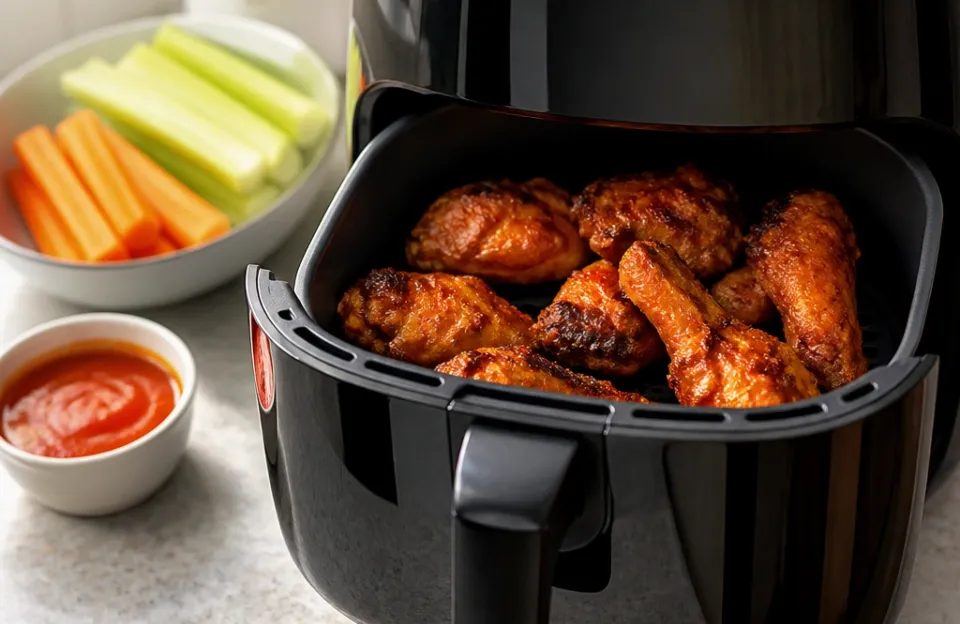
Traditional buffalo wings require heating several quarts of oil to 375°F. That means splatter, lingering smells, and a pot of grease to dispose of later. An air fryer cooks by blowing superheated air around the food at high speed.
This constant airflow pulls moisture off the surface of the chicken skin rapidly. When the surface dries out fast enough, the proteins and fats brown and crisp up.
Buffalo sauce is mostly liquid. If you put wet sauce on raw wings and air fry them, the sugars burn before the meat cooks through. The standard method for air fryer chicken wings buffalo flavor is to cook the wings completely plain or with just dry spices first.
Then you coat them in the sauce immediately after they finish cooking. The residual heat helps the sauce cling to the rough, crispy skin.
You can read more about keeping appliances clean between heavy batches, since rendered chicken fat builds up quickly on heating elements and baskets.
How wing size changes the final texture
Wings sold in grocery stores vary wildly in size. A small party wing might weigh half an ounce, while a large whole wing section can weigh over two ounces. Smaller wings crisp faster because there is less internal moisture to drive off.
Larger wings need more time in the basket to render the thick layer of fat under the skin. If you mix sizes in one batch, the small ones will dry out before the large ones are safe to eat. Sort your wings by size before cooking.
Put the larger pieces in one batch and the smaller flats or drumettes in another.
Drying and Prepping the Raw Chicken
Moisture is the main enemy of crispy skin. Fresh chicken wings come out of the package covered in liquid. If you put them straight into the air fryer basket, that water has to boil off before any browning can happen.
The result is steamed, rubbery skin instead of a crunchy exterior.
Lay the raw wings out on a few layers of paper towels. Pat the tops dry with more paper towels. Press firmly.
You want to absorb as much surface water as possible. Some cooks leave the dried wings uncovered on a wire rack in the refrigerator for a few hours or overnight. The cold, dry air of the fridge pulls even more moisture from the skin.
This step takes planning ahead, but it produces noticeably better results.
Once the wings are dry, you can season them. For classic air fryer chicken wings buffalo preparation, keep the dry seasoning simple. Salt is mandatory.
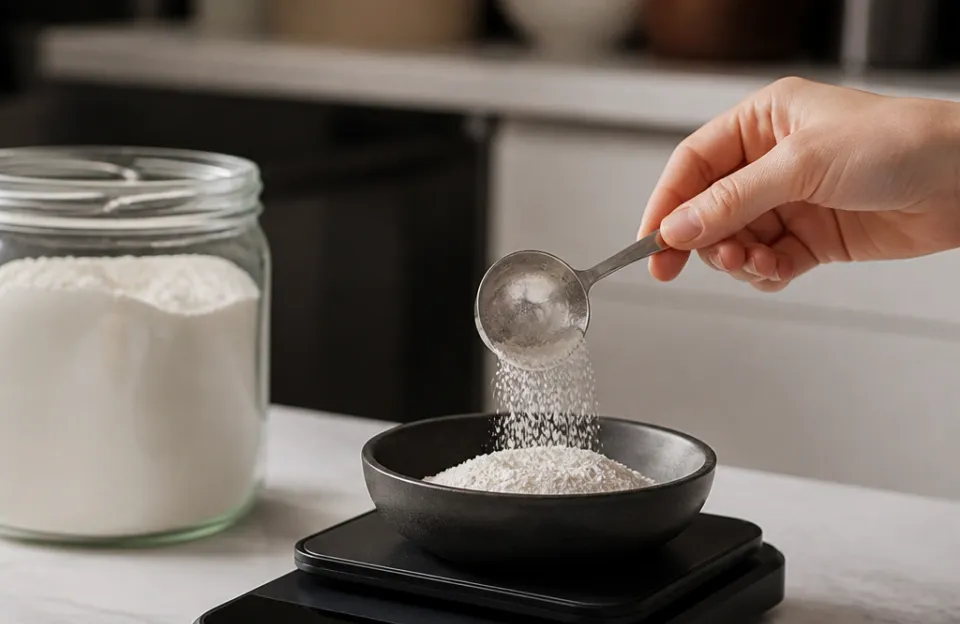
It draws out remaining moisture and seasons the meat. You can add black pepper, garlic powder, or a tiny pinch of baking powder. Baking powder raises the pH level of the skin slightly, which speeds up the Maillard reaction.
Use no more than half a teaspoon per pound of wings. Too much leaves a metallic taste. Do not use baking soda.
They are different chemical compounds, and baking soda will ruin the flavor.
If you prefer using a probe to track doneness rather than relying purely on visual cues, a fast digital reader works well when you open the basket to check.
Cooking Times and Heat Settings
Most air fryers perform best for wings at 400°F. Some recipes suggest starting lower, around 360°F, to render the fat slowly, then cranking the heat up to 400°F for the last five minutes to blister the skin. Both methods work.
The single-temperature method is simpler and yields consistent results for standard-sized wings.
At 400°F, average-sized drumettes and flats take between 20 and 25 minutes total. You must flip or shake the basket halfway through. Around the 10 or 12-minute mark, pull the basket out.
Use tongs to turn each wing over, or give the basket a firm shake if your model allows it. Flipping exposes the bottom side to the direct airflow. Without flipping, the side resting on the grate stays pale and soft.
| Wing Size | Temperature | Total Cook Time | Flip Point |
|---|---|---|---|
| Small (party wings) | 400°F | 18 to 20 minutes | 9 minutes |
| Medium (standard) | 400°F | 22 to 25 minutes | 12 minutes |
| Large (whole sections) | 400°F | 26 to 30 minutes | 15 minutes |
Do not overcrowd the basket. Air fryers rely on moving air. If the wings are stacked on top of each other or touching tightly, the air cannot circulate.
The spots where wings touch will remain wet and uncooked. Arrange them in a single layer with a little space between each piece. Depending on the capacity of your machine, you may need to cook two or three separate batches.
The USDA requires all poultry to reach a minimum internal temperature of 165°F. You can check this by inserting a thermometer into the thickest part of a drumette, avoiding the bone. Wings often taste better when cooked slightly past 165°F, closer to 175°F or 180°F.
At these higher temperatures, the connective tissue near the joints breaks down more fully, making the meat tender rather than chewy. If you cook large batches frequently, a reliable wireless setup lets you monitor the temp without opening the drawer constantly.
Mixing the Classic Buffalo Sauce
While the last batch of wings finishes cooking, make the sauce. Authentic Buffalo sauce contains very few ingredients. It relies on the balance between heat, acid, and fat.
You need a cayenne pepper-based hot sauce. Frank's RedHot is the traditional choice used at the Anchor Bar in Buffalo, New York, where the dish originated. You also need unsalted butter.
The standard ratio is equal parts hot sauce and melted butter by volume. Half a cup of hot sauce mixed with half a cup of melted butter coats about two pounds of cooked wings.
Melt the butter gently. You can do this in a microwave or a small saucepan. Do not let it brown.
Browned butter changes the flavor profile away from the classic tangy taste. Once the butter is melted, whisk in the hot sauce. Whisk vigorously until the mixture looks uniform and slightly thickened.
The butterfat and the vinegar-based hot sauce naturally want to separate. Whisking creates a temporary emulsion.
Some people add a dash of Worcestershire sauce, a pinch of garlic powder, or a few drops of white vinegar to brighten the acidity. These additions are fine, but stick to the basic butter-and-hot-sauce ratio first. Taste the sauce before tossing the wings.
If it is too spicy, add a little more melted butter. If it lacks punch, add more hot sauce.
For those who like experimenting with heat levels beyond standard cayenne, checking a pork internal temperature guide offers useful context on how fat content interacts with spice absorption across different meats.
Tossing the Wings Without Losing the Crunch
Timing matters here. Take the cooked wings out of the air fryer basket and place them directly into a large, clean mixing bowl. Do not let them sit on a plate to cool down.
You want them piping hot. The heat from the chicken helps the sauce adhere.
Pour the prepared sauce over the hot wings. Start with about half the sauce. Toss the bowl gently, folding the wings over each other.
Add more sauce gradually until every piece is coated evenly. You want a glossy red layer clinging to the skin. Do not drown them.
Excess sauce pooling at the bottom of the bowl will eventually make the bottoms of the wings soggy.
Serve the air fryer chicken wings buffalo immediately after tossing. The longer they sit in the sauce, the more moisture penetrates the crispy skin. Within ten minutes, the crunch starts to fade.
Have your plates, celery sticks, and blue cheese or ranch dressing ready before you pull the final batch from the fryer.
If you ever notice your appliance running cooler than expected, an accurate dial gauge placed inside the basket during preheat can verify the true ambient heat.
Dealing With Smoke and Splatter
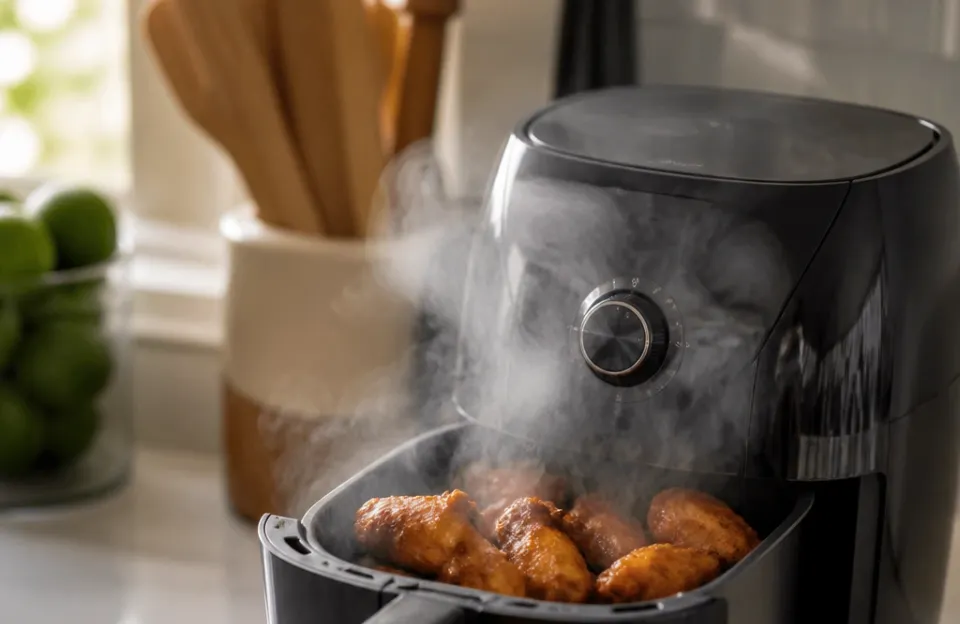
Chicken wings have a high fat content. As the skin crisps in the air fryer, that fat renders out and drips to the bottom of the unit. When liquid fat hits the bare heating element or the hot metal base, it smokes heavily.
White smoke pouring from your machine is almost always burning grease.
To prevent this, put a small amount of water in the bottom drawer beneath the basket. About two tablespoons of water is enough. The dripping fat lands in the water instead of hitting the dry, scorching metal.
The water keeps the temperature of the fat below its smoke point. Do not add too much water, or it will boil over and create a mess.
Another option is placing a small piece of bread under the basket if your air fryer design allows it. The bread absorbs the dripping grease. You throw the greasy bread away after cooking.
Clean the basket and the drawer thoroughly after making wings. Leftover baked-on grease will smoke during your next use, even if you are cooking something lean like vegetables. Wash removable parts with hot, soapy water.
Degreasing spray helps break down the sticky residue left by chicken fat.
Adjustments for Different Air Fryer Models
Not all air fryers behave the same way. Basket-style models with a pull-out drawer tend to cook faster than oven-style models with a front door. The fan placement and wattage dictate how aggressively the hot air moves.
If you own a smaller, high-wattage basket model, your wings might finish in 18 minutes instead of 25. Check them early. Open the basket at the 15-minute mark and assess the color.
The skin should be golden brown and visibly blistered in spots. If it still looks pale and wet, they need more time.
Oven-style air fryers often have multiple racks. If you try to cook wings on two racks simultaneously, the top rack blocks airflow to the bottom rack. The bottom wings will steam.
Cook on one rack at a time, or rotate the trays halfway through and expect a slightly longer total cooking time.
Some newer machines include a "dehydrate" or low-heat setting. A few cooks use a two-stage process: dehydrating the wings at 200°F for 20 minutes to dry the skin completely, then switching to 400°F to cook and crisp them. This works exceptionally well for achieving maximum crunch, though it doubles your total prep time.
When troubleshooting uneven cooking across different brands, verifying your baseline temps with a precision laser tool can pinpoint whether the issue is the heating element or the fan distribution.
Common Mistakes That Ruin the Batch
Even a straightforward recipe has pitfalls. Here are the most frequent errors people make when preparing air fryer chicken wings buffalo style.
- Skipping the drying step. Wet skin steams. No amount of high heat will fix wings that went into the basket dripping with water. Paper towels are mandatory.
- Saucing before cooking. Sugar and vinegar in hot sauce burn rapidly at 400°F. The wings will turn black and bitter before the meat reaches 165°F. Always sauce after cooking.
- Overcrowding the basket. Packing too many wings in restricts airflow. Cook in batches. It takes slightly longer, but every wing gets crispy.
- Using salted butter for the sauce. Hot sauce is already very high in sodium. Adding salted butter pushes the flavor past savory into unpleasantly salty. Stick to unsalted butter so you control the seasoning.
- Ignoring the flip. The bottom of the wing rests against the grate. If you don't turn them, only one side gets exposed to the direct convection current.
Frequently asked questions
Can I use frozen wings straight from the bag?
Yes, but the texture will differ. Frozen wings release a lot of water as they thaw inside the hot machine. This extra moisture prevents the skin from getting truly crispy.
If you must cook them frozen, add about 5 to 8 minutes to the total cooking time and expect softer skin. Thawing them in the refrigerator overnight and patting them dry yields far superior results.
Is baking powder safe to use on chicken skin?
Aluminum-free baking powder is perfectly safe and commonly used in wing preparation. It alters the pH of the skin, helping proteins break down and brown faster. Keep the amount small, roughly half a teaspoon per pound of meat.
Do not confuse it with baking soda, which has a much higher alkalinity and leaves a harsh, soapy flavor on the finished wings.
Why does my buffalo sauce separate into oil and liquid?
Butter and hot sauce form a temporary emulsion. If the butter is too hot when you whisk it together, or if the mixture sits for too long, the fat separates from the vinegar and water in the hot sauce. Whisk the sauce vigorously right before pouring it over the wings.
If it breaks, a quick re-whisk or a brief pulse in a blender brings it back together.
What is the difference between buffalo sauce and regular hot sauce?
Regular hot sauce is typically just aged cayenne peppers, vinegar, and salt. Buffalo sauce is hot sauce combined with melted butter. The butter adds richness, coats the mouth differently, and mellows the sharp acidic bite of the vinegar.
You cannot replicate authentic air fryer chicken wings buffalo flavor using plain hot sauce alone.
Do I need to spray the basket with oil first?
Chicken wings contain plenty of their own fat, which renders out quickly once heated. In most cases, additional oil spray is unnecessary and can cause excess smoking. However, if your air fryer basket has a worn non-stick coating, a very light mist of a high-smoke-point oil like avocado oil can prevent sticking.
Avoid aerosol sprays containing propellants, as they can damage non-stick surfaces over time.
How long do leftovers stay good in the fridge?
Cooked and sauced wings keep in an airtight container in the refrigerator for three to four days. The sauce will soften the skin completely during storage. To reheat them, put them back in the air fryer at 375°F for about 4 to 5 minutes.
This warms the meat through and re-crisps the exterior slightly. Microwaving sauced wings makes them rubbery.
Getting the Timing Right Every Time
Making air fryer chicken wings buffalo style comes down to managing moisture and heat. Dry the skin thoroughly before cooking, give the wings enough space in the basket to let the air move, and hold off on the sauce until the very last second. Once you nail the 400°F timing for your specific machine size, you can turn out a batch that rivals a restaurant fryer without dealing with vats of hot oil.
Keep a thermometer handy to verify the meat hits at least 165°F, whisk your butter and hot sauce until smooth, and serve them the moment they are tossed.