An air fryer chicken wings dry rub is a blend of salt, spices, and herbs applied directly to raw wings before cooking. The seasoning flavors the meat and helps dry the surface, while the air fryer’s rapidly circulating hot air does most of the work of producing crackly skin. Crispness depends mainly on a dry wing surface, well-rendered fat, and space between pieces, not on the rub alone. Air fryers are essentially countertop convection ovens that cook food faster and use less energy than full-size ovens. Most air-fried foods cook in roughly 5 to 25 minutes at 350°F to 400°F, though exact times vary by appliance.
This article covers what goes into a reliable rub for the air fryer, how to apply it so it sticks, how to cook and check the wings, and how to handle leftovers safely.
Why Dry Spices Create Better Crunch Than Wet Sauces
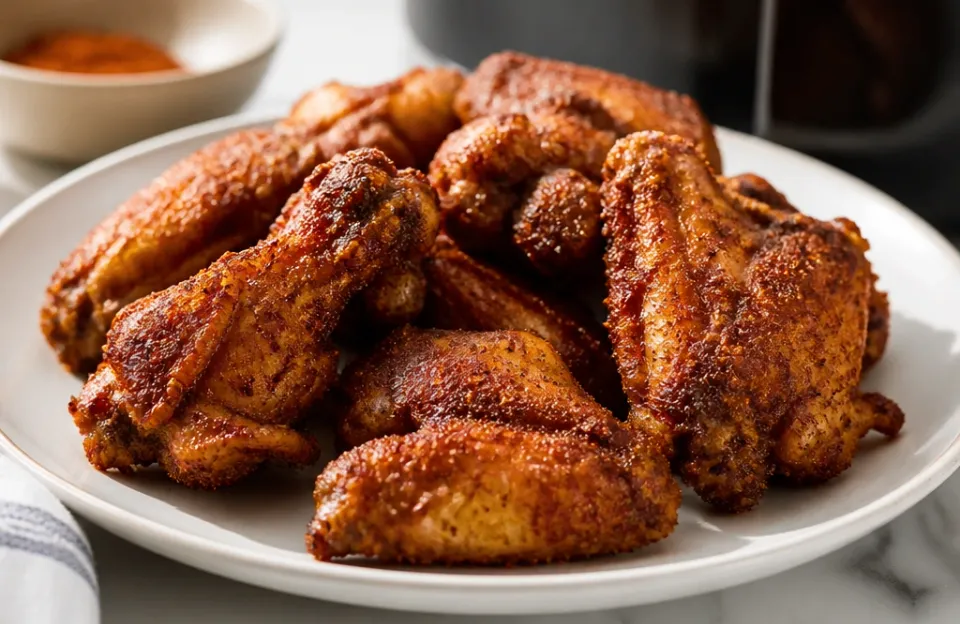
Moisture is the main obstacle to crisping. A wet sauce or heavy marinade adds liquid that must evaporate before the skin can brown, and the air fryer’s fan spends its energy on that water first.
A dry rub skips most of that phase. Once the wings are patted dry, the spices sit directly on the skin, and the salt begins seasoning the meat while the hot air dries and browns the exterior. Sugar in the blend caramelizes at high heat and adds color, while paprika and garlic powder add flavor without adding liquid.
Air fryers cook by convection: a fan pushes heated air around the food continuously, which dries the seasoned skin faster than a still oven. That airflow is the real engine of crispness. The rub supports it by keeping the surface dry and well seasoned.
Building a Balanced Air Fryer Chicken Wings Dry Rub
Every good seasoning mix relies on four components: salt, sweetness, heat, and aromatics. You can adjust the ratios, but leaving one out entirely leaves the wings tasting flat or overly harsh.
Salt is the foundation. Kosher salt works well because the larger grains distribute evenly. Fine table salt dissolves fast and can create intensely salty patches, so if you use it, start with less. Exact quantities are a matter of taste rather than a safety rule, so treat the amounts below as a starting point and adjust.
Sweetness balances the salt and promotes browning. Brown sugar is the standard choice because its molasses caramelizes well at high heat. White sugar browns faster and tastes sharper, so keep the sugar amount lower than the salt.
Heat comes from cayenne pepper, chili powder, or crushed red pepper flakes. Cayenne delivers direct heat without changing the flavor profile much, while chili powder adds earthiness along with the spice.
Aromatics provide depth. Garlic powder, onion powder, smoked paprika, and black pepper form the base layer, and smoked paprika gives a grilled flavor without a smoker. Dried mustard powder adds a slight tang that cuts through the rich chicken fat.
| Component | Example Ingredient | Amount (per 2 lbs wings) | Purpose |
|---|---|---|---|
| Salt | Kosher salt | 1 tablespoon | Seasoning, moisture extraction |
| Sweetener | Dark brown sugar | 1/2 tablespoon | Caramelization, balance |
| Heat | Cayenne pepper | 1/2 teaspoon | Spice level |
| Aromatic | Smoked paprika | 1 teaspoon | Color, smoke flavor |
| Aromatic | Garlic powder | 1 teaspoon | Savory depth |
| Aromatic | Onion powder | 1/2 teaspoon | Background sweetness |
Mix these ingredients in a small bowl until uniform. Store any extra blend in a sealed jar away from direct sunlight; ground spices gradually lose potency over time, so mix modest batches if you only cook wings occasionally. Pre-mixed batches save time if you cook wings frequently.
Getting the Seasoning to Stick Without Oil
Raw chicken skin is slippery. Dumping a spice mix straight onto wet wings causes the powder to slide off and pool at the bottom of the basket. Patting the wings completely dry solves this.
Spread the raw wings on a layer of paper towels. Press more paper towels firmly against the top. Repeat until no visible water remains on the skin. This step takes about two minutes and changes the final texture significantly.
Some recipes call for tossing the dried wings in a light coating of oil before adding the rub. Oil helps the spices adhere and conducts heat directly to the skin. If you want strictly dry wings, skip the oil; the salt in the rub will draw just enough natural moisture back to the surface within a few minutes to hold the spices in place.
Place the dried wings in a large bowl. Sprinkle the rub over them in two or three passes, tossing with your hands between each addition. Coating them in stages prevents clumping and helps every wing get an even layer.
You can rest the seasoned wings uncovered in the refrigerator for 30 minutes to an hour if you have time. This lets the salt begin seasoning the meat while the exterior dries further, and the crust forms better after a short rest. Keep refrigerators at or below 40°F for this step. Raw poultry should be kept away from cooked and ready-to-eat foods to prevent cross-contamination, and hands should be washed with soap and water for 20 seconds before and after handling raw chicken. If you aren’t cooking the wings within about thirty minutes, refrigerate them rather than leaving them on the counter. You can cook them immediately if you are in a rush.
Cooking Temperatures and Timing for Crisp Skin
Wings need high heat to render the fat under the skin. Fat trapped beneath the skin can steam the meat, so thorough rendering is what leaves the skin crisp rather than rubbery.
Set your machine to 400°F as a starting point. Because appliance power and basket size vary, follow your manufacturer’s instructions and treat any time or temperature as a starting range rather than a guarantee.
Arrange the wings in a single layer in the basket, leaving a small gap between each piece. Overcrowding the appliance can prevent enough air circulation to properly cook the food, so cook in batches when the basket is small. Stacked wings trap steam and create soggy contact points.
Cook for about 20 to 25 minutes total. Open the basket and flip each wing with tongs at roughly the 12-minute mark to expose the underside to the fan. Skipping this step leaves the bottom half soft.
All poultry, including wings, should reach a safe minimum internal temperature of 165°F (74°C). Use a food thermometer to confirm the temperature rather than judging by color or time alone. Wings often taste better cooked somewhat past that point, because connective tissue near the joints breaks down further. Checking the exact internal heat with a fast-reading kitchen thermometer removes the guesswork. Insert the probe into the thickest part of a drumette, avoiding the bone. If you prefer monitoring the cook remotely, a wireless Bluetooth temperature tracker lets you watch progress from another room.
Variations Based on Flavor Profiles
Once you understand the basic formula of salt, sweet, heat, and aromatic, you can shift the ratios to match different cuisines. The technique remains identical; only the contents of the bowl change.
For a smoky barbecue style, double the smoked paprika and add a quarter teaspoon of ground cumin. Keep the brown sugar as is, or swap in white sugar for a sharper, less molasses-heavy sweetness. A pinch of celery salt adds a classic backyard cookout note.
A lemon pepper version drops the sugar entirely. Use coarse black pepper, dried lemon peel, garlic powder, and kosher salt. Because there is no sugar to promote browning, these wings rely on rendered fat for their crunch and may need an extra two or three minutes to reach the same color as a sweetened rub.
Spicy Cajun blends lean heavily on cayenne, paprika, oregano, and thyme. Increase the cayenne to a full teaspoon per two pounds if you want serious heat, and add a small amount of dried parsley for color. Cajun seasoning tends to be saltier than other blends, so reduce the added kosher salt slightly to compensate.
If you plan to serve several styles at once, clean the heating element and basket thoroughly between batches so flavors don’t transfer. Burnt sugar from one batch can otherwise taint the next.
Mistakes That Ruin the Crust
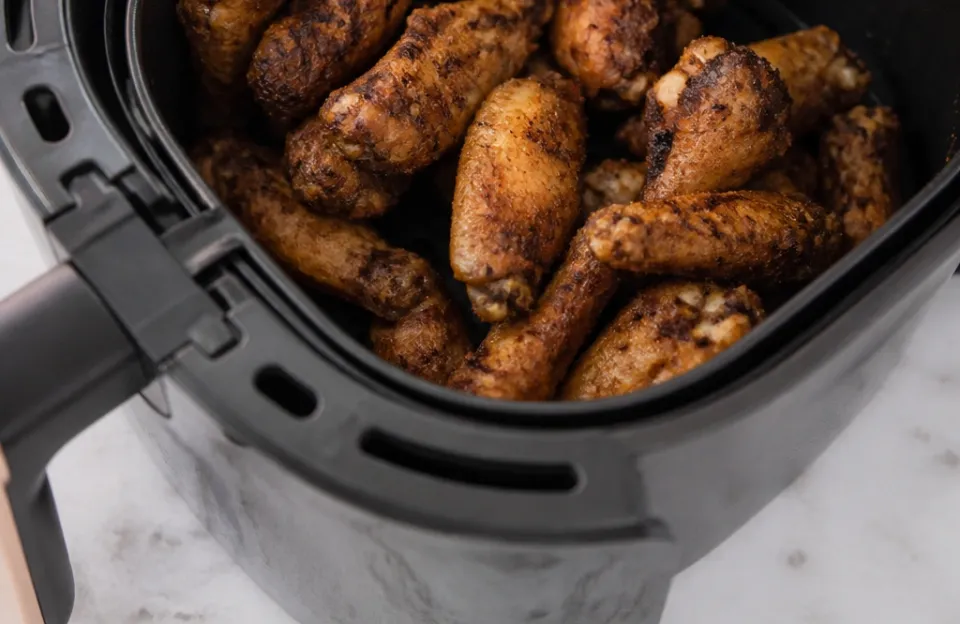
Even with the right ingredients, poor technique ruins the texture. Most failures trace back to moisture management, airflow, or temperature control.
| Symptom | Likely cause | Fix |
|---|---|---|
| Soggy, pale skin | Wet wings, crowded basket | Pat dry completely; cook in a single layer or in batches |
| Burnt, bitter patches | Sugar charring at high heat or close to the element | Lower the heat slightly and watch the final minutes; reduce sugar |
| Uneven seasoning | Rub clumped or applied all at once | Apply in two or three passes and toss between additions |
| Rub turning pasty | Fine salt drawing moisture too fast | Use kosher salt and dry the skin thoroughly first |
| Uneven cooking between sizes | Small flats and large drumettes cooking at the same rate | Check multiple pieces with a thermometer and cook in batches by size |
Using fine table salt instead of kosher salt causes uneven seasoning. Table salt dissolves instantly and can create intensely salty patches while leaving other areas bland.
Skipping the paper towel drying step is the most frequent error. Water left on the skin mixes with the spices to form a sludge that steams instead of roasting, and the wings end up soft and pale.
Overcrowding the basket traps steam. When wings touch each other, the contact points stay wet, so cook fewer pieces per batch if your appliance is small.
Applying the rub hours in advance without refrigeration is a food-safety problem. Perishable foods must not be left at room temperature for more than two hours, and raw chicken becomes unsafe more quickly than that. Always rest seasoned wings in the fridge if you aren’t cooking them promptly.
Burning the sugar happens when the temperature runs too hot or when the wings sit too close to the heating element. Watch the color closely during the last five minutes of cooking.
Verifying Doneness Safely
Visual cues help, but they don’t guarantee safety. Golden brown skin and shrinking meat around the bone ends indicate progress, but dark spices like smoked paprika and black pepper make browning hard to judge by sight alone.
Rely on measured internal temperature: all poultry, including wings, should be cooked to a safe minimum internal temperature of 165°F (74°C). Insert your probe into multiple wings, especially the largest drumettes, since flats cook faster because of their thinner shape. A food thermometer should be used to confirm poultry has reached that minimum.
A reliable digital probe gives you a reading in seconds. If you use a model with dual sensors, a two-sensor setup lets you check a flat and a drumette at the same time to confirm even cooking across different sizes.
If your appliance runs hot or cold compared to its display, you may get inconsistent results. Cooking times vary by the size and power of the appliance, so follow manufacturer instructions and confirm doneness with a thermometer rather than trusting the dial.
Serving and Storage Notes
Dry-rubbed wings hold their crunch longer than sauced ones, because wet sauces seep into the crust on contact. If you want dipping options, serve sauces on the side. Ranch, blue cheese, or hot honey pair well with savory spice blends without compromising the texture.
Leftover wings soften in the refrigerator as condensation forms. Refrigerate leftovers within 2 hours of cooking, or within 1 hour if the ambient temperature is above 90°F. The temperature danger zone for bacterial growth is between 40°F and 140°F, so prompt chilling matters. Store cooked wings in a shallow, covered container rather than leaving them uncovered, and keep the refrigerator at or below 40°F. Cooked leftovers can be kept in the refrigerator for 3 to 4 days or frozen for 3 to 4 months.
Microwaving leftover wings tends to make them rubbery. Reheat them in the air fryer at 375°F for three to four minutes to re-render the fat and dry the skin, and make sure reheated leftovers reach 165°F, measured with a food thermometer. Avoid adding more rub during reheating, since the spices can burn before the meat warms through.
You can freeze seasoned raw wings before cooking. It is safe to cook foods from the frozen state, and cooking will take approximately 50% longer than for fully thawed or fresh meat and poultry. Never thaw perishable foods on the counter or in hot water, and don’t leave them at room temperature for more than two hours. Add extra time to the cook and always verify doneness with a thermometer rather than relying on a fixed time.
Before You Fire Up the Basket
A great crust on air fryer wings comes down to controlling moisture and respecting the sugar in your blend. Pat the skin completely dry, use kosher salt, and leave enough space in the basket for the fan to do its job. Once you have the basic four-part ratio of salt, sweet, heat, and aromatics, you can mix almost any flavor profile without changing the cooking method.
Keep a thermometer handy, watch the clock during those final minutes, and confirm every piece reaches 165°F before you serve.




3 thoughts on “Crispy Air Fryer Chicken Wings With a Bold Dry Rub”