A good air fryer chicken wings marinade does two things at once. It pushes flavor deep into the meat, and it preps the skin to get genuinely crispy under high circulating heat. You don't need a complicated recipe or expensive ingredients.
Most of what works is already in your pantry: oil, salt, acid, and whatever spices you like.
The difference between soggy wings and great ones usually comes down to how you treat the liquid before cooking. A wet wing steams. A well-marinated and properly dried wing crisps.
This article covers which ingredients work best for an air fryer chicken wings marinade, how long to soak them, why sugar behaves differently in an air fryer than on a grill, and a few reliable flavor combinations to start with.
Why Marinating Matters More For Air Frying Than Deep Frying
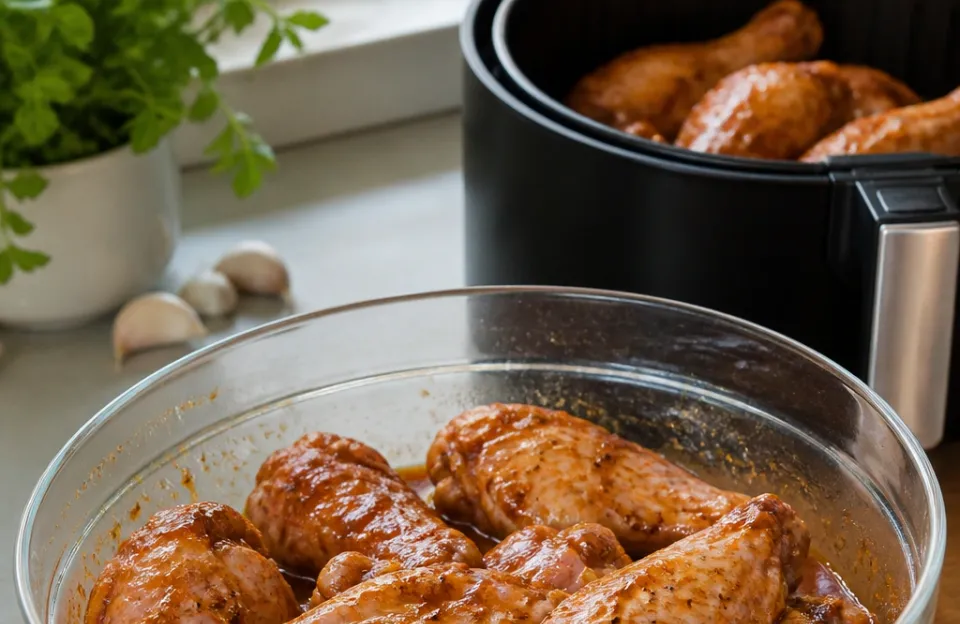
Deep frying submerges the wing in 375°F oil. That hot fat seals the outside fast and cooks the meat evenly from every angle. An air fryer works by blowing superheated air around the food.
It's closer to a small convection oven than a vat of grease. Because the heat transfer relies on moving air instead of direct liquid contact, the surface of the wing needs more help to brown and crisp up quickly.
A marinade gives you that head start. Salt in the mixture breaks down muscle proteins near the surface. This allows the meat to hold onto moisture during the dry cooking process.
Oil in the marinade coats the skin, giving the hot air something to conduct through so the skin blisters rather than dries out into leather. Acidic ingredients like vinegar or citrus juice tenderize the outer layer slightly, letting seasonings penetrate past the skin.
Without a marinade, air-fried wings often end up dry inside and pale outside. The rapid air circulation strips moisture from the surface before the Maillard reaction (the chemical process that creates browning and savory flavor) can fully develop. A proper soak fixes this timing issue.
Balancing Wet Marinades And Crispy Skin
There is a catch. Too much liquid left on the surface will steam the skin instead of crisping it. The goal of an air fryer chicken wings marinade is to infuse the meat, then get out of the way.
Always remove the wings from the marinade and let the excess drip off. Patting them lightly with a paper towel removes the heavy pooling liquid while leaving the oil and spices clinging to the skin. If you dump soaking-wet wings straight into the basket, the pooled liquid drops to the bottom, smokes, and creates a humid environment that prevents crisping.
The Role Of Oil In The Mixture
Oil is the most important ingredient in any marinade destined for an air fryer. Water evaporates. Oil stays, heats up, and fries the skin microscopically as the fan blows air across it.
Use a neutral oil with a high smoke point. Avocado oil, refined peanut oil, or light olive oil all work well. Avoid extra virgin olive oil or unrefined sesame oil as the primary base, since they smoke at lower temperatures and can leave a bitter taste when blasted at 400°F.
You only need about one to two tablespoons of oil per pound of wings. The oil carries the fat-soluble flavors from your spices directly into the skin.
Ingredients That Work Best For Air Fryer Chicken Wings Marinade
Building a solid mix requires four components: fat, salt, acid, and aromatics. Getting the ratios right keeps the wings flavorful without ruining the texture.
Salt. Kosher salt or fine sea salt is mandatory. Salt draws out moisture initially, then pulls the seasoned liquid back into the meat. Plan on roughly one teaspoon of kosher salt per pound of wings.
Acid. Citrus juice, apple cider vinegar, rice vinegar, or buttermilk. Acid softens the tough connective tissue in chicken wings. Keep it to about one tablespoon per pound.
Too much acid turns the outer layer of the meat mushy, especially if you marinate for more than a few hours.
Aromatics and Spices. Garlic powder, onion powder, smoked paprika, black pepper, cumin, or chili flakes. Fresh minced garlic can burn in the high heat of an air fryer and turn bitter. Powdered garlic distributes more evenly and withstands the temperature better.
Umami Boosters. Soy sauce, fish sauce, Worcestershire sauce, or tomato paste. These add depth without needing a lot of volume. A tablespoon of soy sauce adds both salt and rich savory notes.
| Ingredient Type | Purpose | Good Examples | Amount Per Pound |
|---|---|---|---|
| Fat | Conducts heat, crisps skin | Avocado oil, canola oil | 1 to 2 tbsp |
| Salt | Retains moisture, seasons | Kosher salt, sea salt | 1 tsp |
| Acid | Tenderizes, balances flavor | Rice vinegar, lime juice | 1 tbsp |
| Spice | Adds flavor profile | Smoked paprika, garlic powder | 1 to 2 tsp total |
| Umami | Deepens savory notes | Soy sauce, fish sauce | 1 tbsp |
Sugar Content And Burning Risks
This is where many people run into trouble. Traditional barbecue or teriyaki marinades rely heavily on brown sugar, honey, or maple syrup. In a smoker or a low-heat oven, sugar caramelizes slowly.
In an air fryer running at 400°F, sugar burns rapidly. Burnt sugar tastes acrid and leaves a sticky, carbonized mess on your basket that takes forever to scrub off. If you have ever had to clean the inside of a toaster oven air fryer after a sugary spill, you know exactly how frustrating that chore is.
If you want sweetness, use very little. Half a teaspoon of honey per pound of wings is enough to aid browning without crossing into burning territory. Alternatively, save the sweet sauces for after the wings are cooked.
Toss the hot, crispy wings in a glaze immediately after pulling them from the basket. The residual heat warms the sauce without exposing the sugars to the intense air fryer element.
How Long To Soak Wings Before Cooking
Time matters just as much as ingredients. Chicken wings are relatively small and have a high skin-to-meat ratio. They absorb flavors faster than a whole chicken breast or a thick steak.
30 minutes to 2 hours. This is the sweet spot for most standard marinades. The salt has time to penetrate the meat, and the flavors settle into the skin. If you're in a rush, even 30 minutes at room temperature makes a noticeable difference compared to tossing them in dry.
Overnight (8 to 12 hours). This works well for dairy-based marinades like buttermilk, or highly diluted brines. However, if your marinade contains strong acids like lemon juice or vinegar, leaving the wings overnight will break down the proteins too far. The meat will turn chalky and mealy after cooking.
If you plan to marinate overnight, reduce the acid significantly or leave it out entirely until the last hour.
Less than 30 minutes. You won't get deep penetration, but the oil and surface spices will still help the skin crisp and taste seasoned. Treat anything under 30 minutes more like a wet rub than a true soak.
Always marinate raw poultry in the refrigerator, not on the counter. According to FDA food safety guidelines, raw chicken should never sit at room temperature for extended periods due to the rapid growth of bacteria. Pull the wings out about 15 minutes before cooking to take the chill off, which helps them cook more evenly.
Five Reliable Flavor Combinations
You don't need to reinvent the wheel every time you make dinner. These five profiles cover almost any craving, and they are formulated specifically to behave well under high-speed hot air.
Garlic Parmesan Herb
Mix two tablespoons of avocado oil, one teaspoon of garlic powder, half a teaspoon of onion powder, salt, black pepper, and a squeeze of lemon juice. Marinate the wings for one hour. After air frying, toss them immediately in finely grated parmesan cheese and chopped fresh parsley.
The cheese melts slightly against the hot skin without burning because it goes on after the cooking cycle.
Smoky Dry-Rub Style
Combine one tablespoon of neutral oil, one teaspoon of smoked paprika, half a teaspoon of cumin, half a teaspoon of garlic powder, salt, and a pinch of cayenne. This uses minimal liquid. The oil binds the spices to the skin.
It yields an incredibly crunchy exterior because there is almost no water content to steam off.
Soy Ginger Sesame
Whisk together one tablespoon of soy sauce, one tablespoon of toasted sesame oil, one teaspoon of grated fresh ginger, and a dash of rice vinegar. The soy sauce provides the salt and umami. Sesame oil has a lower smoke point than avocado oil, so drop your air fryer temperature by 10 to 15 degrees for this batch to prevent the oil from smoking.
Buttermilk Ranch
Submerge the wings in half a cup of buttermilk mixed with a packet of dry ranch seasoning. Let them sit for at least four hours or overnight. The lactic acid in the buttermilk tenderizes the meat exceptionally well.
Shake off the heavy excess before putting them in the basket. The milk solids brown beautifully in the air fryer.
Buffalo Base
Mix two tablespoons of melted butter (or ghee, which has a higher smoke point), one tablespoon of Frank's RedHot or similar cayenne pepper sauce, and a splash of white vinegar. Since traditional buffalo sauce is mostly butter and hot sauce, it works perfectly as a short marinade. Thirty minutes is plenty.
Applying The Marinade For Even Coverage
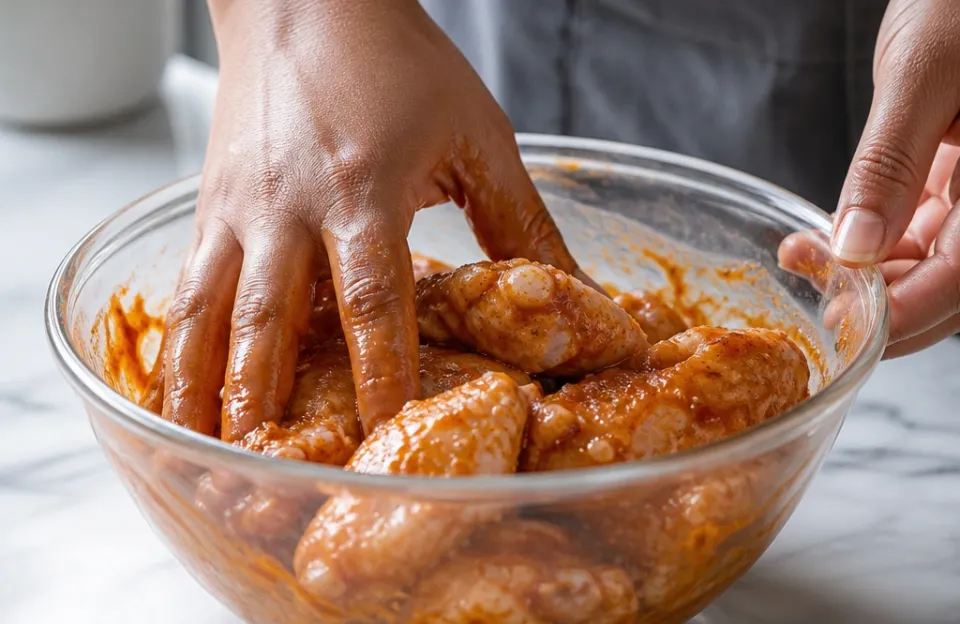
Tossing wings and liquid in a bowl often leaves some pieces drowned and others barely coated. The most efficient method is using a gallon-sized zip-top plastic bag. Put the wings and the marinade inside, press the air out, seal it, and massage the bag for about thirty seconds.
This forces the liquid into every crevice and ensures each wing gets the exact same amount of seasoning.
Place the sealed bag flat in a baking dish in the fridge. Flipping the bag halfway through the marinating time guarantees even exposure. A dish catches any potential leaks, protecting your shelves from raw poultry juices.
When you are ready to cook, open the bag and lift the wings out with tongs. Let the heavy drips fall back into the bag. Arrange the wings in a single layer on a wire rack set over a sheet pan for about ten minutes.
This brief resting period lets the surface air-dry slightly. Surface moisture is the enemy of crispness. Giving the skin a chance to tack up before it hits the hot air makes a massive difference in the final texture.
Checking Internal Temperatures Safely
Marinades change the color of the meat. Soy sauce, paprika, and dark vinegars stain the flesh, making it look cooked on the outside long before the center reaches a safe temperature. You cannot judge doneness by looking at marinated wings.
Poultry must reach an internal temperature of 165°F to be safe to eat. Using a fast digital thermometer is the only reliable way to verify this. Insert the probe into the thickest part of the drumette, avoiding the bone.
Bone conducts heat differently and will give you a false reading.
If you cook large batches frequently, a dual-probe setup saves time. You can check two different sizes of wings simultaneously. For those who prefer monitoring from another room, a Bluetooth-enabled model tracks the temperature on your phone while you prep side dishes.
Just remember that air fryers cook fast, so keep an eye on the timer regardless of the tech you use.
If you notice your wireless device dropping signals near the appliance, it might be interference from the metal housing. There are specific reasons why a wireless probe loses connection near heavy appliances, and moving the receiver slightly usually solves it.
Adjusting Air Fryer Settings For Marinated Wings
Standard plain wings usually cook well at 400°F for about 20 minutes, flipped halfway. Marinated wings require slight adjustments depending on what is in the liquid.
High-oil marinades: Stick to 400°F. The oil protects the skin and promotes blistering. Flip the wings at the 10-minute mark to expose the bottom to the heating element.
Soy or sugar-containing marinades: Drop the temperature to 375°F or 380°F. Cook them for an extra three to five minutes. The lower heat prevents the sugars and amino acids from charring before the center cooks through.
Buttermilk or dairy marinades: Start at 360°F for the first 10 minutes to set the coating without burning the milk solids. Then crank the heat up to 400°F for the remaining time to crisp the exterior.
Do not overcrowd the basket. Air fryers depend on circulation. If the wings are stacked or touching too much, the air cannot reach the surfaces between them.
Those hidden spots will remain pale and soft. Cook in batches if necessary. Two batches of perfectly crispy wings are always better than one batch of steamed, soggy ones.
If you are adapting these times for larger cuts of poultry alongside your wings, referencing a poultry temperature guide helps map out the staggered cooking times needed when mixing different proteins in the same meal prep session.
Common Mistakes With Wing Marinades
Even simple recipes go wrong if a few basic rules get ignored. Here are the most frequent issues people run into when marinating wings for the air fryer.
- Reusing raw marinade as a dipping sauce. The liquid sat in raw chicken juice. Unless you boil it vigorously for several minutes, it carries salmonella risk. Discard the bag contents or make a separate batch of sauce for dipping.
- Using chunky fresh herbs. Large pieces of fresh rosemary, thyme stems, or minced garlic clump together. Under the intense top-down heat of an air fryer element, these chunks burn into bitter charcoal flakes. Stick to powders or strain the herbs out before cooking.
- Skipping the drying step. Putting dripping wet wings straight from the bag into the basket guarantees a steamed texture. Always let the excess liquid drain off.
- Adding honey to a 400°F cook. As mentioned earlier, sugar burns fast in moving air. Keep sweeteners for the post-cook toss, or use them in microscopic amounts.
- Marinating frozen wings. Ice crystals block absorption. The marinade slides off the frozen surface. Thaw the wings completely in the fridge before adding any liquid.
Before You Fire Up The Basket
Getting the air fryer chicken wings marinade right comes down to understanding how hot, fast-moving air interacts with liquids and proteins. Lean heavily on oil and salt. Go easy on the sugar and acid.
Give the skin a few minutes to dry out before cooking, and always verify the temperature with a real probe. Once you dial in the balance between wet flavor infusion and dry surface heat, the results consistently beat anything you order from a takeout window.



2 thoughts on “Best Air Fryer Chicken Wings Marinade for Crispy Flavor”