Air fryer egg molds are small silicone or metal trays designed to hold raw eggs in a specific shape while they cook inside an air fryer basket. They let you make uniform egg patties for breakfast sandwiches, baked egg bites, or mini frittatas without turning on the stove. Most models come in packs of four to seven cups and cost between $8 and $20.
If you want to pick the right one, you need to look at material safety, cup size, heat tolerance, and whether the mold fits your specific air fryer basket. This buying guide covers what matters most when shopping for air fryer egg molds, breaks down the main types available, and gives you practical details to avoid common mistakes.
What separates a good egg mold from a bad one
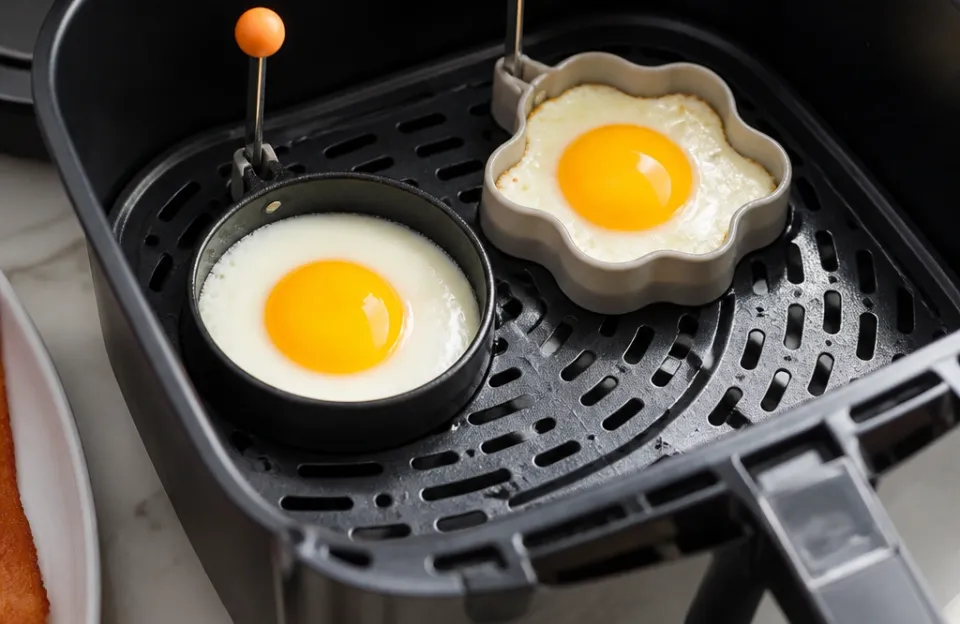
The biggest difference between egg molds comes down to material and fit. Cheap molds often use thin silicone that warps under high heat or lacks proper food-grade certification. A reliable mold holds its shape at 400°F, releases cooked eggs without sticking, and sits flat inside your air fryer without blocking airflow.
Size is the second major factor. Standard fast-food breakfast sandwiches use a round egg patty roughly 3.5 inches across. If you buy a mold with 2-inch cups, your eggs will be too thick and too small for a standard English muffin.
If the cups are too wide, the egg spreads out into a thin crepe. Knowing what you plan to cook dictates the exact dimensions you should buy.
Heat limits and material safety
Silicone is the most common material for these molds because it flexes, making it easy to pop the cooked eggs out. Food-grade silicone can typically handle temperatures up to 440°F or 450°F. Always check the manufacturer's stated maximum temperature before putting a mold into an appliance that runs hot.
The FDA regulates food-contact silicone materials under federal food safety guidelines, so looking for FDA-compliant labeling is a basic first step.
Metal egg rings, usually made of stainless steel, conduct heat faster than silicone. They give the edges of the egg a slightly firmer texture. The tradeoff is that metal sticks more easily unless you grease it thoroughly every single time.
Metal rings also scratch nonstick air fryer baskets if they slide around during cooking.
Cup depth and capacity
Shallow cups (about 1 inch deep) work well for plain egg patties meant for sandwiches. Deeper cups (1.5 to 2 inches) are better for egg bites mixed with vegetables, cheese, or meat. A deeper mold takes longer to cook through in the air fryer, so you will need to adjust your timing based on the depth you choose.
Most molds hold between 1/4 cup and 1/3 cup of liquid per cavity. If you want to meal prep several days of breakfasts at once, look for a tray with six or seven cavities rather than a set of four individual rings. Just keep in mind that larger trays require a bigger air fryer.
Silicone egg bite trays for sandwich patties
These are flat, rectangular trays with four to seven round indentations. They are the most popular style for people who want to replicate drive-through breakfast sandwiches at home. The entire tray goes into the air fryer basket as one piece.
They work best for batch cooking. You crack an egg into each cup, add salt or toppings, and cook them all at the same temperature. Because the tray is one solid piece of silicone, it stays stable when you pull the basket out.
The main limitation is footprint. A seven-cup tray might measure 9 by 5 inches, which won't fit inside a compact 2-quart air fryer. Measure your basket floor before ordering a multi-cup tray.
If you already use your air fryer for other morning routines, like prepping chicken ahead of time for lunch salads, having a dedicated egg tray speeds up breakfast significantly. You just load the tray, set the timer, and walk away.
Individual stainless steel egg rings
Stainless steel rings are sold individually or in sets of four. They have no bottom, so you place them directly onto a piece of parchment paper or a lightly greased surface inside the air fryer basket. Some versions come with folding handles to make lifting them out easier.
The advantage here is flexibility. You can space them out however you want, and they fit into almost any air fryer size. Stainless steel also lasts indefinitely without degrading, tearing, or absorbing odors.
The downside is the sticking issue. Eggs bond aggressively to bare metal. You must spray or brush the inside of the ring with oil before adding the egg.
Even then, you might need a silicone spatula to coax the edges free after cooking.
They are also harder to clean than silicone. Egg residue bakes onto the metal if you don't soak the rings shortly after using them. For someone who hates scrubbing, individual metal rings create more friction in the cleanup process than a flexible silicone tray you can just flip inside out.
Deep silicone molds for loaded egg bites
Deep molds look like miniature muffin pans. The cups are narrow and tall, usually holding about 1/4 cup of mixture each. These are designed for egg bites mixed with heavy cream, cottage cheese, spinach, bacon bits, or diced peppers.
Because the mixture is thicker and denser, these molds require lower air fryer temperatures and longer cook times compared to flat sandwich patties. A standard egg patty might take 6 minutes at 370°F, while a loaded egg bite could take 10 to 12 minutes at 320°F. The deeper shape means the center takes longer to set.
A real limitation of deep molds is stability. Tall, narrow silicone cups can tip over if the air fryer fan blows forcefully. Look for deep molds that have a thick, weighted base connecting all the cups.
Flimsy deep molds will spill raw egg across your heating element, creating a burnt mess and smoke. Checking the internal temperature of dense egg mixtures with a fast-reading thermometer confirms they are fully cooked through without guessing.
Multi-shape molds for variety
Some silicone trays offer different shapes in a single mold: circles, squares, hearts, or stars. These are mostly bought for kids' lunches or themed breakfasts. The square molds are specifically sized to match standard slices of sandwich bread rather than round biscuits or muffins.
The tradeoff with novelty shapes is uneven cooking. A star shape has thin points and a thick center. The points will dry out and turn rubbery before the center finishes setting.
If your priority is texture and consistency, stick to simple circles or squares. If presentation matters more than perfect texture, multi-shape molds do the job.
Keep in mind that intricate shapes are harder to clean. Egg gets trapped in the tight corners of a heart or star mold. You will likely need a small brush to get into those crevices, whereas a smooth round cup wipes clean with a sponge.
Quick-reference comparison table
| Attribute | Silicone Tray (Multi-Cup) | Stainless Steel Rings | Deep Silicone Mold |
|---|---|---|---|
| Best for | Sandwich patties, batch cooking | Custom spacing, durability | Loaded egg bites, frittatas |
| Typical price range | $10 to $18 | $8 to $15 (set of 4) | $12 to $20 |
| Heat tolerance | Up to 440°F | Over 500°F | Up to 440°F |
| Nonstick ability | High | Low (requires oil) | High |
| Cleaning effort | Low | Medium to High | Medium |
| Air fryer fit | Needs specific basket size | Fits almost any size | Needs specific basket size |
| Main limitation | Too large for small fryers | Sticking issues | Tipping risk if base is thin |
How to pick the right size for your air fryer
The number one reason people return egg molds is that they don't fit inside their machine. Air fryer baskets vary wildly. A 4-quart basket has a completely different floor shape than a 6-quart dual-zone model.
Before buying anything, measure the flat bottom of your air fryer basket. Note both the width and the length. Then check the product dimensions of the egg mold.
Leave at least half an inch of clearance on all sides. Air fryers cook by circulating superheated air rapidly around the food. If the silicone tray touches the walls of the basket, it blocks that airflow.
Blocked airflow causes uneven cooking and can trigger the machine's overheat protection.
Round air fryer baskets are especially tricky. Most egg mold trays are rectangular. A rectangular tray will not sit flat in a round basket unless the tray is significantly smaller than the basket diameter.
If you have a round basket, look specifically for circular egg mold designs or stick to individual rings.
When you pair eggs with other items, like testing a new flavorful wing marinade for a weekend brunch spread, basket space becomes even tighter. Plan your mold size around what else you intend to cook simultaneously.
Material certifications and what labels mean
You will see terms like "BPA-free," "food-grade," and "LFGB certified" on packaging. BPA-free is a baseline requirement, given that BPA is a chemical found in certain plastics, though pure silicone doesn't contain it anyway. It is more of a marketing term than a strict quality indicator for silicone products.
Food-grade means the material is safe for contact with consumables. LFGB is a European standard that tests silicone more rigorously than US standards, specifically checking for chemical migration when the material is heated. An LFGB-certified mold is generally a safer bet for high-heat applications like air frying.
Avoid molds that have a strong chemical smell straight out of the package. While a slight odor is normal for new silicone and usually dissipates after washing, a harsh, burning plastic smell indicates low-quality fillers mixed into the silicone. Pure, high-quality silicone shouldn't smell pungent.
Cleaning and maintenance realities
Silicone is dishwasher safe, but air fryer egg molds rarely get dirty enough to warrant a full dishwasher cycle. Usually, warm water and dish soap are enough. If egg bakes onto the rim, soaking the mold in hot water for ten minutes loosens it.
One thing to watch out for is grease buildup. If you spray your molds with aerosol cooking spray repeatedly, a sticky residue forms over time. Aerosol sprays contain propellants and lecithin that bake onto silicone and ruin its natural nonstick properties.
Use a pump oil sprayer or wipe the cups with a paper towel dipped in neutral oil instead. Understanding how different fats behave under high heat helps, much like knowing why some cooks prefer using baking soda on wings to alter surface chemistry for crispness.
Store silicone molds flat. If you fold them or stack heavy pots on top of them in a drawer, they can develop permanent creases. Those creases become weak points where the silicone eventually tears, and they create ridges that deform your egg patties.
Edge cases and situations that change your choice
If you are cooking for someone with a severe egg allergy and want to use the mold for pancake batter or chocolate instead, silicone is the only option. Metal rings react differently to sweet batters and sugars caramelize aggressively against bare steel.
For commercial or heavy daily use, silicone wears out. After hundreds of heating and cooling cycles, cheap silicone becomes brittle. If you plan to use the mold every single day for meal prep, invest in a thicker, premium silicone brand or rotate between two trays to extend their lifespan.
Pairing this habit with tracking macros, such as monitoring the caloric content of proteins you cook alongside your eggs, keeps your weekly planning accurate.
If your air fryer has a crisper plate or raised rack at the bottom of the basket, you cannot place a flat silicone tray directly on it. The tray will wobble. You either need to remove the crisper plate when using the egg mold or buy individual rings that can balance on the ridges.
Another edge case involves altitude. At higher elevations, water boils at a lower temperature, and egg proteins set differently. You may find that standard recipes for air fryer egg molds leave the centers runny if you live above 5,000 feet.
Extending the cook time by a minute or two usually solves this.
Frequently asked questions
Do I need to grease silicone egg molds before air frying?
Yes, lightly. Even though silicone is naturally nonstick, eggs are highly prone to bonding with surfaces when heated quickly. A very light mist of oil or a quick wipe with a greased paper towel prevents the edges from tearing when you remove the patty.
Skip heavy aerosol sprays, as they leave a sticky film on the silicone over time.
Can I put a silicone egg mold directly on the air fryer heating element?
No. Silicone melts or burns if it makes direct contact with the heating coil. The mold must sit safely inside the basket or on the rack, well below the top heating element.
Always check your specific air fryer manual for minimum clearance distances between food containers and the heat source.
Which type of egg mold works best for English muffin sandwiches?
A flat silicone tray with round cups measuring 3.5 to 4 inches in diameter matches a standard English muffin perfectly. Cups that are about 1 inch deep yield a patty thick enough to taste substantial without taking too long to cook through.
Why do my egg bites sink in the middle after cooking?
Sinking happens when the eggs puff up rapidly from high heat and then collapse as they cool. Lowering the air fryer temperature by 20 to 30 degrees and cooking the eggs slightly longer allows the proteins to set gradually. Adding a tablespoon of cottage cheese or heavy cream to the mixture also stabilizes the structure.
Are metal egg rings safe for nonstick air fryer baskets?
They can scratch the coating if they slide around. To prevent this, place a small piece of parchment paper under the metal rings, or ensure the rings have silicone-coated bottoms. Never drag metal rings across the basket floor when removing them.
Lift them straight up.
How do I know when the eggs in the mold are fully cooked?
Visual cues work for thin patties; the tops should look set and dry, with no glossy liquid remaining. For thicker, loaded egg bites, insert a toothpick or a probe into the center. It should come out clean.
Eggs must reach an internal temperature of 160°F to be considered safe according to USDA food safety recommendations. Using a reliable digital probe takes the guesswork out entirely.
Before you buy
Picking the right air fryer egg molds comes down to measuring your basket, deciding between flat patties and deep bites, and choosing a material you are willing to maintain. Silicone trays offer the easiest release and cleanup, provided they fit your machine without blocking airflow. Stainless steel rings give you sizing flexibility and longevity, but demand more attention to greasing and scrubbing.
Check the heat rating, verify the cup dimensions against the bread you plan to use, and skip anything that smells strongly of chemicals out of the box. Once you find a mold that fits your basket and your routine, making uniform breakfast eggs takes less than ten minutes from start to finish.