A good silicone air fryer liner protects your basket from stuck-on grease, saves you from scrubbing after every meal, and keeps the nonstick coating on your machine intact. This buying guide covers what to look for when shopping for one, plus five specific types that handle different cooking needs. We picked these based on heat tolerance, fit, airflow design, and how easy they are to wash.
If you cook in an air fryer more than twice a week, a reusable liner pays for itself fast compared to constantly buying parchment paper rounds. The options below range from flat sheets to deep baskets with tall walls, so there is a match for whatever you usually make.
What actually matters when picking a silicone air fryer liner
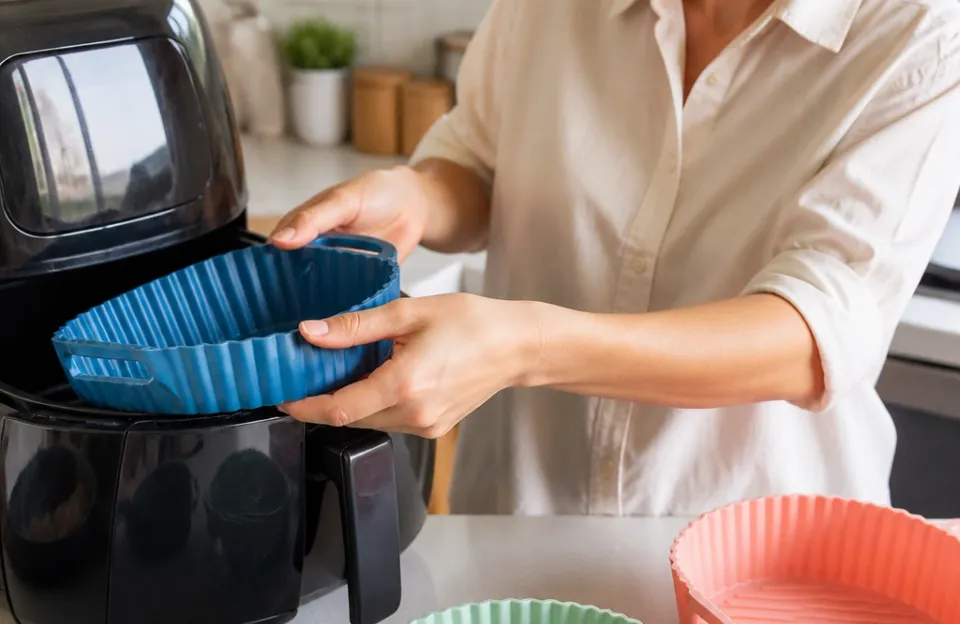
Silicone quality comes first. You want food-grade silicone rated for at least 428°F (220°C), though many reliable liners handle up to 464°F (240°C). The FDA regulates food-contact silicone under its guidelines for rubber articles intended for repeated use, meaning safe products must pass extraction tests so nothing leaches into your food.
Cheap, unregulated silicone sometimes uses fillers that smell terrible when heated or degrade faster. A quick pinch test helps: if you twist the silicone and see white streaks along the fold, it likely contains filler. Pure platinum-cured silicone stays one solid color when stretched.
Fit is the second big factor. Measure the inside diameter of your basket, not the outside housing. A liner that is too large will bunch up against the heating element, which is a fire risk.
One that is too small leaves exposed edges where grease pools and burns. Most brands list their dimensions clearly, but always double-check yours. Square baskets need square liners; round ones need round.
Airflow dictates how well your food cooks. Air fryers work by blasting hot air around the food. A completely solid silicone mat blocks that circulation from underneath, leaving soggy bottoms.
Look for raised ridges, perforated holes, or a slatted design that lets the air move freely beneath your chicken or vegetables. If you routinely aim for a really crunchy skin on your food, proper ventilation in the liner is mandatory.
Finally, think about cleanup. Dishwasher-safe silicone is standard now, but deep grooves trap oil. Smooth surfaces wipe down faster, while textured ones hold onto burnt marinades longer.
Flat Perforated Silicone Mats
Flat mats sit directly at the bottom of the basket. They have dozens of small punched holes spread evenly across the surface. Because they lack raised sides, they take up zero vertical space in the drawer.
These work best for single-layer foods like fries, vegetable chunks, or breaded pieces. The holes allow hot air to hit the bottom of the food directly, giving you even browning without flipping as often. They also slide out easily when you want to dump the food straight onto a plate.
The main limitation is mess containment. Without walls, any liquid or loose crumbs fall through the holes into the base pan below. You still have to wash the bottom drawer.
Also, flat mats can curl at the edges over time if stored rolled up tightly.
They are ideal for people who prioritize crispiness over keeping the machine perfectly spotless. If you frequently toss wings in a wet sauce before cooking, a flat mat will let that sauce drip right through. For dry rubs or light oil coatings, they perform exceptionally well.
Raised-Ridge Reusable Baskets
This style looks like a miniature muffin tin or a shallow bowl with thick ribs molded into the floor. The ridges lift the food off the solid base, creating channels for air to flow underneath.
Raised-ridge baskets contain spills much better than flat mats. The outer lip catches dripping fat, keeping the actual air fryer drawer cleaner. This makes them a strong choice for fatty proteins or dishes where you brush on a glaze halfway through cooking.
When you batch-cook meals ahead of time, having a liner that traps the grease means less downtime spent scrubbing between batches.
The tradeoff is height. These liners usually add an inch or two to the floor of the basket. In smaller 2-quart or 3-quart models, that lost space means you cannot stack as much food.
They also weigh more than flat mats, making them slightly awkward to flip upside down when dumping out finished food.
Cleaning requires a bit more attention. Oil settles into the valleys between the ridges. A soft sponge gets into those grooves, but stiff brushes might tear softer silicone over time.
Slotted Pot-Style Liners
Pot-style liners have tall, flexible walls and a bottom covered in wide slots rather than tiny pinholes. They resemble a collapsible steamer basket. The high sides prevent splatters from hitting the upper heating coil, which is a common cause of smoke during high-fat cooking.
These are the go-to option for messy recipes. If you cook marinated meats or saucy dishes, the tall edges keep everything contained. They also double as serving bowls since you can pull the whole liner out and set it on the table.
Just remember to check your internal temperatures with a fast digital probe before plating, because the silicone holds heat and keeps food cooking slightly after removal.
The drawback is restricted airflow. Even with slots, the tall walls block lateral air movement. Food cooked in pot-style liners tends to steam slightly more than it crisps.
They are poorly suited for things that need heavy browning, like roasted potatoes or frozen snacks.
They also require ample storage space. While flexible, folding them flat repeatedly can weaken the creases. Hanging them on a hook is usually better.
Dual-Layer Drip Trays
Dual-layer designs consist of a top grate that sits inside a bottom catch basin. The food rests on the upper grid, and all rendered fat drops safely into the lower tray. This separates the grease entirely from the cooking surface.
For anyone tracking their intake closely, this setup drains away excess oil efficiently. It changes the final texture significantly, especially if you normally prefer keeping meals lighter by reducing added fats. The separation prevents food from sitting in a pool of its own grease, which stops the bottom from getting soggy.
These are bulkier than other options. They take up considerable vertical room and only fit well in 5-quart or larger air fryers. Washing involves cleaning two separate pieces instead of one.
The interlocking tabs that hold the layers together can be fiddly to snap apart when your hands are greasy.
However, for roasting meats where rendering fat is a priority, dual-layer trays outperform everything else. The collected drippings in the bottom basin can even be saved for other uses if you plan accordingly.
Universal Trim-to-Fit Sheets
Universal sheets come oversized, usually around 10 to 12 inches across, with printed cutting guides. You take scissors and trim the silicone down to match your exact basket shape. This solves the sizing problem entirely, working for oddly shaped or older machines that do not have dedicated accessories sold for them.
The material is typically thinner than molded baskets, which means it heats up faster and takes up minimal space. Some versions include faint perforations that open up once cut, allowing basic airflow. They are great for protecting the nonstick coating on the basket floor without altering cooking dynamics too much.
Thin silicone lacks structural rigidity. When loaded with heavy items like bone-in cuts, the sheet can buckle or fold over the food if it isn't perfectly flush. Cutting it precisely is also required; leaving jagged edges creates spots where the silicone can flap up toward the heating element.
Once trimmed, you cannot undo mistakes. If you buy a new air fryer later, you will need a fresh sheet. Still, for odd-sized appliances, this is the only guaranteed fit.
Quick-reference comparison table
| Liner Type | Best For | Airflow Rating | Mess Containment | Space Taken |
|---|---|---|---|---|
| Flat Perforated Mat | Crispy fries, veggies | High | Low | Minimal |
| Raised-Ridge Basket | Glazed meats, batch prep | Medium-High | Medium | Moderate |
| Slotted Pot-Style | Saucy dishes, splatter control | Low-Medium | High | Significant |
| Dual-Layer Drip Tray | Rendering fat, draining oil | Medium | Very High | Bulky |
| Trim-to-Fit Sheet | Odd-shaped baskets | Varies | Low | Minimal |
How heat ratings change your cooking approach
Most manufacturers rate their silicone air fryer liners between 428°F and 464°F. Standard air frying happens around 350°F to 400°F, so you rarely push the limit during normal use. But preheating an empty machine with the liner inside can cause localized overheating.
Without food absorbing the thermal energy, the silicone takes the full brunt of the heating element's output. Always put food in the liner before sliding it into a preheated basket, or skip preheating entirely when using silicone.
Thicker silicone insulates more. A heavy pot-style liner slows down the initial sear on raw meat. You might need to add two or three minutes to your usual cook time to get the same result you would achieve bare-bottomed.
Conversely, thin trim-to-fit sheets transfer heat almost instantly. Knowing your specific liner's thickness helps you adjust times accurately. If you rely on precise timing for meal prep routines, factoring in the liner's insulation properties prevents undercooked centers.
Some cheaper silicone blends emit a distinct chemical odor the first few times they reach high temperatures. This off-gassing is normal for lower-tier manufacturing but unpleasant. Running the empty liner through a hot cycle outside or in a well-ventilated area before cooking food eliminates most of the smell.
Platinum-cured silicone rarely has this issue.
Sizing mistakes that ruin airflow
Measuring the top rim of your basket instead of the bottom floor is the most frequent error. Baskets taper inward. A liner sized to the top rim will slope down the sides, blocking the crucial gap where air circulates vertically.
Measure the flat floor diameter specifically.
Leaving no gap between the liner edge and the basket wall chokes the machine. Air fryers need a perimeter channel to push hot air down and back up. If the silicone touches the walls all the way around, the fan works harder, runs louder, and cooks unevenly.
Leave at least half an inch of clearance on all sides.
Using a round liner in a square basket wastes corner space and causes the edges to fold upward. Those folded flaps act as dams, trapping steam in certain zones while leaving others dry. Match the geometry exactly.
Cleaning baked-on grease from silicone
Silicone is naturally nonstick, but polymerized oil bonds to it eventually. That sticky, brownish film won't wash off with regular dish soap. Soaking the liner in hot water mixed with baking soda and a splash of white vinegar loosens the bond.
Let it sit for thirty minutes, then scrub with a nylon brush. Avoid steel wool or abrasive scouring pads, which scratch the surface and create microscopic grooves where future grease will hide.
Dishwashers are convenient but harsh. The high heat and aggressive detergents in dishwasher cycles can dry out silicone over months, causing it to turn chalky or stiff. Hand washing extends the lifespan considerably.
If you must use the dishwasher, place the liner on the top rack away from the heating element at the bottom.
For stubborn spots left behind after preparing heavily seasoned dishes, wiping the liner with a little coarse salt and a damp cloth acts as a gentle abrasive. Rinse thoroughly afterward so no grit remains to scratch your next batch of food.
Frequently asked questions
Do silicone air fryer liners stop food from getting crispy?
They reduce crispiness slightly compared to cooking directly on a bare metal rack, because metal conducts radiant heat better. However, choosing a perforated or raised-ridge design minimizes this effect. Solid pot-style liners will definitely yield softer textures due to trapped steam.
If maximum crunch is your goal, stick to flat mats with plenty of holes.
Can I leave the silicone liner inside while preheating?
You should avoid doing this. An empty air fryer concentrates intense heat directly on the basket floor. Without food absorbing that energy, the silicone can exceed its safe temperature rating, leading to warping, melting, or releasing odors.
Always place your ingredients in the liner before inserting it into the hot machine.
How do I choose between a flat mat and a basket-style liner?
Base the decision on what you cook most. If you mostly roast dry vegetables or reheat fried foods, a flat mat preserves airflow and crispiness. If you cook fatty meats, use wet marinades, or hate cleaning the bottom drawer, a basket-style liner with tall walls contains the mess far better.
Many people end up owning one of each for different nights.
Are these liners safe at 400 degrees?
Yes, provided you buy food-grade silicone rated for at least 428°F (220°C). Most reputable brands rate theirs to 446°F or higher. At 400°F, a quality liner operates well within its safety margin.
Check the packaging for the specific maximum temperature before running it at high heat settings.
Why does my new silicone liner smell weird when heated?
Lower-quality silicone often contains residual curing agents or fillers that off-gas when exposed to high heat initially. This smell usually fades after two or three uses. To speed up the process, bake the empty liner at 350°F for twenty minutes in a ventilated area or outdoors.
Premium platinum-cured silicone rarely produces this odor.
Will a silicone liner scratch my nonstick basket?
Silicone is much softer than the ceramic or Teflon coatings used in air fryer baskets. It will not scratch the surface. In fact, using a liner is one of the best ways to protect that factory coating from wearing down over time, especially if you frequently use metal tongs to flip food.
Just avoid dragging sharp utensils across the silicone and into the basket wall.
Picking the right one for your kitchen
Choosing a silicone air fryer liner comes down to matching the shape to your cooking habits. Heavy sauces and fatty meats demand tall walls and deep basins. Dry rubs and frozen snacks need maximum airflow through wide perforations.
Measure your basket floor accurately, verify the heat rating exceeds your typical cooking temperature, and wash it gently by hand to make it last. The right piece of silicone saves you hours of soaking and scrubbing over its lifetime, keeping your machine ready for whatever you decide to cook next.