Reusable air fryer liners are washable sheets or baskets made from silicone, PTFE-coated fiberglass, or perforated parchment alternatives that sit inside your air fryer basket to catch grease and crumbs. A solid reusable air fryer liner buying guide comes down to three things: material safety at high heat, proper airflow, and the exact size of your machine's basket.
If you use an air fryer often, you already know the cleanup drill. Grease bakes onto the nonstick coating, crumbs get stuck in the wire mesh, and scrubbing too hard ruins the finish. Reusable liners solve this by taking the hit instead of your basket.
The right one catches drips, wipes clean in seconds, and lasts for months. The wrong one blocks hot air, leaves food soggy, or melts against the heating element. This guide breaks down what materials hold up, which shapes fit best, and five specific types worth considering so you can stop wasting money on single-use parchment rounds.
What Actually Makes a Liner Safe and Effective
Air fryers cook by pushing superheated air around the food at high speed. Any liner you put inside that chamber has to withstand temperatures between 350F and 400F without degrading, releasing fumes, or catching fire. It also needs to let that fast-moving air pass through or around it.
If the air stops circulating, the bottom of your food steams instead of crisping.
The U.S. Food and Drug Administration regulates materials intended for repeated food contact under its food-contact substance guidelines, meaning any silicone or coated fiberglass sold as a kitchen liner should meet those standards. Look for packaging that explicitly states "food-grade" and lists a maximum temperature rating.
Material choice is the biggest dividing line. Silicone handles heat well and stays flexible. PTFE-coated fiberglass (the same material used in reusable oven mats) conducts heat evenly and wipes clean easily.
Perforated parchment-style reusables try to mimic disposable paper but last longer. Each has tradeoffs in how they handle heavy grease versus dry rubs.
Why Size and Shape Dictate Performance
A liner that is too large folds up the sides of the basket. Those folds block the fan's airflow and create cold spots where food stays raw. A liner that is too small lets grease run down the edges and pool directly on the basket floor, defeating the whole point.
Square baskets need square liners. Round baskets need round ones. Measure the flat bottom interior of your basket, not the top rim.
The liner should sit flush against the bottom with maybe half an inch of clearance on all sides. Many brands sell multiple sizes, so check the dimensions before ordering rather than assuming a "universal" fit will work.
How Airflow Holes Change Your Cooking Results
Solid silicone bowls trap moisture underneath whatever you are cooking. If you are reheating pizza or trying to get chicken skin crisp, a solid bowl liner will leave the bottom soft and wet. If you are roasting vegetables tossed in oil or baking something that drips heavily, that containment is exactly what you want.
Perforated liners split the difference. They have punched holes across the bottom to let air push through while still catching the majority of falling crumbs and larger grease drops. When I am working on getting perfectly crunchy skin on poultry, I always reach for a perforated style so the circulating heat hits the food from below.
Five Types of Reusable Liners Worth Considering
Different cooking habits demand different materials. Here are five distinct categories that cover almost every air fryer setup, along with what each does best and where it falls short.
Heat-Resistant Silicone Bowl Liners
These look like shallow, flexible cake pans. They have raised edges, usually about one to two inches high, and come in round or square shapes. Food-grade silicone is generally rated to handle temperatures up to 450F or higher, giving you plenty of buffer above standard air frying temperatures.
Silicone bowls are the easiest to clean. You can flip them inside out and run them through the dishwasher, or just wipe them down with warm soapy water. They are excellent for messy tasks.
If you are tossing wings in a sticky glaze or prepping batches ahead of time where marinades tend to drip heavily, these catch everything.
The main limitation is airflow. Because they are solid, they block hot air from reaching the bottom of your food. Things cooked in a silicone bowl liner will brown nicely on top but stay softer on the bottom.
They also take up vertical space. If your air fryer is a compact model, the raised walls might push your food too close to the top heating element, risking burnt tops before the inside cooks through.
Flat Perforated Silicone Mats
Flat perforated mats solve the airflow problem of bowl liners while keeping the easy cleanup of silicone. These sit completely flat against the bottom of the basket. The punched holes allow the fan to circulate air underneath the food, promoting even browning.
They are thinner than bowl liners, so they don't eat up valuable cooking height in smaller machines. You can slide a batch of seasoned fries or breaded cutlets right onto them. Cleaning takes slightly more effort than a bowl because grease gets baked into the tiny holes, but a stiff brush and hot water usually clear them out.
The tradeoff here is containment. Because they are flat, liquids and thin oils run straight off the edges and down into the basket below. They catch dry crumbs and thick sauces well, but they won't protect your basket from a very greasy cook.
If you are using a wet batter or a heavy marinade, the mess will still end up on your heating element base.
PTFE-Coated Fiberglass Sheets
PTFE-coated fiberglass is the standard material for reusable oven mats. These sheets are incredibly thin, totally nonstick, and conduct heat efficiently. They lay perfectly flat and don't alter the cooking height of your basket at all.
Most carry a heat rating around 500F.
They wipe cleaner than almost anything else. Grease beads up on the surface and slides right off with a damp cloth. If you want to keep your basket spotless while cooking something relatively dry, like frozen appetizers or roasted nuts, these work perfectly.
However, solid PTFE sheets block airflow entirely unless you buy a pre-perforated version or cut holes yourself. Cutting holes frays the fiberglass core over time, which can shed tiny fibers into your food. Also, if a PTFE sheet is too light, the air fryer's powerful fan can blow it upward into the exposed heating coil during preheating, creating a serious fire hazard.
Always place food on top of them immediately to weigh them down. You should also verify the coating quality, as cheap versions may degrade faster; checking specs alongside reliable tools like a precise digital thermometer helps confirm your machine isn't running hotter than the mat's stated limit.
Mesh Stainless Steel Screens
Stainless steel mesh screens are exactly what they sound like: fine metal grids cut to fit the basket floor. They offer zero resistance to airflow. Hot air moves through them as if they aren't there, making them ideal for anyone who refuses to compromise on crispiness.
They are virtually indestructible and don't carry any chemical coating concerns. You never have to worry about silicone degrading or PTFE overheating. They handle extremely high temperatures without warping.
The downside is cleanup. Fine mesh traps tiny particles of breading, spices, and caramelized sugars. You can't just wipe them off.
They require soaking in hot water and scrubbing with a brush to get the pores clear again. They also don't stop liquid grease from dripping through to the basket bottom. Their only job is keeping food elevated off the wire rack and preventing small pieces from falling through the gaps.
Reusable Parchment-Style Fabric Rounds
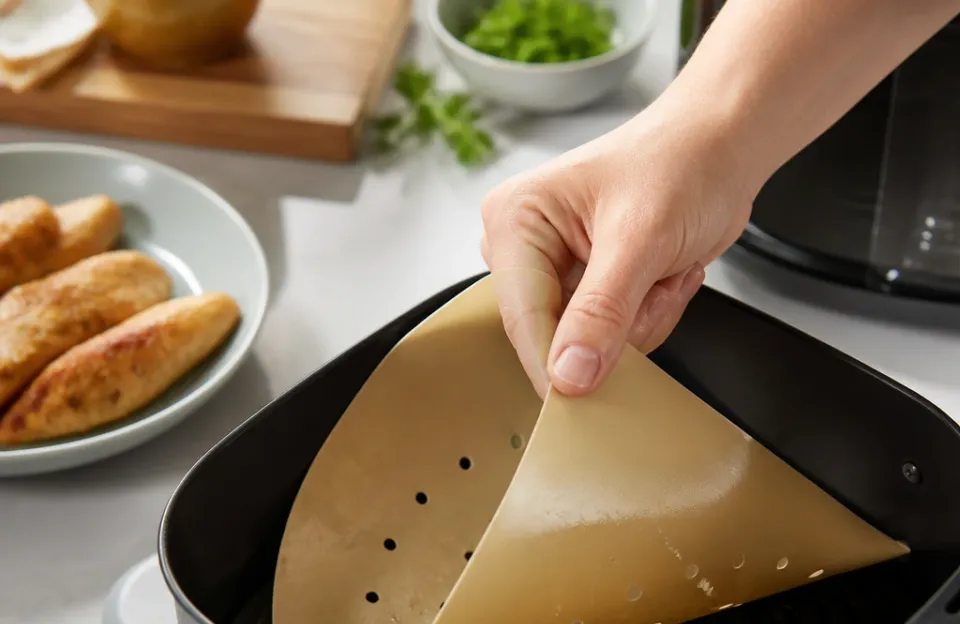
These are newer to the market. They are typically made from woven fiberglass coated in a nonstick layer, designed to mimic the shape and function of disposable parchment paper rounds. They usually come with pre-punched holes and sometimes have small tabs on the edges for lifting.
They strike a balance between the thinness of a PTFE sheet and the breathability of a mesh screen. Because they are shaped specifically for air fryers, they lay flat without needing to be trimmed. They are great for everyday cooking where you want minimal interference with the recipe but easier cleanup afterward.
Durability is their weak point. The edges tend to fray after a few dozen washes, especially if you scrub them aggressively. They also stain easily.
After cooking something with turmeric or tomato paste, the fabric holds onto the color permanently, even if it is structurally fine.
Matching the Material to What You Cook
Picking a liner means looking at your most common recipes. No single type handles every situation perfectly.
| Liner Type | Best Used For | Airflow Quality | Cleanup Difficulty |
|---|---|---|---|
| Silicone Bowl | Wet marinades, saucy foods, fatty meats | Poor (blocks bottom air) | Very Easy |
| Perforated Silicone | Breaded items, fries, general roasting | Good | Moderate |
| PTFE Fiberglass | Dry snacks, frozen foods, baked goods | Poor (unless perforated) | Very Easy |
| Stainless Mesh | Maximum crispiness, small items like peas | Excellent | Hard |
| Fabric Rounds | Everyday mixed use, quick meals | Good | Moderate |
If you frequently cook heavily marinated proteins, a silicone bowl is the safest bet for protecting your machine. When you apply a baking soda treatment to draw out moisture for extra crunch, you need air moving freely around the food, which makes a stainless mesh or perforated silicone mat far superior to a solid bowl.
For people who mostly reheat frozen foods or bake small pastries, a flat PTFE sheet keeps things simple and wipes clean instantly. Just remember to weigh it down with food before turning the fan on.
Maintenance Habits That Prevent Early Failure
Even the best materials break down if treated poorly. Silicone can tear if you stab it with a fork to flip food. Use silicone-tipped tongs or a wooden spatula.
PTFE coatings scratch easily. Never use abrasive scouring pads or steel wool on them. Warm water, mild dish soap, and a soft sponge are enough for daily cleaning.
Avoid aerosol cooking sprays directly on any reusable liner. Commercial sprays contain propellants and lecithin that bake into a sticky residue that is nearly impossible to remove from silicone and PTFE alike. If you need oil, brush it on lightly or use a pump spray bottle filled with pure oil.
Always let the liner cool completely before washing it. Plunging a hot silicone bowl or metal mesh screen into cold water causes thermal shock. Over time, this degrades silicone elasticity and can warp thinner metal frames.
Store them flat or rolled loosely. Folding PTFE sheets creates permanent creases where the coating eventually cracks and peels. Rolling them like a poster prevents sharp bends.
Edge Cases Where Liners Cause More Problems
There are times when using a liner works against you. Dual-basket air fryers often have very tight clearances. Adding a thick silicone bowl liner in a compact drawer might restrict the air path so much that the machine throws an error code or simply fails to brown food properly.
Drawer-style air fryers with the heating element located at the bottom, rather than the top, present another issue. A solid liner placed directly over a bottom heating element can trap extreme heat, potentially damaging the machine's internal components or melting the liner itself. Check your owner's manual to see where your heating coil sits.
If you are tracking macros closely, be aware that heavy silicone bowl liners catch and hold onto rendered fat that would normally drip away from the food. While the food doesn't necessarily reabsorb all of it, cooking in a pool of trapped grease changes the final texture and calorie count compared to letting fat fall through a wire rack. Knowing your exact numbers matters, especially when comparing overall nutritional totals for strict meal plans.
Finally, never use a liner during the preheat cycle if your air fryer requires one. An empty liner flying around a hot chamber is a fire risk. Put the liner in only when you add the food.
Frequently Asked Questions
Are silicone air fryer liners safe at 400 degrees?
Food-grade silicone is typically rated for continuous use up to 425F or 450F. Running your air fryer at 400F with a silicone liner is safe as long as the silicone does not physically touch the exposed heating element. Always check the manufacturer's stated temperature limit printed on the packaging.
Do reusable liners change cooking times?
Solid liners like silicone bowls or unperforated PTFE sheets block hot air from hitting the bottom of the food. This often requires adding two to four minutes to your total cook time, or flipping the food halfway through to compensate. Perforated mats and mesh screens have minimal impact on cooking duration.
Can I put reusable air fryer liners in the dishwasher?
Most silicone bowl liners and stainless steel mesh screens are dishwasher safe. PTFE-coated fiberglass and fabric rounds generally last longer if washed by hand, as the harsh detergents and high heat of a dishwasher cycle can degrade the nonstick coating or fray the edges prematurely.
Will a liner stop my food from getting crispy?
A solid, unperforated liner traps steam underneath the food, resulting in a soft or soggy bottom. If crispiness is your main goal, you must use a perforated silicone mat, a stainless steel mesh screen, or skip the liner entirely for that specific recipe.
How do I choose between a bowl liner and a flat mat?
Pick a bowl liner if you cook messy, wet, or highly fatty foods and prioritize easy cleanup over maximum browning. Pick a flat perforated mat if you want better air circulation and crispier results, and don't mind wiping grease off the actual basket floor occasionally.
Is it safe to cut a large liner down to fit my basket?
You can safely trim silicone with scissors to fit a smaller basket. Cutting PTFE-coated fiberglass exposes the inner fiberglass threads, which can shed into your food and degrade rapidly under heat. Only buy PTFE sheets sized correctly for your specific machine.
Getting the Right Fit for Your Machine
Buying a reusable air fryer liner comes down to measuring your basket, knowing what you cook most often, and accepting the tradeoff between easy cleanup and perfect airflow. Solid silicone bowls save time at the sink but cost you some crispiness. Mesh screens give you the best texture but require elbow grease to wash.
Perforated mats sit comfortably in the middle.
Skip the "universal fit" marketing claims. Grab a tape measure, check the bottom dimensions of your specific air fryer model, and match the material to your weekly menu. Once you find the right shape and heat tolerance, you can stop throwing money away on disposable parchment paper every time you roast a batch of wings.