Air fryer liners come in three main types: disposable parchment rounds, reusable silicone mats and perforated paper sheets. The right choice depends on your basket size and shape, what you cook most often, and whether you want easy cleanup or crispier bottoms. Start by measuring your basket, then match the liner’s shape and printed temperature rating to how you actually cook.
This guide compares the liner types and the specific products worth considering, with the strengths and tradeoffs of each so you know what you’re buying before you add a pack to your cart.
Start with Your Basket, Not the Brand
Fit is the first decision, and it matters for safety as much as for convenience. A liner that climbs up the basket wall can block airflow or drift toward the heating element. Reynolds, which makes air fryer liners, warns that a parchment liner used by itself can be lifted by circulating air into the heating element, which is a fire hazard. Keeping the liner flat and away from the heating element is part of the manufacturer’s own instructions.
Shape narrows the field quickly. Reynolds says its air fryer liners suit most square and round air fryers but should not be used in rectangular or toaster oven-style air fryers. Square and oven-style baskets therefore need a different liner than a standard round one.
Temperature rating is the second filter. Reynolds rates its unbleached parchment air fryer liners as heat safe up to 400°F on the air fryer setting only. COSORI states that its square disposable paper liners resist heat up to 465°F. A liner should be rated at or above the temperatures you actually use.
How to Measure Your Basket Base Correctly
- Remove the basket or drawer and take out any crisper plate.
- Measure the flat interior floor at its widest point, then measure the narrowest point if the base is rounded.
- For a square or rectangular basket, record both length and width.
- Note the corners: rounded corners mean a square liner’s corners will ride up.
- Choose a liner that sits flat on the floor and stops before the basket walls begin to curve upward.
When exact fit is unavailable, err smaller rather than larger. Excess paper that folds up the sides can obstruct airflow or move toward the heating element.
The Three Liner Types and What Each Does Well
Disposable parchment is pre-cut paper, usually with a silicone coating for non-stick release. It is convenient and cheap per use, but single use. Reynolds describes its air fryer liners as non-stick, grease proof, pre-cut and home compostable.
Reusable silicone is a thicker mat or shallow pot that you wash and reuse. It costs more upfront, resists higher temperatures than paper in most product lines, and eliminates repeat purchases. Solid silicone blocks airflow from below by design.
Perforated paper is parchment punched with small holes. It keeps the basket cleaner while letting some air and fat pass through. Reynolds’ liners, for example, have 1/4-inch holes that allow air circulation and help foods stay crispy; the company also says its liners are designed for foods to be placed on top before use.
A simple rule: solid liners catch drips and reduce bottom browning; perforated liners trade some drip-catching for airflow and crispness.
Disposable Parchment Rounds and Sheets
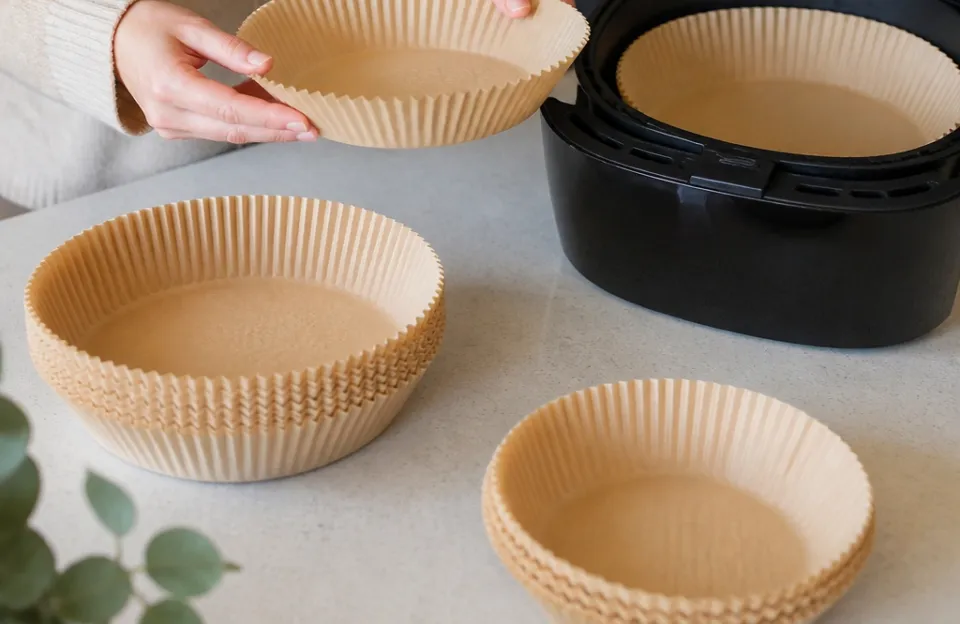
Paper liners are the lowest-effort option. You place one in the basket, cook, and throw it away. They suit greasy foods, breaded items and anyone who dislikes scrubbing.
The tradeoffs are real. Solid paper limits airflow beneath the food, which can leave the underside softer. It is also single use, and Reynolds explicitly instructs users never to reuse its liners. The Reynolds liners are pre-cut at 9 inch by 9 inch with 1/4-inch holes for air circulation.
Reynolds’ safe-use instructions for parchment in an air fryer are worth following regardless of brand: place food on the liner, keep it flat and away from the heating element, stay at or below the rated temperature, and avoid paper when it isn’t weighed down by food, touches the element, blocks airflow, or your air fryer manufacturer advises against liners. The company also instructs users to preheat the air fryer according to the manufacturer’s instructions before placing the liner and food inside.
Reusable Silicone Liners
Silicone liners are thick, flexible mats, sometimes with raised edges, that drop into the basket and get washed afterward. They suit people who run the air fryer frequently and want to stop buying paper.
The main advantage is durability and heat tolerance, but the rating is product-specific and must be read on the packaging. There is no single verified silicone temperature ceiling across brands; treat any number you see online as brand-specific until you confirm it on the product you’re buying. Note also that no air fryer manufacturer statement endorsing silicone liners by name was located in the reviewed sources.
The second tradeoff is airflow. A solid silicone mat blocks the fan’s air from reaching the underside of food, so bottoms brown less than they would on a bare basket. Raised-edge silicone pots block even more and behave closer to a conventional oven.
If you want reusable coverage rather than a mat, the reusable liner options and their materials are worth comparing before you commit to silicone.
Perforated Paper for Crisp Results
Perforated parchment is the middle ground between convenience and crispness. The holes let hot air reach the food’s underside while the paper still catches crumbs and grease. INFRAOVENS describes its perforated parchment as keeping the air fryer basket and racks clean while allowing fat and grease to drip away from food.
This is the type to choose for frozen fries, breaded chicken and roasted vegetables where a crunchy exterior matters. It is not the right choice for wet batters or very liquid-heavy marinades, because the liquid simply passes through the holes onto the basket floor.
If you want a perforated option, verify dimensions and temperature rating on the specific listing; the stored INFRAOVENS source does not state either, so fit and heat limits need checking on the label.
Product Picks and What to Verify on the Label
Reynolds Kitchens Unbleached Parchment Air Fryer Liners. The best-documented option here. Pre-cut 9 inch by 9 inch with 1/4-inch perforations, rated to 400°F on the air fryer setting only, intended for most square and round air fryers but not rectangular or toaster oven-style models, and single use only. Best for round or square basket owners cooking at or below 400°F who want clear published safe-use guidance.
COSORI Disposable Paper Air Fryer Liners. A 6.5-inch square liner coated with food-grade silicone and stated to resist heat up to 465°F, sized for 5 to 7 quart baskets and labeled for air fryer use only. Best for 5 to 7 quart square-basket owners who want a higher stated heat resistance and a 100-count pack. Single use.
INFRAOVENS Perforated Parchment. The perforated design is described as keeping the basket clean while letting fat and grease drip away. Dimensions and temperature rating are not stated in the reviewed listing, so check both before buying.
Hiware Pre-Cut Parchment Sheets. Listed as 12 by 16 inch square sheets in a 100 count pack. Air fryer suitability and temperature rating are not confirmed in that listing, so these suit readers willing to trim sheets and verify heat limits themselves.
Square Reusable Silicone Liner (marketplace listing). A listed square silicone liner measures 8.5 by 8.5 inches at the top, 7.5 by 7.5 inches at the bottom and 2.36 inches in height, and is said to fit square baskets up to 8.9 inches. These are seller-stated dimensions and the temperature rating is unverified, so confirm both with the seller before relying on it.
Cut-Your-Own From a Bulk Roll. Standard parchment rolls let you trace and cut a custom circle for an odd-sized basket. Reynolds says regular parchment paper can work in some air fryers if cut to fit and securely weighed down with food, but it is not the best choice because it can block airflow, shift during cooking or require trimming. Treat DIY liners with the same rules as pre-cut paper, including the never-run-it-empty warning.
Quick-Reference Comparison Table
| Product | Material | Shape | Airflow | Temperature Rating | Best For |
|---|---|---|---|---|---|
| Reynolds Air Fryer Liners | Parchment, perforated | 9 x 9 in | Holes (1/4 in) | 400°F, air fryer setting only | Round or square baskets, cooks at or below 400°F |
| COSORI Paper Liners | Parchment, silicone coated | 6.5 in square | Solid | 465°F stated | 5–7 qt square baskets |
| INFRAOVENS Perforated | Parchment, perforated | Round | Holes | Verify on label | Cleaner basket with fat drainage |
| Hiware Sheets | Parchment | 12 x 16 in square | Solid | Verify on label | Bulk sheets for trimming |
| Square Silicone Liner (listing) | Silicone | 8.5/7.5 in square | Solid | Verify with seller | Reusable fit for square baskets up to 8.9 in |
Custom Cut Liners Versus Pre-Cut
Standard parchment on a roll is the cheapest route and the only reliable one for unusual basket shapes. Trace the basket floor, cut slightly inside the line, and keep the paper flat when it goes in. Never let a homemade liner ride up the basket wall, because an oversized liner can reach the heating element.
The cost is time. Cutting a fresh circle for every meal adds up, and imperfect edges fold in ways that affect airflow. Pre-cut liners remove that variable, which is why they are the better default for anyone cooking several times a week.
Safety Limits You Should Not Push
Paper has a ceiling, and it varies by product. Reynolds rates its air fryer liners to 400°F on the air fryer setting only, while COSORI states 465°F for its paper liners. Read the actual box rather than assuming a universal limit, and avoid liners when the air fryer is set above their recommended temperature.
Never run a paper liner without food on it. Reynolds warns that a parchment liner used alone can be lifted by circulating air into the heating element and start a fire. Place food on the liner before use, and preheat before inserting the liner and food together. The same logic applies if your air fryer manufacturer advises against liners at all.
Silicone needs product-specific verification, not folklore. Temperature ratings differ by brand, and a pinch test is not a reliable way to judge whether a mat contains fillers. Check the manufacturer’s stated limit and food-contact claims instead.
Food-contact rules are substance-specific. The FDA authorizes food contact substances by identity, intended use and conditions of use, so a general “FDA approved” label says less than the specific regulation behind each component. The cited regulation should always be consulted for a given substance to understand its allowed uses and conditions, and the overall status of a material depends on each individual substance that makes it up. Substances in contact with food must have reasonable certainty of no harm under their intended conditions of use. In practice, that means buying from established brands that publish their food-contact compliance rather than relying on unverified marketing claims.
Matching the Liner to Your Cooking Style
Saucy, sticky or heavily marinated food: choose a solid liner. It catches the drips that would otherwise bake onto the basket floor. A marinade-heavy wing recipe is a good example of when the mess prevention outweighs the loss of bottom crispness.
Frozen fries, breaded cutlets and roasted vegetables: choose perforated paper. Airflow through the holes supports browning, and cleanup stays simple. A flour-dusted wing coating is a similar case where a perforated liner beats a solid one.
Daily use and low waste: choose silicone, but confirm the brand’s temperature rating and that the mat sits flat in your basket first. Wash it promptly, since baked-on glaze is harder to remove once it cools.
Oven-style or dual-basket air fryers: choose square paper sized to the interior floor, and check that the corners don’t ride up.
Odd or older baskets: cut your own from a roll, or use the air fryer accessory size guide to confirm what will actually fit before ordering anything.
Frequently Asked Questions
Do Air Fryer Liners Reduce Crispiness?
Solid liners block airflow beneath the food, which can leave the bottom softer. Perforated liners reduce that effect because air passes through the holes. For maximum crunch, cook some foods directly on the basket.
Can I Use Regular Baking Parchment Instead of Pre-Cut Rounds?
Yes, in some air fryers, if it is cut to fit and securely weighed down with food. Reynolds notes it is not the best choice because it can block airflow, shift during cooking or require trimming. If you go this route, follow the same rules as pre-cut paper.
Are Silicone Air Fryer Liners Safe at 400°F?
That depends entirely on the product’s stated rating, which you should read on the packaging. No single verified silicone ceiling applies across brands, and no air fryer manufacturer endorsement of silicone liners by name was located in the reviewed sources. Confirm the rating before use.
How Do I Choose Between Silicone and Parchment?
Choose silicone if you cook often and want to stop buying disposable paper, after verifying the temperature rating. Choose parchment if you prefer throwing the liner away after messy meals. Perforated parchment splits the difference. A dedicated silicone liner comparison can help if you’re leaning reusable.
Will the Fan Blow the Liner into the Heating Element?
It can, which is why Reynolds warns against using a parchment liner by itself and instructs users to place food on the liner before use. Weigh the liner down with food before starting the appliance, and preheat before inserting it. Heavier silicone mats are far less prone to lifting.
Do I Still Need to Clean the Basket If I Use a Liner?
Yes. Liners catch most grease and crumbs, but steam and fine particles still reach the basket walls and floor. A quick wash or wipe after cooking keeps residue from building up.
Getting the Right Fit for Your Machine
The safest, best-supported choice for a round or square basket at or below 400°F is a pre-cut perforated parchment liner with published dimensions, a stated heat limit and clear use instructions, such as the Reynolds liners. If you own a 5 to 7 quart square basket and want a higher stated heat resistance, COSORI’s paper liners are the better fit. Choose silicone only after confirming the brand’s temperature rating and that the mat sits flat in your basket, and verify dimensions and heat limits on any listing that doesn’t publish them.
Measure the interior floor of your basket before ordering, keep every liner flat and weighted down with food, and stay inside the printed temperature rating. Get those three things right and the liner will protect the basket without becoming the hazard.