Disposable air fryer liners are single-use paper or parchment sheets designed to sit inside the basket to catch grease, crumbs, and sticky residues during cooking. They save you from scrubbing baked-on messes after every meal and keep the non-stick coating on your basket intact for longer. Most are made from unbleached parchment paper rated for temperatures up to 450°F, making them safe for standard air frying tasks.
These liners work best when you prioritize convenience over perfect browning on the bottom of foods. They create a physical barrier between food and the heating element’s airflow, which can slightly reduce crispiness on the underside of items like chicken wings or fries. Understanding this tradeoff helps you decide when to use them and when to cook directly on the rack.
This guide covers the specific benefits, material safety, proper usage techniques, and common mistakes that affect performance.
How Disposable Air Fryer Liners Protect Your Basket and Save Time
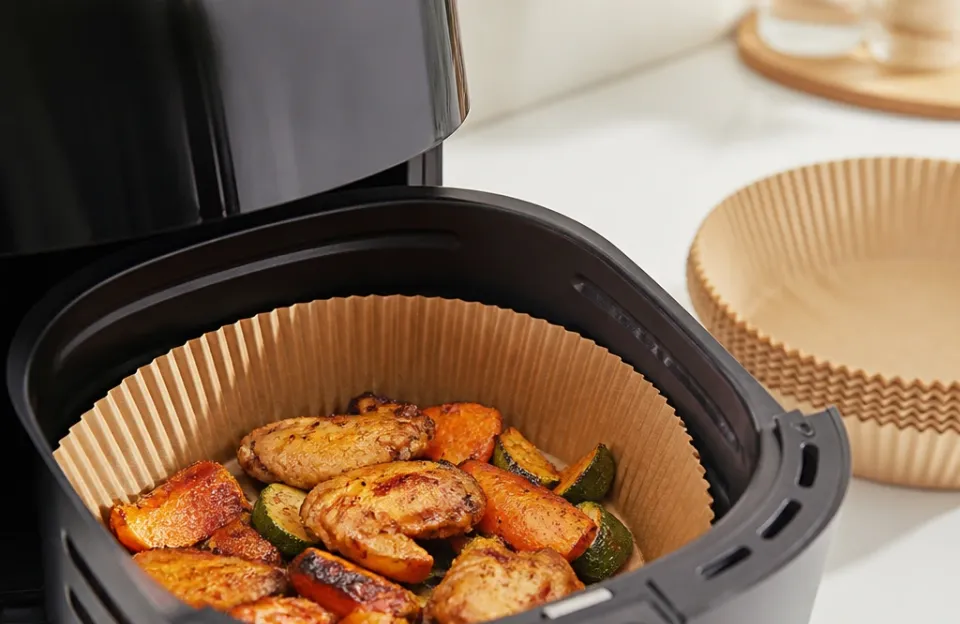
The primary function of disposable air fryer liners is preserving the condition of your appliance while reducing post-cooking labor. Air fryer baskets typically have a non-stick coating that degrades over time with exposure to metal utensils, abrasive sponges, and acidic marinades. A liner acts as a sacrificial layer that absorbs this wear instead of the permanent surface.
Replacing a ten-cent sheet is significantly cheaper than replacing a forty-dollar basket when the coating eventually fails.
Cleanup time drops from fifteen minutes of soaking and scrubbing to roughly thirty seconds of lifting out the liner and discarding it. Grease pools in the folds of the paper rather than fusing to the metal mesh or ceramic coating. For cooks who use their air fryer daily, this reduction in friction makes the difference between using the appliance regularly and letting it gather dust because the cleanup feels burdensome.
The psychological ease of knowing there will be no scrubbing later encourages more frequent experimentation with messy recipes.
Preventing Cross-Contamination Between Sweet and Savory Dishes
Liners provide an effective barrier against flavor transfer when switching between different types of foods in the same cooking session. Residual oils from spicy buffalo wings can linger in basket crevices even after washing, potentially affecting the taste of delicate pastries or breakfast items cooked later. Placing a fresh liner down creates a neutral surface that eliminates this risk without requiring a full wash cycle between dishes.
This benefit extends to allergen management in shared kitchens. If someone in your household has a sensitivity to gluten, dairy, or nuts, using a fresh liner for their portion adds a layer of protection against trace residue from previous meals. While this does not replace proper cleaning protocols for severe allergies, it reduces the surface area where cross-contact can occur during high-volume cooking sessions like meal prep for chicken wings where multiple batches run back-to-back.
Extending Non-Stick Coating Lifespan Through Reduced Abrasion
Every time you scrub an air fryer basket, you remove microscopic layers of the non-stick treatment. Even soft sponges cause gradual degradation over hundreds of wash cycles. Disposable liners eliminate the need for aggressive cleaning entirely for most cooking tasks.
You might only need to wipe the bare basket once a week instead of after every use, potentially doubling or tripling the functional life of the coating.
This preservation matters most for budget air fryers with thinner coatings that tend to fail within eighteen months of heavy use. Keeping the factory finish intact maintains even heat distribution and prevents food from sticking in spots where the coating has worn through. When the basket stays smooth, you also avoid the frustration of torn foods leaving behind fragments that require extra effort to remove.
Material Safety and Temperature Limits for Parchment Liners
Most disposable air fryer liners are made from food-grade parchment paper that has been treated with silicone to create a non-stick, heat-resistant surface. The FDA regulates materials intended for food contact, and legitimate parchment products must meet specific migration limits for substances transferring into food. Always verify that packaging explicitly states "food grade" and lists compliance with relevant safety standards before purchasing.
Unmarked generic papers may contain bleaches, dyes, or adhesives not approved for direct food contact at high temperatures.
Temperature ratings vary by manufacturer but typically range from 425°F to 450°F. Standard air frying occurs between 350°F and 400°F, placing most recipes well within safe operating limits. Problems arise when users exceed these thresholds or allow the paper to contact the heating element directly.
Parchment ignites at approximately 450°F to 500°F depending on moisture content and thickness. Maintaining adequate clearance from the top heating coil is non-negotiable for fire safety.
Differences Between Bleached White and Unbleached Brown Paper
White parchment undergoes a chlorine or oxygen bleaching process to achieve its color, while brown parchment skips this step. Both are generally considered safe for cooking when certified food-grade, though some consumers prefer unbleached versions to avoid any potential chemical residue concerns. From a performance standpoint, both types offer identical non-stick properties and heat resistance when manufactured to the same specifications.
The choice often comes down to aesthetics and personal preference. Brown liners show grease stains less visibly, which some users find preferable when serving food directly from the basket at casual gatherings. White liners make it easier to spot burning or excessive charring early, providing a visual safety cue during high-heat cooking.
Neither option affects cooking times or outcomes when used correctly within temperature guidelines.
Why Wax Paper Is Never a Safe Substitute
Wax paper and parchment paper look similar but have fundamentally different heat tolerances. Wax paper uses a paraffin or soybean wax coating that melts at temperatures above 200°F. Placing wax paper in an air fryer will cause the coating to liquefy, smoke, and potentially ignite long before food reaches doneness.
The melted wax can also coat your heating element and fan, creating a persistent odor and fire hazard that requires professional servicing to remediate.
Only use products explicitly labeled as parchment paper or air fryer liners. Terms like "cooking paper," "baking paper," or "greaseproof paper" may refer to wax-based products depending on regional terminology. Check the ingredient list or manufacturer specifications for silicone-treated cellulose fiber, which indicates true parchment.
When in doubt, skip the liner entirely rather than risk damaging your appliance or causing a kitchen fire.
Practical Usage Techniques for Optimal Results
Proper placement determines whether disposable air fryer liners help or hinder your cooking. Always preheat the air fryer empty first, then add the liner just before placing food inside. Cold air circulation during preheating can lift lightweight paper into the heating element if the liner sits unweighted in the basket.
Adding food immediately after inserting the liner anchors it securely and prevents dangerous movement.
Trim oversized liners to fit your specific basket dimensions with at least half an inch of clearance on all sides. Excess paper curling up the sides blocks vertical airflow and creates hot spots that lead to uneven cooking. Round baskets need round-cut liners, while square baskets work better with trimmed rectangular sheets.
Pre-cut liners sized for your model eliminate guesswork and ensure consistent coverage without obstructing ventilation channels.
Adjusting Cook Times When Using Liners Versus Bare Baskets
The paper barrier slightly insulates food from direct radiant heat coming through the basket floor. Expect bottom-side browning to take one to three minutes longer when using liners compared to cooking directly on the rack. Foods that rely heavily on bottom crisping, like frozen french fries or breaded cutlets, may benefit from flipping halfway through to compensate for reduced direct contact.
Moisture-heavy items like marinated proteins or vegetables release steam that gets trapped between the food and the liner. This can create a steaming effect that softens textures meant to be crispy. Patting foods dry before placing them on the liner minimizes excess moisture accumulation.
For recipes where maximum crispiness is the goal, such as achieving extra crispy skin on wings, consider skipping the liner or removing it for the final few minutes of cooking.
Managing High-Fat Foods Without Soggy Bottoms
Greasy foods like bacon, sausage, or fatty cuts of meat render significant liquid fat during cooking. Flat liners allow this fat to pool directly beneath the food, essentially shallow-frying the bottom surface instead of allowing it to drain away. Perforated liners solve this problem by providing drainage holes that let excess fat pass through to the outer catch pan below.
If using solid liners for fatty foods, tilt the basket carefully midway through cooking to drain accumulated grease into a heat-safe container. Alternatively, place a wire rack insert on top of the liner to elevate food above the pooled fat. This hybrid approach captures drips for easy cleanup while maintaining air circulation underneath for better texture.
Always monitor fat levels to prevent overflow onto heating elements, which causes smoking regardless of liner type.
| Feature | Solid Parchment Liners | Perforated Liners | Silicone Mats (Reusable Alternative) |
|---|---|---|---|
| Best For | Baking, roasting veggies, containing wet batters | Fatty meats, frozen foods needing bottom crispness | Frequent users wanting zero waste |
| Airflow Impact | Moderate reduction, blocks bottom vents | Minimal reduction, maintains circulation | Low reduction, textured surface aids flow |
| Grease Management | Pools under food, requires draining | Drains through holes to outer pan | Channels grease to edges via texture |
| Max Temp Rating | 425°F – 450°F | 425°F – 450°F | 480°F – 500°F |
| Bottom Crispiness | Reduced, softer texture | Near-normal with proper hole alignment | Good, but slightly less than bare metal |
| Cost Per Use | $0.05 – $0.15 | $0.08 – $0.20 | $0.00 after initial purchase |
Situations Where Liners Cause More Problems Than They Solve
Disposable air fryer liners are helpful tools, but they introduce drawbacks in specific scenarios. Lightweight foods like kale chips, shredded coconut, or thin herb garnishes can blow around violently in the air current. The paper itself may lift and block the heating element even when weighted, creating a fire risk.
Cooking these items directly on the rack or using a weighted wire mesh cover is safer than relying on parchment.
Foods requiring intense direct heat for searing or caramelization suffer from the insulating effect of paper. Steaks, pork chops, and tofu cubes develop superior crust when placed directly on hot metal. The liner absorbs thermal energy that should transfer to the food surface, resulting in gray, steamed exteriors instead of Maillard browning.
Reserve liners for messy sauced dishes or baked goods where texture compromise is acceptable.
Acidic Marinades That Can Weaken Paper Integrity
Highly acidic ingredients like lemon juice, vinegar, tomato sauce, or wine can break down parchment fibers during extended cook times. The paper becomes mushy and may tear when you attempt to lift it out, spilling contents into the basket and defeating the purpose of using a liner. For recipes involving heavy acid exposure exceeding twenty minutes, use a silicone mat or cook directly on the rack and accept the cleanup.
Acid-weakened paper also releases small cellulose fibers that can adhere to wet food surfaces. While technically food-safe, nobody wants paper pulp in their chicken wing marinade. Test unfamiliar acidic recipes with shorter cook times first to observe how the liner holds up.
Switching to a reusable silicone option eliminates this failure mode entirely for tangy glazes and citrus-forward preparations.
Overcrowding Risks Specific to Lined Baskets
Adding a liner reduces usable basket volume by occupying space and preventing food from nesting into mesh gaps. Users accustomed to filling bare baskets to capacity often overload lined versions, blocking critical airflow paths. Overcrowded liners trap steam and create cold zones where food remains undercooked while edges burn.
Reduce batch sizes by fifteen to twenty percent when using liners to maintain adequate circulation.
Stacking food on liners compounds the problem because the paper prevents vertical air penetration between layers. Unlike wire racks that allow heat to pass through stacked items, solid parchment creates dead zones where convection cannot reach. Cook in single layers whenever possible, or use perforated liners with elevated rack inserts to restore multi-level cooking capability without sacrificing cleanup convenience.
Frequently Asked Questions About Disposable Air Fryer Liners
Are disposable air fryer liners safe for daily use?
Yes, food-grade parchment liners are safe for daily use when operated within their stated temperature limits of 425°F to 450°F. Ensure the product carries explicit food-safety certification and never substitute wax paper or unverified materials. Daily users should still inspect the bare basket weekly for any grease buildup that bypasses the liner edges.
Do liners increase calorie counts in cooked foods?
No, liners do not add calories to food since parchment paper is inert and does not transfer substances during normal cooking. However, solid liners can trap rendered fat beneath food rather than allowing it to drain away, meaning you consume more of the natural fats already present in the ingredient. Perforated liners or draining mid-cook mitigates this effect for those tracking calorie intake from wings closely.
Can I reuse a liner if it looks clean after cooking?
Reusing liners is not recommended because the paper structure weakens after heat exposure and becomes more prone to tearing or ignition on subsequent uses. Invisible grease absorption also creates a hidden fire hazard even when the surface appears dry. The marginal savings of reusing a ten-cent sheet does not justify the increased safety risk or potential for mid-cook failure.
Will liners prevent my food from getting crispy?
Liners reduce bottom-side crispiness by blocking direct radiant heat and trapping moisture between the food and paper. Top and side browning remain unaffected since hot air circulates freely above the basket. For maximum crispiness on all surfaces, cook directly on the rack or remove the liner during the final three to five minutes of cooking to expose the bottom to direct heat.
How do I know if my liner size fits my air fryer correctly?
Measure your basket's interior width and length, then select liners with at least half an inch of clearance on all sides. Liners that touch or curl against basket walls obstruct vertical airflow and create uneven cooking zones. Round baskets require specifically round-cut liners, as square sheets trimmed hastily leave corners that block ventilation channels and pose fire risks near heating elements.
Making the Right Choice for Your Cooking Routine
Disposable air fryer liners earn their place in kitchens where convenience outweighs the pursuit of perfect texture on every dish. They excel at protecting equipment, speeding cleanup, and enabling quick transitions between sweet and savory recipes without intermediate washing. The tradeoff is modest: slightly reduced bottom crispiness, minor batch size reductions, and ongoing supply costs that add up over years of daily use.
Your decision should hinge on what frustrates you most about air frying right now. If scrubbing deters you from using the appliance frequently, liners remove that barrier and likely improve your overall cooking habits. If achieving restaurant-quality crunch on flour-dusted wings is your priority, skip the paper and invest that time in proper basket maintenance instead.
Both approaches are valid; neither is universally superior. Keep a pack on hand for messy nights, and cook bare when texture demands it.