A typical serving of air fryer chicken wings calories falls between 350 and 450 for about six medium wings. That number assumes plain, unbreaded wings cooked without heavy oil or sugary glazes. Deep frying that same portion pushes the count closer to 600 or 700 calories because the breading and cooking oil soak directly into the skin.
If you are tracking your daily intake, knowing exactly how air fryer chicken wings calories add up matters. The total shifts based on wing size, whether you use flats or drumettes, and what sauce you toss them in after cooking. This article breaks down the math behind the numbers, shows how different sauces change the final count, and explains where those extra calories hide.
Why Cooking Wings in an Air Fryer Changes the Calorie Count
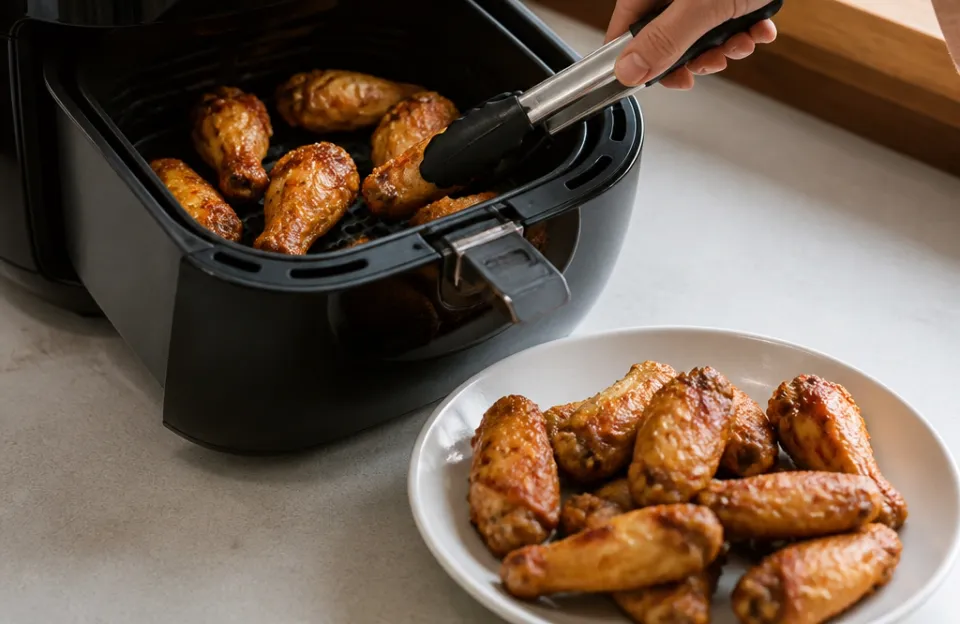
Chicken wings naturally contain a lot of fat. Most of that fat sits right under the skin. When you cook wings in a basket-style air fryer, the rapid hot air circulates around the meat and renders that subcutaneous fat.
The melted fat drips through the perforated basket and collects in the bottom drawer. You literally cook the fat away from the meat.
Deep frying does the opposite. Submerging wings in hot oil seals the outside quickly, but the breading acts like a sponge. It absorbs oil during the entire cooking process.
A breaded, deep-fried wing carries significantly more fat grams than a naked, air-fried wing. Since every gram of fat contains nine calories, that absorbed oil adds up fast.
The USDA lists raw chicken wing meat and skin at roughly 203 calories per 100 grams. Cooking reduces water weight, which concentrates the calories slightly per ounce of finished product. But because the air fryer drains away rendered fat, the final edible portion ends up lighter in calories than traditional methods.
You get the crispy texture without the added cooking oil.
How Rendered Fat Lowers Your Total Intake
Fat rendering is the main reason air fryer chicken wings calories stay lower than other methods. A standard batch of whole wings can release a tablespoon or more of liquid fat into the drip tray. That single tablespoon represents about 120 calories and 14 grams of fat that you do not eat.
This only works if you leave the wings bare. If you coat them in flour or breadcrumbs before air frying, the dry coating catches some of that dripping fat and holds it against the skin. For the lowest possible calorie count, skip the breading entirely.
A light dusting of baking powder mixed with salt gives you a blistered, crunchy skin without adding meaningful calories or trapping grease.
Protein Density Compared to Deep Frying
When you remove excess fat, the percentage of protein per bite goes up. Six air-fried wings deliver roughly 30 to 36 grams of protein. The same six deep-fried wings might deliver similar protein, but they come packaged with 20 to 30 extra grams of fat from the fryer oil.
For anyone managing macros, this ratio makes a huge difference. You get the satiating effect of high protein without blowing past your daily fat limit. Checking your internal temperatures with a fast-reading digital probe guarantees the meat cooks through safely while keeping the exterior crisp enough to render maximum fat.
Breaking Down the Numbers by Wing Size and Cut
Not all wings weigh the same. Restaurants often serve massive wings that skew the math. At home, you control the size, which means you control the calories.
Understanding the difference between whole wings, drumettes, and flats helps you log your meals accurately.
| Wing Type | Average Raw Weight (per piece) | Estimated Calories (Air Fried, Plain) |
|---|---|---|
| Small Flat | 1 oz (28g) | 45 – 55 |
| Medium Flat | 1.5 oz (42g) | 65 – 80 |
| Large Flat | 2 oz (56g) | 90 – 110 |
| Drumette | 1.5 oz (42g) | 70 – 85 |
| Whole Wing | 3 – 3.5 oz (85-100g) | 150 – 180 |
These estimates assume no breading and no sauce. They reflect the USDA baseline for roasted chicken wing meat and skin, adjusted for the fat lost during air circulation cooking. Weighing your raw pieces on a kitchen scale before cooking is the most accurate way to track air fryer chicken wings calories.
Cooked weights vary too much depending on how long you leave them in the heat.
Flats Versus Drumettes: Which Packs More Calories?
Flats have more skin relative to their meat volume. Because the fat lives under the skin, flats carry a slightly higher fat percentage by weight than drumettes. Drumettes have a thicker muscle mass, meaning a higher protein-to-skin ratio.
In practice, the calorie difference between one flat and one drumette of the exact same weight is minimal. Maybe five to ten calories. The real variable is size.
People tend to eat more flats because they are smaller and easier to pop into your mouth. If you are counting, track by total ounces consumed rather than by the number of pieces. Ten small flats will cost you fewer calories than five jumbo drumettes.
Bone-In Versus Boneless "Wings"
Boneless wings are chunks of chicken breast shaped to look like wings. Chicken breast is leaner than dark meat, so you might assume boneless options have fewer calories. That logic fails when you factor in preparation.
Boneless wings are almost always heavily breaded and deep fried, even if you finish them in the air fryer to reheat.
A standard serving of boneless wings usually runs 100 to 150 calories higher than the same weight of bone-in, air-fried wings. The breading adds carbohydrates and traps oil. True bone-in wings cooked naked in the air fryer remain the better option for keeping air fryer chicken wings calories low.
How Sauces and Seasonings Shift the Final Count
Plain wings get boring fast. Sauce is where the flavor lives, and it is also where the hidden calories live. Tossing your finished wings in a bowl of sauce can double the calorie count of your snack if you choose the wrong one.
Dry rubs are your best friend for flavor without bulk. A mix of smoked paprika, garlic powder, onion powder, cayenne, salt, and black pepper adds zero measurable calories. You coat the raw wings before cooking, and the spices toast in the heat.
No oil required.
Wet sauces rely on fats or sugars as a base. Butter-based sauces, sweet chili glazes, and honey BBQ coatings all add significant energy density. Even pouring a little olive oil over the wings before seasoning them adds 120 calories per tablespoon.
If you want wet sauce, measure it. Don't just pour from the bottle.
Buffalo Sauce and the Hidden Butter Trap
Traditional Buffalo sauce is equal parts hot sauce and melted butter. Frank's RedHot has zero calories, but butter has 100 calories per tablespoon. If you toss six wings in two tablespoons of butter mixed with hot sauce, you just added 200 calories to your plate.
You can cut this drastically. Use a light spray of oil instead of melted butter, or whisk the hot sauce with a tiny amount of butter extract or xanthan gum to thicken it without the fat. Many commercial "Buffalo" wing sauces sold in bottles already use soybean oil or margarine instead of butter, which changes the macro profile.
Always read the nutrition label on bottled sauces. Tracking these additions is the only way to know your true air fryer chicken wings calories.
Sweet Glazes: Teriyaki, Honey Garlic, and BBQ
Sugar-heavy sauces are dense. A standard serving of honey garlic glaze can easily add 150 to 200 calories per six wings. Barbecue sauce varies wildly by brand, but most pack about 40 to 50 calories per two-tablespoon serving, mostly from sugar.
Teriyaki sauce follows a similar pattern.
If you crave sweet wings, brush the glaze on during the last three minutes of cooking. This lets it caramelize and stick without needing a heavy drench. Alternatively, serve the sweet sauce on the side for dipping.
Dipping uses a fraction of the volume compared to tossing.
Dry Rubs and Zero-Calorie Flavor Options
Sticking to dry seasonings keeps your meal strictly focused on the protein and natural fat of the chicken. Lemon pepper, Cajun seasoning, ranch powder, and jerk spice all work perfectly in an air fryer. Just avoid pre-mixed rubs that list sugar or maltodextrin as the first ingredient.
Those sneak in carbs you don't need.
Applying a dry rub requires the surface to be slightly tacky. Pat the raw wings completely dry with paper towels first. If the rub won't stick, a very light mist of cooking spray provides enough moisture for adhesion without adding more than 5 or 10 calories to the whole batch.
Practical Steps for Keeping Calories in Check
Knowing the math is one thing. Executing it on a Tuesday night when you are hungry is another. A few specific habits keep your portions controlled and your prep consistent.
- Weigh the raw wings. Place your uncooked wings on a food scale. Log the total ounces. This removes the guesswork of counting individual pieces of varying sizes.
- Pat them completely dry. Moisture creates steam. Steam prevents crisping. If the skin doesn't crisp, the fat doesn't render efficiently. Use paper towels to dry every crevice.
- Skip the oil drizzle. Air fryers don't need added oil to brown naked chicken skin. The natural fat is enough. Save the oil spray for vegetables or breaded items.
- Leave space in the basket. Overcrowding blocks airflow. Blocked airflow means uneven cooking and trapped moisture. Cook in two batches if necessary.
- Measure your sauce. Pour your wet sauce into a measuring spoon or small cup before tossing. Never pour straight from the bottle over the wings.
- Verify the internal temp. Poultry must reach 165°F according to the USDA food safety guidelines. Undercooked wings are unsafe; overcooked wings dry out and lose weight unpredictably, messing up your tracking. Using a reliable wireless thermometer lets you monitor the heat without opening the basket and losing temperature.
Prepping Ahead for Consistent Portions
If you eat wings regularly for meal prep, portion them into zip-top bags by weight before freezing. Grabbing a pre-weighed 6-ounce bag takes the thinking out of tracking. Thaw them in the fridge overnight, pat dry, and air fry.
Consistency matters when you monitor air fryer chicken wings calories over weeks. If one day you eyeball a "small handful" and the next day you weigh exactly 150 grams, your tracking data becomes useless. Standardize your raw input.
Factors That Change the Math

Standard estimates give you a baseline. Real life introduces variables that push the numbers up or down. Being aware of these edge cases prevents you from accidentally underestimating your intake.
Skin removal. Some people peel the skin off after cooking to save calories. While this removes a large chunk of fat, it also removes the crispiness that makes air-fried wings enjoyable. Skin-on wings cooked in an air fryer are still significantly lower in calories than deep-fried wings.
Peeling the skin defeats the purpose of using the appliance for texture.
Marinades versus dry brines. Marinating wings in oil-based dressings or yogurt adds calories before the cooking even starts. A dry brine (salting the wings and leaving them uncovered in the fridge overnight) dries out the skin for better crunch without adding any caloric value.
Basket type and fat pooling. Some air fryer models have fine mesh baskets; others have wide-spaced wire racks. Fine mesh can trap rendered fat against the bottom of the wings, causing them to sit in a shallow pool of grease. If your model does this, pause halfway through cooking and drain the bottom drawer.
Leaving the wings sitting in pooled fat increases the final calorie count.
Carryover cooking. Pulling the wings exactly at 165°F means they will rise a few degrees while resting. If you wait until the dial reads 175°F inside the basket, they will overcook and dry out. Knowing how your specific machine handles heat retention saves both texture and predictable weight loss.
A dual-probe setup tracks both the meat and the ambient air temperature simultaneously.
Common Mistakes When Tracking Wing Macros
People make the same errors repeatedly when logging poultry. Fixing these keeps your daily totals accurate.
- Counting cooked weight instead of raw weight. Meat loses 20% to 30% of its weight in water and fat during cooking. If you log 6 ounces of cooked wing meat using a database entry meant for raw chicken, you will drastically underestimate your calories. Always log raw weight.
- Forgetting the sauce. Logging plain wings but eating them drenched in ranch dressing is a common oversight. Ranch packs about 140 calories per two tablespoons. Track everything that touches the food.
- Assuming all air fryers cook identically. Wattage varies from 1400W to 1800W+. Higher wattage renders fat faster. A recipe that takes 25 minutes in a small unit might take 18 in a powerful one. Adjust times based on visual cues and internal temperature, not just the clock.
- Ignoring the breading on frozen wings. Bagged frozen wings from the grocery store are almost always pre-breaded and par-fried in oil before freezing. Putting them in an air fryer crisps them up, but it doesn't remove the oil they were already cooked in. Their calorie count matches deep-fried wings much closer than raw, naked wings.
- Skipping the cleaning step. Grease buildup from previous cooks alters how heat distributes. If your heating element is coated in old carbonized fat, your new batch won't crisp evenly. Learning how to clean the interior properly keeps the appliance running at peak efficiency.
Frequently Asked Questions
Do air fryer chicken wings have fewer calories than baked wings?
Yes, generally. Baking wings on a flat sheet pan leaves them sitting in their own rendered fat unless you use a wire rack. An air fryer circulates hot air aggressively and allows fat to drip away into a separate chamber.
This results in slightly less fat retention and marginally fewer calories per serving compared to standard oven baking.
How many calories are in 10 air fried chicken wings?
Ten medium-sized, plain, unbreaded air-fried wings typically contain between 600 and 750 calories. This estimate includes the skin. If you add a butter-based Buffalo sauce, expect that number to jump by 150 to 300 calories depending on how heavily you toss them.
Are air fried wings good for a low-carb diet?
They are excellent for low-carb or ketogenic diets, provided you skip the breading and sweet glazes. Naked chicken wings contain zero carbohydrates. The calories come entirely from protein and fat.
Avoid teriyaki, honey mustard, or BBQ sauces, as those are primarily sugar. Stick to hot sauce, dry rubs, or garlic butter.
Does removing the skin save a lot of calories?
Removing the skin eliminates roughly 30% to 40% of the total calories in a wing, because that is where the majority of the fat resides. However, the skin is also what crisps up in the air fryer. Eating skinless air-fried wings leaves you with dry, rubbery meat.
It is usually better to eat the skin and simply reduce your portion size by one or two pieces.
Can I use frozen wings straight from the bag?
You can, but check the ingredients. Frozen "naked" wings are fine and will yield the expected air fryer chicken wings calories. Frozen "breaded" or "seasoned" wings from a bag contain added oils, flours, and starches.
They will always be higher in calories and carbohydrates than buying raw wings and seasoning them yourself.
What temperature should I cook wings at for the best fat rendering?
Start at 360°F for about 15 minutes to gently render the subcutaneous fat without burning the skin. Then increase the heat to 400°F for the final 5 to 10 minutes to blister and crisp the exterior. This two-stage method maximizes fat loss into the drip tray.
Verify the center reaches 165°F using a quick-read thermometer before pulling them out.
Worth Remembering
Tracking air fryer chicken wings calories comes down to three things: starting with raw, unbreaded meat, letting the appliance drain the rendered fat, and measuring whatever sauce you add at the end. The air fryer does the heavy lifting by changing how the fat behaves during cooking. You just have to avoid undoing that work with heavy glazes or inaccurate logging.
Weigh your raw portions, keep your seasonings simple, and pull them when the internal temperature hits 165°F. That is the reliable path to crispy wings that fit your daily numbers.





4 thoughts on “Air Fryer Chicken Wings Calories: The Real Count”