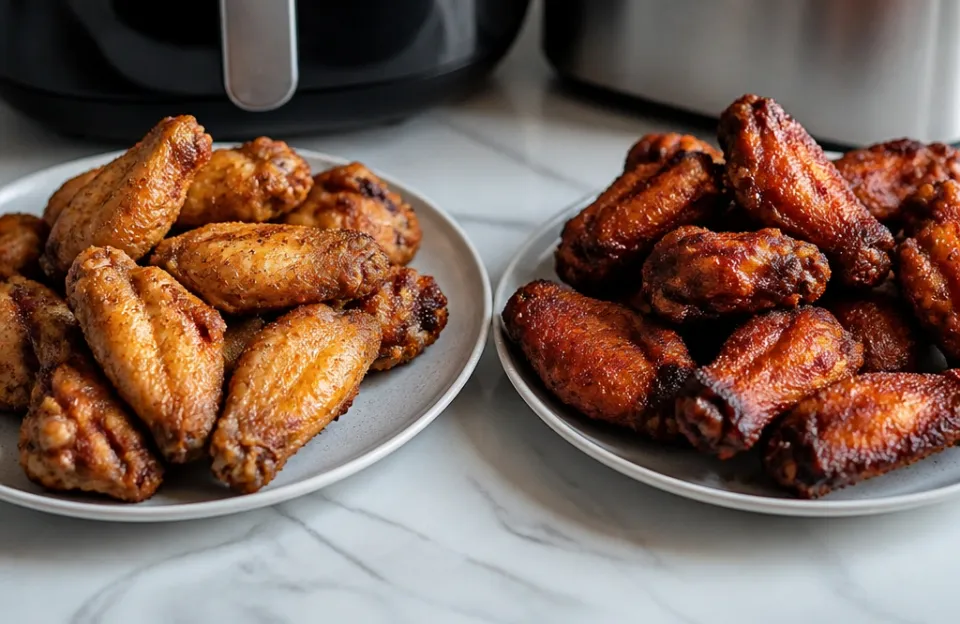
Neither method is universally better. Deep frying gives wings maximum crunch and the classic fried flavor many people expect, but it requires a large volume of hot oil and close attention to fire and burn safety. Air frying is more convenient, uses little or no added oil, and is easier to clean up, but batches are smaller and the crust is crisp rather than truly fried. Choose deep frying for a crowd and peak crunch, and air frying for everyday cooking, smaller batches, and less mess.
The sections below compare both methods across texture, timing, fat, flavor, cleanup, safety, and equipment so you can pick the right approach for your next batch.
How Each Method Cooks the Skin
The difference starts with heat transfer. Deep frying submerges the food completely in extremely hot oil until it reaches a safe internal temperature. That oil can exceed 400 °F, and cooking oil is a highly flammable liquid.
When cold wings hit hot oil, surface moisture boils off quickly. Because oil surrounds every part of the wing evenly, the skin dehydrates fast and sets into a thick, rigid shell. That shell helps keep the meat juicy while the outside stays brittle.
An air fryer works differently. It is essentially a countertop convection oven that crisps food through rapid circulation of hot air rather than an oil bath. Air transfers heat more slowly than liquid oil, so the skin dries and browns more gradually. You still get a crispy surface, but it is thinner and more delicate than a deep-fried crust.
Both methods are safe only when the meat reaches the right internal temperature. Follow the FSIS safe minimum internal temperature chart and confirm 165 °F for poultry, including wings.
Why Submerged Oil Creates a Thicker Crust
Oil holds a lot of thermal energy and releases it into food quickly. That rapid energy transfer drives fast structural changes in the chicken skin, so the crust forms uniformly because the oil touches every surface.
Air relies on convection. Even with a strong fan, air cannot deliver energy as aggressively as oil. The skin dehydrates and browns, but it lacks the heavy, shattered-glass texture that comes from a vat of hot oil. For a practical air fryer method that pushes crispness further, see this guide to extra-crispy air fryer chicken wings.
Crunch and Surface Texture
Texture is usually the first thing people argue about. Deep-fried wings have a distinct, heavy crunch. If you coat them in flour or cornstarch first, that coating puffs up and fries into a solid armor. Even naked wings develop substantial snap because the skin blisters and hardens quickly in the oil.
Air-fried wings are crispy but lighter, with an almost papery snap. The skin shrinks tightly against the meat. Without added oil, an air-fried wing can turn slightly leathery if left in too long, so tossing the wings in a teaspoon of oil before cooking helps browning and texture.
If you want a heavy crackle, deep frying delivers it. If you prefer a lighter bite where seasoning and sauce lead, the air fryer does the job. Checking the internal temperature with a fast digital probe helps you avoid overcooking either version and ruining the texture.
Breading changes the comparison. A flour or starch coating fries into a thick shell in oil, while in an air fryer the same coating dries and browns into a thinner crust. For a coating designed around air frying, this flour-coated air fryer wings method explains the approach.
Cooking Times and Batch Sizes
Speed and volume matter, especially when feeding a crowd. The USDA FSIS gives approximate deep-frying times of 13 to 20 minutes at 375 °F for chicken pieces. A pot of oil needs time to heat before that, and you can cook a few pounds at once as long as you do not overcrowd the pot.
Air-fried foods generally require 5 to 25 minutes at 350 °F to 400 °F, and manufacturer instructions should be followed when available. Wings usually land at the longer end of that range. Cooking times also vary by appliance size and power, though the safe internal temperature stays the same.
Batch capacity is the bigger difference. Air fryer baskets are small, and overcrowding prevents enough air circulation to cook food properly, so larger amounts should be cooked in batches. A single crowded basket produces uneven, soggy results.
For a family dinner, the air fryer can be faster from start to finish because there is no large pot of oil to heat and no heavy cleanup. For a party where you need several pounds of wings at once, deep frying in a large pot is the more practical option. Running back-to-back air fryer batches for a crowd takes considerably longer.
| Attribute | Deep Fried Wings | Air Fryer Wings |
|---|---|---|
| Preheat | Time for oil to reach frying temperature | Short appliance preheat, if any |
| Cook Time | About 13 to 20 minutes at 375 °F for chicken pieces | Within the general 5 to 25 minutes at 350 °F to 400 °F range |
| Batch Capacity | Several pounds in a large pot, without overcrowding | Smaller batches to preserve air circulation |
| Flipping Required | No, the oil surrounds the food | Often helpful for even browning |
| Large-Crowd Suitability | Better for volume | Requires multiple batches |
Fat, Calories and Oil Absorption
This is where the air fryer pulls ahead for everyday eating. Deep-fried food absorbs an estimated 8% to 25% of the total oil at typical frying temperatures of 325 °F to 375 °F. That estimate covers deep-fried foods generally, not wings specifically, and breading or batter increases absorption.
Air frying uses little or no oil and can reduce the fat and calories added during cooking compared with deep or shallow frying. The rendered chicken fat drips away through the basket grate rather than staying in the food. A light oil coating still helps browning, but a teaspoon or two covers an entire batch.
Keep the comparison honest: using an air fryer does not automatically make highly processed foods more nutritious. The underlying ingredients still matter. If you track macros, this breakdown of air fryer chicken wing calories puts typical numbers in context.
Flavor and Sauce Adherence
Fat carries flavor. Deep-fried wings taste richer because the frying oil coats the outer layers of skin and meat, and the thick crust acts like a sponge that grabs wet sauce and holds it without immediately turning mushy.
Air-fried wings taste more like concentrated roast chicken. The flavor is cleaner and meatier without frying oil masking the poultry. The smoother, tighter skin tends to hold heavy sauces less firmly, so wet sauces can slide off or pool at the bottom of the bowl.
To help sauce stick to air-fried wings, toss them as soon as they come out of the basket while the surface is hot and dry, or serve the sauce on the side. Dry rubs work especially well in the air fryer because the circulating air bakes the spices into the skin.
Mess, Splatter and Cleanup
Deep frying is inherently messy. Hot oil splatters, and steam carries grease particles that leave a film on countertops, cabinets, and the stove hood. Afterward you have to deal with a large volume of used cooking oil, which should never go down the drain.
Cleaning the pot means degreasing heavy surfaces, and the whole process can take a chunk of time. This guide to cleaning a toaster oven air fryer covers similar interior grease issues for combo appliances.
Air frying is far easier on cleanup. The basket and grate usually have nonstick coatings, and once cool they go into the dishwasher or wash out in the sink in under two minutes. There is no oil disposal and minimal splatter.
One maintenance note: grease still drips into the bottom drawer or tray of an air fryer. Wipe it out regularly, because accumulated fat will smoke during the next use and can affect the flavor of later meals.
Safety Around Hot Oil and Air Fryer Heating Elements

Hot oil presents real dangers. When water encounters very hot oil at about 350 °F, it vaporizes instantly into superheated steam, expands quickly, and can cause oil to splatter and risk bodily injury.
The USDA FSIS deep-frying guidance covers several practical rules for managing this risk:
- Never use water on a grease fire. Use a kitchen fire extinguisher or cover the fryer with a metal lid, and call 911 immediately if a grease fire occurs.
- Keep a kitchen fire extinguisher available when deep frying.
- Do not overcrowd the frying basket, which can cause undercooking, uneven cooking, and oil overflow.
- Never leave the fryer unattended, because food can blacken, burn, and become a fire hazard within minutes.
- Monitor the oil temperature with a dedicated frying thermometer so the oil does not overshoot the target range.
- Keep children and pets well away from the cooking area while the oil is hot.
Air fryers have no open vat of oil, but they are not risk-free. The basket, housing, and exhaust vents get hot, so keep the appliance clear of walls and anything flammable, and use caution when removing the basket. Follow the manufacturer’s instructions for your model rather than assuming automatic shutoff or a specific vent clearance.
For households with young children or anyone anxious about stovetop frying, the air fryer removes the open-oil hazard that makes deep frying demanding.
Equipment Costs and Counter Space
You may already own a heavy Dutch oven or cast iron skillet suitable for deep frying, in which case the main recurring cost is cooking oil for each session. Dedicated electric deep fryers add another appliance to store, and many home cooks use them only occasionally.
A quality air fryer is a more versatile countertop purchase. It sits on the counter permanently or on a medium shelf, and it does not require buying consumable oil beyond a light spray or drizzle. If kitchen space is tight, a multi-function toaster oven with an air fry setting can save room.
Prices for both appliances vary widely by brand and capacity, so compare current models rather than relying on fixed figures. For most households, the deciding factor is how often you will use each appliance, not the sticker price alone.
Handling Frozen Wings in Each Method
Frozen wings divide the two methods sharply. Dropping frozen, ice-covered wings into hot oil is dangerous, because rapid steam expansion can cause violent bubbling and oil overflow. Thaw wings completely and pat them bone-dry before deep frying, which means planning ahead.
Air fryers handle frozen foods more conveniently, but exact times for raw frozen wings vary by appliance, and no single authoritative time applies to every model. Use your manufacturer’s instructions where available, start at a moderate temperature to thaw and render, then raise the heat to crisp, and always confirm 165 °F in the thickest piece before serving.
Checking Doneness Without Guessing
Whichever method you use, guessing when wings are done risks dry meat or unsafe temperatures. The USDA FSIS lists 165 °F as the safe minimum internal temperature for poultry, including wings.
Two practical rules from the deep-frying guidance apply here:
- Do not check the internal temperature while the food is submerged in hot oil, because the reading will be inaccurate. Lift the wing out, then probe it.
- Probe the thickest part of the drumette or the thickest piece, avoiding bone, and confirm 165 °F.
A quick-read meat thermometer lets you check several wings without losing much heat. If you air-fry large batches often, a wireless monitoring probe can track the largest wing without opening the basket, provided the probe and cable are rated for the appliance’s heat and routed so they do not touch the heating element.
Oil temperature also matters for safety and results. In a deep fryer, adding cold meat makes the oil temperature drop, so track it and adjust the heat. In an air fryer, the effective cooking temperature falls when the basket is crowded, so leave space between wings.
Which Method Fits Your Routine
The choice depends on the occasion more than on any single category.
Choose deep frying when you are hosting a group, when you want that classic sports-bar crunch, or when you plan to coat the wings in a heavy wet batter. The rich flavor and thick crust justify the mess for special occasions, provided you manage the oil safely.
Choose air frying for weeknight dinners, when you want to cook from frozen, when you are watching your fat intake, or when you would rather not spend time scrubbing grease off the stove. It delivers a lighter crisp with far less cleanup.
Frequently Asked Questions
Are Air Fryer Wings Healthier Than Deep-Fried Ones?
They contain less added fat. Deep-fried food absorbs an estimated 8% to 25% of the total oil at typical frying temperatures, while air frying uses little or no oil and can reduce the fat and calories added during cooking. Air frying does not make a food nutritious on its own; the underlying ingredients still matter.
Can I Get the Same Crunch in an Air Fryer as a Deep Fryer?
You can get close, but it will not be identical. Deep frying creates a thicker, harder crust, while air frying creates a thinner, lighter crisp. Tossing the wings in a small amount of oil before air frying helps browning and texture.
Which Is Better for Cooking Frozen Wings Straight from the Bag?
The air fryer is the better option. Dropping frozen wings into hot oil is dangerous because rapid steam expansion can cause splattering and oil overflow. In an air fryer, follow your manufacturer’s instructions, since times vary by appliance, and confirm 165 °F before serving.
Do I Need to Add Oil to Wings Before Air Frying Them?
You do not have to, but a light coating helps. A teaspoon or two conducts heat across the skin, promotes even browning, and reduces the chance of a leathery exterior, while still keeping added fat far below deep frying.
How Do I Keep My Wireless Thermometer from Disconnecting Near the Fryer?
Metal appliances and thick walls can interfere with signals. If you monitor wings remotely, positioning the receiver carefully matters. This guide on why wireless thermometer signals drop near metal can help you place the base station for a steadier link.
What Oil Is Best If I Decide to Deep Fry?
Choose an oil with a smoke point above your frying temperature. Deep-frying oil can reach temperatures over 400 °F, so pick a high-smoke-point oil and monitor it with a thermometer to avoid pushing it past its limit.