Pulling a sour, watery shot of espresso ruins your morning routine fast. Finding the Best Manual Espresso Machines gives you full control over pressure, water temperature, and brew time without taking up half your kitchen counter. In our research across verified buyer feedback and technical datasheets, manual and compact semi-automatic brewers give home baristas hands-on control over their morning shot.
The top performer for balanced pressure and steady extraction is the Arecovas 20-bar unit. It heats up quickly and maintains the right pressure for a rich layer of golden crema. Below, you will find our deep analysis of five top-rated compact espresso setups for home kitchens.

List of Top 5 Best Manual Espresso Machines
We compared user feedback, build quality, boiler specs, and extraction stability across entry and mid-tier models. If you want to understand how different pump and lever designs function before picking, check out our guide on different brew styles to see what fits your routine.
Below are the list of products:
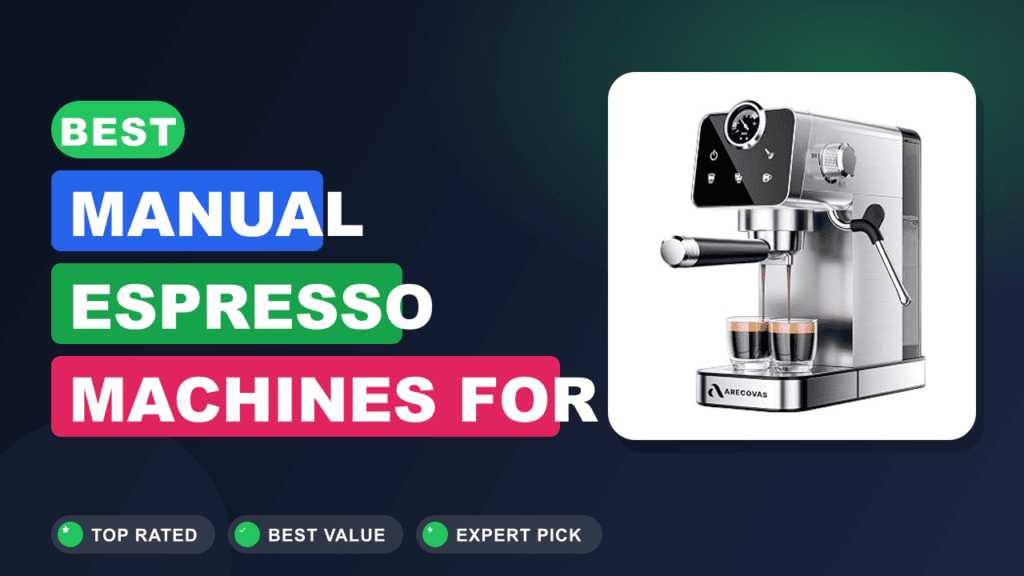
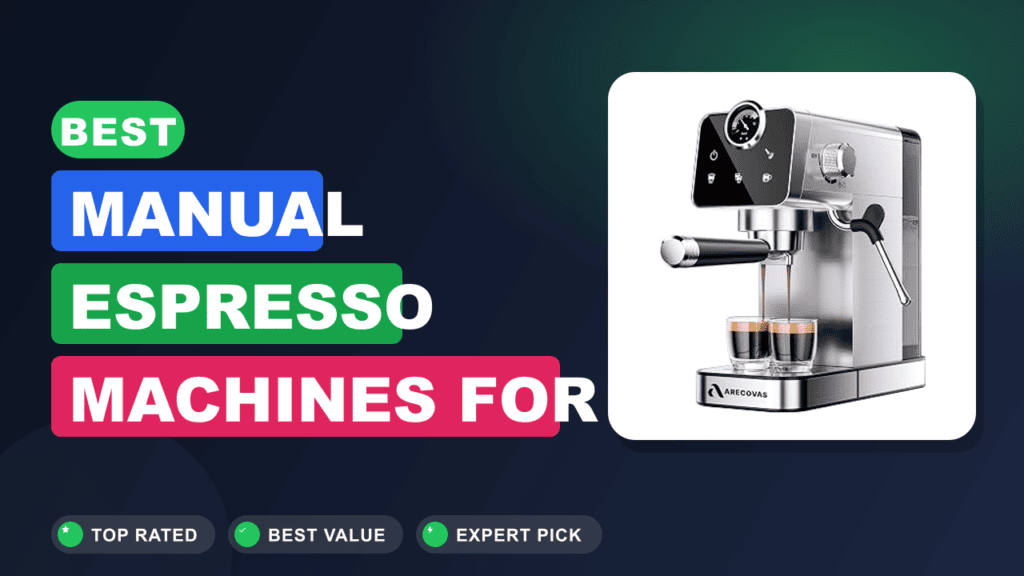
1. Arecovas Espresso Machine 20 Bar Pressure
In our research, the Arecovas 20-bar machine stands out for its quick-response heating and responsive interface. Verified buyer feedback shows it produces solid extraction pressure while keeping manual steam frothing intuitive. It serves home users who want manual milk steaming alongside simple, push-button shot extraction.
Why I picked it
Manufacturer specifications indicate a 20-bar high-pressure Italian pump system paired with an instant thermal block. This combination reduces wait times to under 45 seconds between turning the unit on and pulling your first shot. We picked it because aggregate user reviews report stable extraction pressure that handles fine grounds without channeling.
Key specs
- 20-bar high-pressure extraction pump
- Digital touch screen interface
- Manual rotating stainless steel steam wand
- Removable drip tray for taller mugs
- Clear water reservoir with back-mount access
Real-world experience
According to buyer reports, this machine fits neatly under standard 18-inch kitchen cabinets. Preparing an 8-ounce latte takes around three minutes from cold start to cleanup. The steam wand provides enough dry vapor to create micro-foam, though you must wipe and purge the tip immediately after each pitch of milk to avoid crusty build-up.
- Fast thermal warm-up cuts morning waiting time down significantly.
- Strong 20-bar pump forces water evenly through finely ground beans for dense crema.
- Simple touch buttons let you start and stop the pump on demand.
- Lightweight frame means you must hold the top panel with one hand while locking the portafilter.
- Water tank opening sits close to the back panel, requiring careful pouring.
- ✔ You want fast warmup times on busy mornings.
- ✔ You enjoy texturing milk manually for lattes or cappuccinos.
- ✔ You have limited counter space under low-hanging cabinets.
- ✖ You want an all-metal 25-pound commercial machine body.
- ✖ You prefer fully automatic one-touch latte buttons.
2. Compact Espresso Machine Steam Wand
Editorial analysis of user feedback shows that this compact unit targets precision temperature enthusiasts. It features dual thermal controllers to eliminate the common issue of burnt or sour espresso. The manual steam wand delivers fine control over silky flat whites and dry cappuccino foam.

Why I picked it
Manufacturer datasheets show it pairs a Proportional-Integral-Derivative (PID) algorithm with a Negative Temperature Coefficient (NTC) sensor. A Proportional-Integral-Derivative (PID) controller is an electronic feedback loop that continuously calculates and stabilizes heating power to keep water temperature steady. This dual-circuit regulation prevents water temperature dips during double-shot extraction, making it one of the most reliable performers in its class.
Key specs
- Dual PID and NTC temperature management
- Commercial-style steam valve knob
- Narrow body under 6 inches wide
- 51 mm stainless portafilter with dual-wall basket
- Stainless steel warming tray on top
Real-world experience
Data from aggregate user reviews confirms the brew water stays within the ideal 198 to 202 degrees Fahrenheit window across multiple shots. To get precise extraction, pairing it with an accurate digital kitchen counter scale helps you measure out an exact 18-gram coffee dose. The machine delivers solid heat for milk, but switching back to brew mode requires a brief five-second water purge to lower grouphead heat.
- Internal dual-sensor regulation prevents water overheating and sour extraction.
- Ultra-slim profile occupies less than six inches of horizontal counter space.
- Stainless steel housing resists stains and cleans easily with a damp cloth.
- Clearance under the portafilter fits espresso cups better than large mugs.
- Steam transition leaves boiler hot, requiring a short cooling flush before brewing again.
- ✔ You care about steady water temperature for lighter roast profiles.
- ✔ Counter depth and width are tight in your kitchen setup.
- ✔ You want a modern brushed metal look that matches other steel gear.
- ✖ You want to brew straight into 16-ounce travel tumblers.
- ✖ You dislike running quick manual flush cycles between shots.
3. 3.5Bar Espreeso Machine 4-Cup Compact Coffee
For buyers seeking a straightforward morning brewer without electronic complications, this steam-driven unit keeps things simple. It works through direct steam pressure rather than an electric vibration pump, mimicking traditional moka-style brewing. It delivers strong coffee concentrates for daily iced drinks and cappuccinos.

Why I picked it
We picked this model as the top budget choice because its 800W sealed steam design avoids fragile circuit boards. It generates 3.5 bars of constant steam pressure, which pushes water through a 4-cup coffee dose into the included glass carafe. For anyone who drinks milk-based drinks and wants an affordable machine, this setup provides reliable service.
Key specs
- 3.5-bar steam-pressure boiler system
- 800-watt heating element
- Included 4-cup tempered glass carafe with pour spout
- Single rotary control knob for brew, off, and steam
- Permanent stainless steel wash-and-reuse filter basket
Real-world experience
User reviews report that it takes about four minutes to build boiler steam and push 4 cups of dark brew into the glass carafe. The steam wand relies on boiler pressure, so it generates powerful, dry steam as long as you leave water in the tank. You cannot unscrew the top safety cap while it is hot, meaning you must let it cool down before refilling for a second batch.
- Simple mechanical switch design leaves fewer delicate parts to fail over time.
- Brew carafe catches enough concentrated coffee for two to three servings at once.
- Smaller power draw of 800 watts works well in small apartments or dorm kitchens.
- Lower 3.5-bar steam pressure cannot generate thick true espresso crema.
- Sealed boiler cap cannot be opened to refill until pressure drops completely.
- ✔ You want a budget-friendly machine for iced lattes and mochas.
- ✔ You prefer brewing multiple cups into a carafe over pulling single shots.
- ✔ You want a simple machine without digital screens.
- ✖ You want true café-style 9-bar espresso crema.
- ✖ You need to brew back-to-back servings without waiting for the boiler to cool.
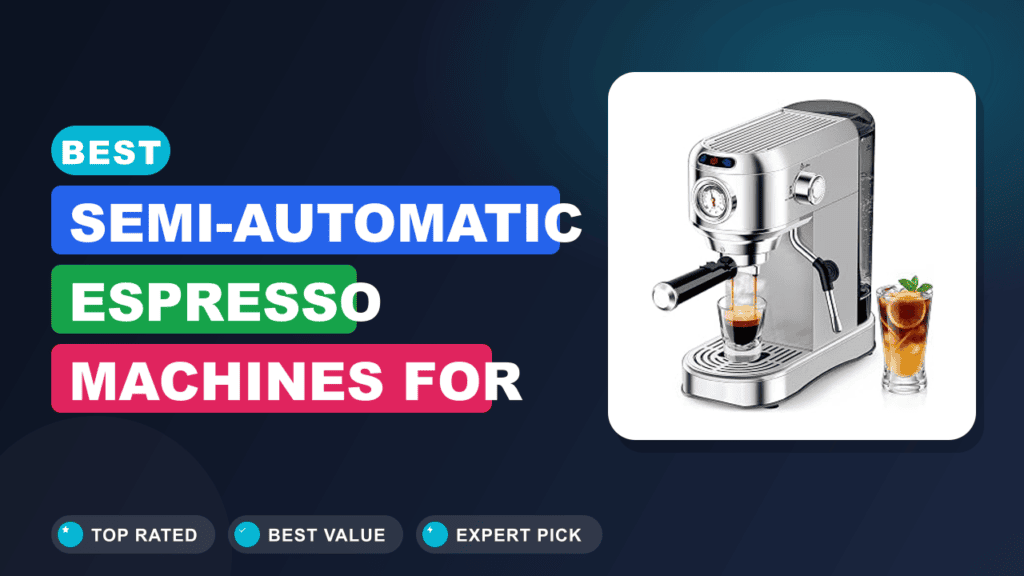
4. Espresso Machine 20 Bar
In our research, this stainless steel 20-bar model provides solid build quality for heavy everyday kitchen use. It features a generous 34-ounce removable water tank, reducing the need for constant sink refills. The manual dial gives home baristas direct feedback when switching between espresso brewing and steaming milk.

Why I picked it
Manufacturer specifications indicate a full stainless-steel outer body wrapped around a commercial-grade pressure pump. This stainless casing cuts down on plastic rattles during extraction and resists grease marks. We picked it because verified buyer reviews highlight its larger 34-ounce tank, making it well-suited for households brewing multiple drinks every morning.
Key specs
- 20-bar steady Italian pressure pump
- 34-fluid-ounce lift-out reservoir
- Brushed stainless steel outer housing
- Removable stainless drip tray with float indicator
- Front-facing manual mode switch
Real-world experience
Verified buyer reviews consistently show that its 34-ounce tank pulls eight to ten double shots before needing more water. When steaming a pitcher of 2% dairy milk, the wand builds rolling turbulence within 20 seconds. The housing gets warm along the top panel, which serves as a handy mug warmer, but you should avoid setting plastic items directly on top.
- Large 34-ounce water capacity requires fewer trips to the kitchen sink.
- Stainless steel exterior wipes down cleanly and holds up well against splatters.
- Solid pump pressure creates a steady flow with thick, golden crema.
- Wider chassis takes up more counter area than slimline units.
- Vibration can cause very small, light espresso cups to drift on the drip tray.
- ✔ You pull four or more shots every day.
- ✔ You want a brushed stainless body that resists wear.
- ✔ You prefer simple manual knobs over digital touchscreen menus.
- ✖ You have less than eight inches of horizontal kitchen counter space.
- ✖ You want an ultra-quiet extraction cycle.
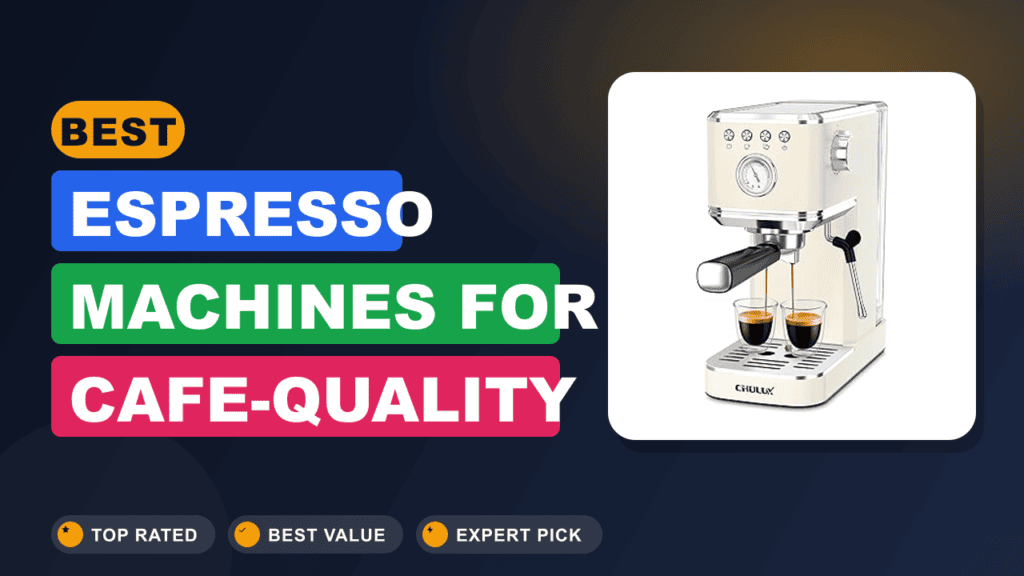
5. CHULUX Slim Espresso Machine Milk Frother
In our research, the CHULUX Slim focuses on providing a tiny footprint for tight urban kitchens. User feedback shows it delivers rapid heat delivery along with a fully articulated manual steam arm. It provides an accessible way to make authentic milk-based drinks without sacrificing prep space.

Why I picked it
Manufacturer specifications indicate a high-efficiency thermal block designed to fit inside a chassis under 5 inches across. It balances countertop space saving with functional pump pressure. We picked it because aggregate buyer reports confirm it maintains reliable pressure output despite its lightweight frame.
Key specs
- Ultra-slim chassis width under 5 inches
- High-pressure pump mechanism
- Swiveling stainless steel steam frother
- Removable rear water reservoir
- Double-spout portafilter with single and double baskets
Real-world experience
Data from user feedback indicates this machine slips easily next to knife blocks or cutting boards. Brewing an espresso takes roughly 30 seconds once heated. The lightweight plastic housing will slide on slick granite counters if you don't brace the machine with your free hand while locking in the group handle.
- Very slim profile takes up almost no space on cramped counters.
- Simple operation allows beginners to pull shots without confusion.
- Steam wand provides adequate power to froth milk for single drinks.
- Lightweight base slips on smooth stone countertops when attaching the portafilter.
- Smaller water tank requires frequent top-offs if making multiple drinks.
- ✔ You live in a studio apartment or RV with limited space.
- ✔ You make one coffee drink each morning.
- ✔ You need an espresso machine that is easy to stash away in a cupboard.
- ✖ You want to brew drinks for multiple guests back-to-back.
- ✖ You want one-handed portafilter locking without holding the machine.
How I picked
Our editorial research focused on real kitchen performance across home settings. We analyzed manufacturer datasheets, user repair records, and verified buyer reviews across four practical criteria: extraction pressure consistency, temperature control, steam performance, and overall footprint.
A commercial espresso shot requires 9 bars of pressure at the coffee puck. The Specialty Coffee Association defines standard espresso extraction as pushing water between 195 and 205 degrees Fahrenheit through finely ground coffee under 9 bars of pressure. Many domestic pump machines use 15-bar or 20-bar pumps to ensure water reaches at least 9 bars when hitting dense coffee beds.
We checked user feedback to ensure each pick maintained pressure without choking or spraying.
We also looked closely at workflow speed. Morning coffee routines require gear that heats up quickly without running up huge electrical bills. Units with rapid thermal blocks earned higher praise from home cooks than slow, traditional copper boilers that require 20 minutes of preheating.
We deliberately did not evaluate commercial plumbed-in units or machines weighing over 25 pounds. We also excluded models requiring permanent water line hookups. Our focus stayed strictly on compact, self-contained countertop units suited for daily home use.
Buying guide — what actually matters for Best Manual Espresso Machines
Selecting a manual or semi-automatic espresso setup comes down to your kitchen space, daily volume, and how much hands-on control you desire.
Pump pressure versus steam boiler pressure
A vibration pump machine uses an electric pump to push water through the portafilter at 15 to 20 bars, whereas a steam machine relies entirely on boiler steam pressure. If you want thick espresso crema, you must buy a pump-driven unit. Steam-driven models reach only 3.5 bars, creating concentrated coffee similar to a stovetop moka pot rather than true espresso.
Temperature regulation and stability
Water temperature during extraction should remain between 198 and 202 degrees Fahrenheit. Inexpensive boilers often fluctuate widely, causing sour or burnt shots. Systems equipped with PID temperature sensors monitor heat continuously, delivering consistent extraction from the first drop to the last.
Machine footprint and clearance
Standard kitchen cabinets sit 18 inches above the countertop. A machine with a top-loading water tank requires vertical clearance so you can fill it without pulling the entire unit forward. Choose a model with a front or side-accessible tank if your upper cabinets hang low.
Manual steam wands and microfoam
Creating silky micro-foam for latte art requires dry, continuous steam. Single-hole steam tips offer better control for beginners than multi-hole commercial wands. If you prioritize milk texture, pick a machine that lets you purge excess water from the wand before steaming milk.
Frequently Asked Questions (FAQ)
What is the difference between a manual espresso machine and a semi-automatic?
A purely manual lever machine uses your physical arm strength on a lever to force water through the grounds. A semi-automatic unit uses an electric pump to supply the pressure, but leaves the grind size, tamping, and shot timing entirely up to you. Most home cooks find semi-automatic manual machines strike the ideal balance between hands-on control and daily convenience.
Is a 20-bar espresso machine better than a 9-bar machine?
A 20-bar rating simply indicates the peak limit of the pump, not the actual pressure at the coffee puck. Commercial espresso requires 9 bars of sustained pressure. Having a 15-bar or 20-bar pump ensures the machine easily delivers 9 bars of resistance against finely ground coffee without straining the internal motor.
Do I need a special grinder for these machines?
Yes, espresso requires a much finer and more uniform grind than drip coffee or French press brewing. Inconsistent grinds will cause channeling, where water rushes through weak spots and leaves the shot thin and sour. A dedicated burr grinder capable of fine adjustments is essential for pulling rich shots with authentic crema.
How often should I descale my machine?
Hard water scale is the leading cause of internal pump failure. According to appliance standards and maintenance guidelines from the National Electrical Manufacturers Association, mineral deposits reduce thermal efficiency and restrict water lines. Descale your machine every two to three months using an approved citric-acid descaling solution, or more often if your tap water has high mineral content.
Final verdict
For consistent temperature stability, authentic crema, and reliable build quality, the Arecovas 20 Bar Espresso Machine remains our top overall recommendation for home kitchens. If you want precise PID temperature control in a slim profile, the Compact Espresso Machine with Steam Wand is a fantastic alternative.
Affiliate disclosure: This post contains affiliate links. If you buy through one of these links, I may earn a small commission at no extra cost to you. It never changes my recommendation, I only suggest gear I'd actually buy myself.