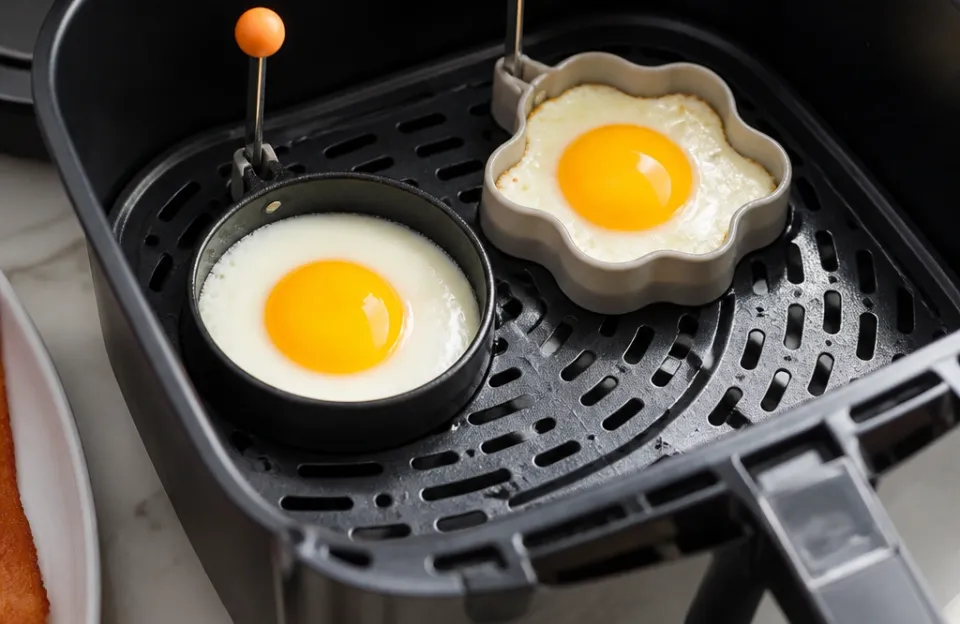
An air fryer baking pan is a small oven-safe dish designed to fit inside your air fryer basket or on its rack. You use it for recipes that need a solid surface, like cakes, casseroles, or anything with a loose batter. Choosing the right one depends mostly on what you cook and how much room your specific machine has inside.
This buying guide covers the materials, shapes, and sizing rules you need to know before you buy an air fryer baking pan. We'll look at how different metals and ceramics handle rapid hot air, which shapes fit common basket sizes, and why airflow matters more here than in a regular oven. By the end, you'll know exactly what to measure and what material fits your cooking habits.
What separates an air fryer baking pan from a regular oven dish
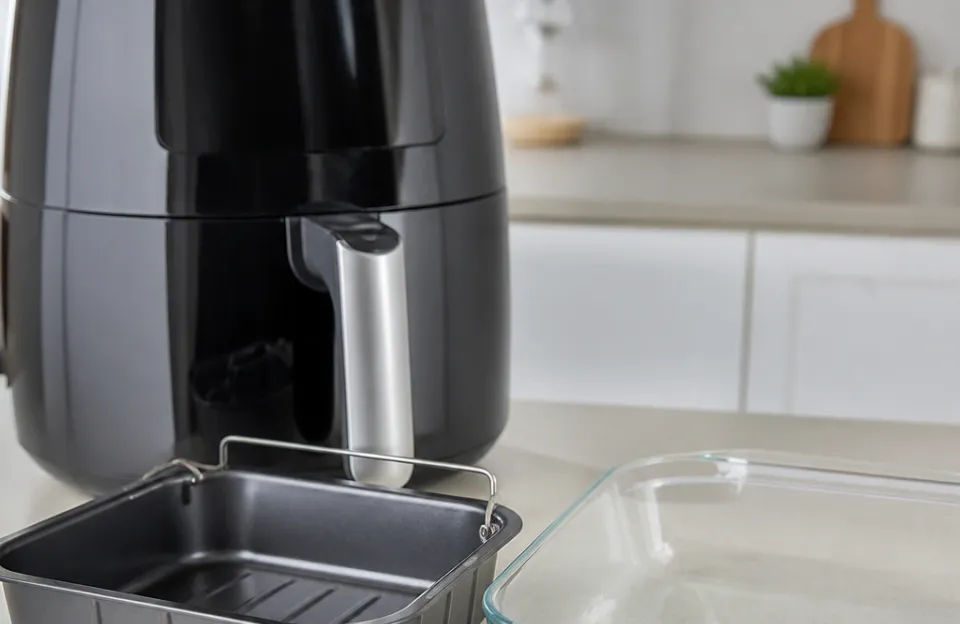
Air fryers work by pushing superheated air around food very fast. A standard oven relies on slower, ambient heat. That difference changes everything about the pan you put inside.
A pan meant for an air fryer needs to withstand sudden temperature shifts without warping. It also needs to leave enough room around its edges for the fan to push air down and back up. If a pan fills the entire basket from wall to wall, the hot air can't circulate.
Your food ends up burnt on top and raw underneath.
Most dedicated air fryer pans are smaller than their standard kitchen counterparts. They often have lower sides to let heat reach the food faster. Some have perforated bottoms or raised ridges to lift the food slightly off the base.
You don't always need a specialized pan. Many standard small bakeware pieces work fine, provided they fit with at least half an inch of clearance on all sides.
The material dictates how fast the pan heats up and how evenly it bakes. Thin aluminum gets hot instantly. Thick stoneware takes longer but holds heat well after the machine turns off.
Picking the wrong material for your recipe usually means uneven baking or a warped pan.
Sizing rules so the pan actually fits your machine
Measuring your air fryer's interior is the first step before buying any bakeware. Don't guess based on the quart capacity printed on the box. Two 5-quart air fryers from different brands often have completely different basket shapes.
Take a tape measure to the inside width and length of your basket or rack. Subtract one full inch from both numbers. That remaining space is your maximum pan size.
You need that half-inch gap on every side so the fan can move air properly. Blocking that airflow ruins the cooking process and can overheat the machine.
Depth matters just as much. If you're making something that rises, like a quick bread or muffins, the pan plus the rising dough must stay below the heating element. Most air fryer heating coils sit close to the food.
A tall loaf pan might push your batter right into the burner. Measure the distance from the rack or basket floor to the top heating element when the drawer is closed. Leave at least an inch of vertical clearance.
If you own a toaster-oven-style air fryer with slide-in racks, you have more flexibility. These usually accept standard quarter-sheet pans. Basket-style models are far more restrictive.
Round baskets generally need round pans. Square baskets can take square or round pans, as long as the corners don't hit the walls.
For recipes where you want a really crunchy exterior, getting the internal temperature right is critical, and using a fast digital thermometer helps verify your food is done even when baking inside a thick pan.
Materials and how they handle rapid convection heat
The metal or ceramic you choose changes your bake time, browning level, and cleanup routine. Here is how the most common options behave under intense convection heat.
Aluminum and aluminized steel
Aluminum heats up almost immediately. It conducts heat better than nearly any other bakeware material. This makes it great for things that need a quick burst of high heat, like roasting vegetables or baking thin cookies.
Thin aluminum pans warp easily in an air fryer. The intense top-down heat can cause a flimsy sheet to buckle and pop. Look for heavy-gauge aluminum or aluminized steel if you go this route.
Aluminized steel has a steel core coated in aluminum. It resists warping much better while keeping the fast heat transfer.
One downside is reactivity. Bare aluminum reacts with acidic foods like tomatoes or citrus. If you plan to bake acidic dishes, stick to coated aluminum or another material entirely.
Ceramic and stoneware
Ceramic takes longer to heat up. Once it gets hot, it stays hot. This slow, steady heat is ideal for custards, cheesecakes, or deep casseroles where you want gentle, even cooking without burning the edges.
You must check the manufacturer's maximum temperature rating before putting ceramic in an air fryer. Some decorative ceramics crack under thermal shock. Only use pieces rated for high-heat oven baking.
Stoneware falls into this category and behaves similarly. It's heavy, retains heat beautifully, and won't react with acids. The weight can be a drawback if your air fryer basket has a low load limit.
Silicone
Silicone molds and pans are popular because they don't stick and fold up for storage. They are completely safe for air fryer temperatures, usually rated up to 425°F or higher.
The problem with silicone is that it insulates. It doesn't conduct heat well. Food baked in silicone rarely gets brown or crispy edges.
If you want a golden crust on your cornbread, silicone will disappoint you. It works best for delicate items like egg bites, muffins, or small cakes where browning isn't the goal. Always place silicone pans on a rigid surface before sliding them in.
They are too floppy to carry filled with batter safely.
Nonstick coatings
Many air fryer accessories come with a nonstick coating. These make cleanup incredibly easy. You can wipe out melted cheese or baked-on batter with a damp cloth.
Coatings wear out. The high-speed fan in an air fryer can blast loose particles around, and repeated heating cycles degrade nonstick surfaces faster than a traditional oven. Avoid metal utensils completely.
Scratching the coating ruins the pan and puts flakes in your food. According to the FDA guidelines on food contact surfaces, damaged nonstick cookware should be replaced rather than continued to be used. If longevity is your main concern, uncoated stainless steel or bare ceramic lasts much longer.
| Material | Heat Speed | Browning Ability | Warp Risk | Best Used For |
|---|---|---|---|---|
| Aluminum | Very Fast | High | High (if thin) | Cookies, flatbreads, roasted veg |
| Aluminized Steel | Fast | High | Low | Cakes, breads, general baking |
| Ceramic / Stoneware | Slow | Medium | None | Custards, casseroles, cheesecake |
| Silicone | Very Slow | Low | None | Muffins, egg bites, delicate cakes |
| Nonstick Coated | Medium | Medium | Varies by base | Easy-cleanup everyday baking |
Pan shapes that match your cooking style
The shape of your air fryer baking pan determines what you can cook and how evenly it bakes. Round, square, and loaf pans all behave differently under a top-mounted fan.
Round pans fit naturally into basket-style air fryers. Because the fan blows air down in a circular pattern, a round pan catches the heat evenly across its entire surface. They are the safest bet for beginners.
Use them for cakes, quiches, or deep-dish pizzas.
Square or rectangular pans maximize corner space in square baskets. They hold more volume than a round pan of the same width. However, the corners sit further from the center airflow and closer to the basket walls.
This can lead to slightly uneven baking, with corners finishing faster than the middle. Rotating the pan halfway through the cook time fixes this.
Loaf pans are tricky. They are narrow and tall. The sides block air from reaching the center of the batter efficiently.
If you bake bread in an air fryer loaf pan, expect the top to brown heavily while the center takes longer to set. Lowering the temperature by 25 degrees compared to a standard oven recipe helps prevent the top from burning before the inside cooks.
Perforated pans exist specifically for air frying. They have holes punched in the bottom. These are excellent for reheating fried foods or baking items where you want the bottom to crisp up.
Don't use them for wet batters. The batter will drip straight through the holes into the bottom of your machine.
When you're baking savory items, like preparing marinated chicken wings in a shallow pan, the right shape keeps juices contained while still allowing top-down heat to crisp the skin.
Why airflow clearance changes your bake times
People often treat air fryer baking pans like regular oven pans and wonder why their recipes fail. The issue is almost always blocked airflow.
In a conventional oven, radiant heat comes from all sides. In an air fryer, a single powerful fan forces heat downward. If your pan touches the walls of the basket, that air hits the rim and bounces back up.
It never reaches the bottom of the food. You end up with a scorched top and a soggy base.
Maintaining that half-inch gap on all sides allows the air to travel down, sweep under the pan (if elevated on a rack), and circulate back up. This is why many manufacturers sell pans with built-in feet or recommend placing the pan on top of the crisper plate rather than directly on the basket floor.
Because the heat is so concentrated, bake times drop significantly. A cake that takes 35 minutes in a standard oven might take 20 minutes in an air fryer. Temperatures usually need dropping by about 25°F as well.
Always check for doneness earlier than your recipe suggests. Using a reliable probe thermometer takes the guesswork out of checking dense baked goods like meatloaves or thick breads baked inside a pan.
If you want extra crispy results on foods cooked in a pan, raising the temperature for the last two minutes works, provided your pan material can handle the spike.
Cleaning and durability realities for daily use
How you clean your air fryer baking pan determines how long it lasts. The compact space of an air fryer means grease splatters hit the pan's exterior and the basket walls constantly.
Let the pan cool completely before washing it. Plunging a hot aluminum or ceramic pan into cold water causes thermal shock. Aluminum warps permanently.
Ceramic cracks. This is the most common way people ruin good bakeware.
Hand washing is safer for almost all materials. Dishwashers use harsh detergents and extreme heat cycles that strip nonstick coatings and dull aluminum. Warm soapy water and a soft sponge handle 90% of messes.
For baked-on grease, soak the pan in warm water for twenty minutes before scrubbing.
Avoid abrasive scouring pads on coated or polished surfaces. They leave micro-scratches where food sticks during the next bake. Silicone pans are the exception.
They handle rough scrubbing well and are fully dishwasher safe, though hand washing still extends their life.
Storage requires thought too. Stacking heavy pans inside the air fryer basket between uses can scratch the basket's nonstick coating. Store your pans separately in a cabinet.
If you must stack them, place a paper towel or cloth between each piece.
Edge cases where standard pans fall short
Not every recipe translates perfectly to an air fryer baking pan. Some situations require specific adjustments or different gear entirely.
Baking with wet batters, like pancakes or crepes, is difficult. The intense top-down fan blows the batter around before it sets. If you must bake wet batters, cover the pan loosely with foil for the first few minutes to shield it from the direct wind.
Poke a small hole in the foil to let steam escape. Just make sure the foil doesn't touch the heating element.
High-altitude baking already requires recipe adjustments. Adding the intense, dry heat of an air fryer compounds the problem. Baked goods rise faster and collapse easier.
You may need to reduce leavening agents further than standard altitude charts suggest.
If you are batch cooking or doing weekly meal prep, having multiple identical pans saves time. You can swap them out quickly without waiting for a single pan to cool and wash.
Very large families often find air fryer baking pans too small. A standard 6-inch round pan yields maybe four servings of casserole. If you need more volume, you are better off using your main oven.
Air fryer pans excel at small-batch baking, side dishes, and single-serving desserts. Trying to force a family-sized portion into a tiny pan leads to spills and blocked airflow.
Also, keep in mind that adding oil or fat to your pan changes the calorie count of your meal. If you are tracking nutrition closely while baking, factor in the added fats absorbed by the food from the greased pan surface.
Frequently asked questions
Can I use regular oven bakeware in my air fryer?
Yes, as long as it is oven-safe and fits with at least half an inch of clearance on all sides. Glass, ceramic, metal, and silicone oven-safe dishes work. The main limitation is size.
Standard 9×13 pans won't fit in most basket-style air fryers. Stick to 6-inch or 7-inch pans for baskets, or quarter-sheet sizes for oven-style models.
Do I need to preheat the air fryer baking pan?
Preheating the pan helps if you want a crispy bottom, similar to preheating a pizza stone. Place the empty pan in the air fryer while it preheats for three to five minutes. Carefully add your food or batter afterward.
Skip this step for delicate cakes or custards where you want gentle, gradual heating.
Will a silicone pan melt in the air fryer?
No, food-grade silicone is typically rated for temperatures up to 425°F or 450°F. Most air fryers max out at 400°F. Silicone won't melt under normal operating conditions.
However, never let the silicone touch the heating element directly, as localized extreme heat can damage it.
How do I choose between these materials for everyday baking?
Pick aluminum or aluminized steel if you bake frequently and want fast, even browning. Choose ceramic if you mostly make casseroles, custards, or dishes that benefit from slow, retained heat. Go with silicone only if easy release and simple cleanup matter more to you than achieving a browned crust.
Why does my cake burn on top before the middle cooks?
The heating element in an air fryer sits very close to the food. The top receives intense direct heat while the center remains raw. Lower your recipe's temperature by 25°F and tent the pan loosely with foil halfway through baking to shield the top.
Checking the internal temp with an instant-read tool prevents pulling it out too early.
Is it safe to line my air fryer baking pan with parchment paper?
Parchment paper is safe up to around 420°F. Cut it to fit inside the pan without hanging over the edges. Loose edges can blow upward into the heating element and catch fire.
Never preheat the air fryer with parchment paper inside unless it is weighed down by food.
Before you buy your next pan
Getting the right air fryer baking pan comes down to measuring your machine and matching the material to your favorite recipes. Don't buy a pan based solely on the brand name of your air fryer. Third-party pans often fit better and cost less, provided you verify the dimensions first.
Stick to heavy-gauge metals or high-quality ceramics if you plan to use it daily. Flimsy pans warp under convection heat and waste your ingredients. Leave room for the air to move, drop your temperatures slightly compared to standard oven recipes, and your air fryer will handle almost any baking task you throw at it.