A standard muffin tin won't fit inside most air fryers. The basket is too small, or the pan blocks the fan and stops hot air from circulating. That's why you need a dedicated air fryer muffin pan.
These pans are smaller, shaped to match specific basket dimensions, and built from materials that handle rapid convection heat without warping.
This buying guide covers the five main types of air fryer muffin pans available right now. We'll look at silicone molds, carbon steel tins, aluminum trays, individual ramekins, and disposable liners. Each section explains who the pan works best for, what it does well, and where it falls short.
You'll also find a breakdown of how to measure your basket before you buy anything.
Sizing Your Basket Before Picking an Air Fryer Muffin Pan
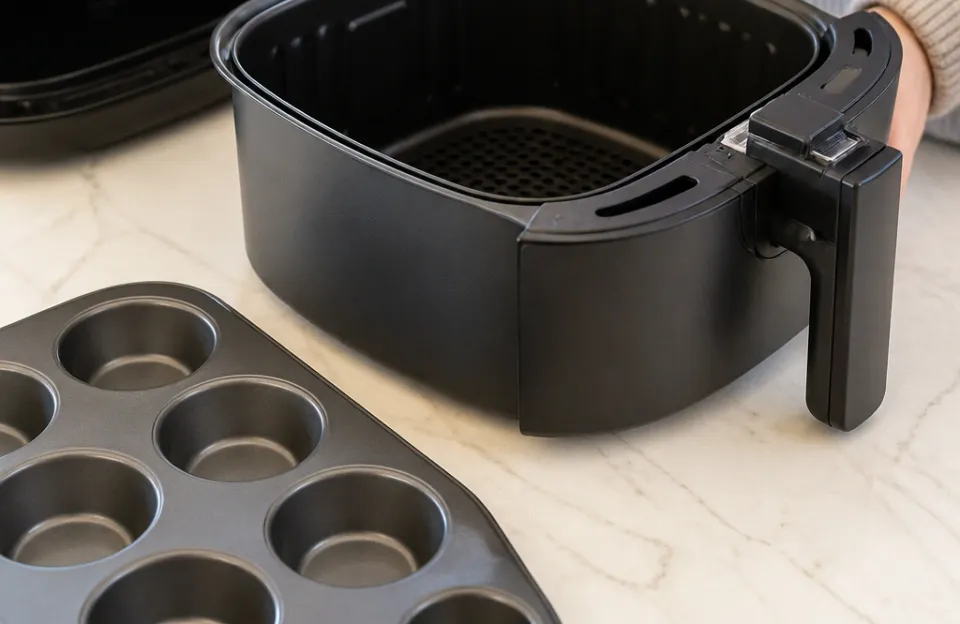
The first step in choosing an air fryer muffin pan is measuring your machine. Grab a tape measure and check the interior width and depth of your basket or oven cavity. Write down those numbers.
Then subtract about half an inch from each side. That gap allows hot air to flow around the pan. If the pan touches the walls, the food cooks unevenly and the heating element might overwork.
Most basket-style air fryers hold a 6-cup silicone mold or a mini metal tin measuring roughly 7 by 5 inches. Oven-style air fryers with slide-in racks can usually take a full 12-cup pan, provided the rack spacing is tall enough. Always check the manufacturer's manual for maximum accessory dimensions.
Guessing leads to returns.
Material matters just as much as size. Air fryers heat up faster than conventional ovens and push air across the food at high speeds. Thin metals warp under this stress.
Silicone flexes but needs support. Knowing your basket size narrows down which materials will actually work for your setup. If you regularly cook savory items alongside baked goods, like getting wings perfectly crisp, you already know how much airflow matters in these machines.
Silicone Cupcake Molds
Silicone molds are the most common choice for air fryer baking. They come in 4-cup, 6-cup, and sometimes 12-cup configurations designed specifically to fit popular air fryer brands. The material is naturally nonstick, flexible, and safe for temperatures up to 450°F or higher depending on the manufacturer.
These molds are ideal for people who bake occasionally in their air fryer and want easy cleanup. You can pop the muffins out by pushing up from the bottom of each cup. No greasing required in most cases, though a light spray helps with very sticky batters.
The main limitation is structure. Silicone is floppy. If you fill a 6-cup mold with batter and try to lift it into the air fryer basket, it bends.
Batter spills everywhere. You have to place the empty mold in the basket first, then pour the batter in using a spoon or a measuring cup. This adds a step and makes portion control slightly harder.
Another tradeoff is browning. Silicone insulates the batter. Muffins baked in silicone tend to have paler sides and softer crusts compared to metal pans.
If you want a crispy edge, silicone won't give it to you. Look for food-grade, platinum-cured silicone when shopping. The FDA regulates food-contact materials in the US, so checking for compliance markings on the packaging is a good habit.
Carbon Steel Mini Muffin Tins
Carbon steel is heavier, stiffer, and conducts heat faster than silicone. A carbon steel air fryer muffin pan gives you the rigid structure needed to carry filled cups from the counter to the basket without spilling. Most models designed for air fryers hold 6 cups and measure under 8 inches wide.
This type suits frequent bakers who want traditional muffin textures with browned edges and domed tops. Carbon steel responds quickly to the intense convection heat of an air fryer, meaning your baked goods rise faster and develop a better crust. Many carbon steel pans come with a nonstick coating, making release relatively easy.
The downside is maintenance. Even with a nonstick coating, carbon steel can rust if left wet. You need to hand wash it and dry it immediately.
Metal utensils will scratch the coating, so stick to silicone spatulas or wooden picks when removing muffins.
Weight is another factor. Carbon steel is significantly heavier than silicone. In a small basket air fryer, a heavy metal pan sitting on top of a wire rack can shift during the fan's high-speed cycle.
Make sure the pan sits flat and doesn't rattle. If you use your air fryer daily for both baking and roasting meats, keeping track of how many calories end up in your meals is easier when your equipment behaves predictably.
Aluminum Baking Trays With Cups
Aluminum is the standard material for commercial bakeware because it heats evenly and resists rust. For air fryers, you'll typically find aluminum trays stamped with 4 or 6 shallow cups. These are lighter than carbon steel and don't require the same careful drying routine.
Aluminum trays work well for savory egg bites, mini quiches, and cornbread. They conduct heat efficiently, so cooking times are often shorter than with silicone. If you're meal prepping breakfast items alongside other weekly tasks, such as batching out portions ahead of time, aluminum trays speed up the process.
The major drawback is warping. Thin aluminum bends when exposed to rapid temperature changes. An air fryer goes from room temperature to 400°F in minutes.
If the aluminum gauge is too thin, the tray will bow upward in the center. Once warped, it won't sit flat again, and batter pools to one side. To avoid this, only buy aluminum trays labeled as heavy-gauge or reinforced.
Uncoated aluminum also reacts with acidic ingredients. If you're baking lemon muffins or adding fruit preserves to the batter, the acid can discolor the pan and leave a metallic taste. Choose anodized aluminum or coated versions if you plan to bake acidic recipes.
Individual Ceramic or Glass Ramekins
Instead of a single connected pan, some air fryer users prefer individual 4-ounce or 6-ounce ramekins. These are made from ceramic or borosilicate glass. You place two or three directly into the basket, spaced apart.
Ramekins are the best option for single servings or when you want to bake different flavors at the same time. One cup can hold blueberry batter while the next holds chocolate. They're also excellent for lava cakes, custards, and soufflés that need straight, rigid walls to climb.
The limitation is capacity. You can only fit a few ramekins in a standard basket air fryer at once. It's inefficient for feeding a family.
You also have to verify that your specific ramekins are oven-safe to at least 400°F. Decorative ceramics meant for serving, not baking, can crack under air fryer convection heat.
Handling hot ramekins is another issue. Unlike a pan with a rim you can grab with tongs, individual cups get extremely hot and are hard to extract safely. You'll need a silicone sling or heat-resistant gloves to pull them out without tipping them over.
Checking internal doneness requires care; inserting a probe thermometer gently is smart, similar to how you would verify poultry temperatures to avoid undercooking.
Disposable Paper Liners and Foil Cups
Paper baking cups and foil liners aren't pans, but they function as one inside an air fryer if used correctly. You place them directly into the basket or onto a flat trivet. They hold about 3 ounces of batter each.
These are perfect for people who hate washing dishes or who want to bake muffins in an air fryer only once or twice. Cleanup means throwing the liner away. Foil cups hold their shape better than paper and can stand alone on a flat surface.
The problem is airflow and stability. Paper liners are flimsy. The powerful fan inside an air fryer can blow empty paper cups around the basket before the batter sets.
If you use paper, always weigh them down with batter immediately. Never preheat the air fryer with empty paper liners inside, as they can fly into the heating element and burn.
Foil cups solve the flying problem, but they block heat transfer on the sides. Your muffins will bake mostly from the top down, leading to uneven textures. They work fine for quick breads or dense batters, but delicate cakes struggle in foil cups.
Matching Materials to What You Bake
Choosing the right air fryer muffin pan depends heavily on your recipes. Different batters react differently to various materials and heating speeds. Here is how the options compare across key factors.
| Material | Best Used For | Heat Conduction | Cleanup Effort | Durability |
|---|---|---|---|---|
| Silicone | Sweet muffins, cupcakes | Slow, even | Very low | High |
| Carbon Steel | Domed muffins, crisp edges | Fast, intense | Medium | High (if dried) |
| Aluminum | Egg bites, cornbread | Fast, even | Low | Medium (can warp) |
| Ceramic/Glass | Custards, lava cakes | Moderate, steady | Medium | Medium (can crack) |
| Paper/Foil | Quick batches, no cleanup | Blocked sides | None | Single use |
If you primarily bake sweet muffins and want soft edges, silicone is the easiest route. If you want bakery-style domes with golden brown sides, carbon steel is necessary. Savory bakes like egg bites do well in aluminum because the fast heat sets the eggs quickly without drying them out.
Consider your storage space too. Silicone molds fold flat. Metal pans stack but take up rigid space.
Individual ramekins require a dedicated cabinet shelf. If your kitchen is small, a flexible silicone mold that fits multiple air fryer sizes offers the most practicality. When experimenting with new batters, especially those using leavening agents like baking soda for texture adjustments, the pan material changes how quickly the exterior sets.
Safety Limits and Coating Concerns
Air fryers operate differently than wall ovens. The heating element sits very close to the food, and the fan moves air rapidly. This environment puts stress on bakeware.
Nonstick coatings on metal air fryer muffin pans are generally safe up to 500°F. However, most air fryer baking happens between 320°F and 375°F. Staying within this range prevents the coating from degrading.
Avoid aerosol cooking sprays that contain propellants, as these chemicals can break down nonstick surfaces over time. Use a pump oil mister instead, or brush the cups lightly with oil.
For silicone, ensure the product is 100% food-grade silicone, not a silicone blend. Blends often contain plastic fillers that melt or off-gas at high temperatures. A simple test is the "pinch test." Pinch and twist a flat part of the silicone.
If the twisted area turns white, it likely contains fillers. Pure silicone retains its color when stretched.
Never put plastic containers or standard plastic muffin pans into an air fryer. Only use materials explicitly rated for oven or air fryer use. Double-checking your equipment's safety limits is as important as monitoring cooking temperatures closely to prevent foodborne illness.
Frequently Asked Questions
Can I put a regular 12-cup muffin tin in my air fryer?
Most standard 12-cup tins are too large for basket-style air fryers. They block the airflow and won't fit through the opening. Oven-style air fryers with slide-in racks can sometimes accommodate a standard tin, but you must measure the interior rack dimensions first.
Using a pan that is too large results in raw centers and burnt tops.
Do silicone air fryer muffin pans smell when heated?
New silicone molds often release a slight odor during their first few uses. This is normal and usually fades after washing and baking a couple of times. If the smell persists or smells like burning plastic, the mold may contain synthetic fillers rather than pure food-grade silicone.
Wash new silicone thoroughly with warm soapy water before the first bake.
How do I keep muffins from sticking to a metal air fryer pan?
Even with a nonstick coating, metal pans benefit from preparation. Brush the inside of each cup lightly with neutral oil or melted butter. Alternatively, drop a small paper baking liner into each metal cup.
This combines the structural support and heat conduction of metal with the easy release of paper.
Will the air fryer fan blow paper muffin liners around?
Yes, empty paper liners are very light and can be blown out of the cups by the convection fan. Always fill paper liners with batter immediately after placing them in the pan or basket. Never run the air fryer empty with loose paper liners inside, as they can hit the heating element and catch fire.
Are glass ramekins safe for air fryer baking?
Only if they are made from tempered or borosilicate glass rated for oven use. Standard drinking glasses or decorative jars will shatter under the rapid heat changes of an air fryer. Check the bottom of the ramekin for an oven-safe stamp and verify the maximum temperature rating before using it in the machine.
How do I choose between silicone and metal for air fryer muffins?
Choose silicone if you prioritize easy cleanup, flexible storage, and soft-edged baked goods. Choose metal, specifically carbon steel, if you want traditional muffin textures, browned edges, and a rigid pan you can carry without spilling. Your decision comes down to whether you value convenience or baking performance more.
Getting the Right Fit for Your Machine
Buying an air fryer muffin pan comes down to three things: measuring your basket accurately, matching the material to your recipe, and respecting the heat limits of the pan. Don't guess on dimensions. A quarter-inch difference determines whether a pan fits safely or blocks the fan entirely.
Silicone remains the easiest entry point for beginners due to its flexibility and low maintenance. Carbon steel rewards experienced bakers who want traditional results. Aluminum and ramekins fill specific niches for savory bites and single servings.
Pick the one that aligns with how often you bake and what you actually eat. Keep your measurements handy, read the temperature ratings, and your air fryer will handle muffins just as well as it handles everything else in your rotation.