Kitchen food scales typically measure within a small margin of error, often around one gram for standard models. They are suitable for cooking and baking but not for laboratory-grade precision. Reliable results depend on managing environmental factors, ensuring proper placement, and verifying readings with known weights.
What Accuracy Means for Kitchen Scales

Accuracy describes how close a scale’s displayed number is to the actual physical weight of an object. If you place a certified 100-gram test weight on the platform and the screen reads 100 grams, the scale is accurate. If it reads 102 grams, it has a 2-gram error.
Digital food scales use a component called a strain gauge load cell. When you place food on the platform, the metal inside the load cell bends slightly. That bending changes electrical resistance, and the scale’s microchip converts that change into a weight reading. The quality of that load cell determines how truthful the final number is.
Consumer scales fall under general manufacturing standards rather than strict legal trade rules. In the US, commercial scales used to sell food by weight must meet NIST measurement guidelines. Your home kitchen scale doesn’t have to meet those exact legal tolerances, but reputable brands design their sensors to stay within a tight margin anyway. A typical tolerance for a home model is plus or minus one division, meaning plus or minus 1 gram on a scale with 1-gram increments.
Precision vs. Accuracy: Why Both Matter
Precision refers to repeatability. If you place the same bag of flour on the scale ten times and get the exact same reading each time, the scale is precise. It does not matter if that reading is wrong; it matters that it is consistent. Accuracy means the reading matches reality. Ideally, you want both, but in consumer electronics, trade-offs occur.
A highly precise but inaccurate scale gives you confidence in your process but fails in absolute measurement. Conversely, an accurate but imprecise scale fluctuates wildly, making it impossible to replicate a recipe step-by-step. Most modern digital scales achieve reasonable precision through stable sensors, but accuracy degrades over time due to mechanical wear or electronic drift. Recognizing the difference allows you to troubleshoot effectively. If your readings jump around, you have a precision issue (often caused by surface vibration or drafts). If your readings are steady but consistently off when checked against a known weight, you have an accuracy issue requiring calibration or replacement.
For deeper insights into why decimal places don’t always equal better performance, see our breakdown of Food Scale Decimal Places.
Why Your Food Scale Gives Wrong Numbers
Several factors contribute to measurement errors, ranging from user habits to physical environment constraints. Identifying these culprits is the first step toward restoring reliability.
Air Drafts and Temperature Swings
Digital scales use strain gauge load cells that detect minute deformations. Moving air creates micro-vibrations on the weighing pan, causing the display to flicker or settle on incorrect values. Similarly, extreme temperature changes affect the metal components of the load cell. Placing a hot pot directly on a cold scale causes thermal expansion in the sensor, leading to temporary inaccuracies until the system equilibrates. Always allow heavy cookware to cool slightly before weighing, and keep the scale away from fans, open windows, or HVAC vents.
Surface Stability
The foundation of any accurate measurement is a rigid, level surface. Countertops with slight flex, especially wooden ones or those near sink cutouts, absorb some of the downward force. This reduces the pressure transferred to the load cell, resulting in lighter-than-actual readings. Never weigh on soft mats, towels, or uneven tiles. A hard, flat stone, glass, or solid laminate counter provides the best baseline stability.
Battery Levels
Weak batteries often lead to unstable readings or delayed responses. When power drops, the scale’s electronics may fail to process signals correctly. Replace batteries promptly if you observe flickering numbers or slow stabilization to ensure consistent performance.
How to Check If Your Food Scale Is Accurate
You do not need professional certification weights to verify your scale. Household items with standardized manufacturing tolerances serve as excellent reference points.
The Coin Test
Coins provide a convenient reference for checking scale accuracy because their weights are standardized. Look up the official mass of local currency denominations from your national mint’s website. Place several identical coins on the center of the platform. Compare the displayed total against the sum of their individual weights. A significant discrepancy suggests the scale needs calibration or repair.
Water Volume Verification
Since water has a predictable density, it serves as a useful test medium. Pour a measured volume of water into a tared container on the scale. The displayed weight should correspond closely to the expected mass based on that volume. Use room-temperature water to minimize thermal expansion effects. This check helps identify gross inaccuracies in the middle of the scale’s range.
If your scale fails these basic checks, consult the manufacturer’s manual for reset procedures. Many models require specific button sequences to enter factory mode. For guidance on resetting devices, refer to resources like how to reset and calibrate a digital food scale.
The Tare Function and Where It Goes Wrong
The tare button zeroes out the current weight, allowing you to add subsequent ingredients without doing mental math. While convenient, misuse introduces error. First, taring adds complexity to the load path. Each item placed on top of another compresses the one below it differently. Stacking bowls or containers can obscure the true position relative to the load cell’s center.
Second, users often forget that taring consumes part of the scale’s total capacity. If a scale maxes out at 5kg and you tare a 1kg bowl, you only have 4kg left for ingredients. Exceeding this limit can damage the internal springs or overload the circuitry, potentially permanently skewing future readings. Always monitor the net weight after taring, especially when working with dense liquids or large batches of meat.
Third, residual static electricity from plastic containers can cling to the sensor plate, affecting zero-point stability. Wiping down plastic bins before placing them on the scale ensures a clean start.
Placement Errors That Skew Every Measurement
Where you put the food on the scale matters significantly. Load cells measure force distribution. Placing an item off-center creates torque, forcing the sensor to compensate for uneven leverage. High-quality scales mitigate this, but budget models often exhibit corner-loading errors where weights appear lighter or heavier depending on position.
Always center your container on the platform. If the scale has a raised circular pad, align the base of your bowl with that circle. For irregular shapes, try to distribute mass evenly. Additionally, avoid touching the scale while it settles. Body heat and vibrations from hands resting on the unit interfere with the stabilization algorithm. Let go completely once you press the ingredient onto the pan.
To understand when higher-end placement sensitivity becomes necessary, review Do You Really Need a 0.1g or 0.01g Food Scale?
Cleaning Habits That Damage Load Cells
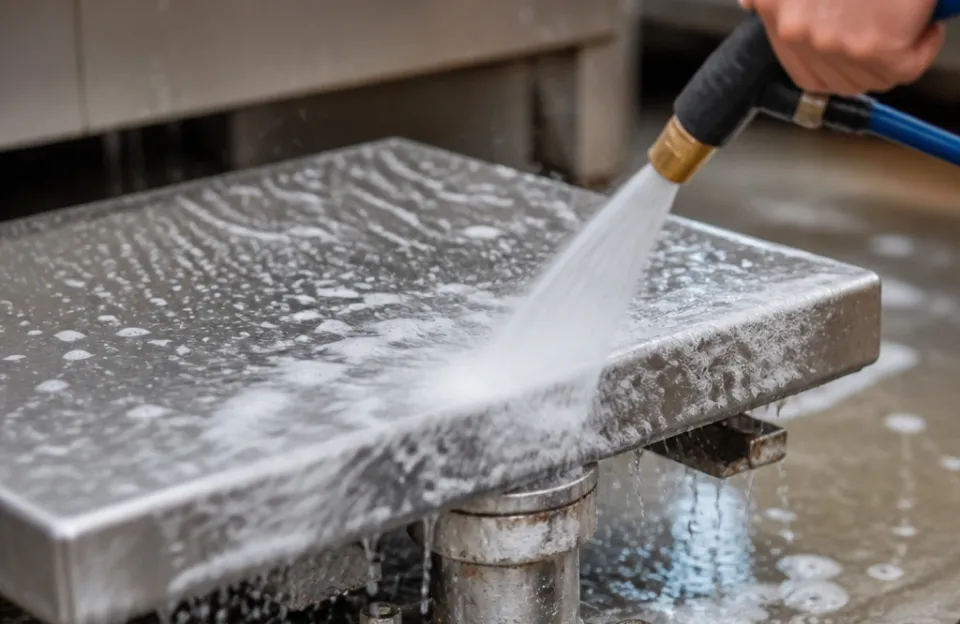
Moisture is the enemy of electronic scales. Spills seep into seams, corroding contacts and short-circuiting boards. Never submerge a non-waterproof scale. Instead, wipe spills immediately with a damp cloth followed by a dry towel. Avoid spraying cleaners directly onto the device; apply solution to the cloth first.
Avoid harsh solvents that might damage the platform’s finish; mild detergent is safer for routine cleaning. Dropping heavy items onto the scale generates shock loads that can misalign internal components or crack sensors. Handle the device carefully and store it securely to protect its calibration integrity.
Accuracy Requirements for Different Kitchen Tasks
Not every recipe demands the same level of fidelity. Matching your tool to the task prevents unnecessary frustration.
| Task | Required Precision | Recommended Scale Type | Notes |
|---|---|---|---|
| General Cooking | ±5–10g | Standard Digital (1g increments) | Suitable for chopping vegetables, portioning meats, and boiling pasta. |
| Baking Bread/Cake | ±1–2g | Quality Digital (1g increments) | Hydration ratios rely on tighter margins; consistency is key. |
| Coffee Brewing | ±0.1–0.5g | Pocket or Brew Scale (0.1g increments) | Small doses require fine resolution to control extraction rates. |
| Nutrition Tracking | ±1–5g | Any Reliable Digital | Human metabolism varies widely; extreme precision offers diminishing returns. |
| Spice Blending | ±0.1g | Laboratory/Pocket Scale (0.01g increments) | Essential for active compounds where tiny amounts alter flavor profiles. |
For daily meal prep, a robust 1g-increment scale balances cost and utility. Professional bakers may prefer scales with faster sampling rates to handle dynamic pouring. Home baristas benefit from specialized timers integrated into 0.1g-capable units. Choosing the right tier avoids buying expensive gear for tasks that tolerate wider variances.
Ultimately, no kitchen scale replaces good technique. Learn your device’s quirks, verify it periodically with simple household tests, and respect its physical limitations. By controlling environment, placement, and maintenance, you maximize the accuracy already built into your hardware.