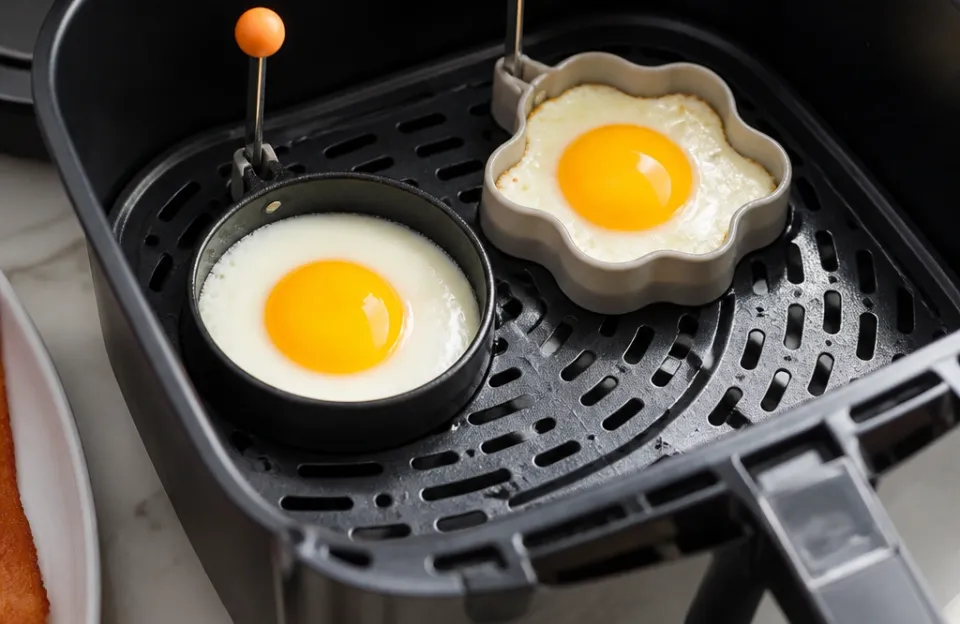
Air fryer accessories for 8-quart models give you the space to cook larger batches, roast whole chickens, and keep food from sitting in pooled grease. An 8-quart basket is big enough for a family of four or five, and the right add-ons change how much you can actually fit inside it. The most useful items are silicone liners that catch drips, metal racks that create a second cooking layer, and perforated parchment rounds that stop sticking without blocking airflow.
This guide covers the specific types of air fryer accessories for 8-quart models that solve real cooking problems. We will look at what fits inside that exact basket size, which materials hold up to high heat, and where people usually buy the wrong dimensions.
Why Basket Size Dictates Your Add-Ons
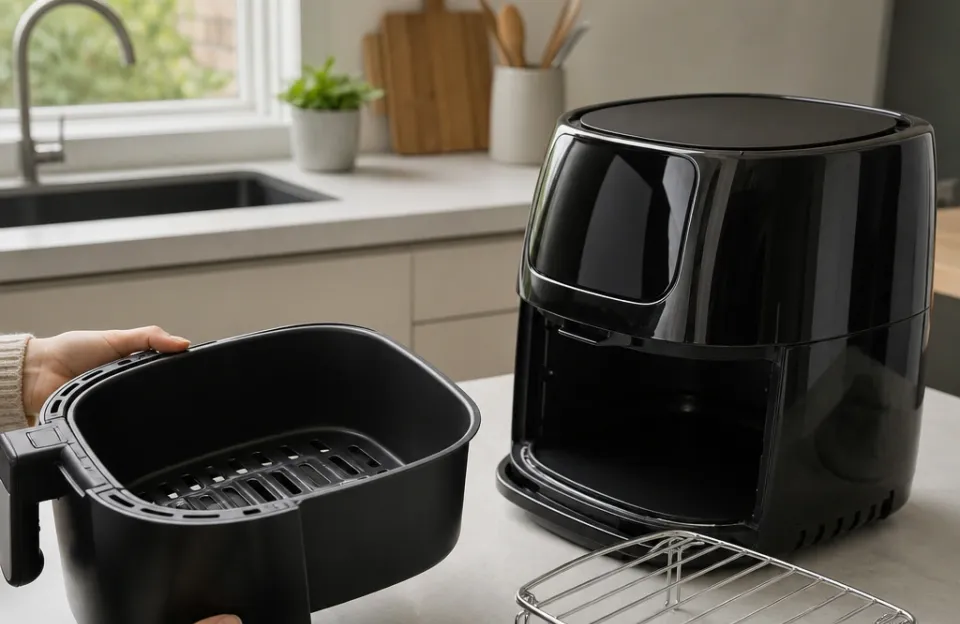
An 8-quart air fryer usually has a square basket measuring roughly 9.5 by 9.5 inches, or a round one around 10 inches across. That interior footprint determines everything. A liner meant for a 6-quart machine will leave exposed edges where grease burns directly onto the nonstick coating.
A rack built for a 10-quart oven-style unit simply won't slide down into the drawer. You have to match the accessory to the internal dimensions, not just the advertised capacity.
The depth matters too. Eight-quart baskets are typically 4 to 5 inches deep. If you stack two layers using a rack, each layer only gets about 2 inches of vertical clearance.
Foods that rise or expand, like breaded chicken pieces, need careful planning when you start stacking. I've found that checking your specific model's manual for interior measurements saves a lot of return shipping costs.
Material safety is the other baseline. The FDA regulates food-contact materials to prevent chemicals from leaching during heating. Any plastic, silicone, or coated metal going into an 8-quart basket needs to be rated for temperatures up to 400°F or higher, since that is where most heavy roasting happens.
Silicone Liners That Actually Fit an 8-Quart Drawer
Silicone liners are the most common starting point. They replace disposable paper and protect the factory nonstick coating from scratching. For an 8-quart square basket, you need a liner with outer edges around 9 to 9.5 inches.
Round 8-quart models need a 10-inch diameter liner.
The thickness of the silicone changes how it cooks. Thin liners warp under the weight of heavy potatoes or bone-in meat. Thick ones hold their shape and often include raised ridges on the bottom.
Those ridges lift the food slightly, letting hot air circulate underneath instead of steaming the bottom layer.
One tradeoff with silicone is browning. Food cooked directly on the bare metal mesh of an 8-quart basket gets crispier on the bottom than food resting on a silicone mat. If you want maximum crunch, you might skip the liner for dry rubs and only use it for wet marinades.
When you do use a wet mixture, like a sticky glaze, pairing the liner with a good prep method makes cleanup trivial. For example, soaking poultry beforehand using a flavorful liquid base means less baked-on residue if you catch the drips early.
Stacking Racks for Double-Layer Cooking
A stainless steel trivet or wire rack is the only way to cook two layers of food at once in an 8-quart drawer. These racks sit on the bottom of the basket, with legs tall enough to clear the first layer of food. You place half your ingredients on the bottom, set the rack in, and put the rest on top.
Look for racks made from 304 stainless steel. Cheaper metals rust quickly when exposed to steam and acidic foods. The rack needs feet that are at least 1.5 inches tall.
Anything shorter squashes the food below it.
Stacking works well for vegetables or thin cuts. It fails with thick, breaded items because the top layer blocks the fan's direct airflow from reaching the bottom layer. You have to swap the layers halfway through cooking.
If you're doing weekly batch cooking, this extra step adds up fast. Planning your portions ahead of time, especially when organizing freezer-to-basket meals, helps you decide whether stacking is worth the effort or if single-layer cooking is faster overall.
Perforated Parchment Paper Rounds and Squares
Parchment paper designed for air fryers comes pre-cut with holes punched through it. The holes are mandatory. Solid parchment acts as a sail, catching the powerful fan current in an 8-quart unit and flying up into the heating element, where it scorches.
Perforated sheets stay flat while still allowing convection.
You can buy these in 9-inch squares or 10-inch rounds. They are disposable, which makes them ideal for sugary glazes or heavy flour coatings that would otherwise bake into a silicone liner. The downside is ongoing cost and waste.
They are single-use items.
Never preheat an 8-quart air fryer with parchment inside and no food weighing it down. The fan will blow it upward immediately. Always place the food on the paper before turning the machine on.
| Accessory Type | Material | Best Use Case | Main Limitation |
|---|---|---|---|
| Silicone Liner | Food-grade silicone | Wet batters, easy cleanup | Reduces bottom crisping |
| Stacking Rack | Stainless steel | Doubling vegetable capacity | Blocks airflow to lower layer |
| Perforated Parchment | Unbleached paper | Sugary glazes, heavy breading | Single-use, fire risk if unweighted |
| Skewer Rack | Metal frame | Kebabs, vertical roasting | Takes up significant basket width |
Skewer Holders and Vertical Roasting Racks
Eight-quart models have the height required for vertical cooking. Skewer racks hold metal or bamboo sticks upright, suspending chunks of meat and vegetables above the basket floor. This exposes all sides of the food to the circulating air without needing to flip anything.
These racks usually consist of a circular base that sits at the bottom of the drawer and a top ring that holds the skewers in place. Make sure the total height of the assembled rack plus the skewer handles clears the top heating element by at least an inch. In some 8-quart models with shallower drawers, tall skewer racks touch the ceiling and burn the handles.
Bamboo skewers need soaking in water for 30 minutes before use so they don't ignite. Metal skewers conduct heat and get dangerously hot to touch, requiring silicone-tipped tongs for removal. This setup is great for kebabs, but it limits you to smaller pieces.
Large cuts require different approaches. Getting the exterior texture right on bigger items often involves techniques like dusting the skin lightly to draw out moisture before the heat hits it.
Baking Pans and Cake Barrels
Small cake barrels and loaf pans fit inside 8-quart baskets, turning the appliance into a compact convection oven. A standard 7-inch round cake pan or a 6-cup bundt mold usually fits with enough room left on the sides for air to move.
Solid metal pans block airflow completely underneath whatever is inside them. The top of a cake will brown much faster than the bottom bakes. To fix this, you either lower the temperature by 25°F compared to a traditional oven recipe, or you place the cake pan on top of a wire trivet to let some heat reach the bottom of the pan.
Silicone baking molds are easier to remove cakes from, but they are floppy. Moving a full, liquid batter mold into a deep 8-quart drawer without spilling requires a steady hand or a flat spatula slid underneath for support.
Thermometers That Work With Accessories
When you load an 8-quart basket with racks, liners, and dense proteins, guessing the internal temperature becomes unreliable. Visual cues change when food is elevated on a rack or insulated by a silicone mat. You need a probe thermometer.
Wireless thermometers are the best fit here. A wired probe trails a cord out of the drawer, preventing the basket from closing fully. That gap lets heat escape, dropping the cooking temperature and ruining the timing.
Wireless probes stay entirely inside the closed drawer, transmitting data to a base station on your counter. Using a reliable wireless temperature monitor keeps the lid sealed tight while tracking the core heat.
If you prefer instant-read tools, you have to open the basket, pull it out, and check manually. Opening the drawer drops the ambient temperature significantly in an 8-quart space. Doing this repeatedly extends cooking times.
Having a fast-responding quick-check tool minimizes how long the drawer stays open. Just remember that inserting any probe through a silicone liner leaves permanent puncture marks over time.
Oil Sprayers Versus Aerosol Cans
Cooking spray in a pressurized aerosol can contains propellants like soy lecithin or dimethyl silicone. These additives build up on the nonstick coating of an 8-quart basket and cause it to peel. Once the coating chips, the basket degrades rapidly.
A pump-action oil sprayer filled with your own avocado or olive oil avoids the chemical buildup. You get a fine mist that coats food evenly without pooling at the bottom of the liner. Glass-bodied sprayers are heavier than plastic ones, but they don't absorb odors or stain from turmeric-heavy spice blends.
Spray the food directly, not the empty basket. Spraying an empty nonstick surface and then heating it causes the oil to polymerize into a sticky varnish that is nearly impossible to scrub off.
Sizing Mistakes That Ruin Airflow
The biggest error people make is buying "universal" accessories that are slightly too large. An 8-quart basket relies on a narrow gap between the food and the outer walls for air to travel down, hit the bottom, and rush back up through the center.
If a silicone liner rides up the sides and touches the walls all the way around, it chokes that circulation path. The food ends up steaming in its own moisture. The same applies to oversized parchment sheets that fold up against the edges.
Trim them if necessary. Leave at least a half-inch gap on all sides.
Conversely, accessories that are too small fail differently. A 7-inch rack in a 10-inch wide round basket wobbles when you try to pull the drawer out. Spilled hot grease across the heating element creates smoke instantly.
Measure the bottom interior flat space of your specific 8-quart model before ordering anything.
Cleaning Add-Ons Without Scratching the Basket
Washing accessories improperly damages both the add-on and the air fryer itself. Silicone liners can go in the dishwasher, but they retain soap flavors if the rinse cycle is weak. Hand washing with hot water and dish soap prevents your next batch of fries from tasting like detergent.
Metal racks need immediate drying. Even stainless steel develops water spots and minor surface oxidation if left wet in a closed cabinet. Wire bristles from cleaning brushes can snap off and lodge in the rack mesh, eventually falling into food.
Use nylon-bristle brushes or sponges instead.
Never use abrasive scouring pads on the 8-quart basket itself when removing stuck-on residue from a failed liner. Scrubbing strips the nonstick layer. Soak the basket in warm water for ten minutes, and the debris usually lifts away.
Keeping track of the fat content in your meals also helps, since rendering fats behave differently depending on how lean the protein is before it hits the heat.
Edge Cases for Oddly Shaped 8-Quart Models
Not all 8-quart air fryers share the same geometry. Dual-basket models split that 8-quart total into two 4-quart zones. Standard single-basket accessories won't fit those divided trays.
You have to buy inserts specifically sized for the narrower dual chambers.
Oven-style 8-quart models use slide-in racks rather than pull-out drawers. Liners for these need to be flat sheets, not bucket-shaped bowls. The heating elements in oven styles are often exposed at the top, making parchment paper even more dangerous if it curls upward.
Some 8-quart baskets taper heavily toward the bottom. The top opening might be 10 inches wide, while the flat cooking floor is only 8 inches. Racks must be sized for the narrow floor, not the wide rim.
Always measure the lowest usable flat surface.
Frequently asked questions
Can I use aluminum foil in an 8-quart air fryer?
Yes, you can use small pieces of aluminum foil to catch drips under messy foods. Keep the foil weighed down by the food so the fan doesn't blow it into the heating coil. Never line the entire bottom of the basket with foil, as it blocks the essential airflow needed for convection cooking.
Do universal silicone liners actually fit every 8-quart model?
No. Universal liners are usually designed for average dimensions, which means they fit loosely in wide square baskets and bunch up in round ones. Check the exact interior width and length of your specific 8-quart model.
Buy a liner tailored to those numbers rather than relying on a generic label.
Will stacking racks scratch my nonstick basket?
They can, if the rack lacks protective feet. Look for stainless steel racks that have silicone caps or rolled, smooth edges on the legs. Dragging a bare metal rack across the bottom of an 8-quart drawer while pulling it out is the most common way the factory coating gets gouged.
How do I choose between silicone mats and parchment paper?
Choose silicone mats for daily cooking where you want to avoid waste and mostly cook savory items. Choose perforated parchment paper for sticky, sweet, or heavily breaded recipes that would require intense scrubbing to clean off a reusable mat. Many cooks keep both on hand for different tasks.
Are air fryer accessories safe at 400 degrees?
Food-grade silicone is generally rated up to 430°F to 450°F, making it safe for standard air frying temperatures. Stainless steel handles 400°F easily. Parchment paper is typically rated to 420°F or 450°F, though it browns significantly near its limit.
Avoid any accessory containing plastic components not explicitly rated for high heat.
Does adding a liner change the cooking time?
It usually adds a minute or two. A silicone liner or parchment sheet insulates the food slightly from the direct radiant heat of the metal basket floor. You may also notice less browning on the bottom side of the food.
Compensate by flipping items halfway through or raising the temperature by 5 to 10 degrees.
Before you buy your next insert
Matching air fryer accessories for 8-quart models comes down to measuring your specific basket and respecting the airflow path. A perfectly sized silicone liner or stainless rack changes how much food you can process at once, while the wrong size turns a powerful convection cooker into a slow steamer. Stick to heat-safe materials, avoid aerosol sprays, and always leave a gap around the edges for the fan to do its job.
If you are pushing the limits of your 8-quart capacity to get that deep golden crust, the right accessories keep the process predictable rather than frustrating.