Yes, air fryer chicken wings are a healthy option compared to deep frying. Cooking them in an air fryer cuts the added fat significantly because you only need a light spray or a single teaspoon of oil instead of submerging the meat in a vat of it. A standard serving of air fried wings gives you a solid amount of protein with far fewer calories than the restaurant version.
This article breaks down exactly why air fryer chicken wings healthy is a fair description, how the cooking method changes the nutrition facts, and what steps you can take to keep your batch as lean as possible. We will also look at how they stack up against baked and deep fried wings so you know where you stand.
Why hot air changes the fat content
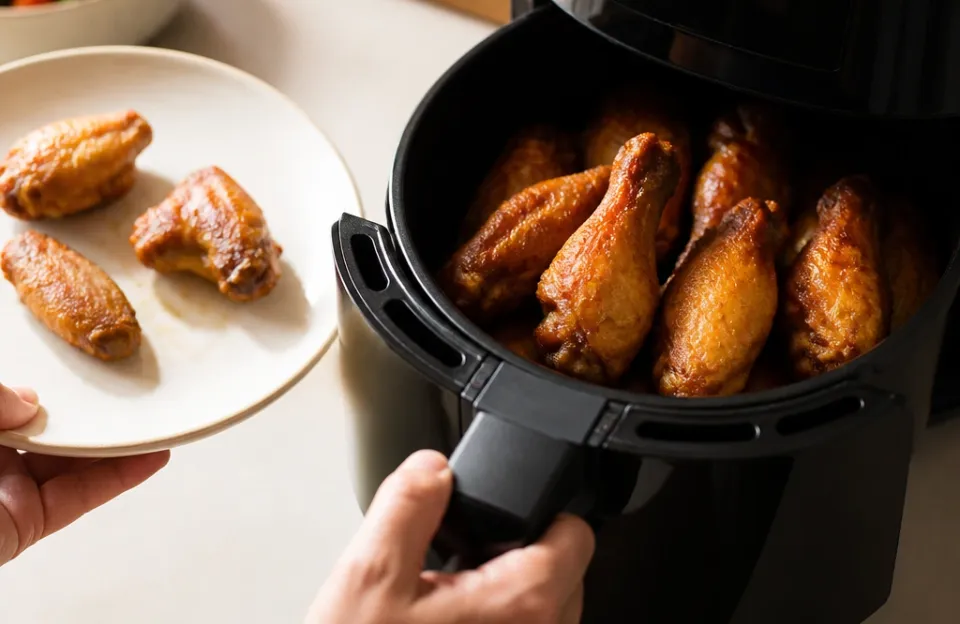
An air fryer cooks by pushing superheated air around the food at high speed. That constant circulation crisps the skin without requiring you to add cups of cooking oil. Chicken wings naturally contain a good amount of fat under the skin.
When you air fry them, a lot of that natural fat renders out and drips down into the bottom of the basket.
You end up eating less total fat per wing. The USDA notes that poultry skin holds a large portion of the bird's total fat, so any method that lets that fat drain away lowers the final calorie count. Deep frying does the opposite.
The battered or bare skin absorbs oil from the fryer pot, adding grams of fat that were not there when the wing was raw.
Because you skip the oil bath, you also avoid the inflammatory compounds that form when cooking oils break down at high temperatures for long periods. You get the crunch without the heavy grease. If you want to track the exact heat inside the basket while you cook, a fast reading thermometer helps you verify the air temperature before you load the tray.
Skin crispness without the oil bath
People assume you need deep oil to get a shatteringly crisp wing skin. Rapid air movement dries the surface of the skin out very quickly. Once the surface moisture evaporates, the proteins and fats in the skin brown and stiffen.
A light mist of avocado or olive oil spray speeds this up. You only need enough to coat the surface lightly. Tossing the wings in a tiny bit of baking powder before cooking also pulls moisture from the skin, giving you that fried texture using just hot air.
What happens to the rendered fat
When you pull the basket out after cooking, you will see liquid grease pooled at the bottom. That is the fat leaving your food. In a deep fryer, the wing sits in fat and absorbs it.
In the air fryer, gravity and airflow pull it away.
This drainage is the main reason air fryer chicken wings healthy claims hold up. You physically remove fat from the final dish before you eat it. Emptying and washing that drip tray after every batch keeps your machine running well, which ties into routine appliance upkeep if you use a combo oven model.
Nutrition breakdown for air fryer chicken wings healthy preparations
The exact numbers depend on the size of the wings and whether you use flats, drumettes, or whole wings. For a standard serving of about six plain air fried drumettes (roughly 3 ounces of edible meat and skin), you are looking at approximately:
- Calories: 200 to 250
- Protein: 18 to 22 grams
- Total Fat: 14 to 16 grams
- Saturated Fat: 4 to 5 grams
- Carbohydrates: 0 grams (if unseasoned or dry rubbed)
Compare that to six deep fried breaded wings, which can easily push past 400 calories and 25 grams of fat due to oil absorption and flour coatings. The protein stays roughly the same between methods, but the fat and calorie gap is wide.
| Cooking Method | Calories (6 drumettes) | Total Fat | Added Oil Required |
|---|---|---|---|
| Air Fried (plain) | ~220 | ~15g | Spray or none |
| Oven Baked (rack) | ~240 | ~16g | Light coating |
| Deep Fried (breaded) | ~430 | ~28g | Several cups |
These numbers shift the moment you add sauce. A heavy pour of traditional buffalo sauce adds butter. Sweet barbecue glazes add sugar and carbohydrates.
Keeping the wings dry rubbed or tossing them lightly in a vinegar based hot sauce preserves the nutritional advantage.
Protein density compared to other snacks
Wings are mostly muscle and skin. That makes them highly satiating. Eating 20 grams of protein triggers fullness signals much faster than eating 20 grams of carbohydrates from chips or crackers.
If you are tracking macros, chicken wings fit neatly into low carb, keto, or high protein diets. Just watch the sauces. Many commercial wing sauces contain corn syrup or added sugars that change the macro profile entirely.
Sodium levels in store bought vs homemade rubs
Pre mixed wing seasonings often pack over 300 milligrams of sodium per quarter teaspoon. When you make your own dry rub, you control the salt. Mixing smoked paprika, garlic powder, onion powder, black pepper, and a measured pinch of salt keeps the sodium reasonable.
Store bought marinades and wet sauces are usually the biggest source of hidden sodium in a wing recipe. Reading labels or making your own sauce from scratch keeps the meal heart friendly.
How sauces and seasonings shift the health profile
A plain air fried wing is lean. A heavily sauced one might not be. The cooking method gets you halfway there, but what you put on the wings after they cook dictates the rest of the nutritional story.
Traditional Buffalo sauce is a mix of hot sauce and melted butter. The butter adds saturated fat and calories. You can cut the butter in half or swap it for a small amount of ghee to reduce the dairy fat while keeping the flavor.
Frank's RedHot mixed with a splash of vinegar works as a zero fat alternative.
Barbecue sauces rely on sugar, molasses, or honey for thickness and sweetness. Two tablespoons of standard barbecue sauce can add 10 to 14 grams of sugar. If you prefer sweet wings, look for sugar free versions or use a light drizzle rather than a heavy toss.
Dry rubs are generally the safest route. Spices like cumin, chili powder, cayenne, and garlic powder add zero calories and zero fat. They deliver flavor through aromatics rather than fats and sugars.
Sugar content in popular wing glazes
Teriyaki, sweet chili, and honey garlic sauces are essentially liquid sugar. Glazing wings in these sauces right before serving coats them in simple carbohydrates. If you are monitoring blood sugar or following a low carb diet, these glazes erase the benefits of air frying.
Opt for mustard based sauces, garlic parmesan (using real grated cheese lightly), or dry lemon pepper to keep sugar out of the equation.
Dry rubs that add flavor without calories
A solid dry rub relies on aromatic spices. Combine equal parts garlic powder and onion powder. Add half a part of smoked paprika and black pepper.
Finish with a quarter part of cayenne if you like heat.
Toss the raw wings in this mixture before they go into the basket. The spices toast slightly in the hot air, creating a flavorful crust without needing oil to bind them. Checking the internal temp with a reliable digital probe guarantees the meat is fully cooked even under a thick spice layer.
Air frying versus baking and deep frying
Deep frying submerges the food. The oil penetrates the breading and the skin, increasing the caloric density drastically. It also requires heating a large volume of oil, which poses burn risks and creates lingering odors in the kitchen.
Baking on a wire rack set over a sheet pan is the closest relative to air frying. The rack allows air to circulate underneath, letting fat drip away. However, a conventional oven takes longer to preheat and often requires more time to achieve the same level of crispness because the fan in an air fryer moves air much faster than natural oven convection.
Air frying wins on speed and crispness per calorie. You get results closer to deep frying with a nutritional profile closer to baking.
Texture differences across cooking methods
Deep fried wings have a distinct, puffy crunch if breaded, or a blistered, greasy snap if naked. Baked wings can sometimes turn out leathery if the oven isn't hot enough or if the skin wasn't dried properly beforehand.
Air fried wings land in the middle. They develop a tight, snappy skin that shatters when you bite it. Because the moisture is blasted away rapidly, the skin doesn't get rubbery.
The meat inside stays juicy because the cooking time is shorter than in a standard oven.
Time and energy usage in the kitchen
Heating three quarts of oil for deep frying takes time and wastes energy once you are done, since you have to dispose of or store the leftover oil. Preheating a massive conventional oven for a single tray of wings uses more electricity than necessary.
An air fryer preheats in three minutes. It cooks a batch of wings in 20 to 25 minutes. It uses a fraction of the electricity of a full sized oven.
For quick weeknight meals, the efficiency is hard to beat. If you monitor your oven's ambient heat for other recipes, an easy read dial thermometer is a useful tool to keep nearby.
Steps to keep your air fryer chicken wings healthy
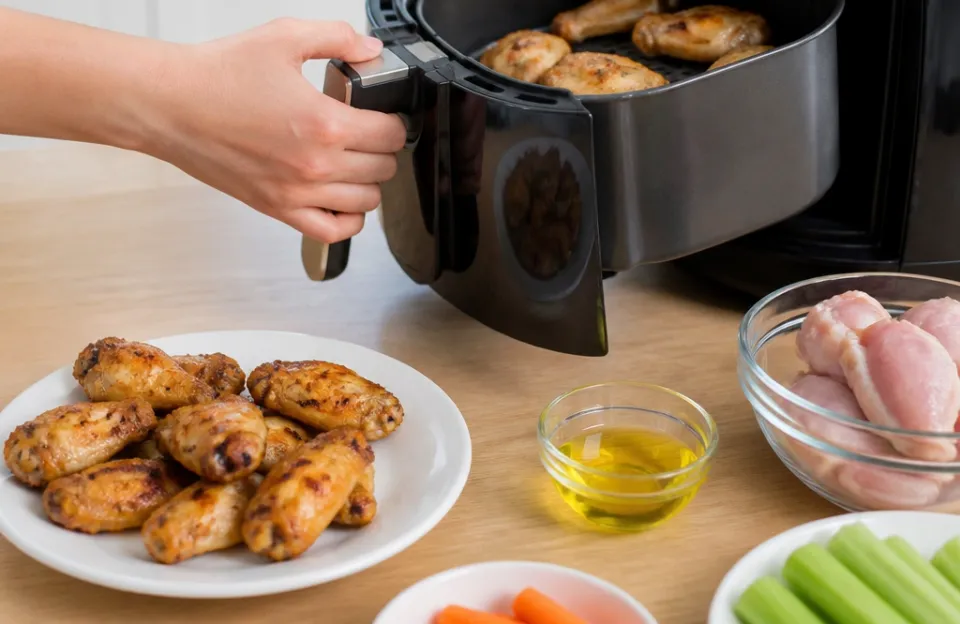
Getting the best result requires a specific sequence. Skipping steps leads to soggy skin or uneven cooking.
- Pat the wings completely dry. Use paper towels to press every drop of surface moisture off the skin. Moisture creates steam, and steam prevents crisping.
- Apply a light coating. If using baking powder, toss the dry wings in a mixture of one tablespoon of aluminum free baking powder and your chosen spices. Do not use baking soda; it tastes metallic.
- Arrange in a single layer. Overcrowding the basket blocks airflow. The wings need space between them so the hot air hits every surface. Cook in batches if necessary.
- Set the temperature high. Start at 380°F for 12 minutes to cook the meat through, then increase to 400°F for the final 8 to 10 minutes to blister and crisp the skin.
- Flip halfway through. Shake the basket or use tongs to turn the wings. This exposes the bottom side to the direct heat element.
- Verify the internal temperature. Poultry must reach 165°F to be safe. Insert your thermometer into the thickest part of the drumette, avoiding the bone. Using a dual sensor setup lets you check two different sizes of wings simultaneously.
- Sauce lightly after cooking. Toss the hot wings in a bowl with just enough sauce to coat them. Do not put wet sauce on the wings before air frying, as the sugars will burn before the meat cooks.
Drying the skin before cooking
Leaving the wings uncovered on a rack in the refrigerator overnight dries the skin out further. This technique, often used for roasting whole chickens, works perfectly for wings. The cold, dry air of the fridge pulls moisture from the surface.
When you put those fridge dried wings into the air fryer, they crisp up almost immediately. It requires planning ahead, but the texture difference is obvious.
Managing basket overcrowding
It is tempting to dump the whole package in at once. Resist that urge. When wings touch each other, the contact points stay soft and pale.
The fat has nowhere to drip, so the bottom wings end up sitting in a shallow pool of grease.
Cooking in two batches of ten wings yields better results than one batch of twenty. Keep the first batch warm in a 200°F oven while the second batch finishes.
Situations where the health benefits shrink
Air frying is a healthier method, but it does not magically turn wings into a diet food if you ignore the additions.
If you serve the wings with a heavy blue cheese dressing made from full fat mayonnaise and sour cream, the dipping sauce can contain more calories than the wings themselves. Swapping to a Greek yogurt based ranch or using a lighter vinaigrette keeps the sides in check.
Eating a massive quantity also negates the benefit. Saving 150 calories per serving by air frying means nothing if you eat twice as many wings because they feel lighter. Portion control still applies.
Finally, using aerosol cooking sprays that contain propellants can degrade the nonstick coating of your air fryer basket over time. Pump sprays filled with pure olive or avocado oil are safer for the machine and give you better control over the amount applied. If you ever notice your wireless tools acting up while you multitask in the kitchen, resolving connection drops quickly saves you from guessing your cook times.
Heavy dipping sauces adding hidden calories
Ranch, blue cheese, and honey mustard dips are calorie dense. A standard two tablespoon serving of restaurant style blue cheese dressing contains around 140 calories and 14 grams of fat.
Measure your dips instead of pouring them freely into a bowl. Using a small ramekin forces you to acknowledge how much you are actually consuming alongside the protein.
Portion sizes that cancel out the savings
A typical appetizer serving is five to seven wings. A main course serving might be ten to twelve. Restaurant platters often push twenty or more per person.
Weighing your raw wings before cooking gives you an accurate baseline. Six ounces of raw bone in wings yields a reasonable portion of meat. Tracking this prevents mindless overeating during game days or parties.
Frequently asked questions
Are air fried chicken wings actually good for weight loss?
They can fit into a weight loss plan because they offer high protein with lower fat than deep fried versions. Protein keeps you full longer, which reduces overall daily calorie intake. You still need to account for the calories in the skin and any sauces you add.
Do I need to add any oil at all to get crispy wings?
No. Chicken skin contains enough natural fat to crisp on its own in a high heat air stream. A light spray of oil can improve browning and help dry spices stick, but it is optional.
Skipping the oil entirely yields the lowest calorie result.
What is the safe internal temperature for chicken wings?
The USDA requires all poultry, including wings, to reach a minimum internal temperature of 165°F. Check the thickest drumette near the bone to confirm. Eating undercooked poultry carries a risk of salmonella and campylobacter.
Is baking powder safe to use on chicken skin?
Yes, as long as you use aluminum free baking powder, not baking soda. Baking powder alters the pH of the skin slightly and draws out moisture, creating micro bubbles that crisp up during cooking. It leaves no chemical taste when used in small amounts.
Can I cook frozen wings directly in the air fryer?
You can, but the skin will not get as crispy because frozen wings release a lot of water as they thaw in the heat. It is better to thaw them in the refrigerator overnight and pat them dry before cooking. If you must cook from frozen, add 5 to 7 minutes to the cook time and expect softer skin.
Does air frying destroy the nutrients in the chicken?
High heat cooking always causes some minor nutrient loss, particularly with heat sensitive B vitamins. However, air frying is faster than baking, which limits the exposure time. The protein content remains entirely intact regardless of the cooking method.
Worth remembering
Air fryer chicken wings healthy claims hold up when you focus on the mechanics of the cooking process. You render out excess fat, skip the heavy oil absorption, and retain all the protein. The method itself does the heavy lifting for your nutrition goals.
Keep an eye on your sauces, measure your portions, and always verify the internal temperature hits 165°F before serving. If you stick to dry rubs or light vinegar based sauces, you get a genuinely satisfying snack or meal that fits cleanly into most dietary plans.





2 thoughts on “Are Air Fryer Chicken Wings Actually Healthy?”