Air fryer accessories for 5-quart models must fit within a basket that typically measures 8.5 to 9 inches wide and 3.5 to 4 inches deep. The most useful additions are silicone-tipped tongs, perforated parchment liners, stackable racks, and instant-read thermometers. These tools solve the specific problems of a mid-sized unit: limited surface area, food sticking to nonstick coatings, and uneven cooking when the basket is full.
Buying accessories labeled "universal" without checking your specific basket shape often leads to wasted money because 5-quart baskets vary significantly between round and square designs.
This guide covers which accessories genuinely improve performance in this size class and which ones just clutter your cabinet. We focus on tools that address the physical constraints of a 5-quart capacity rather than generic air frying gadgets. You will learn how to verify fitment before buying, what materials withstand high-heat convection safely, and how to pair accessories with foods that actually benefit from them.
Why Basket Dimensions Matter More Than Capacity Labels
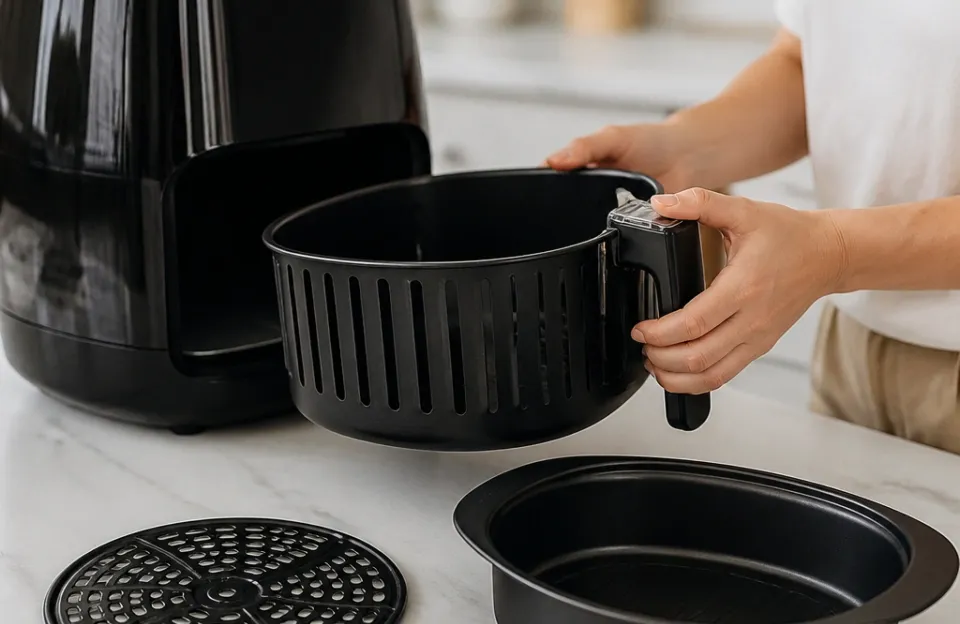
The "5-quart" label refers to volume, not shape or usable width. Two air fryers can both hold 5 quarts but have completely different footprints. A round 5-quart basket might be 9 inches in diameter, while a square one could be 8.5 inches across but deeper.
Accessories designed for one often fail in the other. Perforated parchment rounds cut for a 9-inch diameter will curl up against the heating element in an 8.5-inch square basket, creating a fire hazard and blocking airflow. Stackable racks made for round baskets wobble dangerously in square ones.
Always measure the interior width at the widest point and the depth from the bottom grate to the top rim before ordering anything. Ignore the quart rating on accessory packaging. Manufacturers frequently label items as fitting "3 to 5 quart" units, but this range is too broad to guarantee compatibility.
A rack that fits snugly in a shallow 5-quart model might sit too high in a deeper version, causing food to burn against the upper heating coil. Physical measurements are the only reliable way to avoid returns.
Round Versus Square Basket Compatibility
Round baskets dominate the 5-quart market, but square models are common in dual-zone or compact footprint designs. Round accessories like silicone muffin cups and pizza pans rarely work well in square baskets because they leave unusable gaps in the corners. Square baskets accept round accessories if there is enough clearance, but you lose efficiency.
Dedicated square accessories maximize the usable surface area. If you own a square 5-quart model, prioritize brands that specifically list square dimensions rather than hoping round items will adapt.
Usable Width Versus Total Volume
Total quart capacity includes space above the cooking grate that isn't usable for accessories. Many 5-quart models have tall sides to reach the volume target, but the actual flat cooking surface is smaller than expected. A rack advertised as fitting "up to 5 quarts" might technically drop into the basket but leave no room for food on the lower level.
Check the usable width at the grate level, not just the top opening. This measurement determines whether a multi-layer rack will actually function or just block airflow.
Essential Tools for Safe Handling and Accurate Cooking
The factory-included basket and crisper plate are sufficient for basic tasks, but three inexpensive tools fix the most common frustrations with 5-quart units. Nonstick coatings scratch easily, chicken wings and other proteins stick without proper release methods, and guessing doneness wastes time and ruins texture. These aren't luxury upgrades.
They're corrections for design limitations inherent to this size class.
Silicone-tipped tongs protect the nonstick coating better than metal utensils or plastic spatulas. Metal scratches the surface permanently, and hard plastic can melt or chip against the hot grate. Silicone tips grip food securely without scraping.
Look for tongs rated for at least 400°F with a locking mechanism for storage. Long handles keep your hands away from the heating element when reaching into a deep 5-quart basket. Short tongs force you to hover over open heat, increasing burn risk.
An instant-read thermometer eliminates guesswork for proteins. Air fryers cook faster than ovens, and visual cues are unreliable in a confined basket where browning happens unevenly. Checking internal temperature takes seconds and prevents both undercooking and drying out.
For thicker cuts like bone-in thighs or whole chicken breasts, a digital probe thermometer allows monitoring without repeatedly opening the basket and losing heat. According to the USDA Food Safety and Inspection Service, poultry must reach 165°F internally regardless of cooking method, and air fryer speed makes verification especially important.
Perforated parchment paper liners prevent sticking and simplify cleanup without sacrificing crispness. Solid liners trap steam and make food soggy. Perforations allow hot air to circulate through the bottom layer.
Pre-cut rounds or squares save time versus trimming sheets to fit. Never use parchment during preheating without food on top. Unweighted paper lifts into the heating element and ignites.
Always place food on the liner before starting the cycle.
| Accessory Type | Primary Function | Key Fitment Check | Material Safety Limit |
|---|---|---|---|
| Silicone-Tipped Tongs | Protect nonstick coating | Handle length vs. basket depth | 400°F minimum rating |
| Instant-Read Thermometer | Verify safe internal temp | N/A (external tool) | Probe rated for 572°F+ |
| Perforated Parchment | Prevent sticking, ease cleanup | Diameter/width vs. basket floor | 425°F max oven-safe temp |
| Stackable Rack | Increase vertical capacity | Width at grate level | Stainless steel preferred |
Expanding Capacity With Racks and Multi-Layer Inserts
A 5-quart basket holds about two servings of wings or fries in a single layer. Overcrowding blocks airflow and causes steaming instead of crisping. Stackable racks double or triple usable surface area by creating separate tiers.
This works best for foods that cook at similar temperatures and times. Mixing raw chicken on the bottom tier with vegetables on top risks cross-contamination and uneven results.
Stainless steel racks are safer and more durable than coated alternatives. Nonstick-coated racks eventually chip, exposing bare metal that rusts or flakes into food. Uncoated stainless steel withstands repeated washing and high heat indefinitely.
Look for racks with feet tall enough to clear the food below but short enough to maintain headroom above. In a 5-quart basket, 1.5 to 2 inches of vertical space per tier is typical. Taller racks press food against the heating element.
Multi-layer inserts differ from simple racks by including dividers or walls. These help organize different foods but reduce flexibility. A divided insert might hold wings on one side and fries on the other, but you can't remove the divider for larger items.
Simple open racks adapt to any food shape. Choose divided inserts only if you consistently cook mixed meals in fixed portions. Open racks serve more varied purposes over time.
When using racks, rotate tiers halfway through cooking. The top tier receives direct radiant heat from the element and browns faster. The bottom tier relies on convected air and cooks slower.
Swapping positions ensures even results. Foods with high fat content should go on the bottom tier to prevent grease dripping onto items below. Dripping fat smokes and flavors other foods unintentionally.
Liners and Mats That Preserve Nonstick Surfaces
Beyond disposable parchment, reusable silicone mats and liners offer long-term protection for the basket floor. These are thicker than parchment and provide a stable surface for delicate items like fish fillets or marinated wings that tend to tear when flipped. A good chicken wing marinade adds flavor but increases sticking risk, making a reusable mat valuable for wet preparations.
Silicone mats must be perforated specifically for air frying. Solid baking mats block all bottom airflow and defeat the purpose of the appliance. Perforated air fryer mats have holes aligned to promote circulation while still catching drips.
Size matters here too. A mat that's even half an inch too large buckles under heat, creating pockets where oil pools and smokes. Trim-to-fit options exist but require careful cutting to avoid frayed edges that degrade quickly.
Disposable parchment remains superior for very greasy foods. Bacon, fatty sausages, and heavily breaded items saturate reusable mats over time, leading to lingering odors and reduced nonstick performance. Parchment absorbs excess grease and discards it entirely.
Reserve silicone mats for drier applications like roasted vegetables, reheating leftovers, or cooking lean proteins. Using the right liner type for each food extends the life of both the accessory and the basket itself.
Avoid aluminum foil as a routine liner. Foil reflects heat and alters cooking dynamics unpredictably in a small cavity. It also blocks airflow completely unless heavily perforated by hand.
Small pieces can detach and contact the heating element directly. If you must use foil for easy cleanup with messy glazes, weigh it down thoroughly with food and never let edges extend above the basket rim. Parchment or silicone achieves the same goal more safely.
Thermometers and Monitoring Tools for Consistent Results
Air fryers vary widely in actual temperature accuracy. A dial set to 375°F might run at 350°F or 400°F depending on calibration, age, and model. Relying solely on preset times and temperatures produces inconsistent outcomes.
External monitoring tools bridge the gap between displayed settings and real cooking conditions.
Oven-safe thermometers placed inside the basket during preheating reveal true operating temperature. Leave the probe in for five minutes after reaching set temp to stabilize. Note the difference between displayed and actual readings.
Adjust future recipes accordingly. If your unit runs 25°F hot, reducing the set temperature compensates. This one-time calibration improves every subsequent cook.
An oven thermometer with easy-read dial stays visible through the basket opening without requiring digital connectivity.
Wireless probe thermometers eliminate basket-opening heat loss entirely. Insert the probe into the thickest part of the meat before cooking starts. Route the cable through the basket seal or use a wireless model with a base station outside the unit.
Monitor progress on your phone or receiver without interrupting the cooking cycle. This is especially valuable for meal prep batches where timing multiple components matters. Opening the basket drops internal temperature by 20-30°F each time, extending total cook time and affecting texture.
Infrared thermometers measure surface temperature instantly but cannot read internal doneness. Use them to verify preheat completion or check pan temperature before adding oil. They're supplementary tools, not replacements for probe thermometers.
Pointing an infrared gun at the heating element gives meaningless readings. Aim at the basket floor or food surface only. Understanding this distinction prevents misuse and false confidence in inaccurate data.
Accessories to Avoid in Mid-Sized Units
Not every air fryer gadget earns its storage space. Several popular categories perform poorly specifically in 5-quart models due to size constraints or airflow requirements. Recognizing these saves money and frustration.
Pizza pans marketed for air fryers often fit dimensionally but fail functionally. A 5-quart basket accommodates roughly a 7-inch pizza at most. Most frozen pizzas exceed this size.
Homemade dough scaled down to fit yields a thick, undercooked center because the small diameter limits crust spread. Unless you regularly make personal-size pizzas from scratch, a dedicated pan wastes space. A piece of parchment trimmed to size achieves identical results for occasional use.
Deep cake barrels and bundt molds displace too much volume. A 5-quart basket needs airflow around all sides of the food. Tall, narrow molds block lateral circulation, causing burnt exteriors and raw interiors.
Wide, shallow vessels work better in this form factor. Standard 6-inch round cake pans fit most 5-quart baskets and bake evenly. Specialty tall molds belong in full-size ovens or larger air fryer models.
Universal accessory kits bundle mismatched items at apparent savings. Most include sizes that don't fit your specific basket alongside one or two usable pieces. Individual purchases cost slightly more upfront but ensure everything works.
Bundles also tend toward lower-quality materials to hit price points. Thin silicone melts. Flimsy racks warp.
Coated metals chip. Buying individual, verified-compatible items builds a functional kit over time without accumulating useless parts.
Glass bakeware carries thermal shock risk in rapid-convection environments. Air fryers heat faster than conventional ovens. Cold glass entering a preheated 400°F basket can crack or shatter.
Even oven-safe glass isn't always rated for convection-speed heating cycles. Metal or silicone alternatives handle thermal transitions safely. If you prefer glass for serving, transfer cooked food to glass dishes after cooking rather than cooking directly in them.
Cleaning and Maintenance for Longevity
Accessories last longer with proper care tailored to their materials. Dishwashers convenience comes at a cost for some items. High-pressure spray and harsh detergents degrade silicone and strip coatings faster than hand washing.
Evaluate each piece individually rather than defaulting to machine cleaning.
Silicone mats and liners wash easily by hand with warm soapy water. Stubborn residue soaks off in minutes. Dishwasher heat accelerates silicone degradation, causing brittleness and odor retention over months.
Hand washing takes thirty seconds and preserves flexibility. Store mats flat or rolled loosely. Folding creates permanent creases that trap food and weaken the material.
Stainless steel racks tolerate dishwashers but benefit from immediate drying. Water spots and mineral deposits build up in hard-water areas. Towel-drying after washing maintains appearance.
Inspect weld points periodically for cracks or separation. Stress concentrates at joints during stacking and handling. A failing rack collapses unexpectedly.
Replace at first sign of structural weakness rather than risking food spills mid-cycle.
Parchment paper is single-use by design. Reusing it transfers burnt particles and accumulated grease to fresh food. Compost unbleached parchment if municipal facilities accept it.
Bleached varieties contain chlorine residues unsuitable for composting. Silicone-coated reusable parchment alternatives exist but require seasoning like cast iron. Without regular oil treatment, they lose nonstick properties within weeks.
Factor maintenance effort into your choice between disposable and reusable options.
Nonstick-coated accessories demand gentle handling. Abrasive scrubbers destroy the coating instantly. Soak stuck-on food instead of scouring.
Replace coated items once scratching appears. Exposed base metal beneath damaged coating leaches into food and rusts rapidly. There's no safe repair for compromised nonstick surfaces.
Prevention through proper utensil use extends service life far beyond replacement cycles.
Frequently Asked Questions
Can I use accessories from a different brand if they fit my measurements?
Yes, physical dimensions determine compatibility, not brand matching. Measure your basket's interior width and depth carefully, then compare to the accessory specifications. Third-party options often cost less and perform identically to OEM parts.
Verify material safety ratings independently since off-brand listings sometimes exaggerate heat tolerance.
Are silicone accessories safe at maximum air fryer temperatures?
Food-grade silicone rated for 400°F or higher is safe for standard air frying. Most units max out at 400°F, though some reach 450°F. Check both your appliance's maximum setting and the accessory's stated limit.
Silicone degrades above its rating, releasing odors and potentially contaminating food. When in doubt, choose accessories rated 50°F above your unit's maximum to provide margin.
Do I need special accessories for frozen foods versus fresh cooking?
No specialized tools are required exclusively for frozen items. Frozen foods benefit more from perforated parchment to catch ice-crystal meltwater and prevent sogginess. Fresh, wet-marinated proteins may stick more readily, making silicone mats preferable.
The accessory choice depends on moisture content and sticking risk, not whether the food started frozen. Adjust liner type based on texture goals rather than origin state.
How do I know if a stackable rack will block too much airflow?
Test the rack empty during preheating. Place it in the basket and run the unit at normal cooking temperature for five minutes. Listen for changed fan noise or observe reduced exhaust flow.
Significant airflow restriction causes louder operation and slower heating. If the rack occupies more than one-third of the basket's vertical space, it likely impedes circulation. Opt for lower-profile racks or cook in single layers for better results.
Is it worth buying an accessory bundle or purchasing items individually?
Individual purchases usually yield better value despite higher per-item cost. Bundles include ill-fitting or low-quality pieces to inflate perceived value. Buy only what solves a specific problem you've already encountered.
Start with tongs and parchment. Add racks or mats only when single-layer cooking becomes a genuine bottleneck. This approach builds a functional collection without storing unused items.
Before You Buy Anything Else
Measure your basket first. No amount of positive reviews compensates for incorrect dimensions. Focus on tools that solve real problems you experience during cooking rather than hypothetical needs.
A 5-quart air fryer performs excellently with minimal accessories when those accessories match its specific constraints. Spend on quality for items you'll use weekly, skip trendy gadgets that address nonexistent issues, and always prioritize safe materials over attractive pricing. Your existing dipping sauce recipes and healthy preparation methods work better with properly fitted tools than with a crowded basket full of incompatible gadgets.



1 thought on “Best Air Fryer Accessories for 5-Quart Models”