Air fryer chicken wings honey garlic is a fast weeknight meal that gives you sticky, caramelized skin and fully cooked meat in about 25 minutes. You toss raw wings with a little oil and salt, cook them in the air fryer until the skin crisps, then coat them in a quick sauce made from honey, garlic, soy sauce, and butter. The result tastes like takeout without the deep fryer mess.
This guide covers how to prep the wings so they actually crisp up, how to mix the glaze without burning it, exact cooking times for different wing sizes, and what goes wrong when the sauce turns into a sticky mess inside your basket. If you've struggled with soggy skin or scorched honey before, the fixes are here.
Why Honey Garlic Glaze Works Better After Air Frying
The main reason you don't put the sauce on before cooking comes down to sugar. Honey contains fructose and glucose. Both burn at temperatures well below the 380°F to 400°F needed to render chicken fat and crisp poultry skin.
If you coat raw wings in a honey garlic mixture and drop them into a hot air fryer, the sugars will blacken long before the meat cooks through. You'll end up with bitter, charred skin and undercooked meat near the bone.
Cooking the wings naked first solves this. The hot circulating air dries out the surface moisture. Once the skin is dry, the fat underneath starts to render.
That rendered fat fries the skin from the outside in, creating a textured, crunchy layer. Only after that structure is set do you introduce the wet glaze.
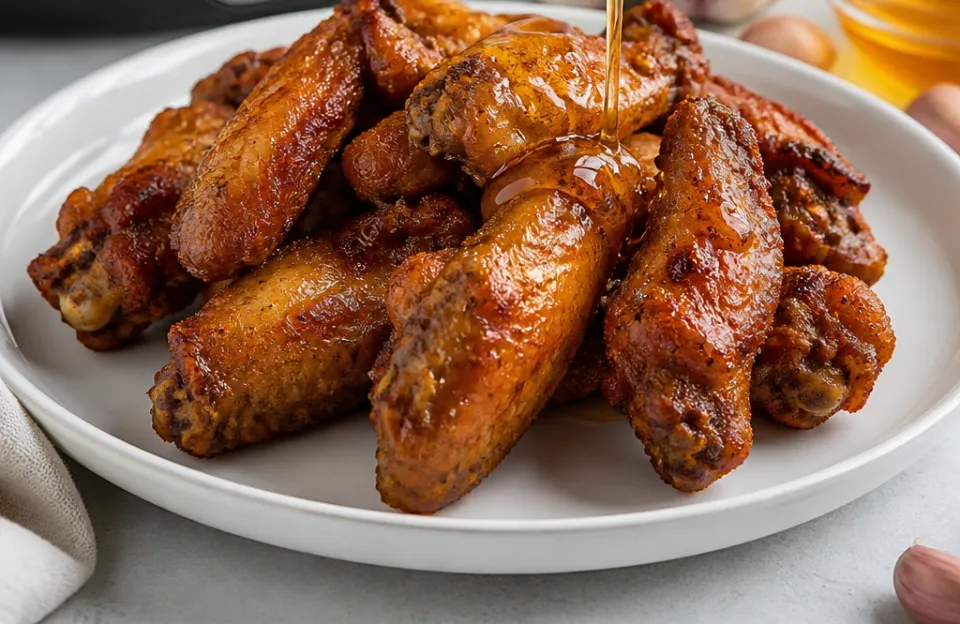
When you toss the hot, crispy wings in the honey garlic sauce right at the end, the residual heat warms the glaze just enough to make it tacky. It clings to the rough surface of the fried skin instead of sliding off. You get the crunch and the sweet-savory flavor in the same bite.
The USDA requires all poultry to reach an internal temperature of 165°F, and cooking the wings plain first lets you verify that safely without scraping burnt sugar off your thermometer probe. Checking the thickest part of the wing with a fast-reading digital tool takes only a second and keeps you from guessing.
Picking Between Flats and Drums for Even Cooking
A whole chicken wing has three parts: the drumette, the flat (or wingette), and the tip. Most grocery stores sell "party wings," which are already split into drumettes and flats with the tips removed. Drumettes are thicker, shaped like small chicken legs, and take slightly longer to cook through.
Flats are thinner, have two small bones running parallel, and crisp up faster because there's less mass.
If you buy a mixed bag, you have two choices. You can cook them together and accept that the flats might get slightly darker while the drums finish. Or you can separate them into two bowls before cooking.
Pull the flats out about 3 to 5 minutes early if you want them perfectly crisp while the drums hit their final temperature. Leaving the tiny tips attached usually results in burnt, inedible ends, so trim those off if your butcher didn't.
Drying the Skin Before It Hits the Basket
Moisture is the enemy of crisp skin. When you pull wings out of the package, they're wet. If you put them straight into the air fryer, the machine spends the first 10 minutes steaming off that water instead of browning the skin.
Pat every single wing dry with paper towels. Press firmly. Don't just dab the top; get into the folds of the skin.
Some cooks leave the patted-dry wings uncovered on a wire rack in the fridge for a few hours or overnight. The cold, dry air pulls even more moisture from the surface. This step isn't mandatory for a weeknight dinner, but it makes a noticeable difference in how blistered and crunchy the final skin gets.
If you skip the fridge rest, just be thorough with the paper towels. A light dusting of baking powder (about half a teaspoon per pound) mixed with your salt also helps draw out moisture and raises the pH of the skin, encouraging faster browning. Make sure it's baking powder, not baking soda, or the wings will taste metallic.
Mixing the Honey Garlic Sauce Without Burning It
The glaze needs to balance sweet, salty, savory, and a hint of acid. A standard ratio that coats about two pounds of wings is one-third cup of honey, three tablespoons of soy sauce, four to six cloves of minced garlic, one tablespoon of rice vinegar or apple cider vinegar, and two tablespoons of unsalted butter.
Combine the honey, soy sauce, vinegar, and minced garlic in a small saucepan. Heat it over medium-low. You don't want a rolling boil.
A gentle simmer is enough to soften the raw bite of the garlic and melt the ingredients together. Let it bubble softly for about 3 to 4 minutes. The sauce will reduce slightly and thicken.
Take it off the heat and stir in the butter. The butter adds richness and gives the glaze a glossy finish that looks great on the plate.
If you prefer a thicker sauce that clings heavily, mix one teaspoon of cornstarch with one tablespoon of cold water. Stir that slurry into the simmering sauce before adding the butter. Let it cook for another minute until it turns translucent and thick.
Keep the heat low. High heat causes the honey to scorch quickly, turning the whole batch bitter.
You can adjust the garlic level based on preference. Four cloves give a mild, sweet garlic flavor. Six or more push it into sharp, pungent territory.
Mincing the garlic very fine or using a microplane grater helps it melt into the sauce so you don't get large chunks of raw-tasting garlic stuck to the wings. For a spicy version, add a teaspoon of sriracha or half a teaspoon of red pepper flakes during the simmer stage.
Timing and Temperature for Crispy Results
Most basket-style air fryers handle two pounds of wings comfortably. Preheat the machine to 380°F. Toss your dried wings in one tablespoon of neutral oil, like avocado or canola, and season generously with salt and pepper.
Arrange them in a single layer. They shouldn't touch much. Overcrowding traps steam and ruins the crispness.
Cook at 380°F for 12 minutes. Open the basket and flip each wing using tongs. Bump the temperature up to 400°F and cook for another 10 to 12 minutes.
The higher heat at the end forces the last bit of fat to render and blisters the skin. Total time is usually 22 to 25 minutes for average-sized party wings. Larger drumettes might need 27 or 28 minutes total.
| Wing Type | First Stage (380°F) | Second Stage (400°F) | Total Time |
|---|---|---|---|
| Small flats | 10 minutes | 8 to 10 minutes | 18 to 20 minutes |
| Standard party wings | 12 minutes | 10 to 12 minutes | 22 to 24 minutes |
| Large drumettes | 14 minutes | 12 to 14 minutes | 26 to 28 minutes |
Don't rely solely on the clock. Visual cues matter. The skin should look deeply golden brown, slightly blistered, and feel firm when you tap it with tongs.
If the wings look pale, leave them in. If you want to track the heat closely, especially when testing a new appliance, pointing an infrared laser reader at the basket surface tells you exactly how hot the air is circulating.
Once the wings are done, transfer them immediately to a large, clean mixing bowl. Pour the warm honey garlic sauce over them. Toss vigorously with tongs or by shaking the bowl until every wing is coated.
Serve right away. If you let sauced wings sit in the basket, the steam trapped underneath softens the bottom layer.
Keeping Your Air Fryer Clean After Sticky Glazes
Honey and soy sauce baked onto a non-stick basket is a pain to scrub. The best defense is keeping the sauce away from the heating element and the basket walls during the actual cooking phase. Since you're applying the glaze after the wings are fully cooked, the basket only deals with rendered chicken fat during the high-heat run.
That fat is easy to wash off with hot water and dish soap.
However, drips happen. If a little sauce falls back into the basket when you're tossing the wings, wipe it out before it cools and hardens. Once cooled, honey garlic glaze turns into cement.
Soak the basket in warm, soapy water for 10 minutes if you missed a spot. Use a soft sponge. Metal scouring pads strip the non-stick coating, which ruins the basket for future use.
If you frequently make glazed recipes, learning how to wash the interior properly prevents buildup around the fan and heating coil. Sugar smoke smells terrible and can trigger your kitchen smoke alarm. Wiping the ceiling of the air fryer chamber with a damp cloth once it cools down stops carbonized sugar from accumulating over time.
What Goes Wrong With Honey Garlic Wings
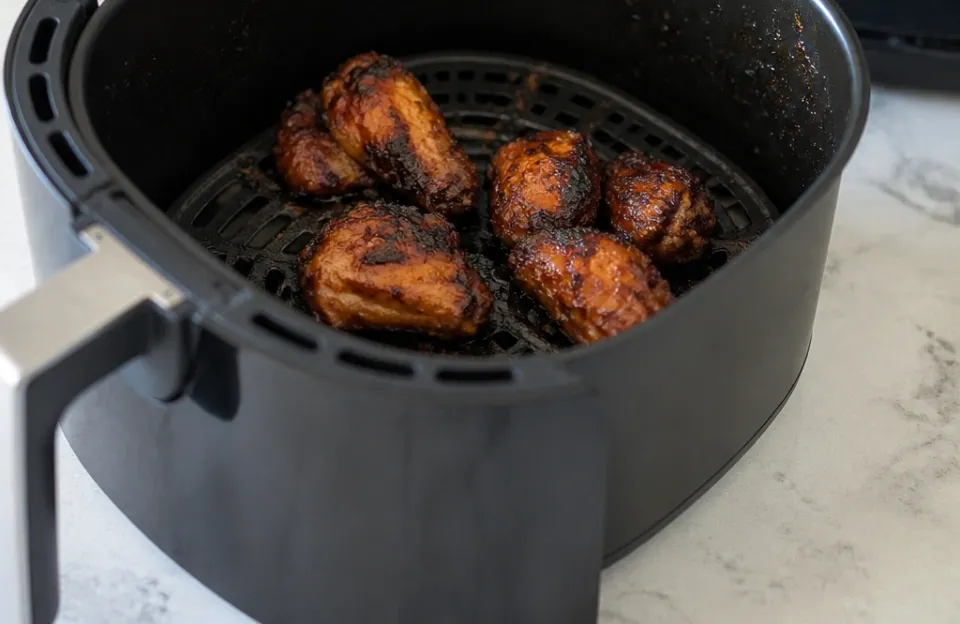
Soggy skin almost always traces back to skipped drying steps or overcrowding. If you stack wings on top of each other, the ones on the bottom steam instead of roast. Cook in batches if your basket is small.
Two pounds is usually the maximum for a standard 5-quart model. A 3-quart basket might only hold 1.5 pounds in a single layer.
Burnt garlic is another frequent issue. If you chop the garlic too coarsely and try to cook it directly in the air fryer with the wings, the small pieces will incinerate at 400°F. Always cook the garlic gently in the saucepan with the liquid ingredients.
The moisture protects it from burning while still releasing its flavor into the honey and soy sauce.
Sometimes the sauce slides right off the wings, pooling at the bottom of the serving bowl. This happens when the wings aren't hot enough when tossed, or the sauce hasn't reduced sufficiently. The glaze needs to be slightly syrupy.
If it's as thin as water, it won't stick. Simmer it a minute or two longer next time. Also, make sure you toss the wings the second they come out of the fryer.
The surface heat helps the sauce adhere.
Uneven cooking usually means the wings were drastically different sizes mixed together. Sorting them into flats and drums before cooking fixes this. If you notice some pieces are done while others are still rubbery near the bone, check the thickest piece with a reliable wireless setup that stays connected throughout the cook.
Dropping connection mid-cook means you lose track of the temperature curve, so knowing why signals fail saves you from pulling underdone chicken.
Adjusting the Flavor Profile for Different Tastes
The base recipe is sweet and savory, but it bends easily. If you find standard honey too cloying, swap half the honey for brown rice syrup. It has a milder sweetness and a slightly nutty flavor that pairs well with garlic.
You can also use maple syrup, though it changes the flavor profile significantly and burns slightly faster due to its water content.
For a deeper umami punch, add a teaspoon of fish sauce or oyster sauce to the glaze while it simmers. Fish sauce sounds strange in a sweet wing recipe, but it acts similarly to soy sauce, amplifying savory notes without making the dish taste like seafood. A pinch of MSG works the same way if you keep it in your pantry.
Acid cuts through the richness of the fried chicken skin and the heavy honey. Rice vinegar is standard, but lime juice added right at the end (off the heat) gives the wings a bright, fresh edge. Don't boil citrus juice in the sauce, as it turns bitter.
Stir it in after you take the pan off the stove.
If you want a thicker, more restaurant-style coating that doesn't drip, double the cornstarch slurry. Be aware that a very thick glaze can feel pasty if you overdo it. Start with one teaspoon of cornstarch dissolved in water.
If it's not thick enough after a minute of simmering, add another half teaspoon.
Scaling Up for a Crowd Without Losing Crunch
Feeding more than three or four people means dealing with multiple batches. The biggest mistake people make when scaling up is letting the first batch go cold while the second batch cooks. Cold wings absorb sauce differently.
The glaze seizes up and becomes gummy instead of glossy.
To manage this, keep your oven on the lowest setting, usually around 170°F to 200°F. Place a wire rack on a sheet pan. As each batch of wings finishes air frying, move them to the wire rack in the warm oven.
This keeps the skin dry and crisp. Do not stack them on a plate or cover them with foil. Trapped steam will ruin the texture you spent 25 minutes building.
Cook all your batches naked. Once the final batch is done and moved to the warming rack, gather all the wings into one massive bowl. Reheat your honey garlic sauce briefly if it has thickened too much while sitting.
Pour it over the entire pile and toss everything together at once. This guarantees every wing gets the same amount of glaze and goes to the table hot.
If you're monitoring multiple batches, having a quick-check thermometer nearby lets you spot-check the last batch rapidly. You don't want to leave the basket open too long, dropping the ambient temperature and extending the cook time unnecessarily.
Frequently Asked Questions
Can I use frozen wings for this recipe?
Yes, but you must thaw them completely first. Cooking frozen wings in an air fryer releases a massive amount of water. The wings will steam rather than roast, resulting in rubbery, pale skin that won't hold the honey garlic glaze.
Thaw them overnight in the refrigerator, then pat them aggressively dry with paper towels before seasoning and cooking.
Does the honey garlic sauce work on boneless chicken?
It does. Boneless, skinless chicken breast chunks or thigh pieces cook much faster than bone-in wings, usually in 10 to 14 minutes total at 380°F. Because there is no skin to crisp, the texture relies entirely on the exterior browning.
Cut the pieces uniformly so they finish at the same time, and toss them in the glaze immediately after cooking.
Why did my sauce turn dark brown and taste bitter?
The honey burned. This happens when the sauce is boiled over high heat instead of simmered gently. Fructose in honey scorches rapidly above 300°F.
Keep the burner on medium-low, watch for small bubbles rather than a rolling boil, and remove the pan from the heat as soon as the garlic softens and the mixture thickens slightly.
How long do leftover honey garlic wings keep?
Store them in an airtight container in the refrigerator for up to three days. The skin will lose its crunch once refrigerated. To reheat, put them back in the air fryer at 375°F for 3 to 5 minutes.
Avoid the microwave, which turns the skin chewy and melts the glaze into a watery puddle.
Is it safe to eat if the wings look pink near the bone?
Color is an unreliable indicator of doneness in poultry. Hemoglobin in the bone marrow can cause the meat immediately surrounding the bone to stay pink even when fully cooked. The only way to confirm safety is by checking the internal temperature.
According to FDA food safety guidelines, poultry must reach 165°F to destroy harmful bacteria like Salmonella. Insert the probe into the thickest part of the meat, avoiding the bone itself.
Can I make the glaze ahead of time?
You can mix the honey, soy sauce, vinegar, and garlic up to three days in advance and store it in a jar in the fridge. Leave the butter out. When you're ready to serve the wings, pour the pre-mixed sauce into a saucepan, warm it gently, and stir in the butter at the end.
Adding the butter fresh keeps the emulsion smooth and glossy.
Getting the Timing Right Every Time
Making air fryer chicken wings honey garlic style comes down to managing moisture and heat. Dry the skin thoroughly before cooking, keep the sauce away from the high heat of the air fryer basket, and toss the wings while they are still piping hot. Those three habits prevent the most common failures, like soggy bottoms, burnt garlic, and sliding glaze.
Once you dial in the timing for your specific machine, the process takes less than half an hour from start to plate. Keep your tools simple, trust the temperature readings over visual guesswork, and the wings will come out sticky and crisp every time.