Cooking chicken without a thermometer is a gamble. One minute you have perfectly juicy meat; the next, it is dry, rubbery, or worse—unsafe to eat. The difference between those outcomes comes down to a single metric: internal temperature. Whether you are searing boneless breasts on a weeknight or roasting a whole bird for guests, knowing exactly when to pull the chicken off the heat is the most important skill in your kitchen.
A reliable chicken internal temperature chart removes the guesswork entirely. Instead of relying on cooking times that vary wildly by oven, grill, or air fryer, you measure the actual heat inside the meat. In practice, this means consistently safe food and dramatically better texture. This guide breaks down the exact target temperatures for every cut, explains why dark meat needs more heat than white meat, and shows you precisely where to place your probe so you never serve undercooked poultry again. You can also read our guide on how do i know if my meat thermometer is correct.
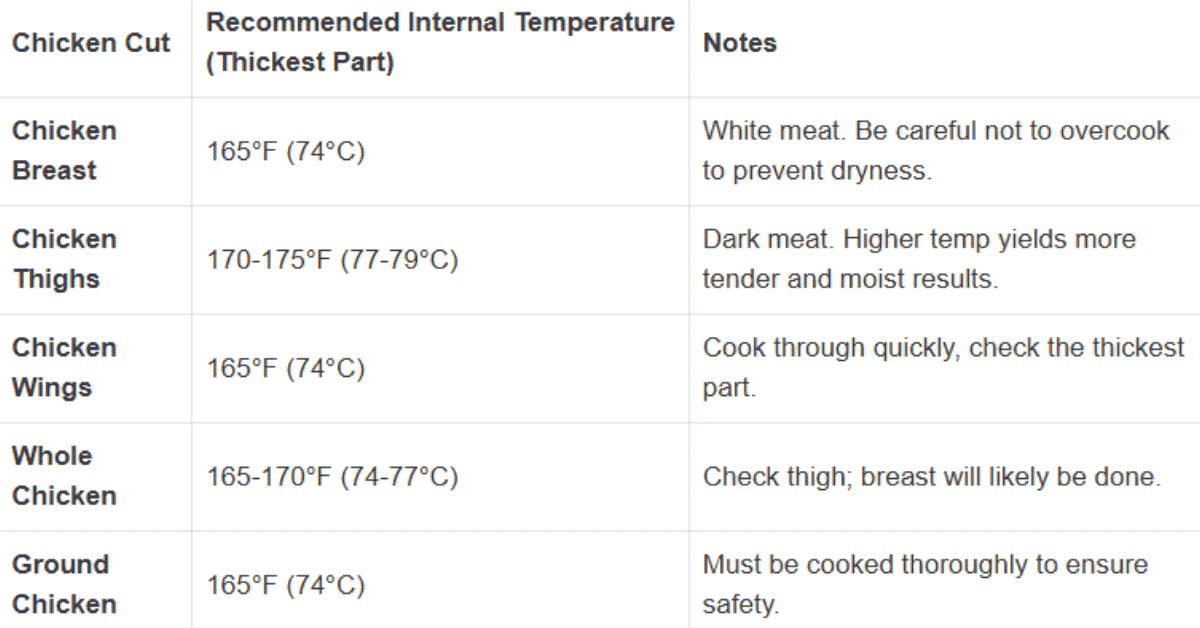
Quick Reference: Chicken Internal Temperature Chart
If you need the numbers right now while standing over a hot stove, use these targets. These temperatures apply to the thickest part of the meat, away from any bone.
| Chicken Cut | Target Internal Temp (°F) | Target Internal Temp (°C) | Best Texture Notes |
|---|---|---|---|
| Chicken Breast | 165°F | 74°C | Pull at 160–162°F; carryover heat finishes the job. |
| Chicken Thighs | 170–175°F | 77–79°C | Higher heat melts collagen for tender, juicy results. |
| Chicken Legs / Drumsticks | 170–175°F | 77–79°C | Needs time near the joint to break down connective tissue. |
| Chicken Wings | 165°F | 74°C | Check the thickest section of the drumette. |
| Whole Chicken | 165°F (breast) / 175°F (thigh) | 74°C / 79°C | Probe the deepest part of the thigh without touching bone. |
| Ground Chicken | 165°F | 74°C | Must reach this temp evenly throughout the entire mixture. |
For cooks who prefer Celsius, bookmark our metric poultry cook times for quick conversions.
Why 165°F Is the Universal Safety Baseline
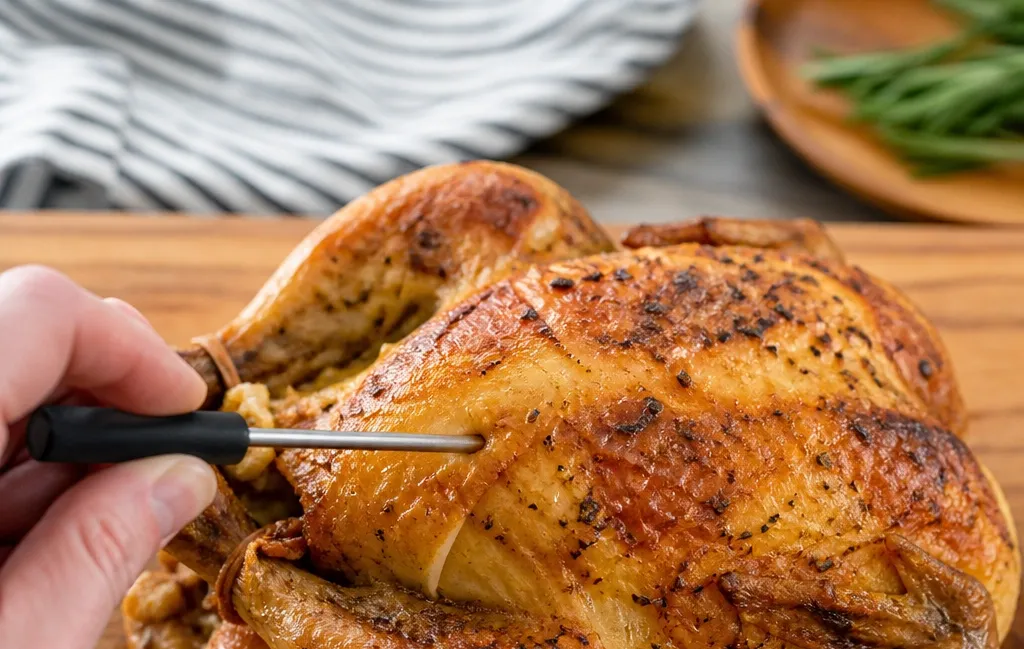
The United States Department of Agriculture (USDA) establishes 165°F (74°C) as the minimum safe internal temperature for all poultry. At this specific temperature, harmful pathogens commonly found in raw chicken—primarily Salmonella and Campylobacter—are destroyed almost instantly. You can also read our guide on is chicken safe to eat at 70c.
This is not just a suggestion; it is a public health standard based on decades of microbiological research. A common mistake home cooks make is assuming that if the outside looks browned, the inside is safe. Bacteria do not care about surface color. They only die when the core of the meat reaches the required thermal threshold. If you are ever unsure whether your equipment is reading accurately, verifying sensor performance against known standards is essential before serving food to others.
White Meat vs. Dark Meat: Why One Number Doesn't Fit All
While 165°F guarantees safety across the board, treating a chicken breast exactly like a chicken thigh will ruin your dinner. The biology of the bird dictates how each cut responds to heat. You can also read our guide on what is the to rule for calibration.
Cooking Chicken Breasts Without Drying Them Out
Chicken breasts are lean white meat with very little fat or connective tissue. When heated past 165°F, the muscle fibers contract aggressively, squeezing out moisture and leaving you with a chalky, stringy texture. To prevent this, experienced cooks use a technique called carryover cooking.
Pull the breast off the heat when your thermometer reads 160°F to 162°F (71–72°C). Tent it loosely with foil and let it rest. The residual heat trapped inside the meat will continue to raise the internal temperature by 3 to 5 degrees over the next few minutes, safely coasting it up to the USDA-mandated 165°F without overshooting into dry territory. You can also read our guide on pork internal temperature guide.
Why Chicken Thighs and Legs Need More Heat
Dark meat—thighs, drumsticks, and the legs attached to them—is fundamentally different. It contains significantly more fat and dense connective tissue, primarily collagen. At 165°F, dark meat is technically safe to eat, but the collagen hasn't fully broken down yet, resulting in a chewy, slightly gummy texture that many people dislike.
To achieve the fall-off-the-bone tenderness that makes dark meat so popular, you need to push the internal temperature higher, typically between 170°F and 175°F (77–79°C). At this range, the tough collagen melts into rich gelatin, lubricating the muscle fibers and creating a succulent bite. Because dark meat has more fat to insulate it, it can handle this extra heat without drying out the way a breast would. You can also read our guide on what is the ideal chicken internal temperature.
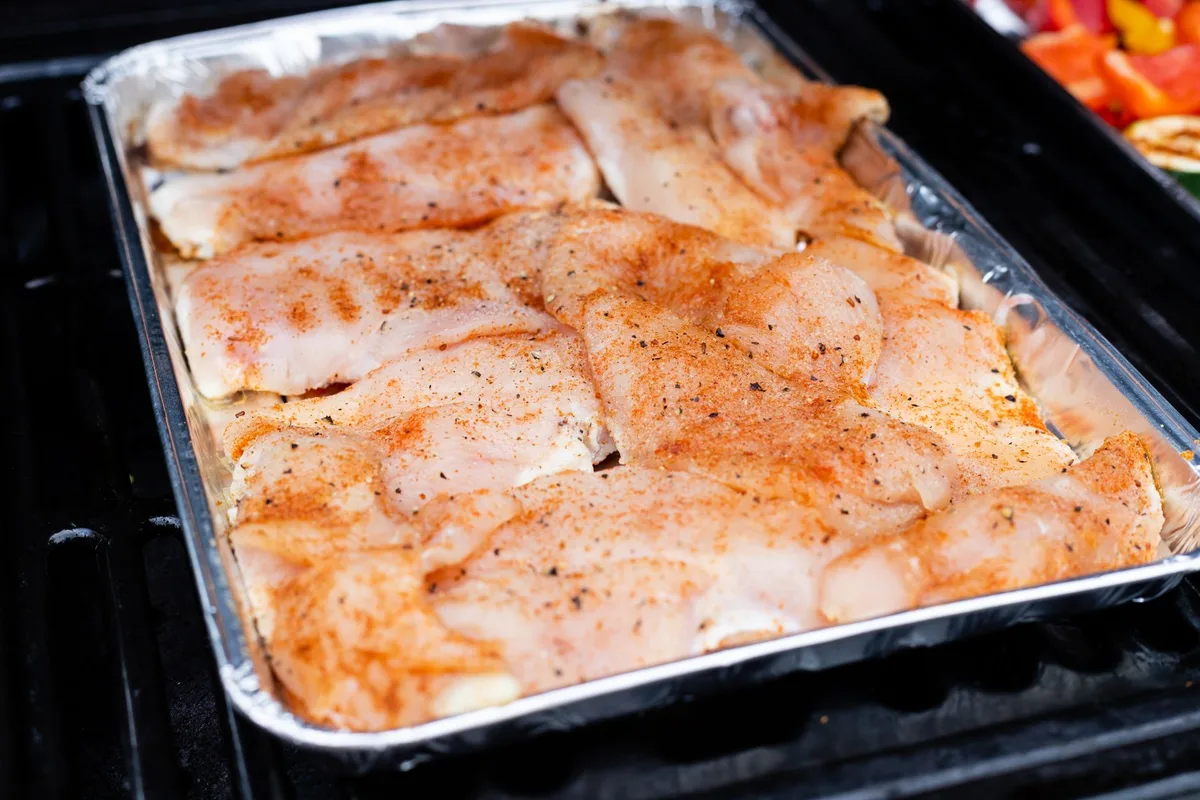
A digital probe inserted into the thickest part of the thigh ensures accurate readings.
Image source: Pexels / Mateusz Feliksik (Pexels License)
How to Properly Measure Chicken Temperature
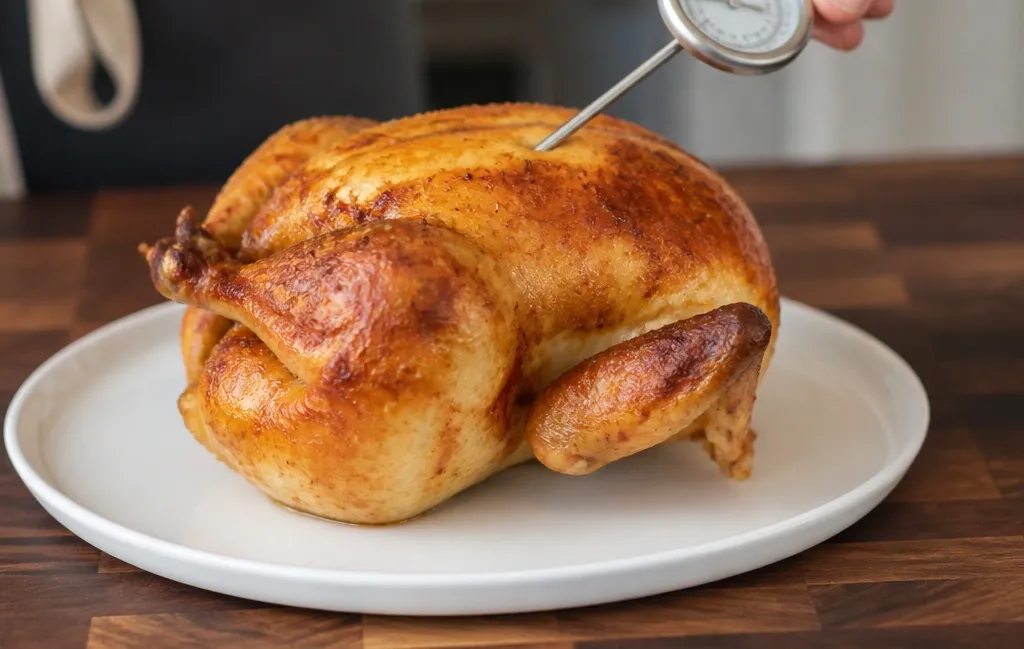
Having the right target number is useless if you are measuring it incorrectly. Where and how you insert your probe determines whether your reading reflects reality or gives you a false sense of security.
Finding the Thermal Center
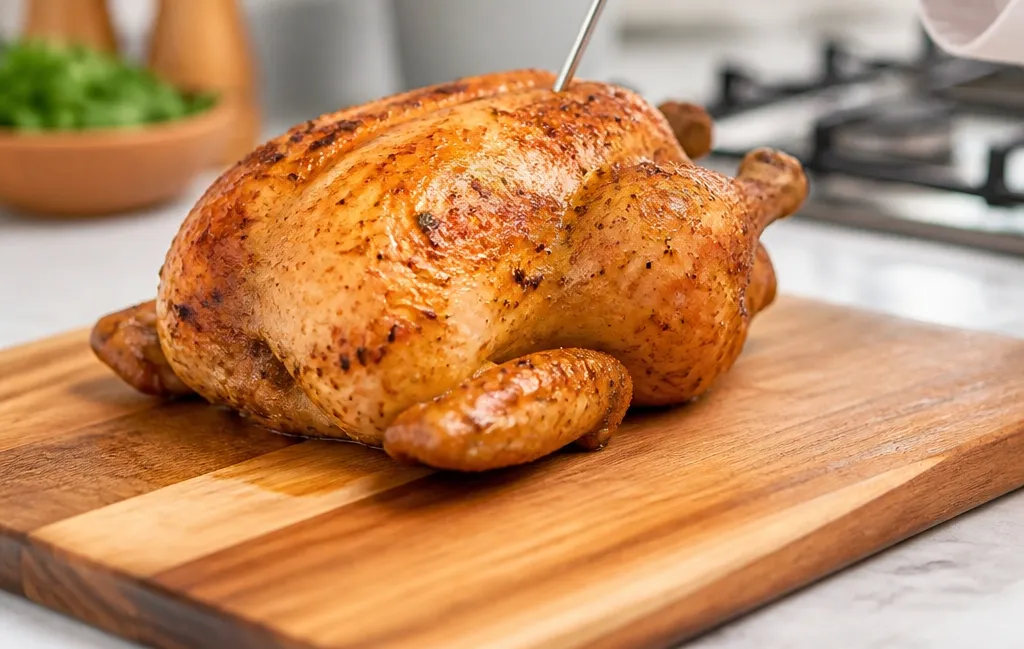
You always want to measure the coldest part of the meat, which is the geometric center or the thickest section. For a chicken breast, this is usually the plump middle. For a whole bird, the thickest part of the thigh—where it meets the body—is the slowest area to heat up. If the deep thigh is done, the rest of the bird is done.
Avoiding the Bone
Never let the tip of your thermometer touch bone, cartilage, or the roasting pan. Bone conducts heat much faster than muscle tissue. If your probe rests against the femur of a chicken leg, it might read 180°F while the surrounding meat is still sitting at a dangerous 150°F. Insert the probe into the flesh, angling it away from skeletal structures.
Ground Chicken Requires Extra Attention
When dealing with ground chicken—whether formed into burgers, meatballs, or cooked loose in a skillet—the grinding process distributes surface bacteria throughout the entire batch. Unlike a solid breast where bacteria only live on the exterior, every part of ground chicken must reach 165°F. Probe the absolute center of patties or meatballs to confirm they are fully cooked.
Choosing and Maintaining Your Thermometer
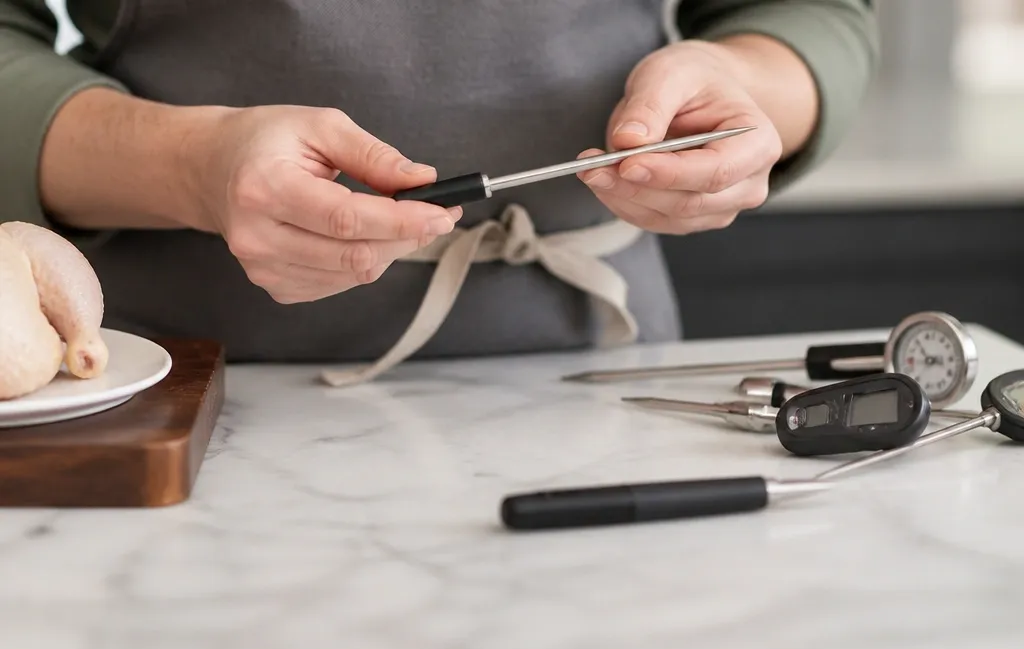
You cannot manage what you cannot measure accurately. A fast, reliable instant-read digital thermometer is the single best investment you can make for cooking poultry.
In practice, cheap dial thermometers are too slow and often drift out of calibration after being dropped or exposed to high oven heat. Digital probes give you a stabilized reading in two to three seconds, meaning you spend less time holding the oven door open and losing heat. When selecting gear for high-heat environments, prioritizing speed and accuracy prevents overcooking while you wait for the display to settle. If you are currently comparing popular models to find the right fit for your kitchen, looking at side-by-side testing data helps clarify which features actually matter during a busy dinner service.
Even a premium tool needs basic upkeep. If your readings start fluctuating wildly or seem unusually slow, check the power source first. A fading power supply frequently causes erratic behavior in digital sensors. Furthermore, understanding the difference between surface scanners and physical probes is vital. Surface lasers only read the exterior of the meat, making them completely useless for determining if the inside of a chicken breast has reached 165°F. You must use a penetrating probe for poultry safety.
Resting Chicken: The Step You Cannot Skip
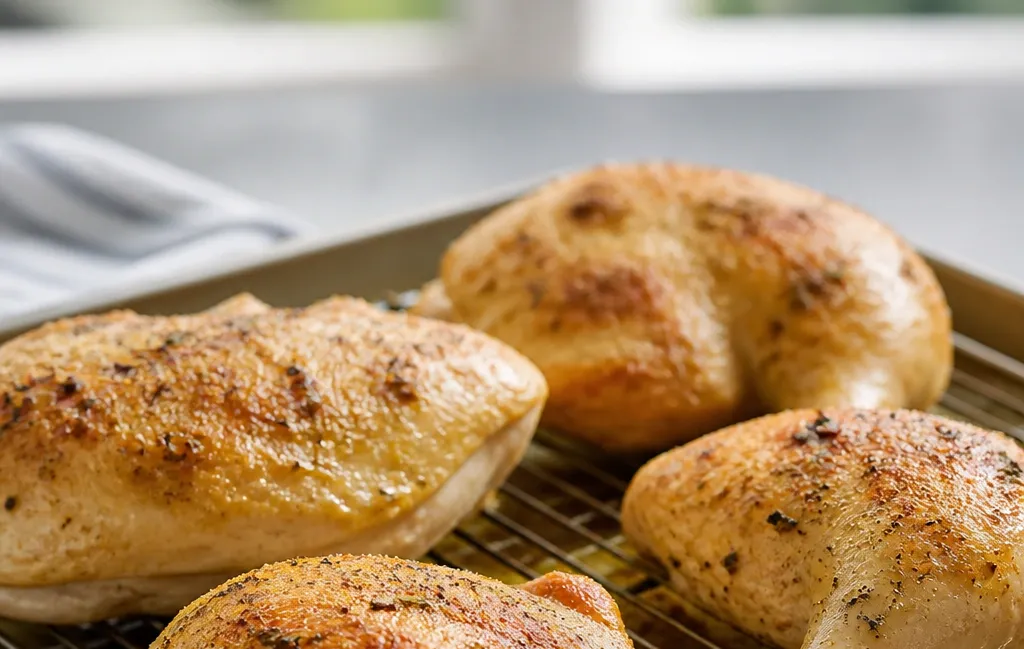
Pulling chicken off the heat is only half the process. Resting the meat is non-negotiable if you want juicy results.
When chicken cooks, the heat forces its internal juices toward the center of the cut. If you slice into it immediately, those concentrated juices spill out onto your cutting board, leaving the meat parched. By letting the chicken rest for 5 to 10 minutes (or up to 20 minutes for a large whole bird), the muscle fibers relax, and the juices redistribute evenly throughout the meat.
During this resting phase, keep the chicken loosely tented with aluminum foil. Do not wrap it tightly, or the trapped steam will soften and ruin any crispy skin you worked hard to achieve. As mentioned earlier, this resting period is also when carryover cooking happens, safely bringing pulled-early breasts up to their final target temperature.
Air Fryer and Grill Considerations
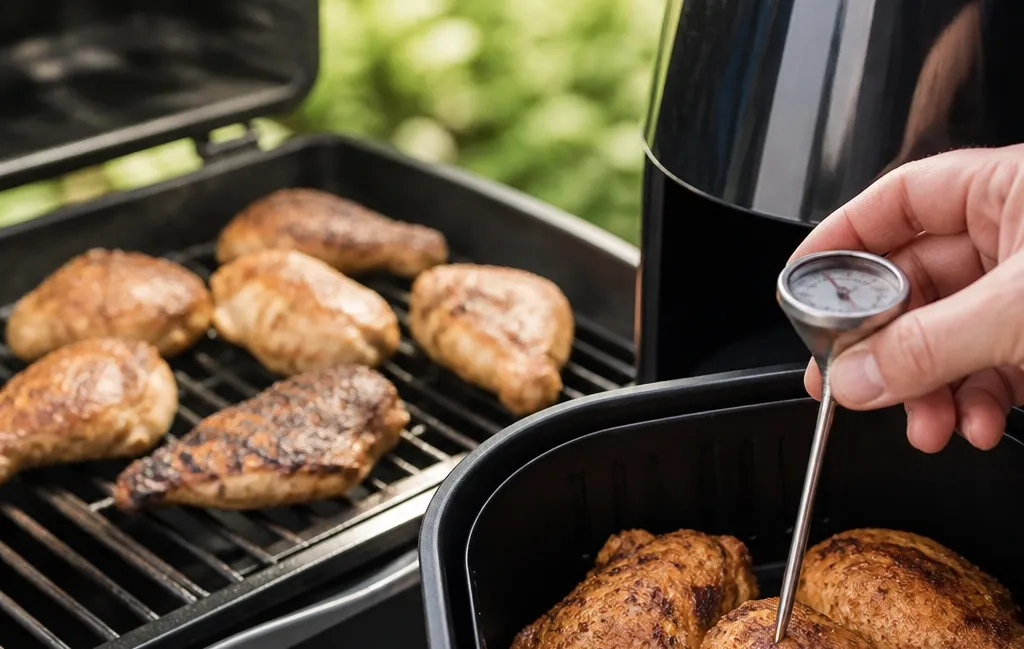
Different cooking methods affect how quickly chicken reaches its target temperature. High-velocity convection cooking, like using a modern countertop appliance, tends to cook the exterior much faster than a conventional oven. This means the outside might look deeply browned while the inside is still lagging behind. Always rely on your probe rather than visual cues or preset timer dials when using forced-air cooking.
On a grill, managing direct versus indirect heat is crucial. Searing chicken breasts directly over high flames often chars the outside long before the center hits 165°F. A better approach is to sear over direct heat for color, then move the pieces to a cooler, indirect zone to gently bring the internal temperature up without burning the exterior.
Food Safety Risks of Undercooked Poultry
Undercooked chicken is not just unpleasant; it is a genuine health hazard. Raw poultry frequently harbors Salmonella, Campylobacter, and occasionally Clostridium perfringens. Consuming meat that has not reached the thermal kill step for these pathogens can lead to severe foodborne illness.
Symptoms of bacterial infection from poultry typically manifest within 6 hours to 6 days after consumption. They include intense stomach cramps, diarrhea, fever, and vomiting, often lasting up to a week. For vulnerable populations—young children, pregnant women, the elderly, and immunocompromised individuals—these infections can require hospitalization and, in rare cases, be fatal. Adhering strictly to the chicken internal temperature chart is the only reliable way to protect yourself and anyone you cook for.
UK and International Temperature Standards
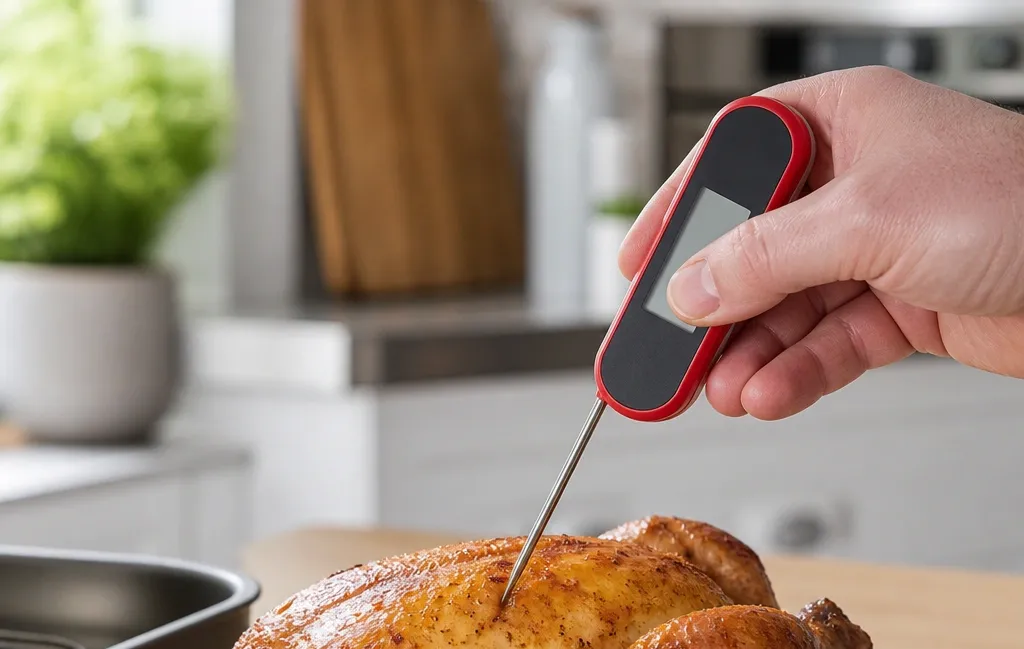
If you follow international recipes or live outside the US, you may see slightly different guidance. The UK’s Food Standards Agency (FSA) recommends cooking poultry until the thickest part reaches 70°C (158°F) and holds that temperature for at least 2 minutes, or reaches 75°C (167°F) momentarily.
In practice, this aligns perfectly with the USDA's 74°C (165°F) baseline. The FSA model simply illustrates the scientific relationship between temperature and time: a slightly lower temperature held for a longer duration achieves the same pathogen destruction as a higher temperature reached instantly. For home cooks without laboratory timing equipment, aiming for 74–75°C measured by an instant-read thermometer satisfies both American and British safety standards comfortably.
Frequently Asked Questions
Can I eat chicken if it is slightly pink inside?
Yes, provided a calibrated thermometer confirms the thickest part has reached 165°F (74°C). Color is an unreliable indicator of doneness. Chemical reactions during cooking, particularly in younger birds or smoked chicken, can leave the meat pink even when it is perfectly safe to consume.
What happens if I accidentally overcook my chicken breast?
Overcooked chicken breast becomes dry, chalky, and tough because the muscle fibers have squeezed out their moisture. While still safe to eat, the texture is unpleasant. You can salvage it by shredding the meat and mixing it into soups, salads, or sauces where added liquid compensates for the lost moisture.
Do I need a different temperature for bone-in versus boneless chicken?
The safety target remains 165°F (74°C) regardless of whether the cut is bone-in or boneless. However, bone-in cuts take longer to cook because bone acts as an insulator. Always probe the meat adjacent to the bone, as this area heats up last.
How do I know if my meat thermometer is giving accurate readings?
Test it using the ice water method. Fill a glass with crushed ice and cold water, stir it, and insert the probe without touching the sides. It should read exactly 32°F (0°C). If it deviates, consult the manufacturer's instructions to adjust the calibration nut or reset the digital offset.
Is ground chicken safer or riskier than whole cuts?
Ground chicken carries a higher risk because the grinding process mixes surface bacteria throughout the entire batch. With whole cuts, bacteria mostly stay on the outside. Therefore, ground chicken must be cooked thoroughly to 165°F (74°C) all the way through its center to ensure complete safety.
Should I wash raw chicken before cooking it?
No. Washing raw chicken under running water splashes harmful bacteria like Salmonella onto your sink, countertops, and nearby utensils. Cooking the chicken to the proper internal temperature of 165°F is the only effective way to eliminate pathogens. Pat the meat dry with paper towels instead.
Cook With Confidence
Mastering the chicken internal temperature chart transforms your cooking from anxious guesswork into precise, repeatable success. By understanding the distinct needs of white and dark meat, placing your probe correctly, and respecting the resting phase, you guarantee meals that are both exceptionally safe and remarkably juicy. Stop relying on timers and visual cues. Grab a quality digital thermometer, reference the charts above, and serve poultry with absolute certainty every single time.