You’ve just finished a long afternoon of smoking a brisket or roasting a chicken to perfection. The food is great, but now you’re staring at a greasy probe covered in baked-on protein and fat. The temptation to just toss it in the silverware caddy of your dishwasher and call it a night is strong.
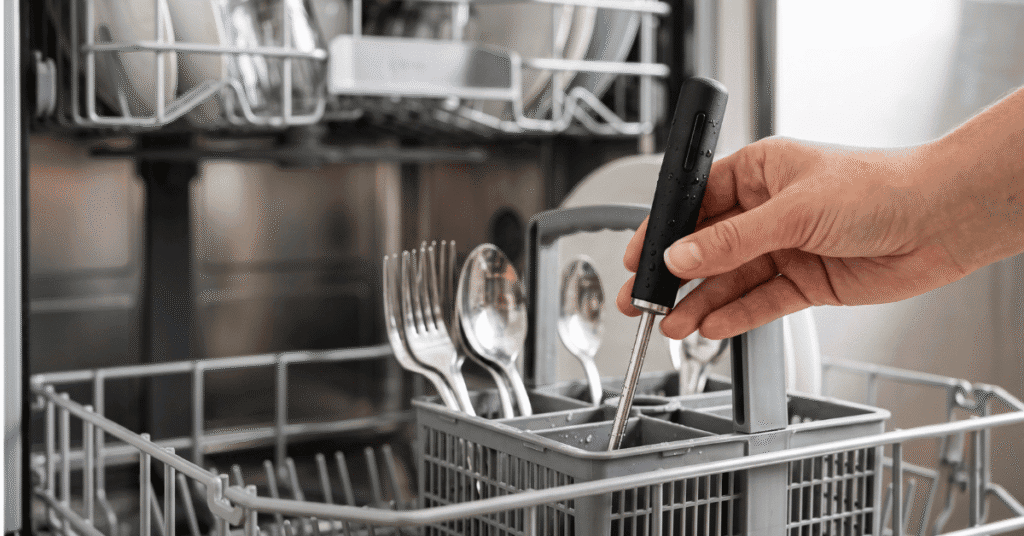
Yes, the MeatStick probe is dishwasher safe. According to the manufacturer, the probe is designed to withstand high temperatures and is deep-fryer safe, which translates well to the environment of a standard residential dishwasher. However, the Charger and the Bridge components are not waterproof and must never go in the dishwasher.
Understanding the MeatStick’s Durability
The reason the MeatStick can handle a dishwasher cycle is rooted in its structural design. These wireless thermometers are built to survive extreme heat, often rated for ambient temperatures up to 572°F (300°C) and internal temperatures of 212°F. Because they are engineered to be used inside closed grills, ovens, and even deep fryers, the seals are airtight.
A typical dishwasher cycle reaches temperatures between 130°F and 170°F. Since this is well below the probe’s maximum heat rating, the electronic components inside remain protected. The stainless steel and ceramic construction also resists the chemical detergents used in most pods or powders.
The Waterproof Rating
Most high-end wireless probes carry an IPX7 or IP68 rating. This means the device can stay submerged in water for extended periods without failing. The MeatStick is specifically marketed as being deep-fryer safe, which implies a higher level of seal integrity than a standard “water-resistant” gadget.
If it can keep hot oil out of its circuitry, a soapy water spray won’t be an issue.
Chemical Resistance
Dishwasher detergents are often more abrasive than standard dish soap. They contain surfactants and enzymes designed to break down tough proteins. While these chemicals won’t damage the stainless steel shaft or the ceramic handle of the MeatStick, frequent dishwasher use can sometimes lead to a dulling of the finish over several years.
Components That Must Stay Dry
While the probe is resilient, the MeatStick ecosystem includes several other parts that are incredibly sensitive to moisture. Misidentifying which part is “safe” is the most common way these devices get ruined.
-
The Charger: This is the plastic dock where the probe sits to refuel its battery. It contains exposed metal contacts and internal batteries or circuitry. Water will cause immediate corrosion or a short circuit.
-
The Bridge/WiFi Link: This unit acts as the middleman between the probe and your phone. It is a dedicated electronic hub and should be treated like a smartphone, keep it away from the sink and the dishwasher.
-
The MiniX Charger: Even the smaller, portable chargers are strictly “dry-only” components.
How to Clean The MeatStick Safely
Even though the dishwasher is an option, many long-term users prefer manual cleaning to extend the life of the internal battery. Extreme heat cycles, even those within the “safe” range, can theoretically put more stress on lithium batteries over hundreds of cycles compared to a quick hand wash.
-
Wait for the cool down: Don’t take a probe from a 450°F oven and drop it into ice-cold sink water. Let it reach room temperature naturally to avoid thermal shock to the ceramic.
-
Use a scrub sponge: Use the abrasive side of a standard kitchen sponge with hot, soapy water. This removes the “varnish” that smoke and fat leave behind.
-
Check the sensors: Ensure the area where the steel meets the ceramic is clear of debris. Gunk buildup here can occasionally interfere with accurate ambient temperature readings .
-
Dry completely: Before putting the probe back into the charger, wipe it down with a microfiber cloth. Placing a wet probe into the charger can cause the charging contacts to oxidize.
Edge Cases and Potential Risks
There are a few scenarios where putting your MeatStick in the dishwasher might lead to issues, even if the manual says it is allowed.
The “Searing” Factor
If you used the probe during a high-heat sear and noticed a black, carbonized layer on the ceramic handle, the dishwasher probably won’t get it off. This carbonized grease acts like a heat-shield and can actually cause the probe to give sluggish readings. In this case, hand-scrubbing with a bit of Bar Keepers Friend or a vinegar soak is much more effective than a dishwasher cycle.
Dishwasher Heating Elements
The biggest risk in a dishwasher isn’t the water; it’s the heating element at the bottom used for the “Heated Dry” cycle. If the probe falls through the silverware rack and lands directly on or near that element, it can be exposed to temperatures far exceeding its 572°F limit. Always secure the probe in a lidded basket or the top rack’s cutlery tray.
Common Mistakes to Avoid
-
Forgetting the charging contacts: If the two small metal bumps on the probe have a film of grease on them, the probe won’t charge. The dishwasher sometimes leaves a “spotting agent” film behind that can insulate these contacts.
-
Leaving it in the dishwasher: Don’t let the probe sit in a damp, humid dishwasher for days. Once the cycle is done, take it out, dry it, and return it to the charger.
-
Using industrial dishwashers: If you work in a commercial kitchen, avoid the high-pressure, high-chemical industrial washers. Stick to hand washing or residential-grade machines.
Frequently Asked Questions
Can I boil my MeatStick to sanitize it?
Yes, because the MeatStick is rated for deep-frying, it can easily handle the 212°F (100°C) temperature of boiling water. This is an effective way to remove stubborn, sticky residue from long “low and slow” BBQ sessions.
Why is my MeatStick not charging after a dishwasher cycle?
This is usually caused by a thin layer of mineral buildup or detergent residue on the charging end. Take a bit of steel wool or a rough sponge and gently buff the metal contacts at the end of the probe. Once they are shiny again, it should charge normally.
Is the MeatStick Mini also dishwasher safe?
Yes, the MeatStick Mini and the MiniX probes follow the same construction standards as the original. They can go in the dishwasher, but their chargers still must stay dry.
Will the dishwasher ruin the battery?
Standard dishwasher temperatures won’t “ruin” the battery instantly, but constant exposure to high-heat drying cycles can accelerate the degradation of any lithium-based battery. If you want the probe to last five years instead of three, hand washing is a better bet.
Worth Remembering
While the MeatStick is robust enough to handle the dishwasher, treat that feature as a convenience rather than a requirement. For a quick Tuesday night roast, the dishwasher is fine. For your expensive high-end kitchen gear, a 30-second hand wash is usually the safer, more thorough route.
Always double-check that the probe is bone-dry before clipping it back into its charging base to prevent long-term damage to the electronics. For more detailed technical specifications on temperature limits, you can refer to the official MeatStick support documentation.