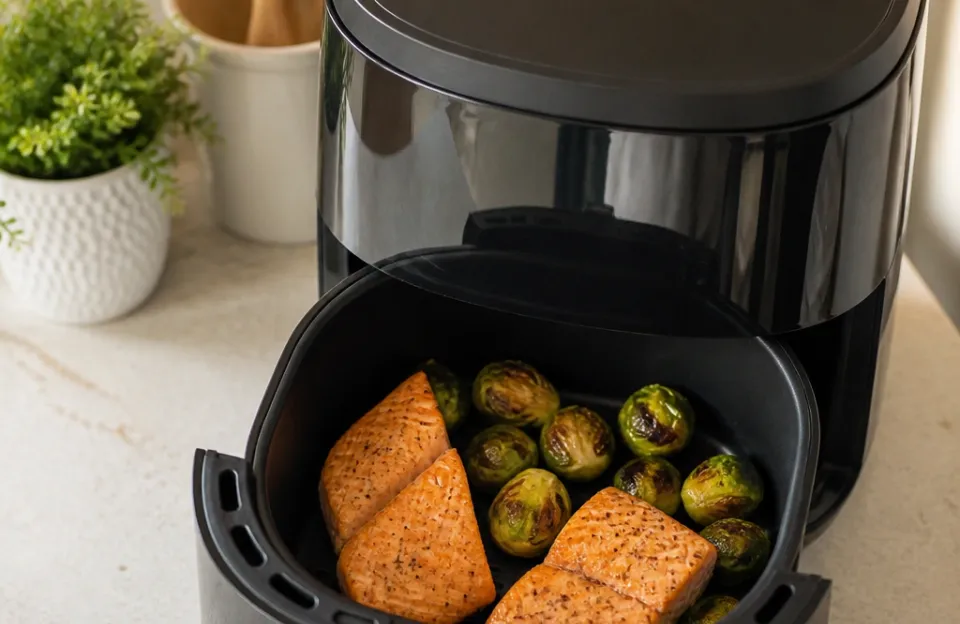
Air fryer salmon cooks in about 8 to 12 minutes at 400°F. The circulating hot air crisps the outside while keeping the center moist and flaky. You don't need to preheat a large oven or stand over a hot skillet.
Just season the fillets, place them in the basket, and let the machine do the work.
This article covers how to prepare air fryer salmon from start to finish. We'll look at picking the right cuts, seasoning options, exact timing for different thicknesses, and what to do when things go wrong. Whether you have skin-on pieces or thin tail cuts, the steps below will get you a reliable dinner.
Why Cooking Salmon in an Air Fryer Works So Well
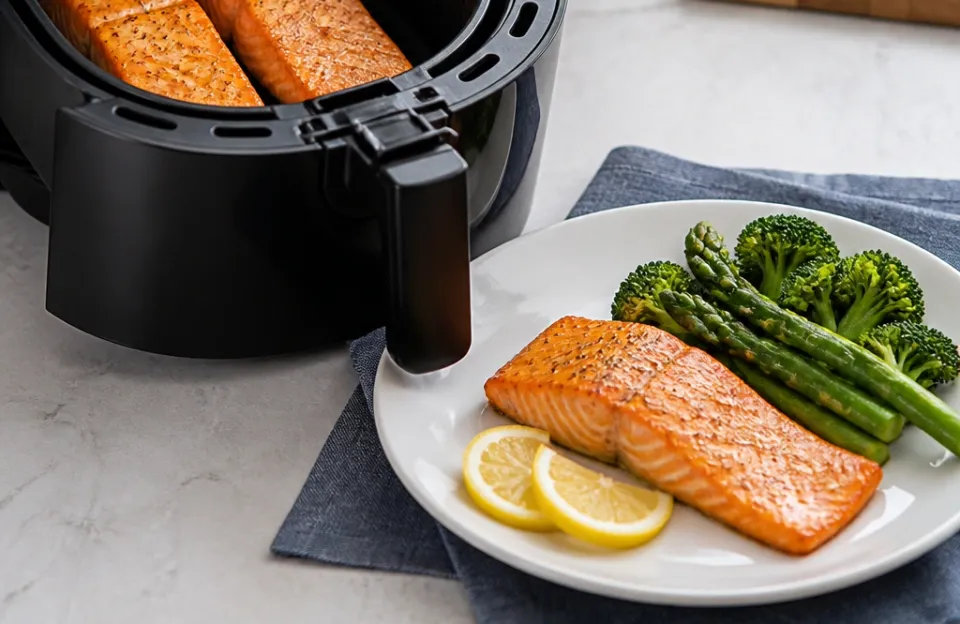
Salmon is a fatty fish. That natural fat renders quickly under high heat, basting the meat from the inside out. An air fryer pushes that hot air directly against the surface of the fillet.
This creates a slightly crisp exterior without needing heavy oils or deep frying.
Traditional baking requires waiting for a large oven to reach temperature. Pan-searing demands constant attention to prevent sticking or burning. The air fryer eliminates both issues.
The cooking chamber is small, so it heats up fast. The basket lifts the fish off the bottom, allowing air to flow underneath.
You also get less lingering odor in your kitchen. The enclosed space traps most of the fish smell compared to an open skillet. Cleanup is faster too, since you only wash the basket instead of scrubbing a greasy stovetop.
If you enjoy coating proteins for extra crunch in the air fryer, the same principles apply here. A light dusting or marinade behaves predictably in the moving air.
The FDA recommends cooking all fish to an internal temperature of 145°F for safety. You can read their full seafood handling guidelines on their official site. Reaching this target is straightforward in an air fryer because the consistent airflow prevents cold spots.
Picking the Right Salmon Fillets for the Basket
Not every piece of salmon fits well in an air fryer. The size of your basket dictates what you can cook. Most standard home models hold between two and four average-sized fillets without crowding.
Crowding blocks the airflow and leads to uneven cooking.
Center-cut fillets are usually the best choice. They have a uniform thickness, which means they cook evenly from edge to edge. Tail pieces are much thinner on one end.
If you use tail cuts, the thin end will dry out before the thick end finishes.
Skin-on versus skinless comes down to preference. Skin-on fillets protect the delicate flesh during cooking. Place them skin-side down in the basket.
The skin won't get as shatteringly crisp as it does in a cast-iron pan, but it prevents sticking and holds the fish together. Skinless fillets work fine if you lightly oil the basket first.
Fresh salmon yields the best texture. If you're using frozen fillets, thaw them completely in the refrigerator overnight. Pat them very dry with paper towels before seasoning.
Excess surface moisture creates steam, which prevents any browning. For weeknight dinners where you prep ingredients ahead of time, portioning your salmon into equal sizes earlier in the day saves effort later.
Wild-caught salmon, like Sockeye or Coho, is leaner than farmed Atlantic salmon. Leaner cuts dry out faster. Farmed salmon has more intramuscular fat, making it more forgiving if you accidentally leave it in a minute too long.
Adjust your expectations based on what you buy.
| Cut Type | Thickness | Best Air Fryer Temp | Estimated Time | Notes |
|---|---|---|---|---|
| Center-cut (Farmed) | 1 to 1.5 inches | 400°F | 8 to 12 mins | Very forgiving due to higher fat content |
| Center-cut (Wild) | 1 to 1.5 inches | 375°F | 7 to 10 mins | Watch closely; dries out fast |
| Thin tail piece | Under 1 inch | 375°F | 5 to 7 mins | Fold thin ends under for even cooking |
| Thick steak cut | Over 1.5 inches | 390°F | 12 to 15 mins | May need flipping halfway through |
Seasoning and Glazing Without Burning
Salmon takes on flavors easily. A simple mix of salt, black pepper, garlic powder, and smoked paprika works perfectly. Rub the spices onto the flesh side after patting the fish dry.
Let it sit for five minutes so the salt starts to penetrate.
Wet marinades require a bit more care. If you soak the fillets in something acidic, like lemon juice or vinegar, limit the time to 30 minutes. Acid breaks down the proteins quickly.
Leave it too long and the surface turns mushy before it hits the heat. When adapting sweet glazes meant for poultry, remember that salmon cooks much faster, so sugary sauces need lower heat to avoid scorching.
Sugar-based glazes, such as teriyaki, honey mustard, or maple soy, burn easily at 400°F. If you want a sweet glaze, lower the cooking temperature to 370°F. Alternatively, cook the salmon plain for the first six minutes.
Then open the basket, brush the glaze on, and cook for the remaining three to four minutes. This gives you a sticky coating without charred edges.
Oil is necessary even though salmon is fatty. Brush a thin layer of olive oil or avocado oil over the fillet. This helps dry spices adhere and promotes browning.
Don't use aerosol cooking sprays directly on the basket's non-stick coating, as the propellants can degrade the finish over time. Use a pump spray bottle or brush the oil on by hand.
Herbs like fresh dill or parsley should be added after cooking. High heat turns delicate green herbs brown and bitter. Sturdy herbs like rosemary or thyme can handle the air fryer, but chop them finely so they don't blow around the basket.
Exact Timing and Temperature for Air Fryer Salmon
Set your air fryer to 400°F for standard, one-inch-thick farmed fillets. Preheating isn't strictly required, but running the machine empty for two minutes gets the basket hot. A hot basket immediately starts searing the bottom of the fish.
Place the seasoned fillets in a single layer. Leave at least half an inch of space between each piece. Cook for 8 to 10 minutes.
Do not flip them unless they are thicker than 1.5 inches. Flaking fish falls apart easily when handled.
Check for doneness early. Open the basket at the 7-minute mark. The salmon is done when the color changes from translucent deep pink to opaque light pink.
It should flake easily when pressed gently with a fork. The thickest part of the fillet is the last to cook, so check there.
If you prefer medium-rare salmon with a slightly translucent center, pull it out at 6 or 7 minutes. Keep in mind the USDA food safety standard targets 145°F measured at the thickest point. To verify this accurately, insert a fast digital probe directly into the center of the flesh.
Thinner wild-caught pieces need less time. Drop the temperature to 375°F and start checking at 6 minutes. The lower heat compensates for the lack of fat, giving the interior time to cook before the exterior dries out.
Remember that carryover cooking happens. Once you remove the salmon from the air fryer, its internal temperature will rise another 3 to 5 degrees as it rests. Pull the fish out just before it reaches your target doneness.
Let it rest on a plate for two minutes before serving.
Checking Internal Temperatures Accurately
Visual cues are helpful, but a thermometer removes the guesswork. Insert the probe horizontally into the thickest part of the fillet. Avoid pushing it all the way through to the bottom, or you'll measure the basket temperature instead of the fish.
At 125°F, the center is soft and mostly translucent. This is rare. At 135°F, it's medium, with a slightly firmer texture and a hint of translucence.
At 145°F, it's fully cooked, firm, and flakes cleanly. Going past 150°F results in dry, chalky meat.
Using a reliable tool matters. A slow thermometer forces you to leave the basket open, dropping the cooking temperature rapidly. Models designed for quick readings in hot environments give you a number in seconds so you can close the drawer immediately.
If you don't own a thermometer, use the fork test. Press the tines gently into the thickest section. If the flesh separates along the white fat lines with zero resistance, it's done.
If it feels rubbery or resists pressure, it needs another two minutes.
What Happens When Things Go Wrong
Even with a simple method, mistakes happen. Knowing how to fix them saves your dinner.
The salmon sticks to the basket. This usually means the basket wasn't oiled, or the fish was placed in wet. Always pat the fillets completely dry. Lightly brush the basket grates with oil before laying the fish down.
If it still sticks, slide a thin metal spatula carefully underneath rather than pulling from the top, which tears the flesh.
The outside burns before the inside cooks. Your temperature is too high, or the fillet is too thick for 400°F. Lower the heat to 360°F and add a few minutes to the timer. Thicker cuts benefit from slower, gentler heat.
The fish tastes overly "fishy" or smells strong. Fresh salmon shouldn't smell pungent. If it does, it might be past its prime. To minimize mild odors during cooking, place a small piece of bread at the bottom of the air fryer drawer, beneath the basket.
It absorbs some of the dripping oils and reduces smoke.
White stuff is oozing out of the meat. That white substance is albumin, a protein pushed out by high heat. It's harmless, but it looks unappetizing. It happens when the fish cooks too fast or too long.
Brining the salmon for 15 minutes in saltwater before cooking helps the proteins retain moisture, reducing albumin buildup. Keeping track of caloric and fat differences between proteins can also remind you that fattier cuts naturally resist drying out better than lean ones.
The fillets blew around the basket. This happens with very lightweight, thin pieces when the fan speed is high. Tuck the thin ends under the fillet to create a heavier, compact shape. You can also use a metal rack or trivet designed for your air fryer model to pin them down slightly.
Pairing and Serving the Finished Fish
Air fryer salmon pairs well with sides that can cook alongside it or while it rests. Since the air fryer is occupied, use your stove or oven for accompaniments. Quick options include steamed rice, roasted asparagus, or a simple cucumber salad.
If you want to serve the salmon over greens, make sure the dressing is ready beforehand. Warm salmon wilts delicate lettuce instantly. Heartier greens like kale or spinach hold up better to the residual heat.
Leftovers store well in an airtight container in the fridge for up to three days. Cold air fryer salmon is excellent flaked over salads or mixed into pasta. Reheating it in the microwave tends to make it rubbery.
Instead, warm leftovers gently in a covered skillet over low heat, or eat them cold.
Sauces elevate the dish without complicating the cooking process. A quick yogurt-dill sauce, a squeeze of fresh lemon, or a spoonful of pesto adds brightness. You can easily adapt savory dipping concepts meant for other proteins into drizzles for seafood.
Avoid heavy cream sauces that mask the flavor of the fish.
For those watching their intake, choosing leaner preparation styles across all your air fryer meals keeps your weekly routine balanced. Salmon already provides omega-3 fatty acids, so minimal added oil keeps the nutritional profile strong.
Frequently Asked Questions
Can I cook frozen salmon fillets directly in the air fryer?
Yes, but the texture won't be as good as thawed fish. If you must cook from frozen, rinse the ice glaze off the fillet first and pat it dry. Cook at 360°F for 7 minutes to thaw the center, then increase the heat to 400°F for another 5 to 8 minutes.
Season halfway through, as spices won't stick to a frozen surface.
Is 400°F too hot for wild-caught salmon?
It often is. Wild species like Sockeye have significantly less fat than farmed Atlantic salmon. Cooking them at 400°F frequently dries out the edges before the center finishes.
Dropping the temperature to 375°F and shortening the total time yields a much moister result for wild cuts.
Does air fryer salmon taste exactly like baked salmon?
No. Baking in a conventional oven relies on ambient radiant heat, which is gentler and slower. The air fryer uses forced convection.
This creates a slightly firmer, more textured crust on the outside while keeping the inside dense and moist. It's closer to roasting at a high temperature than gentle baking.
How do I stop my air fryer from smoking when cooking salmon?
Smoking happens when rendered fish fat drips onto the bare heating element or the hot bottom of the drawer. Put a tablespoon of water in the bottom of the drawer, safely below the basket. The water catches the drips and prevents them from reaching their smoke point.
Cleaning the basket thoroughly after previous meals also prevents old grease from burning.
Should I wrap the salmon in foil inside the air fryer?
Wrapping it in foil essentially steams the fish in its own juices. You lose the textural contrast the appliance is designed to provide. If you want a crispy exterior, cook it uncovered.
Only use foil if you are cooking a very messy, sugar-heavy glaze that you know will burn, and even then, leave the top open for the last few minutes.
What is the safest internal temperature for leftover salmon?
When reheating previously cooked salmon, bring it back to 165°F to ensure any potential bacterial growth is eliminated. However, reheating salmon often ruins the texture. Eating leftovers cold or at room temperature within three days of the initial cook is generally preferred for quality.
Getting Dinner on the Table Faster
Air fryer salmon strips away the intimidation factor of cooking fish. You don't need to master pan-searing temperatures or wait twenty minutes for an oven to preheat. Uniform cuts, a light coat of oil, and strict attention to the clock are all it takes.
Keep a thermometer nearby. Trust the numbers over the timer, especially when switching between farmed and wild varieties or changing fillet thicknesses. Once you dial in the exact minutes for your specific machine, you'll be able to repeat the process without thinking.
It becomes one of the fastest proteins you can put on a plate.