You are halfway through a twelve-hour brisket smoke when your digital display suddenly flashes "HHH" or jumps from 145°F to 480°F in three seconds. That sinking feeling hits hard. Your meal is on the line, and your gear just quit. In practice, the digital base unit is rarely the culprit; it is almost always the thin, wire-tethered probe that has given up the ghost. Knowing how to handle a meat thermometer probe replacement quickly can save an expensive cut of meat and your entire afternoon.
Quick Answer: To replace a damaged probe, identify your device’s brand and model to find a compatible sensor with the correct jack size (usually 2.5mm or 3.5mm). Unplug the old probe from the transmitter port, inspect the socket for debris, and firmly insert the new one until it seats fully. Always test the new probe in a crushed ice bath to verify it reads within two degrees of 32°F (0°C) before you start cooking. You can also read our guide on is your meat thermometer probe broken how to tell and what to do.
Why Thermometer Probes Fail and When to Swap Them
A probe thermometer is a sensitive piece of electronic equipment that lives a brutal life. It spends hours inside a hot, smoky chamber, gets splashed with rendered fat, endures flare-ups, and often suffers through aggressive cleaning. The internal component—typically a thermistor or a thermocouple—relies on precise electrical resistance to tell the base unit what the temperature is. When the wiring inside the braided cable frays or the sensor in the tip degrades, the electrical signal gets garbled.
Moisture remains the number one killer of these components. While the stainless steel probe tip itself is waterproof, the junction where the wire enters the metal housing often is not. If water seeps into that transition point during a soak in the sink, it creates a short circuit. High heat is the second most common failure point. Most consumer-grade probes are rated for continuous exposure up to 482°F (250°C) or 572°F (300°C). If your grill flares up or you let the wire rest against a glowing charcoal ember, the internal insulation melts instantly. You can also read our guide on how to store thermometer probes without tangling the wires.
You should consider a replacement if you notice physical fraying on the mesh cable, if the wire feels unusually stiff or kinked, or if your display shows "LLL," "HHH," or an obviously wrong temperature like 250°F when the meat is sitting cold on the counter. Because these parts are consumables, experienced pitmasters keep two or three spares in their grill kit. Buying a $15 replacement probe is vastly cheaper than replacing an $80 wireless system mid-cook. If you ever suspect your readings are drifting without visible damage, erratic temperature swings are usually the first sign of internal sensor degradation.
Identifying the Right Jack, Plug Size, and Sensor Type
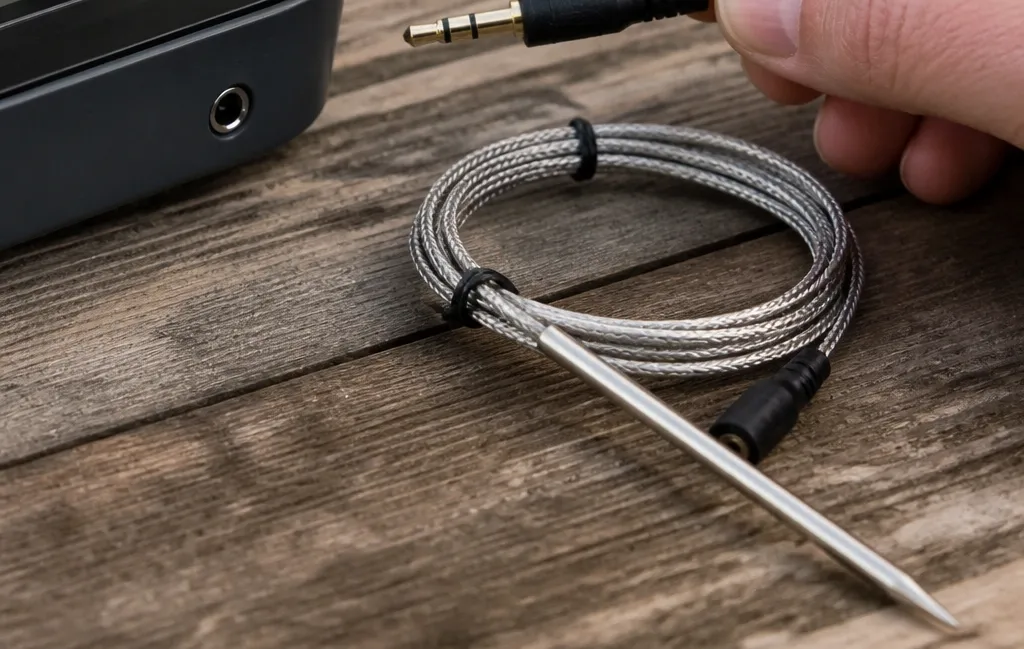
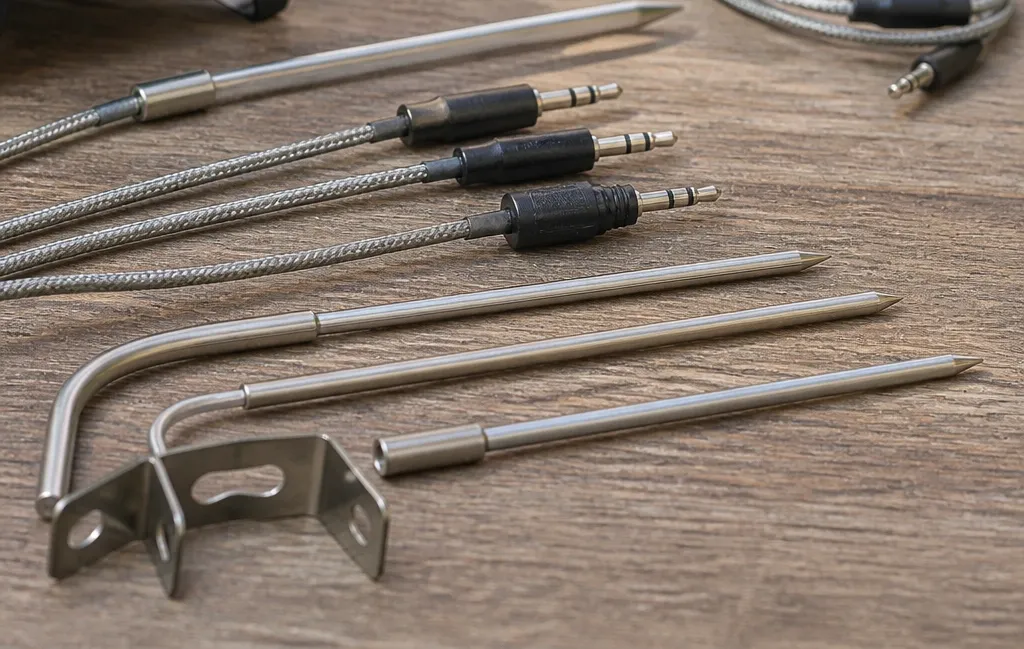
Before you buy a replacement, you must know exactly what kind of connection your base unit uses. Most modern digital thermometers use a standard mini-jack similar to older headphone plugs, but there are two distinct sizes: 2.5mm and 3.5mm. Using the wrong size will either fail to fit entirely or sit loosely in the port, causing intermittent readings that jump wildly as the wire shifts. You can also read our guide on what is the ideal chicken internal temperature.
Check your manufacturer's manual or the official product listing. Some brands use proprietary connectors or specific resistance levels. A probe that physically fits might not translate temperatures correctly if the internal electronics do not match the base unit's programming. For instance, if you plug a K-Type thermocouple probe into a standard NTC thermistor unit, it will not work, regardless of whether the plug fits. Understanding which sensor technology suits your cooking style helps prevent buying the wrong hardware entirely.
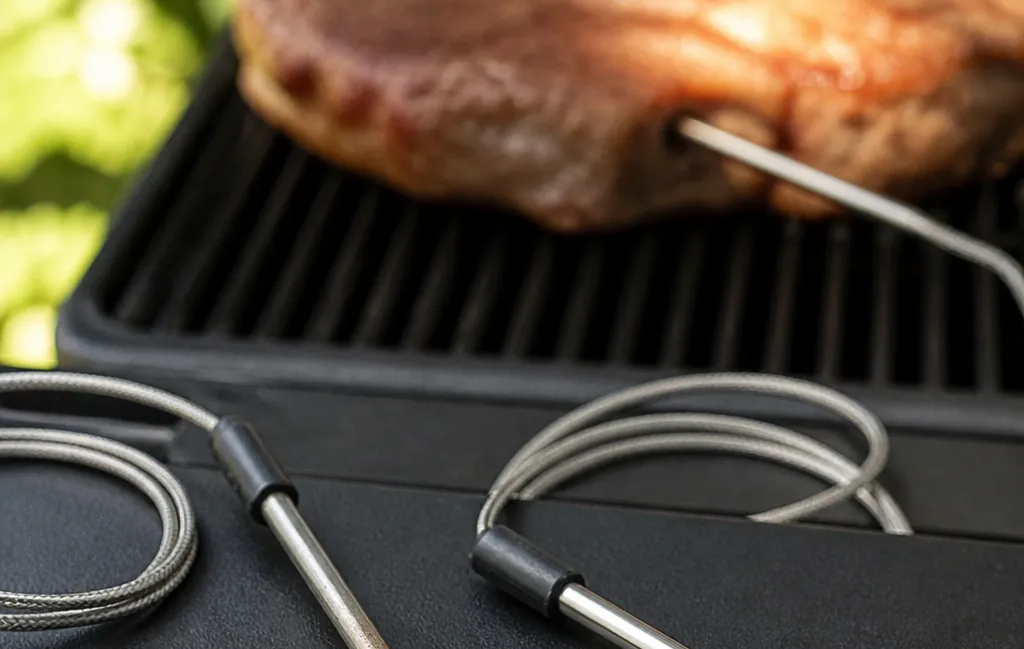
When shopping, you will also need to distinguish between internal meat probes and ambient probes. Internal meat probes feature a sharp, pointed tip designed to slide easily into the center of a roast or steak. Ambient probes (often called pit probes) usually have a blunt, rounded tip and frequently come with a small metal grate clip. Meat probes are engineered to read the temperature precisely at the very tip, while ambient probes are calibrated to measure the air temperature surrounding the food. Their response times and thermal mass differ significantly. If you need to monitor your smoker's airflow temperature, ensure the replacement is specifically labeled as an ambient or "pit" probe.
Step-by-Step Probe Replacement Process
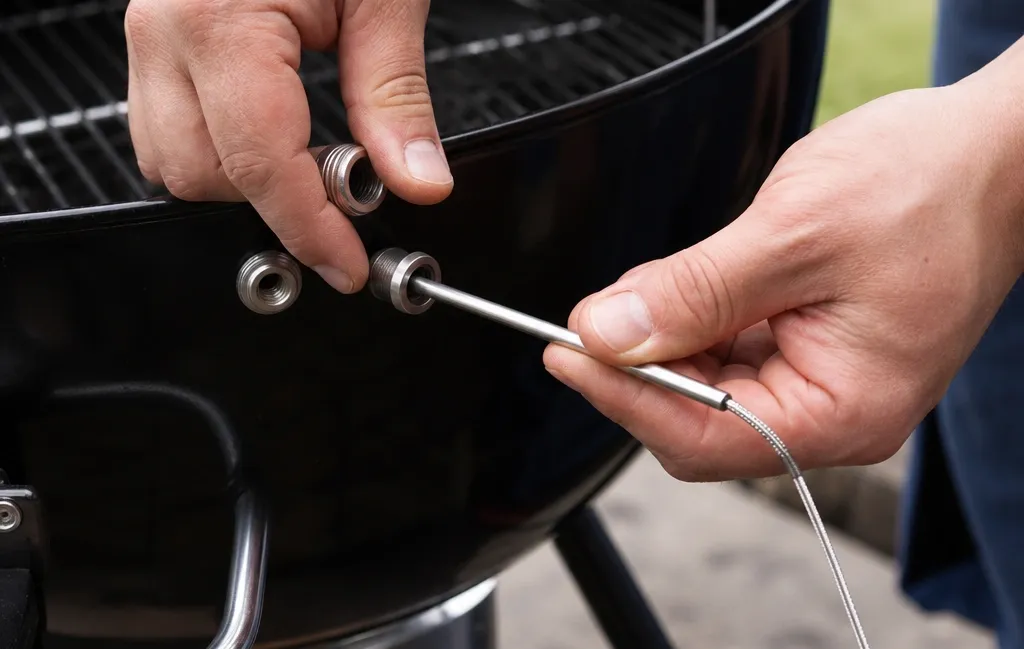
Replacing the part itself is straightforward, but verifying that it works accurately is the most critical step. You should never trust a fresh-out-of-the-box probe with an expensive prime rib without checking it first. Manufacturers occasionally ship units with slight calibration offsets, and shipping transit can be rough on delicate sensors.
- Power down the unit: Turn off your transmitter and receiver completely before touching the ports.
- Remove the old probe: Grasp the plastic or rubber housing of the plug—never pull by the wire itself—and pull it straight out of the port.
- Inspect the port: Look inside the socket on the base unit for any debris, carbon buildup, corrosion, or moisture. If it is dirty, a quick blast of compressed air or a dry cotton swab will clear it out. Corroded contacts cause false readings even with a brand-new probe.
- Plug in the new probe: Push the new jack firmly into the port. You should feel a distinct click or sense it seat fully. If there is a visible gap between the plug housing and the unit, it is not inserted all the way.
- Turn it on: Power the unit back up. It should immediately display the current room temperature.
Once connected, perform an ice bath test. Fill a glass tightly with crushed ice and add just enough cold water to fill the gaps. Stir it for a full minute to stabilize the temperature, then insert the probe tip into the dead center of the ice slurry. It should read within 1 to 2 degrees of 32°F (0°C). According to USDA food safety guidelines, accurate temperature monitoring is essential for preventing foodborne illness, making this calibration check non-negotiable. If your reading is significantly off, check your connection again or see if your base unit features a "Cal" button to manually fine-tune the offset.
Dealing with Specialty and Wireless Probes
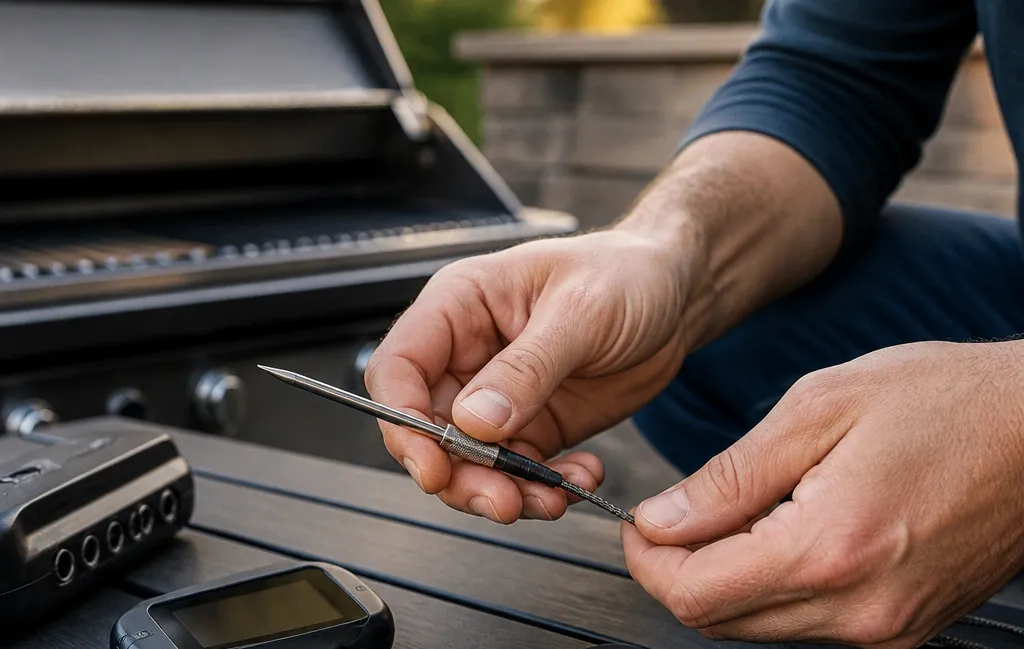
Not all replacements are as simple as plugging in a wired sensor. Modern barbecue setups increasingly rely on truly wireless probes that house the battery and Bluetooth transmitter directly inside the probe handle. If one of these fails, you usually have to replace the entire stick, as the internal batteries and electronics are hermetically sealed to withstand high temperatures.
For these wireless versions, the "replacement" process involves unpairing the old, broken probe from your smartphone app and pairing the new serial number. Because they lack wires, they are prone to different failure modes. The most common issue is internal sensor degradation caused by leaving the probe in a grill "hot spot" where temperatures exceeded the ceramic handle's safety limit (usually around 527°F / 275°C). If your wireless probe refuses to charge or drops its Bluetooth connection repeatedly, it is likely time for a swap. If you are currently comparing systems, understanding how different wireless platforms handle heat limits will guide your next purchase. Similarly, evaluating signal reliability across models ensures you buy a replacement that won't drop out mid-smoke.
A frayed probe wire near the jack is a primary reason for sudden "HHH" error codes.
Common Pitfalls During Probe Replacement
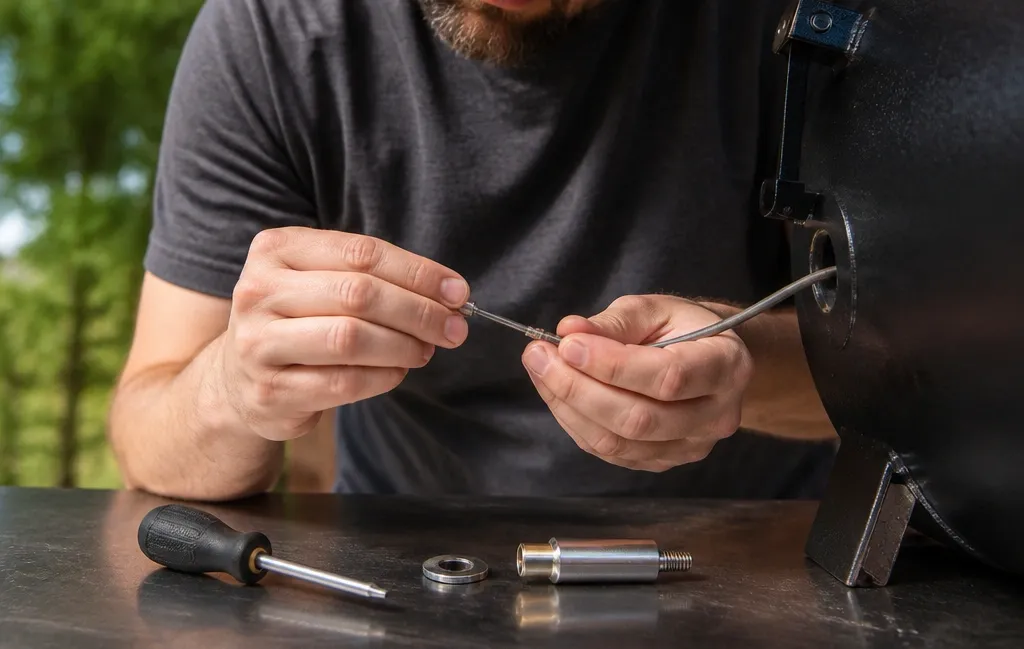
The most frequent mistake people make is buying a "universal" probe that is not actually universal. While the plug might fit perfectly, the temperature curve programmed into the thermometer base may be entirely different. One brand might interpret a specific electrical resistance as 150°F, while another brand sees that exact same resistance as 165°F. That 15-degree difference is more than enough to overcook poultry or undercook pork. Always verify the ohm rating (e.g., 10k or 100k) matches your original equipment.
- Forcing the plug: If the jack does not slide in smoothly, you likely have the wrong size (2.5mm vs. 3.5mm). Forcing it can snap the internal soldering on the motherboard of your thermometer, turning a $15 fix into a ruined device.
- Ignoring the O-ring: High-end waterproof probes often feature a tiny rubber O-ring on the plug shaft. If your new probe comes with one, ensure it stays seated. Without it, steam from your grill can enter the transmitter and fry the electronics.
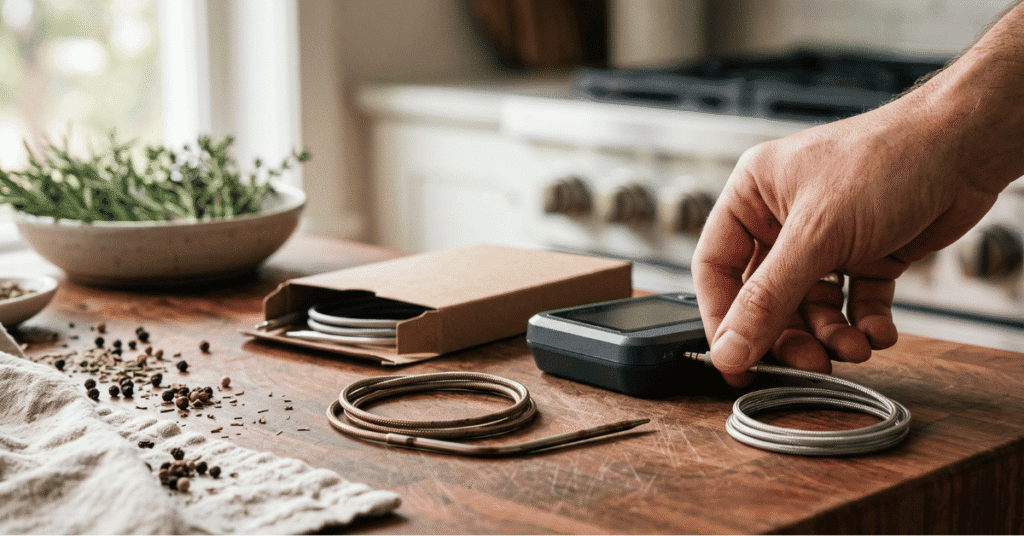
- Twisting the wire: New probes arrive tightly coiled, often secured with zip ties or twist bands. Do not yank them straight. Carefully unroll the cable. Kinking the wire right out of the box causes micro-fractures in the internal copper strands, leading to a permanent "no probe" error message.
- Submerging the new wire: Even if the packaging says "waterproof," treat the wire-to-probe junction as a weak point. When testing your replacement in an ice bath or cleaning it after the first cook, never dunk the entire cable. Wipe the stainless steel section with a soapy cloth and keep the braided wire completely dry.
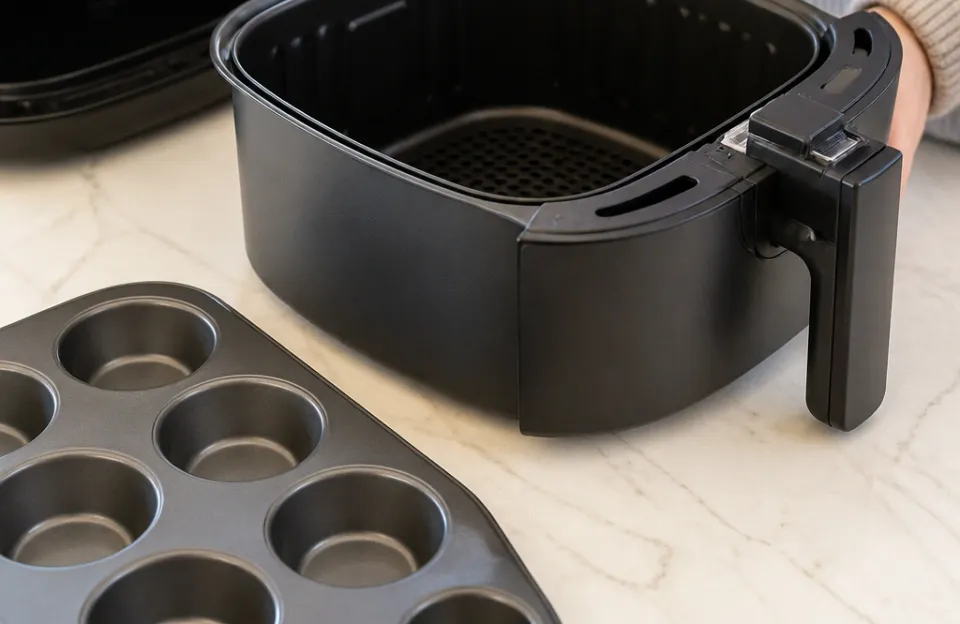
If you use specialized countertop appliances alongside your smoker, remember that inserting rigid probes into compact baskets can bend the wires. Choosing the right appliance setup minimizes accidental probe damage during everyday cooking.
How to Extend the Lifespan of Your New Probe
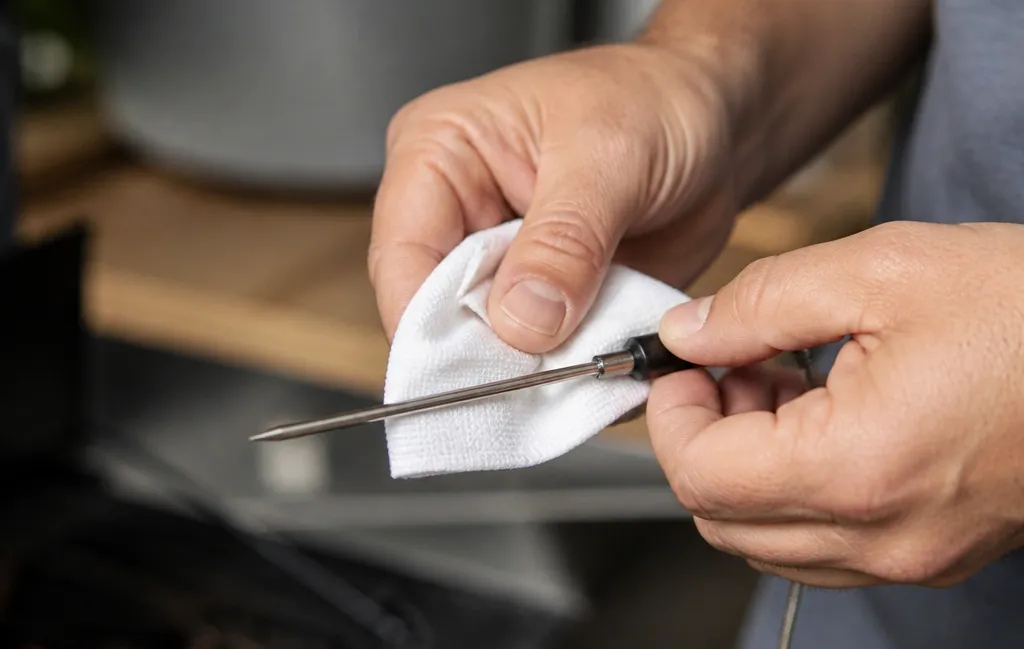
Replacing a probe is cheap, but doing it every month is frustrating. A common mistake is leaving the probe resting directly against the metal grates or the side of the firebox. Metal conducts heat far faster than air, and direct contact with a cast-iron grate over a burner will exceed the probe's maximum rating almost instantly, melting the internal Teflon or fiberglass insulation. Use the provided clips to suspend the wire away from direct flame paths.
Cleaning habits also dictate longevity. Never put a wired probe in the dishwasher. The combination of prolonged submersion, harsh detergents, and extreme heat destroys the wire junction. Instead, wait until the probe is cool, wipe the metal shaft with a damp paper towel, and use a mild degreaser only on the stainless steel tip. Coil the wire loosely in large loops (about six inches in diameter) when storing it. Tight wrapping strains the copper core. Finally, always double-check your power source health before blaming the probe; a dying transmitter battery often mimics a failing sensor by producing erratic readings.
Summary of Probe Types and Jack Sizes
| Feature | Standard Thermistor | K-Type Thermocouple | Truly Wireless |
|---|---|---|---|
| Typical Plug | 2.5mm or 3.5mm jack | Two-prong flat plug | No plug (Bluetooth/Wi-Fi) |
| Common Use | Backyard BBQ, oven roasts | Professional kitchens, fast reads | Rotisserie, deep frying, closed lids |
| Durability | Moderate (vulnerable to water) | High (industrial grade) | Sensitive to extreme ambient heat |
| Cost Range | Low ($10 – $20) | Medium ($20 – $40) | High ($80+) |
| Sensor Mechanism | Electrical resistance change | Voltage generated by two metals | Internal thermistor + radio transmitter |
Frequently Asked Questions
Can I use a probe from a different brand if the plug fits?
It is highly risky. Even if the plug slides in perfectly, the base unit is calibrated to a specific resistance-to-temperature scale. Unless the manufacturer explicitly states they use a standard 10k or 100k ohm thermistor that matches your unit's specifications, you will likely get dangerously inaccurate readings. Always stick with parts made for your specific model.
Why does my new probe read "HHH" right out of the box?
An "HHH" error usually indicates a short circuit or an open circuit. First, check the plug to ensure it is pushed entirely into the transmitter. If it is fully seated and still shows an error, the probe may have been damaged during shipping, or there could be a fault in the transmitter port itself. Try plugging it into a different channel on your unit to see if the problem follows the probe or stays with the port.
Is it possible to repair a probe wire instead of replacing it?
Generally, no. The wires are shielded with stainless steel mesh and insulated with high-heat materials like Teflon or fiberglass. Attempting to solder these back together usually alters the electrical resistance of the circuit, which makes the temperature readings permanently inaccurate. Given the low cost of a replacement, a DIY repair is not worth the risk of foodborne illness or a ruined dinner.
How many times can I replace a probe before the base unit fails?
The base unit (the transmitter) typically lasts for many years because it sits outside the high-heat zone. The input ports are rated for thousands of plug-in cycles. As long as you keep the transmitter dry, avoid dropping it, and ensure the batteries have not leaked and corroded the contacts, you can replace the probes indefinitely without wearing out the main unit.
What is the difference between a stepped-tip and a tapered-tip probe?
Tapered probes narrow gradually to a point and are excellent for delicate proteins like fish or poultry breasts where you want minimal juice loss. Stepped-tip probes have a distinct shoulder near the point, which acts as a depth gauge to help you consistently place the sensor in the exact thermal center of thick cuts like briskets or pork shoulders.
Final Thoughts on Maintaining Accurate Readings
Keeping your thermometer hardware in top shape is the difference between a perfect medium-rare steak and an overcooked, dry disappointment. Probes are essentially the tires of your barbecue setup—they endure friction, heat, and wear, and they eventually need changing. By matching the right plug size, verifying the sensor type, and performing a simple ice bath test, you can extend the functional life of your digital thermometer system for years.
Before you head out to the grill for your next cook, take those extra two minutes to test your new probe in ice water. That single step provides the peace of mind that your gear is telling you the truth. If you find yourself replacing probes every few months, critically evaluate how you are cleaning, routing, and storing them. Keeping cables out of the sink, avoiding tight kinks, and suspending wires away from direct flames will save you significant money and frustration in the long run. Upgrade your toolkit today by identifying your exact model's requirements and keeping a tested spare probe ready for your next smoke.