You are hovering over the smoker, trying to balance a massive brisket on one grate and a rack of ribs on another. Every time you lift the lid to check progress with a standard instant-read tool, you bleed out heat and moisture, extending your cook time and risking dry meat. This constant guessing game turns a relaxing afternoon into a stressful ordeal.
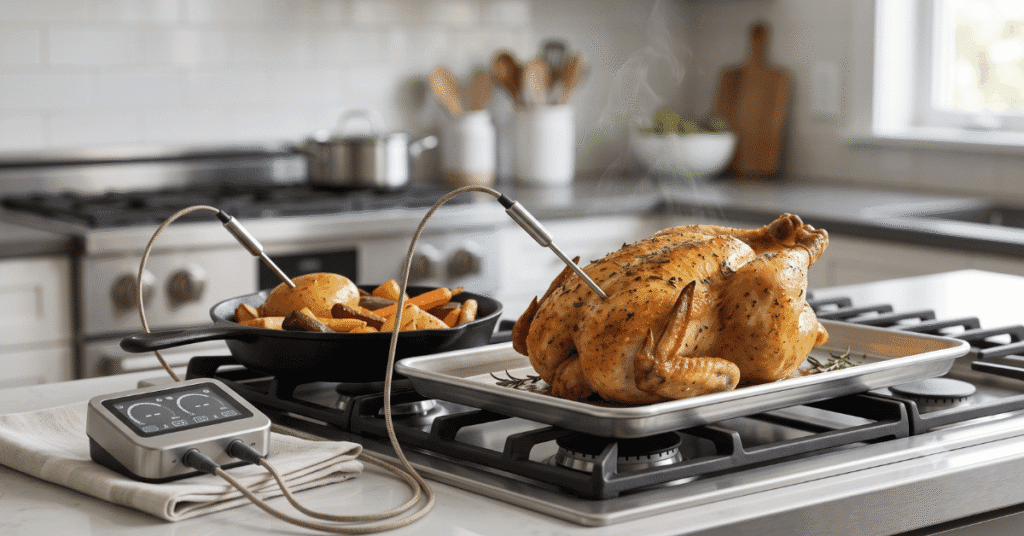
A dual probe meat thermometer eliminates that stress entirely. It is a digital temperature monitoring system equipped with two separate sensors, allowing you to track two distinct temperatures simultaneously without ever opening your grill or oven door. You can monitor the internal temperature of two different cuts of meat at once, or track one piece of meat alongside the ambient air temperature inside your cooker. In practice, this single upgrade transforms reactive cooking into proactive management, giving you total control over the variables that usually lead to ruined dinners. You can also read our guide on what is a leave in probe thermometer.
Why Two Probes Change the Way You Cook
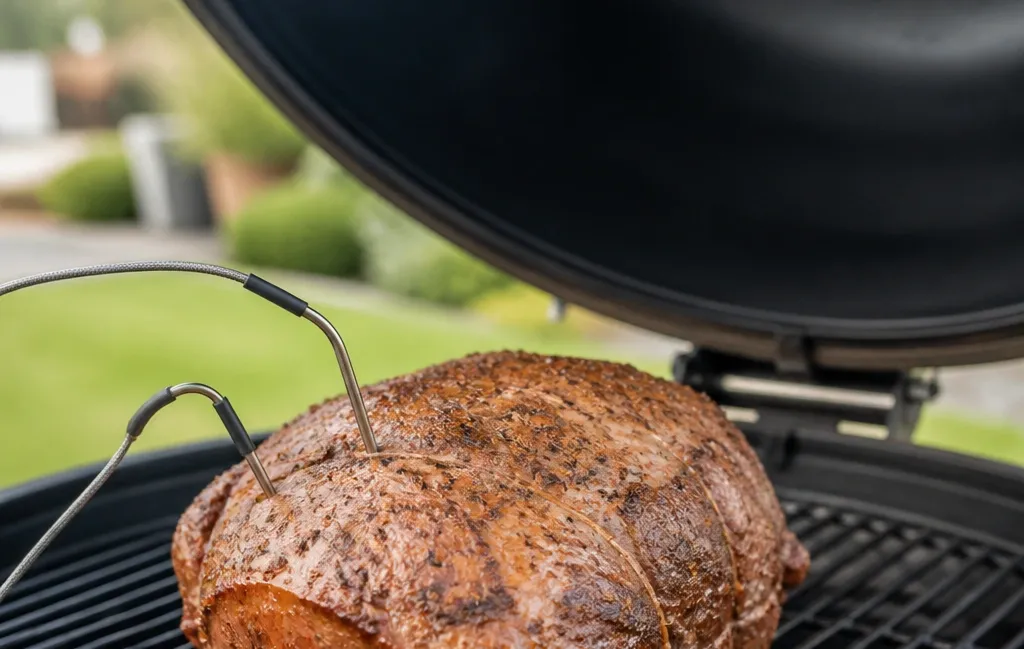
The core value of a dual probe setup lies in continuous, uninterrupted monitoring. Built-in dome thermometers on grills and smokers are notoriously unreliable. They typically sit high in the lid, measuring air temperature far above the cooking grate, and can easily be off by 50°F or more. By placing dedicated sensors exactly where the heat matters—at the food level and inside the muscle—you get actionable data rather than rough estimates.
For outdoor pitmasters and indoor roasters alike, this means precision. While a single-probe tool might tell you when a turkey reaches 165°F, a dual-probe system tells you when the bird hits its target while simultaneously alerting you if your smoker’s fire dies down and the ambient temperature drops below 225°F. If you want to understand how to operate specific models effectively, learning proper sensor placement techniques is the first step toward consistent results.
Tracking Ambient Heat and Internal Doneness
The most popular configuration for low-and-slow barbecue involves using one probe for the meat and the second for the air. The food probe goes into the thickest part of the cut, carefully avoiding bone or large fat pockets. The ambient probe clips directly to the grill grate near the food using a specialized bracket. This reveals the true cooking environment your meat is experiencing, which is often drastically different from what the lid gauge claims.
Coordinating Multiple Cuts Simultaneously
When you are searing steaks for yourself and roasting chicken for the family, they will not finish at the same time. A dual probe system lets you set independent alarms for both items. You will know exactly when to pull the smaller cut while letting the larger one continue to cook. For poultry specifically, pairing your device with a reliable safe poultry temp guide ensures every piece leaves the grill safely cooked but still juicy.
How the Technology Handles Extreme Heat
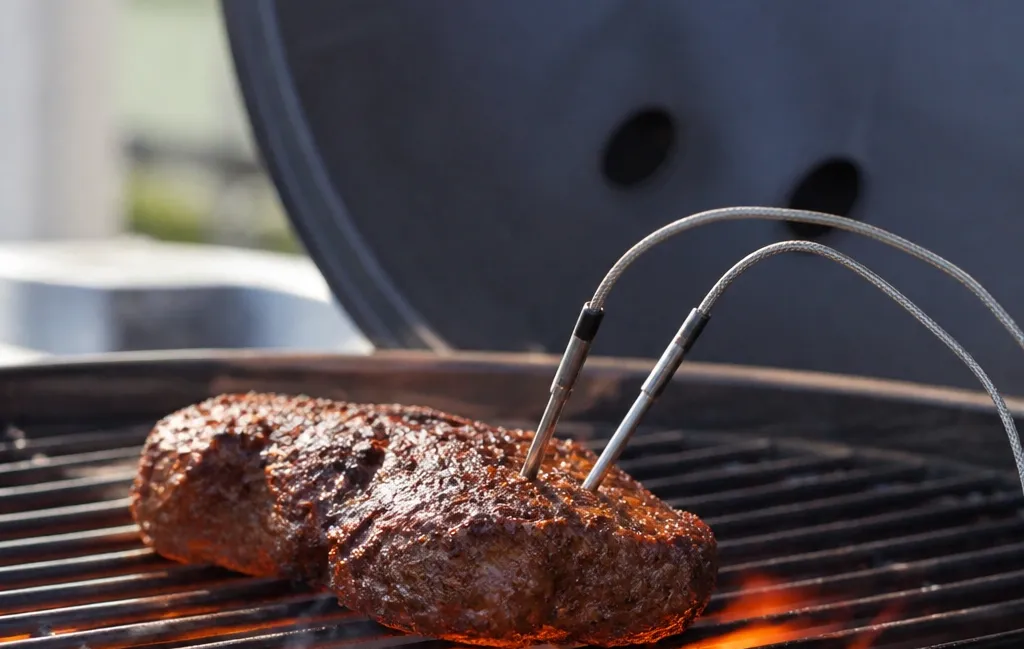
Understanding how these tools work helps you use them better and avoid premature failure. The probes themselves are typically machined from food-grade stainless steel with a tapered tip designed to pierce dense muscle fiber cleanly. Inside that sealed tip sits a thermistor—a resistor whose electrical resistance changes predictably as temperature fluctuates. The base unit measures this resistance through the connecting wire and translates it into a precise digital readout.
Most wired dual probe thermometers utilize braided stainless steel cables engineered to withstand continuous exposure up to 700°F (371°C). These cables are thin enough to run under a closed grill lid or through an oven door gasket without breaking the seal.
Wired Base Stations vs. True Wireless Probes
Wired models remain the most affordable and dependable choice for long smokes. The base unit sits outside the heat source, connected to the probes via shielded wires. Because there are no batteries inside the hot zone, you never have to worry about a probe dying mid-cook. Many enthusiasts prefer comparing popular wired units side-by-side before committing to a specific brand.
True wireless models, however, have matured significantly by 2026. These probes house all electronics—including the battery and Bluetooth or Wi-Fi transmitter—inside the stainless steel shaft itself. There are no external cables. This is a massive advantage when using a rotisserie, where a wire would tangle and snap within minutes. The trade-off is that wireless probes are thicker, require regular charging, and carry strict maximum ambient temperature limits to protect their internal batteries. If you are weighing your options, evaluating leading wireless platforms will help you decide which connectivity style fits your cooking habits.
If you frequently use rotating spits or deep pits where wires snag, a true wireless dual probe system is worth the premium.
Accuracy Standards and Routine Calibration
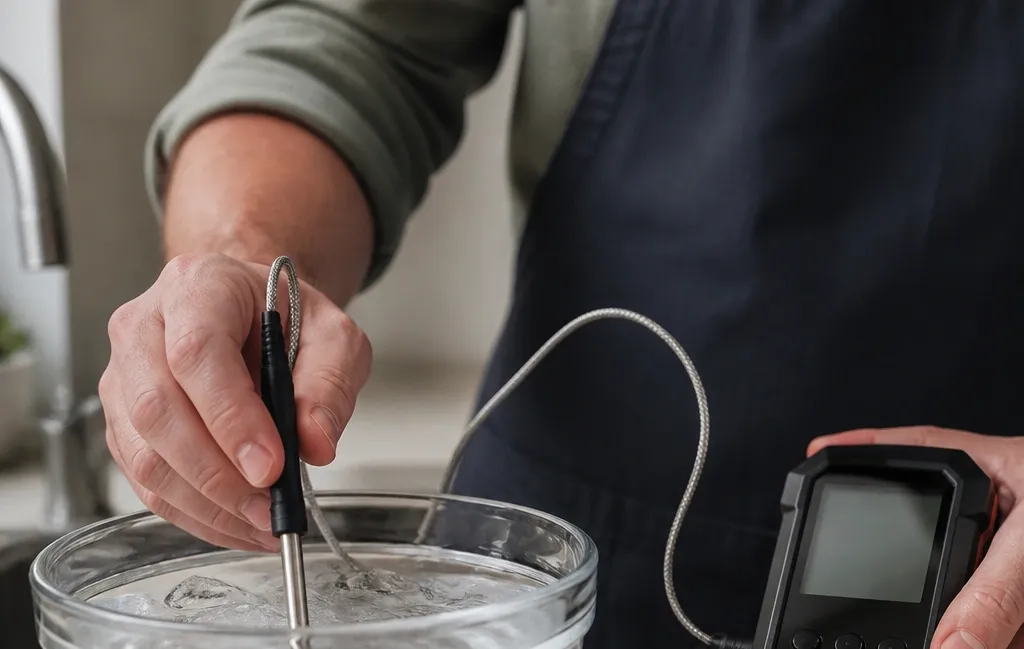
A quality dual probe thermometer should deliver readings accurate within ±1°F to ±2°F. However, repeated exposure to extreme heat cycling will eventually cause minor drift. To maintain confidence in your numbers, calibration checks are essential. The USDA food safety guidelines emphasize that proper internal temperatures are non-negotiable for preventing foodborne illness, making thermometer accuracy a health issue, not just a culinary one.
To verify your probes, perform the ice water test. Fill a tall glass with crushed ice, add cold water just below the top of the ice, and stir. Insert the tips of both probes into the slurry without touching the sides or bottom of the glass. After 30 seconds, they should read exactly 32°F (0°C). If they do not, consult your manual; many modern digital bases feature an offset calibration setting in the menu to correct minor deviations. If your readings are wildly erratic or drifting constantly, you may need to troubleshoot inconsistent temperature readings before your next cook.
Step-by-Step Guide to Using Dual Probes
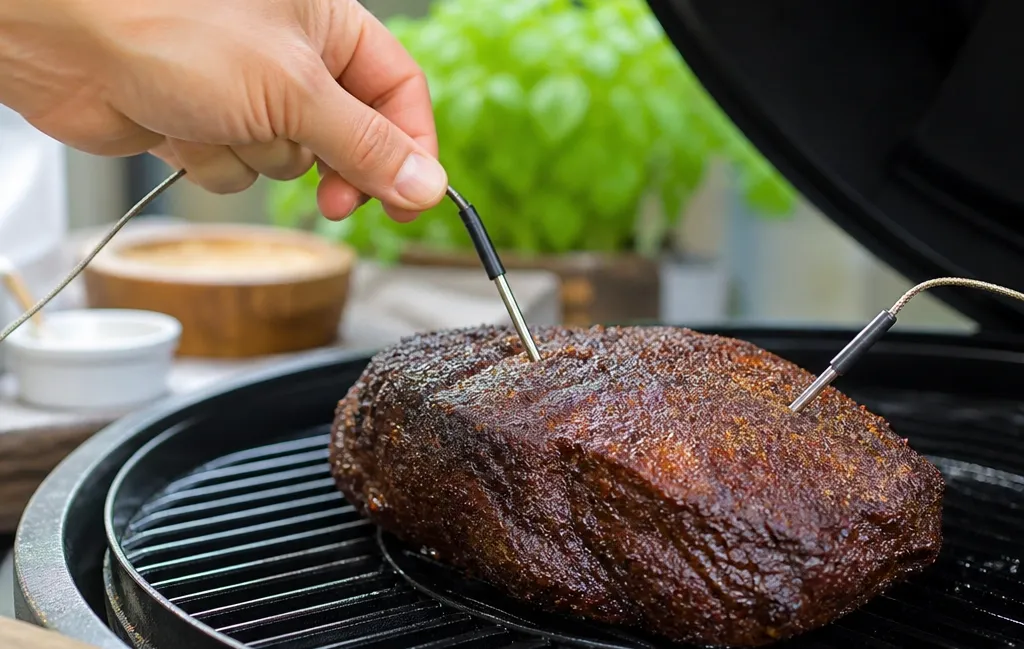
Using a dual probe system involves more than simply pushing metal into meat and walking away. Proper technique dictates whether you achieve perfect medium-rare or serve a ruined dinner.
- Insert the food probe correctly: Push the meat probe into the thickest geometric center of the cut. For whole poultry, this is usually the deepest part of the breast or the inner thigh. Ensure the sensing tip (usually the bottom half-inch) is suspended in muscle tissue, not resting against bone, cartilage, or a hollow cavity. Bone conducts heat faster than meat and will give you a falsely high reading.
- Position the ambient clip: If using the second probe for air temperature, attach the grate clip roughly two inches away from the meat. If it touches the cold raw food, the reading will be artificially low. If it hangs directly over the charcoal or burner, it will read too high.
- Route the cables safely: Run the wires through a designated side port on your smoker, or gently close them in the corner of your oven door. Avoid pinching the wire aggressively against sharp metal edges, as crushing the cable damages the internal conductors over time.
- Program your alarms strategically: Set your target temperature alarm 5°F below your actual desired final temperature. This accounts for "carryover cooking," the phenomenon where residual heat continues to raise the internal temperature after the meat is removed from the heat source.
- Monitor the rest: Leave the food probe inserted during the resting period. Watching the temperature peak and slowly stabilize on your display tells you exactly when the juices have redistributed and the meat is ready to carve.
Edge Cases and Practical Limitations
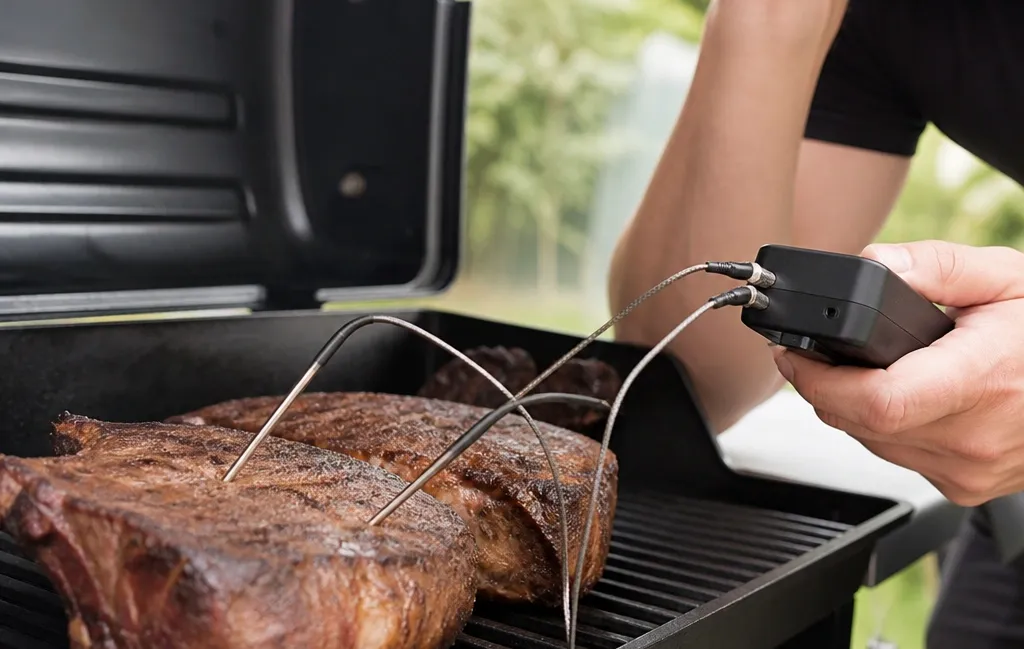
While incredibly versatile, dual probe leave-in thermometers are not designed for every cooking scenario. Understanding their limitations prevents broken equipment and ruined meals.
High-Heat Searing and Direct Flame
Most dual probe systems are optimized for low-and-slow roasting or smoking. If you are reverse-searing a steak over direct flame at 800°F, the cables can melt or the internal thermistor can fail catastrophically. Always check the manufacturer's maximum temperature rating for both the probe tip and the cable. For fast, high-heat grilling where speed matters most, looking into top-rated grilling thermometers designed for rapid response is a safer bet.
Deep Frying and Liquid Submersion
Probe shafts are generally water-resistant, but the junction where the steel meets the wire or handle is rarely waterproof. If you use a probe to monitor frying oil, never submerge that connection point. If oil or moisture wicks inside the joint, the sensor will short out, delivering erratic readings or permanent failure.
Cold Weather Performance
When smoking in freezing winter temperatures, LCD screens on base units can slow down, dim, or temporarily freeze. Furthermore, cold weather drains alkaline batteries rapidly. If you are cooking outdoors in the cold, opt for a model that relays data via Bluetooth to an app on your phone. This allows you to keep the sensitive receiver electronics warm inside your pocket or house while only the rugged probes stay in the cold.
Common Mistakes That Ruin Thermometers
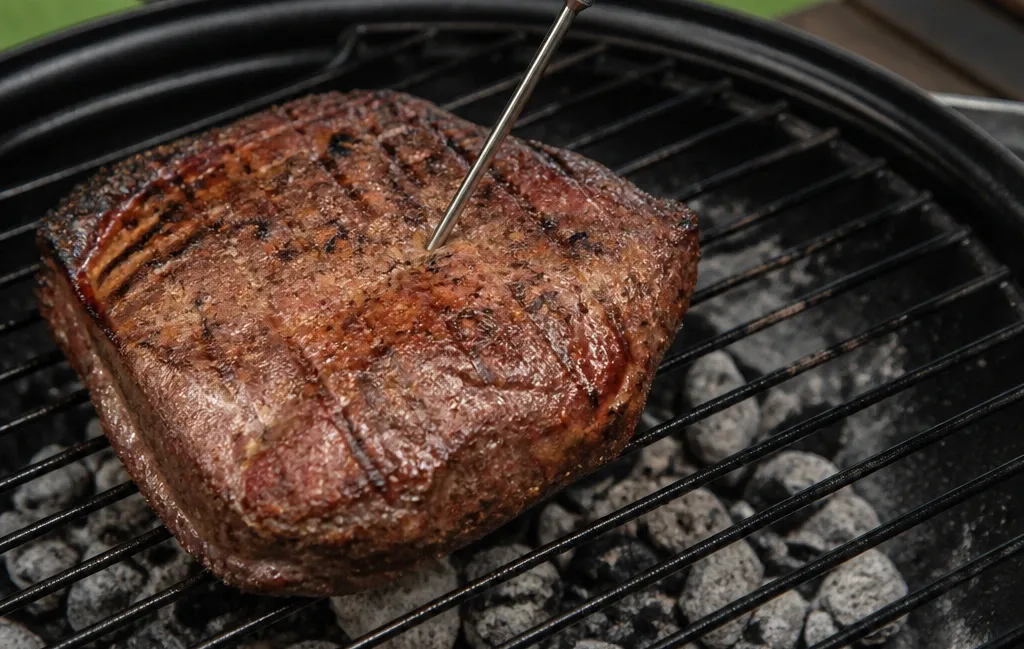
In practice, most dual probe failures are caused by user error rather than manufacturing defects. Avoid these common pitfalls to extend the life of your gear.
- Submerging the probes in dishwater: Never drop the entire probe and attached wire into a sink full of soapy water. This is the fastest way to destroy the internal circuitry. Instead, wipe the stainless steel shaft clean with a damp, soapy cloth or sanitizing wipe, keeping the wire, handle, and connector completely dry.
- Swapping specialized probes: In some dual-probe kits, one probe is explicitly designed for ambient air (often shorter or blunter) while the other is meant for meat (longer and sharper). Swapping them can result in poor penetration or inaccurate air flow readings. Check your manual to see if your probes are interchangeable.
- Kinking the wires during storage: Do not wrap the cables tightly around the base unit like a spool. Small fractures in the delicate internal wiring happen easily under tension, leading to the dreaded "HHH" (high error) or "LLL" (low error) codes on your screen. Coil them loosely in wide loops.
- Panicking during the stall: If you are smoking a pork shoulder or brisket and the internal temperature stops rising around 160°F for hours, your thermometer is not broken. This is the "stall," caused by evaporative cooling as moisture sweats from the meat. Trust your calibrated probes and let the process finish.
Quick-Reference Cooking Temperatures
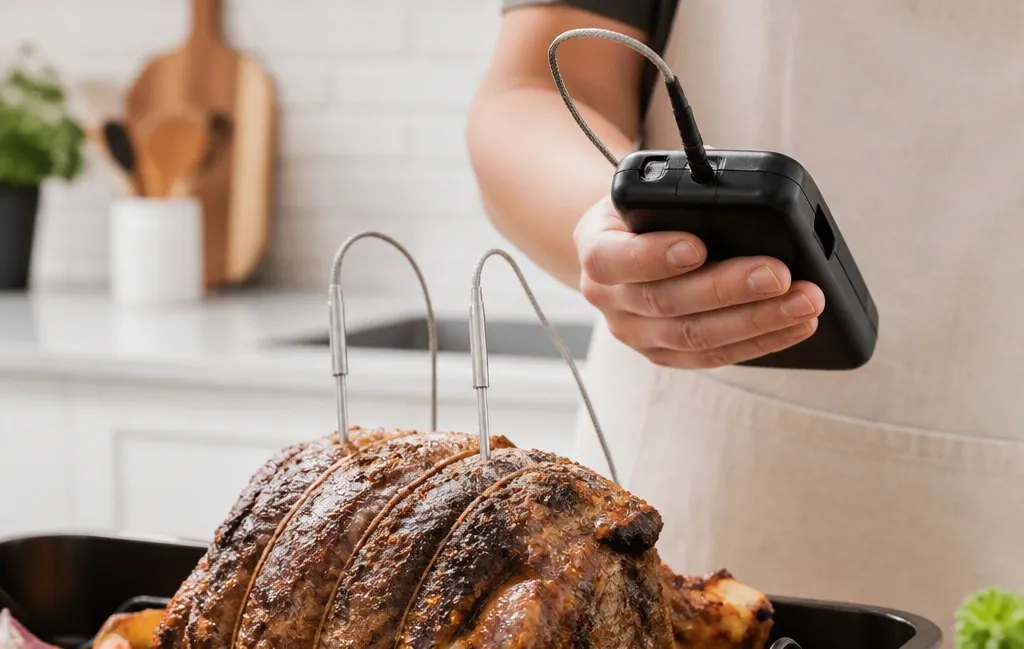
Setting the right alarms requires knowing your targets. The following table outlines standard safe minimums alongside practical "pull" temperatures that account for carryover cooking during the resting phase.
| Meat Type | USDA Safe Minimum | Best Pull Temp (Before Rest) |
|---|---|---|
| Chicken & Poultry | 165°F (74°C) | 160°F – 162°F |
| Ground Beef / Pork | 160°F (71°C) | 155°F – 158°F |
| Steaks (Medium Rare) | 145°F (63°C) | 135°F – 140°F |
| Pork Chops / Roasts | 145°F (63°C) | 140°F |
| Fish & Seafood | 145°F (63°C) | 135°F – 140°F |
Note: According to the USDA, 165°F is the absolute standard for poultry to ensure harmful bacteria are destroyed instantly. Utilizing a dual probe allows you to hit these critical safety marks precisely without overshooting and drying out the meat.
Maintenance and Maximizing Probe Lifespan
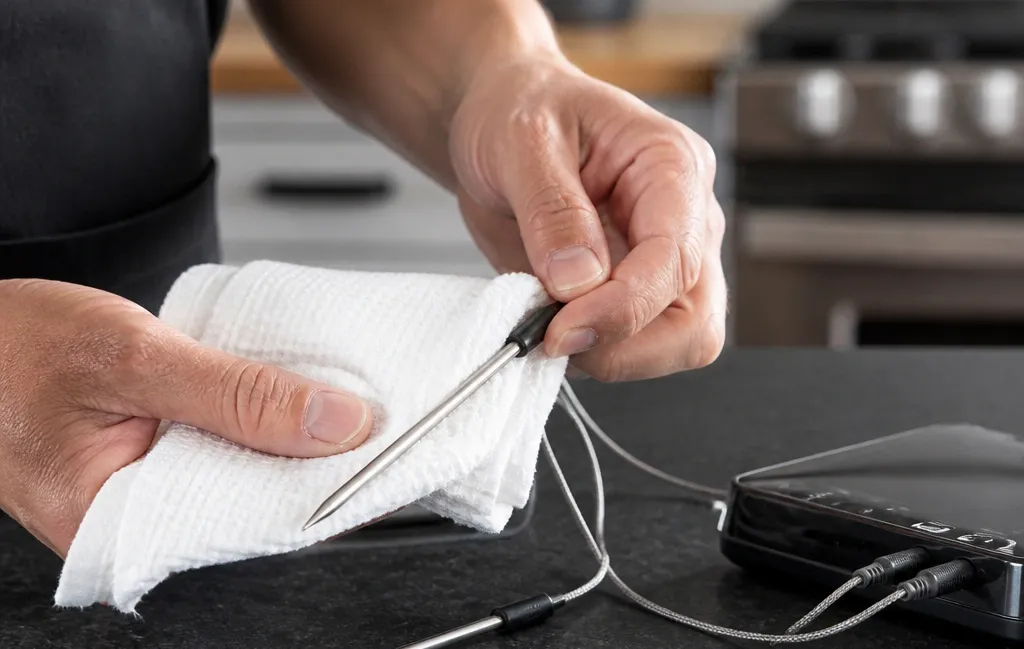
Even with flawless technique, probes are considered consumable parts. Repeated expansion and contraction from extreme heat cycling eventually degrades the internal thermistor. With proper care—avoiding water submersion, preventing sharp cable bends, and staying within temperature limits—a good pair of probes should last several years of regular weekend use.
Because wear is inevitable, prioritize buying a dual probe system from a manufacturer that sells replacement probes separately. Being able to swap out a single damaged sensor for a fraction of the cost of a whole new unit is a major long-term financial advantage. When shopping for a reliable daily driver, verifying brand reliability and support ensures you won't be left stranded mid-cook with no replacement parts available.
Frequently Asked Questions
Can I leave the probes inside the meat while it bakes in the oven?
Yes, leave-in probes are engineered specifically for this purpose. The stainless steel shaft and braided cable are built to handle sustained oven heat while the base unit remains safely outside on the counter. Just ensure your oven temperature does not exceed the maximum heat rating specified for your cables.
Why do my two probes show different temperatures in the exact same roast?
Meat is not a uniform material; fat, bone, and dense muscle conduct heat at different rates. If one probe tip is closer to a bone or sitting in a fat cap while the other is dead-center in lean muscle, they will display different numbers. Additionally, ovens and grills often have localized hot spots.
Do I really need a dual probe if my smoker has a built-in lid thermometer?
Absolutely. Most factory-installed lid gauges are cheap bi-metal dials that measure stagnant air at the very top of the dome, which can be 50°F hotter than the grate level. A dual probe gives you verified, digital data exactly where the food and the fire interact.
How do I know if my thermometer battery is failing?
Fading displays, delayed response times, or sudden jumps in temperature readings are classic signs of low voltage. Before blaming the probes, always check power indicators and battery health to rule out simple power starvation.
Are true wireless dual probes better than wired ones?
Neither is universally better; they serve different needs. Wireless probes eliminate cable management issues and are mandatory for rotisseries, but they are thicker, more expensive, and require charging. Wired probes are thinner, cheaper, and don't rely on internal batteries exposed to high heat, making them highly reliable for traditional smoking.
Conclusion
A dual probe meat thermometer is the single most effective tool for removing guesswork from your cooking. By continuously monitoring both the internal progress of your food and the ambient environment of your cooker, you gain precise control over the variables that dictate texture, moisture, and safety. Whether you are managing a twelve-hour brisket smoke or simply ensuring a holiday turkey finishes perfectly alongside your side dishes, having two digital sensors working simultaneously guarantees consistency that manual checking simply cannot match.
Stop lifting the lid and hoping for the best. Choose a dual probe system that fits your primary cooking style—wired for budget-friendly reliability, or wireless for ultimate freedom—and calibrate it today. Your next cook will be noticeably more relaxed, and your meat will be undeniably better.