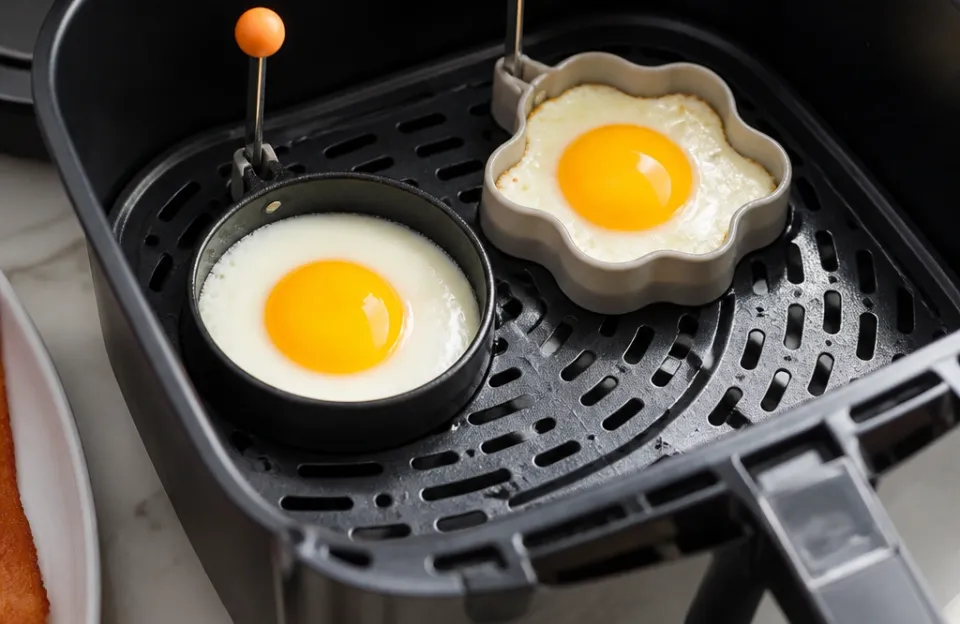
Universal air fryer accessories are add-on tools designed to fit inside multiple brands and models of countertop air fryers, regardless of the basket shape or capacity. They include items like silicone liners, metal racks, grill pans, skewers, and baking molds that expand what the appliance can cook. Most universal pieces rely on flexible materials or adjustable sizing so they work in both round and square baskets ranging from 3 to 7 quarts.
If you own an air fryer, you already know it handles basic tasks well. Universal air fryer accessories push the machine further. They let you bake, stack food for larger batches, catch grease, and keep delicate items from falling through the grates.
This article covers what these add-ons do, which ones solve real cooking problems, how materials compare, and where sizing gets tricky.
What Makes Air Fryer Accessories Universal
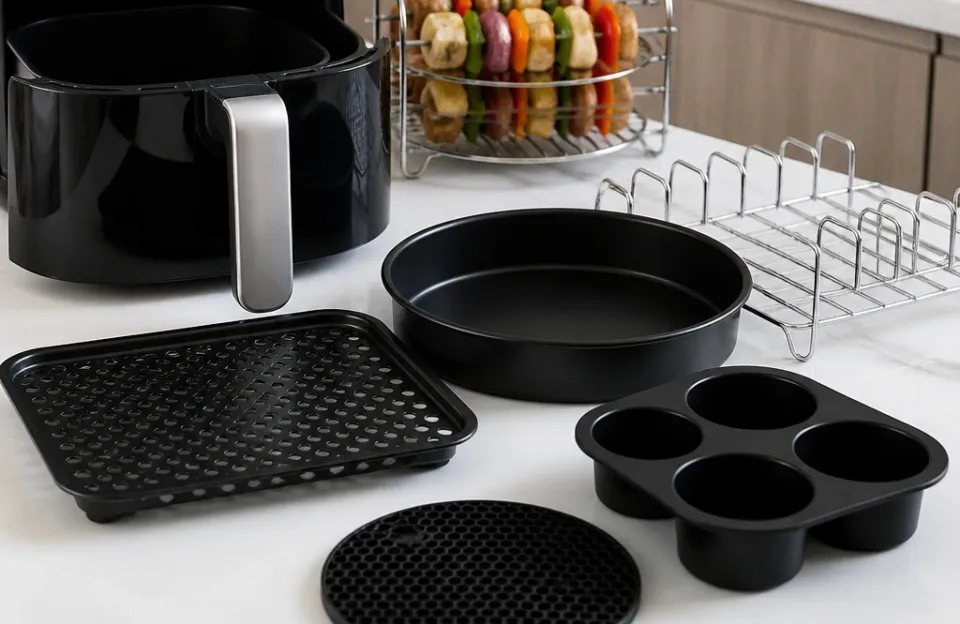
A universal accessory fits across different machines because of its material flexibility or physical dimensions. Brand-specific parts lock into proprietary grooves or match exact basket diameters. Universal pieces skip those locking mechanisms entirely.
They sit flat on the bottom of the basket or hang from the rim without needing a custom track.
Silicone is the most common material for this approach. A round silicone liner with a 7-inch diameter will bend slightly to fit into a 6.5-inch square basket. It won't sit perfectly flush in the corners, but it catches drips and protects the nonstick coating underneath.
Metal accessories achieve universality by staying small enough to clear the walls of standard 4-quart models while still providing useful surface area in larger 6-quart machines.
Manufacturers design these items around the most common air fryer footprints. The majority of basket-style air fryers sold today fall between 3 and 8 quarts. Accessories targeting this range use diameters between 6 and 8.5 inches.
If your machine falls outside this range, such as a compact 2-quart model or a large dual-basket oven style, standard universal pieces might not fit properly.
Silicone Liners and Reusable Baking Pots
Silicone liners replace disposable parchment paper rounds. They have raised edges to contain liquids and a textured bottom to allow some airflow. You drop them directly into the basket before adding food.
When you finish cooking, you pull the liner out and wash it.
Food-grade silicone tolerates temperatures up to 450°F. This matches the maximum heat output of almost every consumer air fryer on the market. The material stays flexible when hot, making it easy to remove even after roasting vegetables or baking small cakes.
Because the silicone bends, it conforms to round, square, and slightly rectangular baskets without jamming.
The main tradeoff involves airflow. Air fryers cook by circulating hot air rapidly around the food. A solid silicone pot blocks air from hitting the bottom of whatever you are cooking.
Items that need serious browning on all sides, like getting that extra crunch on poultry skin, will cook unevenly if they sit flat against thick silicone. Perforated silicone liners solve part of this problem. They have small holes punched through the base to let hot air pass through while still catching most grease.
You also need to watch the height. Deep silicone pots take up vertical space inside the basket. If the food sits too close to the heating element at the top, it can scorch or create a fire risk.
Leave at least an inch of clearance between the top of your food and the upper heating coil.
Metal Racks and Multi-Level Cooking Trays
Stainless steel racks let you stack food in layers. A standard setup includes a short rack that sits on the bottom of the basket and a taller one that rests on top of the first layer of food. This doubles your cooking surface area.
Metal conducts heat quickly and doesn't block airflow. Unlike solid silicone, a wire rack lets the fan push hot air under and over the food simultaneously. This makes metal racks the preferred choice when you want even browning on items like marinated chicken pieces or roasted root vegetables.
Stainless steel is the safest metal for this job. It resists rust, doesn't react with acidic foods, and handles high heat without warping.
Fitting a metal rack universally requires paying attention to the legs. Fixed-leg racks only fit baskets wider than their base. Some universal racks use folding legs or telescoping frames that adjust from 6 to 8 inches wide.
If you buy a fixed-size rack, measure the bottom interior width of your specific basket before ordering. A rack that touches the side walls restricts the air circulation that makes the appliance work in the first place.
Stacking food introduces another practical issue. The items on the bottom rack get shielded from direct top-down radiant heat. You usually need to swap the top and bottom layers halfway through the cooking cycle to get consistent results.
| Material | Max Temp Tolerance | Airflow Impact | Cleaning Method | Best Used For |
|---|---|---|---|---|
| Food-Grade Silicone | 450°F | Blocks bottom air | Dishwasher safe | Baking, catching grease, delicate foods |
| Stainless Steel | 800°F+ | Allows full circulation | Hand wash or dishwasher | Stacking, roasting, browning meats |
| Carbon Steel (Coated) | 450°F | Allows full circulation | Hand wash recommended | Skewers, grill pans, heavy searing |
| Parchment Paper | 425°F | Blocks bottom air | Disposable | Quick cleanup, single-use baking |
Skewers, Grill Pans, and Specialty Inserts
Skewer sets designed for air fryers typically come with a central rotating hub or a flat rack that holds the sticks parallel to each other. Universal skewer racks sit flat on the bottom of the basket. They hold four to six stainless steel sticks horizontally.
You load meat or vegetables onto the sticks, lay them across the rack, and let the fan circulate heat around them.
Grill pans mimic the ridges of an outdoor grate. They are usually made of carbon steel or cast aluminum with a nonstick coating. Universal grill pans have straight edges rather than curved lips tailored to a specific brand's basket.
This allows them to slide into any machine where the diameter matches. They work well for getting char marks on thicker cuts of meat. Just be aware that heavy metals like cast iron or thick carbon steel take longer to preheat.
You may need to run the empty air fryer for three minutes before adding the pan and your food.
Baking inserts, like small pizza pans or cake barrels, follow the same sizing rules as grill pans. A 7-inch round pan fits most 5-quart and larger machines. If you plan to bake frequently, check the depth of your basket.
Some air fryers have shallow drawers that prevent tall barrels from closing fully. Forcing the drawer shut against a tall accessory can damage the latch or the heating element above it.
How Materials Handle High Heat and Circulating Air
Air fryers move air at high speeds. This constant movement means lightweight accessories can shift during cooking. A flimsy piece of parchment paper can blow up into the heating element and ignite.
The FDA regulates food-contact materials to confirm they don't leach harmful chemicals when heated, so anything you put inside the machine needs to meet those safety standards.
Silicone stays put because its weight and friction grip the basket floor. Metal racks stay put because the food loaded onto them provides downward pressure. Lightweight aluminum foil trays, on the other hand, tend to rattle or lift if they aren't weighed down.
If you use foil, always anchor it with food. Never preheat the machine with loose foil inside.
Heat tolerance varies widely among materials. While bare stainless steel handles extreme temperatures without breaking a sweat, nonstick coatings have strict limits. Most PTFE-based nonstick coatings begin to degrade above 500°F.
Since most air fryers max out at 400°F or 450°F, this isn't usually a problem. But running an empty coated pan at maximum temperature for extended periods can shorten its lifespan. Stick to the manufacturer's stated temperature ceiling for any coated universal accessory.
When you prepare heavily seasoned or wet-coated items, having the right setup matters. If you're working with battered foods, using the proper dredging method prevents messy drips from burning onto your accessories.
Sizing Your Basket Before Buying Add-Ons
Guessing the size of an accessory leads to wasted money. The listed capacity of an air fryer, measured in quarts, tells you volume. It doesn't tell you the shape or the exact interior dimensions.
A 5-quart square basket has completely different usable floor space than a 5-quart round basket.
To find the right fit for universal air fryer accessories, grab a tape measure. Measure the interior width at the narrowest point. For round baskets, that is the diameter.
For square baskets, measure wall to wall. Then measure the usable depth from the bottom grate to the top rim. Write these numbers down.
When shopping for a universal rack or pan, look for an item that is at least half an inch smaller than your narrowest interior measurement. That quarter-inch gap on each side allows hot air to travel down the walls and under the food. If an accessory fits edge-to-edge, it chokes the airflow.
The food will steam instead of roast, and the machine's fan motor will work harder than necessary.
Height matters just as much. Subtract one inch from your total interior depth to find the maximum safe height for an accessory. That remaining inch guarantees clearance from the top heating element.
Overfilling the vertical space causes burning and poses a genuine fire hazard.
Checking Internal Temperatures Safely With Accessories Installed
Adding layers, racks, or thick silicone changes how heat moves through the basket. Food stacked on a lower rack cooks slower than food on top. Dense silicone insulates the bottom of whatever sits inside it.
Because of these variables, relying purely on recipe times becomes risky.
Using a reliable thermometer is the only way to verify doneness when you alter the cooking environment with new tools. A fast digital probe lets you check the center of a piece of meat without pulling the entire rack system out of the basket. Knowing how quickly your tool reads helps you check temps before the open drawer loses all its heat.
When checking food on a multi-level rack, test the items on the bottom tier. They receive less direct heat. Poultry must reach 165°F internally to be safe, according to USDA guidelines.
If you are cooking wings across two levels, the bottom batch might lag behind the top batch by several degrees. Rotating the racks halfway through the cook time minimizes this gap.
If you use deep silicone pots, insert the thermometer probe through the top of the food until it hits the geometric center. Don't let the probe tip touch the silicone bottom, as the reading will reflect the pot's temperature rather than the food's internal state. Having a dependable dual-probe setup saves time when you're managing different proteins on separate tiers.
Cleaning and Maintaining Non-Brand-Specific Parts
Universal accessories don't come with custom storage slots or specialized cleaning instructions tied to your specific machine. You maintain them based on their material.
Silicone absorbs odors over time. If you roast garlic or heavily spiced meats in a silicone liner repeatedly, the smell lingers even after washing. Baking the empty silicone liner in a regular oven at 350°F for twenty minutes helps burn off trapped oils causing the odor.
Alternatively, soaking it in a mixture of warm water and baking soda works for milder smells. Always check your silicone for micro-tears. Once the surface breaks down, food sticks to it, and bacteria can hide in the crevices.
Stainless steel racks require attention to the weld points. Cheap universal racks use spot welding that can trap grease. Soak the racks in hot, soapy water for ten minutes before scrubbing them with a stiff brush.
Avoid steel wool on coated metals, as it strips the finish and exposes the base metal to rust.
Carbon steel grill pans need seasoning, similar to cast iron skillets. Wash them with mild soap, dry them completely, and wipe a thin layer of high-smoke-point oil over the surface before storing. Leaving them wet guarantees rust spots within days.
Proper maintenance extends the life of everything you cook. Pairing clean gear with a solid make-ahead wing strategy keeps your weekly routine smooth. And keeping your accessories free of old grease buildup ensures accurate calorie tracking, since burnt residue adds nothing good to your overall meal totals.
Common Mistakes People Make With Third-Party Inserts
Buying universal air fryer accessories seems straightforward, but a few recurring errors cause poor results or damaged machines.
- Blocking the fan path. Placing a solid, oversized tray directly under the heating element stops air circulation entirely. The machine overheats, and the food stays raw in the middle. Always leave perimeter gaps.
- Using aerosol cooking sprays on nonstick coatings. Commercial cooking sprays often contain propellants and soy lecithin. These additives build up a sticky residue on nonstick universal pans that cannot be washed off. Use a pump spray bottle filled with pure oil or brush oil on manually.
- Assuming "universal" means "fits everything." A universal accessory targets average sizes. It will not fit ultra-compact 2-quart models or wide-format toaster oven hybrids. Measuring your specific basket is mandatory.
- Overloading stacking racks. Wire racks have weight limits. Piling dense items like potatoes or thick steaks on a thin-gauge universal rack causes the legs to buckle mid-cook. Distribute heavy foods evenly across the wires.
- Ignoring the drip factor. When stacking raw meat on a top rack above vegetables on a bottom rack, raw juices drip down. This cross-contamination risk requires careful planning. Cook similar items together or place a solid barrier pan beneath raw proteins.
If you're pairing your new tools with a flavorful soak, a good wing marinade recipe works best when the excess liquid is patted dry before it hits the rack. Wet marinades dripping through stacked tiers create smoke and mess. Also, remember that serving your finished dishes with a proper dipping sauce setup completes the meal without requiring extra basket space during the actual cook.
Frequently Asked Questions
Can I use silicone muffin cups inside my air fryer?
Yes, standard silicone muffin cups work well as universal air fryer accessories. They withstand the heat and fit easily into most baskets. Arrange them so they don't touch the side walls, allowing the fan to push air between each cup.
Do universal racks scratch the nonstick coating on my basket?
Bare metal racks can scratch nonstick surfaces if they slide around during loading. To prevent this, look for stainless steel racks with silicone-tipped feet. If your rack lacks protective feet, placing a small piece of parchment paper underneath the rack legs reduces friction.
Is aluminum foil safe to use as a liner?
Aluminum foil is safe if it is weighed down by food. Loose foil can get pulled into the heating element by the fan, creating a fire hazard. Never cover the entire bottom of the basket with foil, as this blocks the essential airflow needed for the appliance to function correctly.
Will third-party accessories void my warranty?
Using generic inserts does not automatically void your warranty. However, if a poorly sized accessory damages the heating element or scratches the basket beyond normal wear, the manufacturer may deny a warranty claim for that specific damage. Always stick to the recommended size and temperature limits.
How do I stop lightweight parchment liners from blowing around?
Place your food on the parchment immediately after putting it in the basket. The weight of the ingredients pins the paper down. Alternatively, buy perforated parchment rounds with weighted edges designed specifically for high-speed convection environments.
Are universal air fryer accessories dishwasher safe?
Most silicone and stainless steel accessories are dishwasher safe. Coated carbon steel, nonstick grill pans, and painted items should be washed by hand. The harsh detergents and high heat in dishwashers strip nonstick coatings and cause painted finishes to peel over time.
Sorting Out What Actually Fits Your Machine
Universal air fryer accessories solve real problems. They protect your basket coating, increase capacity, and let you cook things the bare machine struggles with. The key is treating the word "universal" as a starting point rather than a guarantee.
Measure your interior dimensions, respect the airflow gaps, and match the material to the type of food you cook most often. A 7-inch stainless steel rack and a perforated silicone liner will handle the vast majority of daily tasks across almost any standard countertop model. Keep the heat limits in mind, clean the parts based on their specific material, and your setup will last as long as the appliance itself.