The best espresso machines with water reservoirs for most home kitchens balance tank size, counter space, and consistent brewing pressure. A removable reservoir between 40 and 60 ounces (1.2 to 1.8 liters) covers two to four drinks a day without constant refilling. You get cafe quality without hard plumbing your kitchen.
How We Picked These Espresso Machines With Water Reservoirs
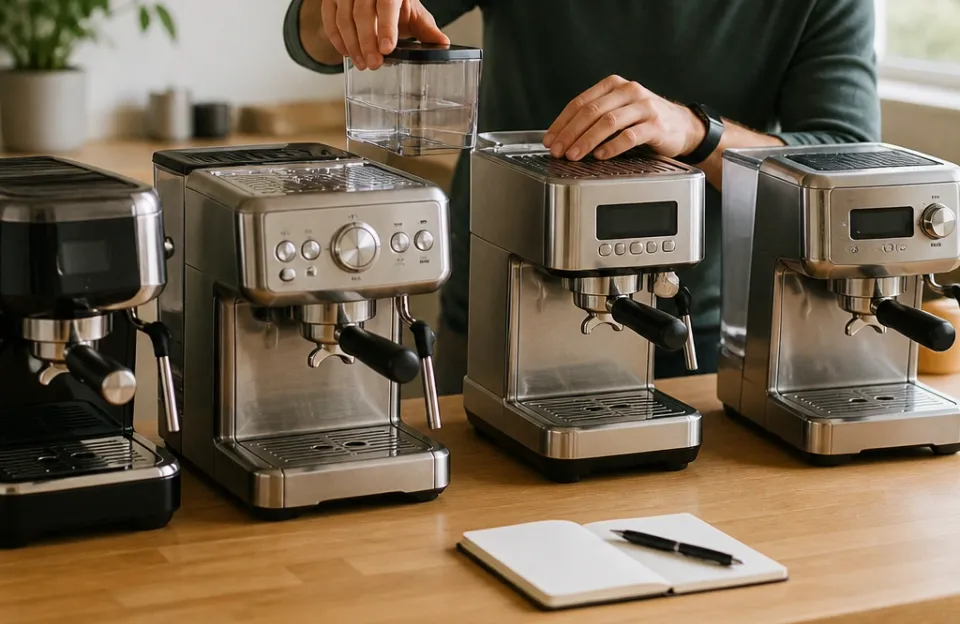
We compared specs, pump pressure ratings, reservoir capacity, build materials, warranty terms, and the complaints that come up most often for this type of product. Every machine here has a removable water tank. That is the main requirement.
Beyond that, we looked at how easy the tank is to pull out, whether it sits on top or slides from the side, and if the machine stops cleanly when the water runs low.
A few rules guided our picks. The reservoir must hold at least 35 ounces. Smaller tanks force you to refill too often.
The machine needs a standard 15 bar or 19 bar pump. Lower pressure struggles to extract proper crema. Finally, the drip tray and tank need to clear standard upper cabinets, which usually sit 18 inches above the counter.
| Machine | Tank Capacity | Pump Pressure | Best For |
|---|---|---|---|
| Breville Bambino Plus | 64 oz | 15 bar | Small counters |
| Gaggia Classic Pro | 72 oz | 15 bar | Learning manual control |
| De’Longhi Dedica EC680M | 37 oz | 15 bar | Tight spaces |
| Breville Barista Express | 67 oz | 15 bar | Built in grinding |
| Philips 3200 Series | 60 oz | 15 bar | One touch milk drinks |
Breville Bambino Plus: Best Overall Pick
This machine fits almost anywhere. It measures about 7.7 inches wide, making it one of the narrowest options available. The 64 ounce water reservoir slides out from the back.
You can fill it under the tap without moving the whole machine.
The Bambino Plus heats up in three seconds. It uses a thermojet system instead of a traditional boiler. This means less waiting between pulling a shot and steaming milk.
The automatic milk frother adjusts texture and temperature on its own.
Who should buy it: People who want fast morning coffee without taking over the whole counter. If you keep your gear tucked beside the stove, check how much clearance you actually have before buying any appliance. Knowing how to measure tight spaces applies just as well to coffee setups as it does to cooking baskets.
One honest limit: The water tank is in the back. If you push the machine flush against a wall or under a low cabinet, pulling the tank out gets awkward. You need a few inches of overhead clearance.
Skip it if you want total manual control over steam pressure. The automated frother is convenient, but it takes away the ability to practice latte art by hand.

Gaggia Classic Pro: Best for Manual Control
The Gaggia Classic Pro looks like a commercial machine shrunk down for home use. It has a 72 ounce reservoir, the largest on this list. That is enough water for several days of regular use.
The tank sits on top and lifts straight off.
Inside, it uses a commercial style 58 millimeter portafilter. Most home machines use smaller 51 or 54 millimeter baskets. The larger size gives you more room to distribute grounds evenly.
It also uses a standard 15 bar vibration pump.
Who should buy it: Anyone who wants to learn real espresso technique. You control the grind, the tamp, the timing, and the steam wand manually.
One honest limit: It requires patience. Out of the box, the factory settings often need tweaking. Many owners replace the pressurized filter basket with a non pressurized one right away.
If you want perfect shots on day one without reading guides, this machine will frustrate you. Getting good results takes practice, much like dialing in the right time and heat for crispy chicken wings. Both tasks reward attention to detail.
Skip it if you want push button convenience. There are no digital screens or automatic milk programs here.
De’Longhi Dedica EC680M: Best for Very Small Kitchens
At just under six inches wide, the Dedica is the narrowest machine in this group. The 37 ounce water reservoir is smaller than the others. It pulls out from the side, which helps if your machine is wedged into a corner.
It uses a thermoblock heating system. It reaches brewing temperature quickly, though not quite as fast as the Breville thermojet. The steam wand is manual.
It takes some practice to get microfoam, but it works well once you learn the angle.
Who should buy it: Apartment dwellers or anyone with extremely limited counter space. It makes decent espresso without demanding a dedicated coffee station.
One honest limit: The small tank means frequent refills. If you drink more than two cups a day, or if you run water through the group head to warm your cups, you will empty it fast. Also, verify that the plastics used in the water path meet your safety standards, just as you would when checking if plastic housings are safe for hot food prep.
Heat and plastic always deserve a second look.
Skip it if you entertain often. The small reservoir and lightweight build make it better suited for one or two people.
Breville Barista Express: Best With a Built In Grinder
This machine combines a grinder and an espresso brewer in one unit. The 67 ounce water reservoir slides out from the back. Because the machine is deeper than most, you need to plan for the extra space when pulling the tank out.
The built in conical burr grinder lets you adjust dose and grind size directly on the machine. Freshly ground beans make a noticeable difference in crema and flavor. The 15 bar Italian pump provides steady pressure during extraction.
Who should buy it: People who want fresh coffee without buying a separate grinder. It saves counter space by combining two appliances into one footprint.
One honest limit: Cleaning takes more effort. Coffee oils build up inside the grinder chute. You have to brush it out regularly.
If you ignore maintenance, old oils turn rancid and ruin the taste of your next shot. Keeping your daily routine clean matters everywhere in the kitchen, whether you are avoiding cross contamination when handling raw poultry or clearing stale coffee dust from a burr set.
Skip it if you already own a high end standalone grinder. Paying for a built in grinder you will not use makes no sense.
Philips 3200 Series: Best Super Automatic Option
A super automatic machine grinds, tamps, brews, and ejects the puck with one button press. The Philips 3200 has a 60 ounce water reservoir located at the front. This is a major advantage.
You never have to move the machine to refill the tank.
It includes the LatteGo milk system. Instead of tubes that clog and require scrubbing, it uses a two piece container that snaps together. You pour milk in, the machine froths it directly into your cup, and the container rinses clean in seconds.
Who should buy it: People who want zero fuss. You press a button and get a cappuccino or espresso without learning barista skills.
One honest limit: Super automatics cost more upfront. They also have more moving parts. If the internal brew group jams, repairs are harder than fixing a simple manual machine.
Make sure any attachments or milk carafes fit properly before forcing them, similar to checking if third party add ons match your specific model number. Forcing mismatched parts breaks latches.
Skip it if you enjoy the ritual of making coffee by hand. This machine removes the process entirely.
Why Reservoir Size Matters More Than You Think
Most buyers look at pump pressure first. But the water tank size dictates your daily routine. A reservoir under 40 ounces forces you to visit the sink constantly.
A tank over 70 ounces holds water so long it can taste flat if you do not drink coffee every day.
Measure your actual usage. One double shot of espresso uses about two ounces of water. But you also need water to flush the group head before and after brewing.
Steam wands consume water from the same tank. If you make two lattes a morning, you easily use 15 to 20 ounces.
Do the math for your household. Say you have two adults who each drink two milk based coffees daily. That is roughly 40 ounces a day.
A 60 ounce tank means filling it every day and a half. A 37 ounce tank means filling it before every single use. Match the tank to your habits, not just the physical size of the machine.
Water left sitting in a plastic reservoir for days can pick up odors or develop biofilm. Empty and rinse the tank twice a week, even if it is not fully empty. The US Food and Drug Administration provides general guidelines on safe drinking water storage and handling that apply to keeping your home appliances sanitary.
Stagnant water in a dark plastic tank is exactly where bacteria prefer to grow.
Top Loading vs Rear Loading Tanks
Where the reservoir sits changes how you use the machine.
Top loading tanks lift straight up and out. The Gaggia Classic Pro uses this design. It is great if your machine sits in the open.
It is terrible if you slide the machine under low hanging cabinets. You need at least eight to ten inches of vertical clearance above the machine to remove the tank.
Rear loading tanks slide backward or lift from the back. The Breville models use this setup. It keeps the machine profile lower.
However, if you push the machine against a wall, you cannot reach the handle. You end up dragging the heavy espresso maker forward every time you need water.
Side loading tanks pull out to the left or right. The De’Longhi Dedica does this. It solves the wall problem.
Just make sure you leave clearance on that specific side of your counter.
Front loading tanks sit behind a door on the face of the machine. The Philips 3200 uses this. It is the easiest to access.
You just open the door and pull the tank toward you. Super automatics favor this design because their bodies are deep and heavy.
Before you buy, look at your counter. Measure the distance from the back wall to the edge. Measure the height from the counter to the bottom of your upper cabinets.
Compare those numbers to the machine dimensions plus the tank removal path.
Maintaining Your Water Reservoir
Hard water destroys espresso machines. Minerals build up inside the heating element and block the narrow tubes that carry water to the group head. This process is called scaling.
If your tap water leaves white crust on your faucets, you have hard water. Using it directly in your reservoir will shorten the life of your machine.
You have three choices for water.
Filtered tap water is the most common. Use a standard pitcher filter. It removes chlorine and reduces mineral content.
Do not use reverse osmosis or distilled water. Espresso needs some minerals to extract flavor properly. Pure water tastes flat and can confuse the sensors in some machines.
Bottled spring water works well. Look for brands with moderate mineral content. Avoid heavily mineralized sparkling waters or purified drinking water that has had everything stripped out.
Descaling is mandatory. Even with filtered water, minerals accumulate. Run a descaling cycle every two to three months.
Most manufacturers sell specific descaling solutions. Citric acid based powders also work for many machines. Check your manual first.
Some brands void warranties if you use unauthorized chemicals.
When you descale, empty the reservoir completely. Mix the solution according to the instructions. Run it through the brew cycle and the steam wand.
Then flush the entire system with two full tanks of fresh water. Leaving descaling residue in the tank ruins your next cup.
Wash the plastic reservoir itself with warm soapy water once a week. Rinse it thoroughly. Soap residue creates bitter espresso.
Let the tank air dry upside down before putting it back on the machine.
Choosing Based on Your Situation
Different kitchens and different drinkers need different setups. Use these rules to decide quickly.
If you have less than 12 inches of counter width, pick the De’Longhi Dedica. Its narrow body and side loading tank fit tight spots.
If you want to learn traditional espresso skills, pick the Gaggia Classic Pro. The large 72 ounce top loading tank and commercial portafilter give you room to practice without constant interruptions.
If you want fast mornings with no learning curve, pick the Philips 3200 Series. The front loading 60 ounce tank and automatic milk system handle everything with one button.
If you want fresh ground beans without buying extra gear, pick the Breville Barista Express. The 67 ounce rear tank supports the built in grinder setup well.
If you want a balance of speed, size, and good espresso, pick the Breville Bambino Plus. The 64 ounce rear tank and three second heat up time make it the easiest daily driver for most people.
Frequently Asked Questions
Can I plumb an espresso machine with a reservoir directly to my water line?
Most machines designed with removable reservoirs cannot connect directly to a water line. They lack the internal valves needed to regulate line pressure. Some prosumer models offer conversion kits, but standard home machines rely on the tank.
If you want direct plumbing, buy a machine specifically built for it.
Why does my espresso taste bad even with expensive beans?
Stale water in the reservoir is a common culprit. Water sitting in a plastic tank for days absorbs odors and loses oxygen. Empty the tank every few days and refill it with fresh filtered water.
Also check if your machine needs descaling. Mineral buildup alters water temperature and flow rate.
Is a bigger water tank always better?
No. A massive tank encourages leaving water stagnant for long periods. If you only drink one cup a day, a 70 ounce tank means that water sits for over a week.
Match the tank size to your actual daily consumption. Refilling a slightly smaller tank with fresh water yields better tasting coffee.
Do I really need to use filtered water in the reservoir?
Yes. Unfiltered tap water contains chlorine, which alters the taste of espresso. It also carries calcium and magnesium that build up as scale.
Scale blocks the pump and lowers heating efficiency. Filtered water protects both the flavor and the lifespan of your machine.
How do I stop the reservoir from leaking onto the counter?
Check the rubber gasket or silicone valve at the bottom of the tank. Over time, coffee oils and mineral deposits prevent it from sealing tightly. Remove the tank and wash the valve area with warm water.
If the rubber is cracked or hardened, contact the manufacturer for a replacement part.
Finding the right espresso machines with water reservoirs comes down to measuring your space and knowing how many cups you pour each morning. A tank that matches your daily habit saves you from constant trips to the sink while keeping your coffee tasting fresh. Pick the loading style that fits your counter layout, use filtered water, and the machine will last for years.
As an Amazon Associate, we earn from qualifying purchases.


2 thoughts on “Best Espresso Machines With Water Reservoirs”