Most modern air fryers are BPA-free in the parts that touch your food, but this is not a universal guarantee across every model or brand. Manufacturers have largely shifted away from polycarbonate plastics containing bisphenol A due to consumer demand and regulatory pressure, replacing them with polypropylene or ceramic-coated metals. However, some older stock, budget models, or specific internal components may still contain BPA or chemically similar substitutes.
You cannot assume safety based on the appliance category alone. Checking the product manual, packaging labels, or manufacturer specifications for each specific unit is the only way to verify its status.
This guide breaks down where BPA actually hides in these appliances, how to verify if your current machine is safe, and what materials offer the most reliable alternative. We will also cover the difference between "BPA-free" and truly non-toxic construction, since removing one chemical does not automatically make a plastic component inert at high cooking temperatures. Understanding these distinctions helps you make informed decisions about your kitchen equipment without relying on marketing claims alone.
Where BPA Hides in Air Fryer Construction
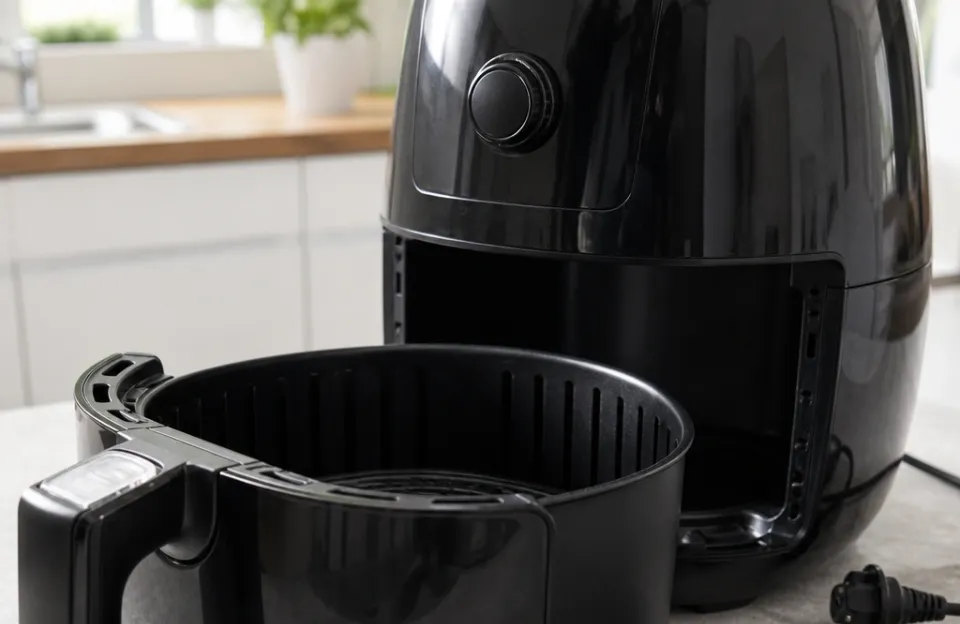
Bisphenol A was historically used to manufacture polycarbonate plastic because it creates a hard, clear, heat-resistant material. In kitchen appliances, this plastic often appeared in outer housings, viewing windows, and sometimes in basket handles or drip trays. The primary health concern involves chemical migration, which occurs when heat causes the polymer chains to break down and release compounds into food or air.
Since air fryers operate by circulating superheated air directly around food, any plastic component inside the cooking chamber faces significant thermal stress.
The cooking basket and crisper plate represent the highest risk zones because they maintain direct contact with food during the heating cycle. Many manufacturers now use food-grade polypropylene (PP) or PTFE-coated aluminum for these parts, both of which are typically BPA-free. Polypropylene has a higher melting point and different chemical structure than polycarbonate, making it less likely to leach bisphenols.
However, the outer shell or control panel bezel might still use older plastic formulations since those parts stay cooler and do not touch ingredients directly.
Internal fan blades and heating element shrouds present a gray area. These components sit inside the cooking chamber but rarely touch food. Some brands use heat-resistant plastics here that may contain BPA or other bisphenols, arguing that the lack of direct food contact prevents migration.
Others use stamped metal or ceramic composites to eliminate the question entirely. If you are highly sensitive to chemical exposure, prioritizing models with all-metal or ceramic interiors removes this variable completely, regardless of whether the plastic parts technically meet FDA food-contact standards.
Identifying Safe Plastics Versus Risky Ones
Not all plastics carry the same risk profile, and knowing the resin identification code helps you evaluate components quickly. Polycarbonate is labeled as #7 or sometimes unmarked, and it is the primary source of BPA exposure. Polypropylene (#5) is widely considered the safest common plastic for hot food applications because it lacks bisphenols and maintains stability up to roughly 320°F.
High-density polyethylene (#2) and low-density polyethylene (#4) are also generally safe but appear less frequently in rigid air fryer parts due to lower heat tolerance.
Some manufacturers advertise "BPA-free" while using Tritan copolyester or ABS plastic. These materials do not contain bisphenol A, but they may contain other additives whose long-term behavior at 400°F remains less studied than polypropylene. This distinction matters because "BPA-free" is a negative claim that only confirms the absence of one specific compound.
It does not confirm positive safety testing at air frying temperatures. When evaluating compatible accessories or replacement baskets, always check the material specification rather than trusting the BPA-free label in isolation.
How to Verify Your Specific Model's Safety Status
Manufacturers provide material safety information through several channels, though the clarity varies significantly. Start with the product manual or specification sheet, which should list materials for each food-contact component. Look for explicit statements like "food-contact surfaces are BPA-free" or specific resin codes.
Vague language such as "made with safe materials" or "complies with FDA regulations" does not guarantee the absence of BPA, since FDA compliance allows certain uses of polycarbonate in food-contact applications under specific conditions.
Customer service departments can provide definitive answers when documentation is unclear. Ask specifically: "Do any food-contact components, including the basket, crisper plate, or interior housing, contain polycarbonate plastic or bisphenol A?" This precise phrasing prevents representatives from giving generic reassurances about overall product safety. Request written confirmation via email so you have a record.
Some brands publish material declarations on their websites under sustainability or safety sections, which saves you the wait time.
Third-party testing certifications add another layer of verification. Organizations like NSF International, UL, or independent labs test for chemical migration under actual use conditions. A certification mark indicates the product passed specific extraction tests, not just that the manufacturer claims compliance.
Be aware that some certifications test only for lead and cadmium, not organic compounds like BPA. Read the certification scope carefully to confirm it covers bisphenol migration. For those who cook frequently and want to minimize cumulative exposure, choosing certified units provides measurable assurance beyond marketing copy.
Material Alternatives That Eliminate the Question Entirely
Stainless steel and ceramic-coated metal interiors represent the most reliable path to avoiding BPA concerns. These materials are inherently free of synthetic polymers and maintain structural integrity well above typical cooking temperatures. Stainless steel baskets and racks are increasingly available as aftermarket upgrades or factory options for popular models.
They weigh more than plastic and may require longer preheating, but they remove all uncertainty about chemical leaching. When shopping for replacement parts for larger capacity units, stainless steel options often provide better longevity alongside chemical safety.
Ceramic non-stick coatings offer another polymer-free alternative, though the term "ceramic" requires scrutiny. True ceramic coatings derive from silica-based sol-gel processes and contain no carbon-based polymers. Some products marketed as ceramic actually use PTFE with ceramic particles suspended in the matrix, which still involves synthetic chemistry.
Verify that the coating is explicitly labeled as sol-gel or silicon dioxide-based if avoiding all synthetics is your goal. Even true ceramic coatings eventually wear down, exposing the underlying metal, so inspect surfaces regularly for chips or degradation.
Glass and silicone accessories expand your safe cooking options within existing appliances. Borosilicate glass baking dishes fit many air fryer baskets and provide an inert barrier between food and any plastic components. Food-grade silicone mats and liners are BPA-free by nature, as silicone is a siloxane polymer distinct from carbon-based plastics.
These accessories prove especially useful when preparing acidic foods like lemon pepper wings or tomato-based dishes, since acid accelerates chemical migration from susceptible plastics. Using inert barriers lets you continue using a convenient appliance while controlling exposure at the point of contact.
| Material | BPA Risk | Max Safe Temp | Durability | Notes |
|---|---|---|---|---|
| Polycarbonate (#7) | High | 280°F | High | Avoid for food contact; common in older models |
| Polypropylene (#5) | None | 320°F | Medium | Industry standard for BPA-free baskets |
| Stainless Steel | None | 1500°F+ | Very High | Heaviest option; no coating to degrade |
| True Ceramic | None | 800°F+ | Medium | Sol-gel only; verify no PTFE blend |
| Silicone | None | 450°F | Medium | Flexible; use as liner or accessory |
Why Temperature Matters More Than Labels Alone
Chemical migration is a function of both time and temperature, meaning a component deemed safe at room temperature may behave differently at 400°F. Most BPA migration studies focus on conditions simulating dishwashing or microwave reheating, not sustained convection heating. Air fryers concentrate heat through rapid air circulation, creating surface temperatures that can exceed the set point locally, especially near the heating element.
This thermal intensity means marginally stable plastics face greater stress than in conventional ovens.
Repeated heating cycles compound the risk through cumulative degradation. Each use slightly weakens polymer bonds, increasing the potential for leaching over the appliance's lifespan. Scratches from utensils or abrasive cleaning accelerate this process by increasing surface area and creating micro-fractures where chemicals can escape.
A basket that tested clean when new may release measurable compounds after six months of daily use. This reality makes material choice more important than initial certification for long-term users.
Fatty and acidic foods extract chemicals more readily than neutral, aqueous foods. Lipids act as solvents for many plasticizers and monomers, while acids catalyze hydrolysis reactions that break polymer chains. Cooking chicken wings with oil or marinating proteins in vinegar-based solutions creates worst-case extraction conditions.
If you regularly prepare these types of dishes, prioritizing inert materials becomes more urgent than for someone who primarily air-fries frozen vegetables or breaded items. Matching your material safety margin to your actual cooking habits prevents unnecessary exposure during high-risk preparations.
Common Misconceptions About Plastic Safety Claims
The "BPA-free" label has become so ubiquitous that many consumers treat it as synonymous with "non-toxic," but this conflation misses important nuance. Manufacturers sometimes replace BPA with structurally similar compounds like BPS or BPF to meet market demand while maintaining material properties. Emerging research suggests these substitutes may exhibit comparable endocrine-disrupting activity, though regulatory bodies have not yet restricted them.
A product can honestly claim BPA-free status while still containing bisphenol analogues whose safety profiles remain incomplete.
Dishwasher safety ratings do not indicate chemical inertness at cooking temperatures. A component may survive dishwasher cycles without warping yet still leach compounds when exposed to dry heat and fat. Dishwasher testing evaluates mechanical integrity and stain resistance, not migration under convection conditions.
Similarly, FDA food-contact compliance establishes legal thresholds for intended use but does not certify zero migration. The agency permits detectable levels of certain substances below established tolerances, meaning compliant products are not necessarily free of transferable chemicals.
New product smell is often dismissed as harmless off-gassing, but persistent odors after multiple uses warrant investigation. While some initial odor from manufacturing residues is normal, continued plastic-like smells during cooking suggest thermal degradation of components. This sensory signal deserves attention even if the product carries safety certifications.
Trust your senses alongside documentation. If something consistently smells wrong during operation, discontinue use and contact the manufacturer regardless of what the label says.
Practical Steps for Minimizing Exposure With Existing Equipment
You do not need to replace a functional air fryer solely because it contains plastic components, but you can adopt practices that reduce potential migration. Always preheat empty to allow volatile compounds to dissipate before adding food. Use parchment paper or silicone liners as physical barriers between ingredients and basket surfaces, especially for fatty or acidic recipes.
Avoid aerosol cooking sprays, which often contain propellants and emulsifiers that interact with plastic coatings more aggressively than pure oils applied with a brush or mister.
Hand washing extends component life and reduces thermal shock compared to dishwashers. Use soft sponges and mild detergent to preserve surface integrity. Inspect baskets and trays monthly for scratches, cloudiness, or texture changes that indicate degradation.
Replace worn components proactively rather than waiting for visible failure. Many brands sell replacement baskets separately, allowing you to upgrade to safer materials without buying an entirely new appliance. When sourcing replacements, verify compatibility and material specs match your safety standards.
Temperature moderation provides another practical safeguard. Most foods cook effectively at 350-375°F, reducing thermal stress on components compared to maximum settings. Reserve 400°F+ for brief finishing steps rather than extended cooking periods.
Allow adequate ventilation during and after use to prevent residual heat from continuing to stress materials. These operational adjustments cost nothing and meaningfully reduce cumulative exposure for households keeping existing equipment.
Frequently Asked Questions
Can I trust BPA-free claims on budget air fryer models?
Budget models face the same regulatory requirements as premium ones, but enforcement and quality control vary. Lower price points sometimes correlate with less rigorous supplier vetting or older material inventories. Verify claims through manufacturer documentation or third-party testing rather than assuming compliance based on labeling alone.
Price alone does not determine safety, but it can indicate the level of oversight behind the claim.
Do air fryer accessories need to be BPA-free too?
Yes, any accessory that contacts food during heating should meet the same standards as the base unit. Silicone molds, rack inserts, and liner papers all face identical thermal and chemical extraction conditions. Check material specifications for every add-on purchase.
Using a certified-safe appliance with unverified accessories defeats the purpose of selecting safer equipment initially.
Is stainless steel always safer than BPA-free plastic?
Stainless steel eliminates bisphenol concerns entirely and offers superior durability, making it the most conservative choice for chemical avoidance. However, high-quality polypropylene components from reputable manufacturers present negligible risk under normal use conditions. The safety gap between verified PP and steel is small for most home cooks.
Choose steel if you want zero uncertainty or cook fatty/acidic foods daily. Choose verified PP if convenience and weight matter more than absolute elimination.
Does the Prop 65 warning mean my air fryer contains BPA?
California Proposition 65 warnings indicate the presence of listed chemicals above safe harbor levels, but BPA is just one of hundreds of listed substances. The warning could reference acrylamide formation from high-heat cooking itself rather than plastic components. Read the specific warning language to identify which substance triggered it.
A Prop 65 label does not automatically confirm BPA presence, nor does its absence guarantee freedom from all listed compounds.
How often should I replace plastic air fryer baskets?
Replace plastic baskets at the first sign of surface degradation, including cloudiness, roughness, deep scratches, or persistent odors. Under moderate use, expect 18-24 months of service life before replacement becomes advisable. Heavy daily use or frequent high-temperature cooking shortens this timeline.
Proactive replacement costs far less than chronic exposure and maintains consistent cooking performance alongside safety.
Making Peace With Your Kitchen Equipment
Navigating material safety in modern appliances requires balancing legitimate health concerns with practical functionality. The good news is that verifiable BPA-free options exist across price points, and inert alternatives continue expanding as consumer awareness grows. You have real choices beyond accepting uncertain defaults or abandoning air frying entirely.
Focus your energy on verification and operational habits rather than anxiety. Check your specific model, use appropriate barriers for high-risk foods, and replace worn components promptly. These actions provide meaningful protection without requiring perfection.
Your kitchen should serve your health goals without becoming a source of constant worry. Informed, measured decisions beat either blind trust or paralysis every time.



2 thoughts on “Are Air Fryers BPA-Free? What You Need to Know”