Yes, raw chicken can be cooked safely in an air fryer, provided it reaches a safe minimum internal temperature of 165°F (74°C) throughout, checked with a food thermometer. Cooking times and settings vary by appliance, so the temperature reading rather than the timer or the color of the meat is the reliable safety test.
Why Air Fryers Can Cook Raw Chicken Evenly
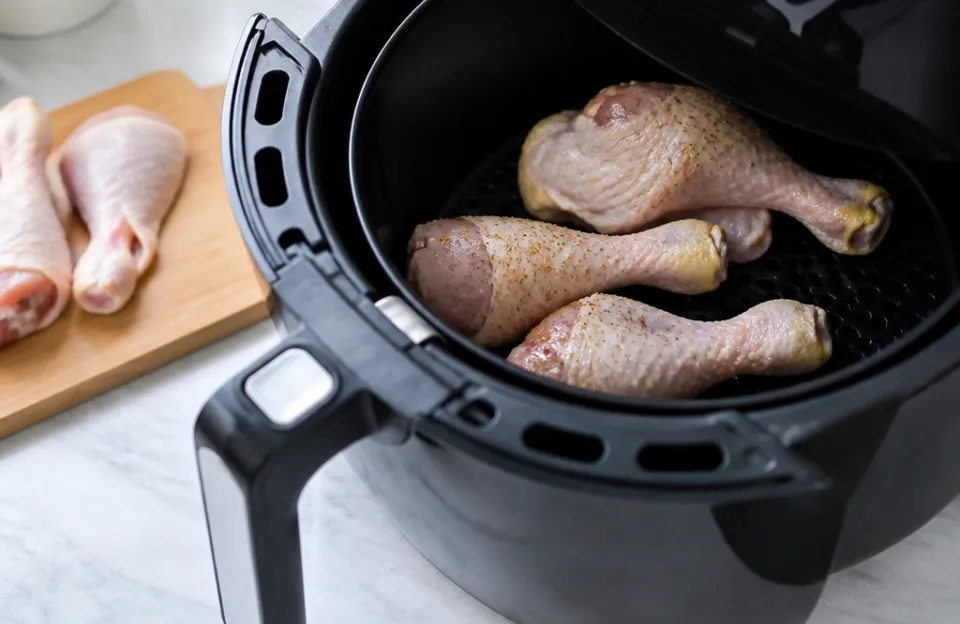
Air fryers are essentially countertop convection ovens that cook food faster and use less energy than full-size ovens. They work by pushing hot air from the heating mechanism and circulating it quickly around the food, which is what produces browning and crispness. That rapid circulation is also why an air fryer can cook raw chicken thoroughly in a fraction of the time an oven needs.
The catch is space. Air fryers generally have limited interior room, and crowding the basket can block the airflow that cooks the food. When hot air cannot reach every surface, some pieces finish while others stay cool in the middle. For larger batches, cooking in two smaller rounds is usually better than filling the basket at once.
Why Basket Size Changes Your Safety Margins
A five-quart basket and an eight-quart basket do not hold the same useful amount of food. Arranging pieces in a single layer with a little space between them gives the hot air a path around each one. If your model came with basket liners or racks, use them as intended rather than layering chicken on top of chicken. Larger baskets can take add-on racks designed for larger baskets, but even then the thermometer decides when the food is done.
Safe Target Temperatures for Different Chicken Cuts
The safe minimum internal temperature for all poultry, including breasts, legs, thighs, wings, ground poultry, giblets and stuffing, is 165°F (73.9°C). The same figure applies to chicken, turkey and other poultry under federal food-safety guidance.
| Chicken cut | Safe minimum internal temperature |
|---|---|
| Boneless or bone-in breasts | 165°F (74°C) |
| Thighs and drumsticks | 165°F (74°C) |
| Wings | 165°F (74°C) |
| Ground chicken | 165°F (74°C) |
| Giblets and stuffing inside poultry | 165°F (74°C) |
There is no separate lower pull temperature for air-fried chicken that this guidance supports. Pulling meat at 160°F and counting on carryover heat to finish the job is not a substitute for reaching 165°F, and it should not be treated as a safe shortcut.
Temperature, not time, is what matters here. Foods cooked in an air fryer generally need about 5 to 25 minutes at 350°F to 400°F, and package or manufacturer instructions should be followed when they are available. Two identical-looking chicken breasts can still finish minutes apart if one is thicker, so probe each piece.
Prepping Raw Chicken Before It Goes in the Basket
Good prep starts with clean hands and clean surfaces. Wash your hands with soap and water for 20 seconds before and after handling raw chicken, and clean and sanitize counters and utensils before and after preparation. Use one cutting board for raw meat and poultry and a separate one for fruits and vegetables. Keep raw chicken and its juices away from cooked food and ready-to-eat items.
Do not rinse raw chicken in the sink. Washing or rinsing raw poultry can spread bacteria around the kitchen, which is why the USDA advises against it. In one USDA observational study, 60 percent of participants who washed raw poultry had bacteria in their sink afterward, and 14 percent still had bacteria there after attempting to clean it. Rinsing or brining with salt water, vinegar or lemon juice does not destroy bacteria. If something needs to come off the surface, pat the area with a damp paper towel and wash your hands right away.
Pat the chicken dry with paper towels before seasoning. A dry surface browns better and reduces spattering. A light coating of oil helps seasoning stick and encourages browning, and a basic garlic and herb mixture works as well as any rub for a simple cook. Discard the paper towels and wash your hands again before you touch the air fryer handle or drawer.
Getting an Accurate Temperature Reading
A food thermometer is the only dependable way to confirm that chicken has reached a safe internal temperature. Federal guidance calls for measuring the temperature before the food comes off the heat source.
To take a reading:
- Insert the probe into the thickest part of the piece.
- Keep the tip away from bone, fat and gristle, which can skew the reading.
- Check several spots on larger pieces, especially near the center and the thickest end.
- Confirm the reading before you remove the chicken from the basket.
Having a quick-read tool nearby lets you check the meat and close the drawer quickly so heat does not escape. A standard digital option covers the basics if you only cook chicken occasionally. If you cook chicken frequently, a reliable wireless setup or a long-range Bluetooth thermometer can make repeated checks easier.
If the reading is below 165°F, return the chicken to the basket and cook longer, then check again. Do not rely on juices running clear or meat looking white as proof of safety.
Handling Raw Poultry Safely in the Kitchen
Cross-contamination is the most common way raw chicken causes problems, and it happens off the plate as often as on it. Never place cooked chicken back on the plate or board that held it raw. Wash and sanitize anything the raw chicken or its juices touched, including the counter, the sink and the thermometer probe.
Keep the air fryer itself clean between batches. Raw juices that drip into the basket or tray can transfer onto the next batch of food, so clean those parts after every cook involving raw poultry. Store raw chicken in the refrigerator below ready-to-eat foods so drips cannot fall onto them.
Situations That Require Adjustments
Some chicken needs more attention than a standard boneless breast.
Frozen chicken. Cooking raw chicken from frozen is possible, but the outside will brown long before the center thaws and cooks. No official cooking time or temperature for frozen raw chicken in an air fryer was available in the sources used here, so follow the package or manufacturer instructions and verify the internal temperature with a thermometer before serving. Expect a longer cook than thawed chicken and check the center carefully.
Uneven thickness. Chicken breasts that are thick at one end and thin at the other cook unevenly. Pound thicker pieces to a more even thickness, or cook thin and thick pieces in separate batches. Small pieces such as nuggets cook quickly and can overcook while a thick piece is still finishing.
Bone-in pieces. Bone-in thighs, drumsticks and wings take longer than boneless cuts. Probe the meat in the thickest part away from the bone. The bone itself does not make the meat unsafe, but a probe resting against it can give a misleading reading, so reposition the thermometer and check again.
Glazes and marinades. Sugary finishes can brown or scorch before the chicken is cooked through. Apply glazes such as a sweet honey garlic finish near the end of cooking, after the meat has approached its target temperature, rather than at the start.
Stuffed raw breaded chicken breast products. USDA advises against cooking raw, stuffed breaded chicken breast products in an air fryer and says to follow the manufacturer cooking instructions instead.
Troubleshooting Undercooked or Uneven Chicken
When chicken comes out uneven, work through the likely causes before adding more time.
Overcrowding. This is the most common cause of uneven cooking. If pieces were touching or stacked, cook the next batch in a single layer.
Uneven piece size. Thick and thin pieces finish at different times. Separate them or pound them to an even thickness.
Appliance variation. Air fryers differ in size and power, which is why cooking times vary so much between models. A recipe time that worked in one basket may be too short in another.
Frequent basket opening. Every time you open the drawer, heat escapes and the cook slows down. Check doneness near the end of the estimated time rather than constantly.
Blocked airflow. A drip tray or basket that is clogged with debris can interfere with circulation. Clean it before cooking.
If chicken is still below 165°F after the expected time, put it back in and cook in short increments, checking with the thermometer after each one. Do not serve partially cooked chicken or assume the outside color tells you anything about the center. Stop and discard the food if it has been left in the temperature danger zone too long; leftover cooked food should be refrigerated within 2 hours.
Cleaning the Air Fryer After Raw Poultry
Cleaning steps depend on your model, so the manufacturer manual is the authority for which parts are dishwasher-safe and how to clean near the heating element. Unplug the air fryer and let it cool completely before cleaning.
Remove the basket and any trays, wash them with hot soapy water, and sanitize surfaces that touched raw chicken. Do not place cooked food into a basket that still holds residue from a previous raw batch. Wipe down the interior only as the manual directs, and never immerse the main unit in water.
A Simple Rule for Air Fryer Chicken
The safety question has a short answer: cook raw chicken in the air fryer until a food thermometer reads at least 165°F in the thickest part of every piece. Keep the basket uncrowded so hot air can circulate, handle raw chicken without rinsing it, and clean up thoroughly afterward. If you set the timer by temperature instead of minutes, the appliance you own becomes far less important than the reading on the probe.