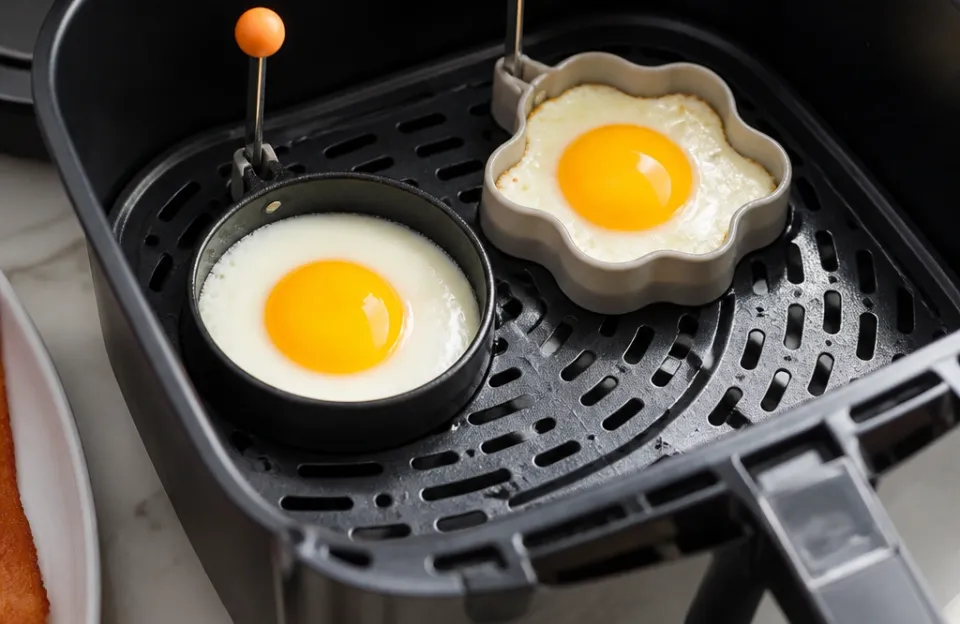
No, air fryer accessories do not fit all models. The short answer is that basket shape, interior dimensions, and heating element placement vary too much between brands for a single accessory to work everywhere. A round silicone liner made for a 5.8-quart Cosori will wobble inside a square Ninja Foodi basket.
A rack designed for an Instant Vortex might block the fan in a Philips model.
If you are shopping for extra pans, racks, or liners, you need to match the accessory to your specific machine. This guide covers why sizing differs across brands, which types of add-ons have the best chance of working universally, and how to measure your basket so you buy the right parts the first time. We will also look at safety limits you should know before putting third-party items near a heating coil.
Why Basket Dimensions Change Between Brands
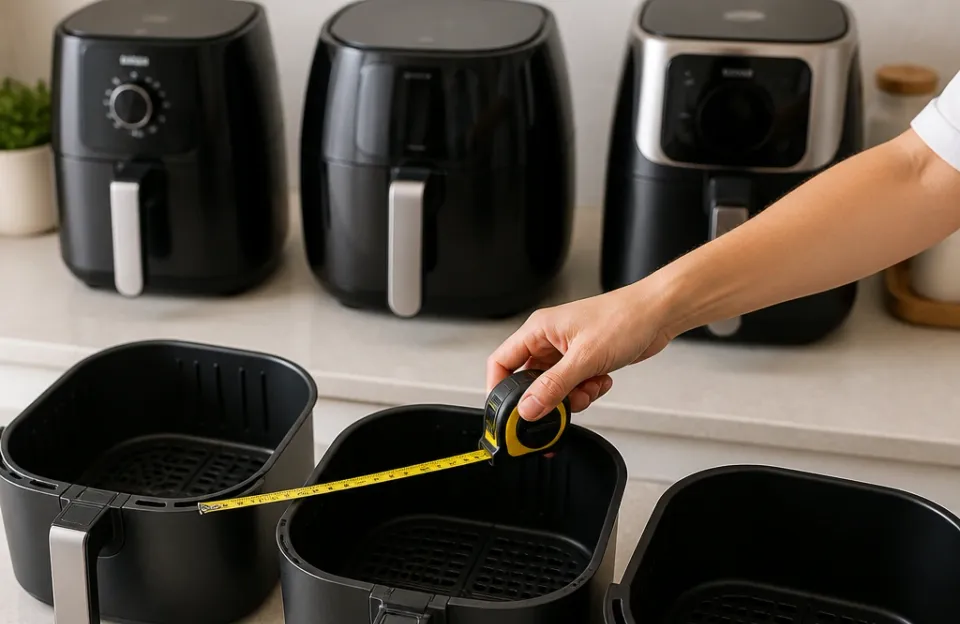
Air fryer manufacturers design their baskets around specific heating elements and fan speeds. That engineering choice dictates the interior width, depth, and height. Even two machines with the same stated capacity, like 4 quarts, can have completely different footprints.
One might be tall and narrow. Another might be wide and shallow.
Basket shape is the biggest dividing line. Most early air fryers used round baskets. Brands like Philips popularized this design.
Later, companies like Ninja and Cosori shifted toward square or rectangular baskets because they hold more food in a single layer. A round accessory placed in a square basket leaves dead space in the corners where air cannot circulate. A square accessory forced into a round basket simply will not slide down to the bottom.
The location of the heating element also matters. In most drawer-style units, the coil sits directly above the basket. Some models have very little clearance between the top of the food and the element.
Adding a thick rack or a tall silicone mold can push food too close to the heat source. Oven-style air fryers place elements on the top and bottom, giving you more vertical room but requiring accessories that sit flat on wire shelves rather than dropping into a deep bucket.
Do Air Fryer Accessories Fit All Models When Sold as Universal
You will see plenty of products online labeled "universal air fryer accessories." These items usually fit a range of sizes rather than every single machine on the market. Manufacturers achieve this by using flexible materials or adjustable designs.
Silicone liners are the most common example. Because silicone bends, a liner rated for 3 to 5 quarts can stretch to fit several different baskets. It might sit loosely in a larger unit or require some folding in a smaller one.
Flexible silicone muffin cups work similarly. They compress to fit inside whatever space you give them.
Rigid metal accessories rarely earn the universal label honestly. A stainless steel trivet has fixed dimensions. If your basket is 7 inches wide and the trivet is 7.5 inches, it will not go in.
Some metal racks come with foldable legs or adjustable widths, which helps. Even then, the adjustment range is limited to maybe an inch or two.
Paper liners are another category where sizing gets tricky. You can buy round parchment sheets or square ones. If you use a round paper sheet in a square basket, the corners of the basket stay exposed.
Grease pools there. If you use a square sheet in a round basket, the edges bunch up against the walls and can blow toward the heating element.
| Accessory Type | Material Flexibility | Chance of Cross-Brand Fit | Main Sizing Risk |
|---|---|---|---|
| Silicone Liners | High | Good across similar shapes | Too loose in oversized baskets |
| Metal Racks | None | Low unless adjustable | Will not fit if even slightly too wide |
| Paper Liners | Medium | Depends entirely on shape match | Edges blowing into the heating coil |
| Skewer Sets | Low | Moderate | Length exceeds basket depth |
| Baking Pans | None | Very low | Blocks airflow around the sides |
Measuring Your Machine Before Buying Third-Party Parts
Guessing based on quart capacity alone causes most sizing mistakes. A 6-quart basket from one brand might measure 9 inches across, while another brand's 6-quart version measures 10 inches. You need physical measurements taken with a tape measure or ruler.
Start with the interior width. Measure straight across the widest point of the basket floor. If your basket is square, measure both sides.
They are usually identical, but manufacturing variances happen. Write this number down.
Next, measure the interior depth from the floor of the basket to the top rim. This tells you how tall an accessory can be before it prevents the drawer from closing or pushes food into the heating element. Leave at least half an inch of clearance below the maximum height.
Finally, check the shape again. Look at the corners. Are they sharp 90-degree angles, or are they rounded off?
Some baskets have heavily rounded corners that reduce the usable flat space. A rigid square pan might technically fit the overall width measurement while getting stuck on those curved edges.
When you shop for parts, compare your three numbers against the accessory's listed dimensions. Ignore the packaging claim that says "fits most 5-quart models." Trust your tape measure over marketing copy. If you plan to cook poultry often, knowing your exact interior space also helps when prepping chicken wings so they lay flat without stacking too high.
Which Add-Ons Work Across Different Shapes
Some accessories ignore the shape problem entirely. Skewer racks, for instance, often rest on the top rim of the basket rather than sitting on the floor. As long as the rim diameter falls within the skewer rack's adjustable range, it works regardless of whether the bottom is round or square.
Magnetic vent covers are another shape-independent option. These small metal discs stick to the ceiling of the cooking chamber to prevent lightweight foods from flying up into the fan. Since they attach to the top housing rather than resting inside the basket, the basket shape does not matter.
You just need to confirm the interior ceiling material is magnetic.
Oven-safe glass or ceramic dishes sometimes work across models if they are small enough. A 6-inch round ramekin fits inside almost any air fryer larger than 3 quarts, regardless of basket shape. The tradeoff is that thick glass blocks radiant heat from below and slows down cooking.
You lose the rapid air circulation benefit that makes these appliances fast.
If you want to track internal temperatures accurately while using various inserts, keeping a reliable probe handy prevents undercooked food. Checking the final temp with a quick digital reader takes the guesswork out of timing adjustments caused by adding thick baking dishes.
Materials and Heat Limits You Should Check First
Fitting physically inside the basket is only half the requirement. The material must also survive the operating temperature. Most air fryers reach 400°F.
Some oven-style models hit 450°F. Any accessory you introduce needs a heat tolerance safely above your maximum cooking temperature.
Food-grade silicone generally handles temperatures up to 428°F or 450°F, depending on the manufacturer. Always check the specific rating printed on the product packaging. Cheap silicone blends sometimes contain fillers that degrade or release odors at high heat.
Pinch and twist a small section of the silicone. If the twisted area turns white, it likely contains fillers. Pure silicone maintains its color throughout the twist test.
Metal accessories need to be uncoated or coated with heat-stable finishes. Avoid anything with plastic feet or rubber grips unless those components are explicitly rated for oven temperatures. Standard plastic melts rapidly at 400°F.
Non-stick coatings on cheap metal pans can break down and release fumes if overheated. Bare stainless steel or carbon steel remains the safest bet for metal racks and pans.
Parchment paper requires special attention. Regular baking parchment ignites if it touches the heating element. Inside an air fryer, the powerful fan creates an updraft.
If a paper liner is too light and lacks food weighing it down, the fan pulls it upward into the exposed coil. Preheat the machine before inserting paper, or always weigh the liner down with food immediately. Never run the appliance empty with a paper insert inside.
For recipes where you apply wet marinades before cooking, heavy liquids can make parchment soggy and increase the risk of tearing or shifting during the cycle. Using a solid base helps when cooking marinated chicken pieces that release juices quickly under high heat.
Clearance Rules Around the Heating Coil
Every air fryer relies on rapid air circulation. The fan pushes hot air down through the center and up around the sides of the food. Blocking this path ruins performance and creates fire hazards.
When you place an accessory inside the basket, look at the gaps around its edges. You need at least half an inch of open space on all sides for air to travel. If a baking pan fits so snugly that it touches the basket walls, the air has nowhere to go.
The top of your food burns while the bottom stays raw.
Height clearance is equally strict. Measure the distance from the top of your accessory to the heating element when the drawer is fully closed. You typically need a minimum of one inch.
Less than that, and fat splattering off food hits the element directly, causing smoke and flare-ups. Tall silicone molds meant for standard ovens frequently violate this rule inside compact drawer-style machines.
If you switch between different accessories frequently, you change the airflow dynamics every time. A wire rack elevates food closer to the element. A deep silicone pot lowers it further away.
Adjust your cooking times accordingly. Getting a crispy finish on elevated items requires watching the surface closely, especially when trying to achieve extra crunchy skin on fatty cuts.
Drawer Units Versus Oven-Style Machines
The divide between drawer-style air fryers and oven-style air fryers creates two completely separate accessory ecosystems. Drawers use deep buckets that slide horizontally. Ovens use flat wire racks that slide vertically into slots, much like a traditional toaster oven.
Accessories built for drawer units assume deep vertical walls. Things like tall silicone egg bite molds or hanging skewer racks rely on that depth. Put one of those inside an oven-style machine, and it either blocks the door from closing or takes up so much horizontal shelf space that you can only cook one item at a time.
Oven-style machines accept standard quarter-sheet pans and toaster oven bakeware. You can buy accessories specifically sized for 10×8 inch interiors, which is a common footprint for countertop ovens. Those same pans will never fit inside a cylindrical 5-quart drawer basket.
Dual-zone machines complicate things further. Models with two independent drawers side-by-side usually have smaller individual baskets than a single-drawer machine of the same total capacity. An accessory that fits perfectly in a single 8-quart basket might be too large for one half of a dual 8-quart system.
Always measure each zone independently.
If you own an oven-style unit, you already have access to broader bakeware options. For drawer owners, sticking to brand-specific or carefully measured flexible items prevents wasted money. Knowing your exact style dictates whether you buy round liners or rectangular trays.
Brand-Specific Sizing Quirks Worth Knowing
Certain brands have distinct design choices that affect compatibility. Philips uses a starfish-shaped pattern raised on the bottom of their baskets to direct airflow. Flat-bottomed accessories sit unevenly on this ridged surface.
You need pans with enough rigidity to bridge the gaps without rocking.
Ninja Foodi dual-basket models have rectangular zones that are narrower than they appear from the outside. The exterior housing looks bulky, but the interior cooking space tapers slightly toward the bottom. Racks that fit the top opening might jam halfway down.
Cosori tends to use fairly standard square dimensions across their popular 5.8-quart line. Many third-party sellers specifically target Cosori measurements because of the brand's market share. If you own a Cosori, you have the easiest time finding compatible aftermarket parts.
Instant Vortex models often feature a removable drip tray that sits below the main cooking rack. Accessories designed for the Vortex need to account for this lower tray. Dropping a solid pan onto the upper rack blocks grease from reaching the drip tray below, causing pooling and smoking.
Breville Smart Oven Air models function as full convection ovens. Their accessories align with standard commercial sizing rather than proprietary air fryer shapes. You can often use regular baking supplies instead of hunting for branded add-ons.
Checking how specific coatings react to different metals is smart. If you dust items lightly before cooking, making sure the flour settles evenly across the basket floor avoids clumping in corners where airflow stalls. Testing flour-coated batches reveals quickly whether your chosen liner disrupts browning.
Safety Warnings From Manufacturers
Appliance makers write their manuals with strict warnings about third-party parts. Most state clearly that using unapproved accessories voids the warranty. They say this because they cannot test every aftermarket item for thermal stability and airflow impact.
Underwriters Laboratories (UL) tests appliances for safe operation under specific conditions. Modifying those conditions by inserting untested materials changes the safety profile. You can review general appliance safety standards through organizations like UL Research Institutes to understand how consumer electronics are evaluated for home use.
Overheating is the primary concern. If an accessory restricts airflow, the internal temperature rises beyond what the thermostat expects. The machine runs longer to compensate, stressing the motor and heating coil.
In extreme cases, thermal cutoff switches trip and shut the unit down permanently.
Fire risk comes second. Paper, thin plastics, and poorly cured silicone coatings ignite or melt when pushed too close to 400°F elements. Always verify the maximum temperature rating printed on any insert before turning the dial past 350°F.
Chemical leaching is a quieter danger. Metals with unknown alloys or painted finishes can release compounds when heated repeatedly. Stick to bare stainless steel, verified food-grade silicone, or uncoated aluminum.
Avoid colored metals unless the dye is certified heat-safe for food contact.
Mistakes People Make When Matching Parts
Buying based solely on quart capacity leads to returns. A 4-quart round basket and a 4-quart square basket share volume but have entirely different geometry. Volume does not equal footprint.
Ignoring the taper of the basket is another frequent error. Many baskets angle inward toward the bottom. An accessory that slides easily past the rim gets wedged tight three inches down.
Once heated, metal expands slightly, making a wedged rack nearly impossible to remove without pliers.
Using flimsy parchment paper without weighing it down causes fires. The fan inside these machines moves air much faster than a standard convection oven. Lightweight items fly upward.
Always anchor paper with food before starting the cycle.
Stacking multiple accessories defeats the purpose of air frying. Putting a wire rack on top of a silicone liner on top of the basket floor creates three layers blocking vertical airflow. Pick one insert per cooking session.
Assuming dishwasher safety applies universally damages both the accessory and the machine. Harsh dishwasher detergents strip non-stick coatings and degrade certain silicones over time. Hand washing extends the life of almost every third-party part.
Finally, people forget that adding mass changes cooking times. A heavy cast iron pan dropped into a basket absorbs significant heat energy. The food cooks slower because the appliance spends the first ten minutes warming the metal instead of the meal.
Adjust your expectations or preheat the empty pan briefly if your manual allows it. Tracking calorie output differences when changing cookware setups helps explain why texture shifts occur when swapping bare baskets for heavy inserts. Understanding how overall calorie counts shift based on retained fats gives context to why drainage matters when choosing racks versus solid pans.
Frequently asked questions
Can I use regular oven bakeware inside my air fryer?
You can use oven-safe dishes if they fit inside the basket with at least half an inch of clearance on all sides. The dish must withstand 400°F. Thick glass or ceramic slows down cooking significantly because it blocks the rapid air circulation the machine relies on.
Thin metal pans work better for maintaining speed.
Are silicone liners safe for all air fryer brands?
Silicone liners are safe regarding material toxicity as long as they are rated food-grade and heat-resistant to at least 428°F. They do not fit all brands physically. You must match the liner shape to your basket shape.
Round liners fail in square baskets by leaving greasy corners exposed.
Will a universal rack scratch my non-stick basket coating?
Metal racks frequently scratch non-stick surfaces if they shift during cooking. To prevent damage, look for racks with silicone-tipped feet. Alternatively, place a small piece of parchment paper between the rack legs and the basket floor.
Avoid dragging metal across the coating when removing food.
Do I need to preheat the machine with the accessory inside?
Preheating depends on the material. Heavy metal pans benefit from preheating so they do not absorb heat away from your food. Silicone and paper should never be preheated empty.
The fan blows lightweight items into the heating element when no food weighs them down. Insert those only after preheating finishes.
Why does my food cook unevenly when I use a third-party pan?
Uneven cooking happens when the accessory blocks airflow. If a pan fits too tightly against the basket walls, hot air cannot circulate underneath or around the food. The top burns while the bottom stays raw.
Switch to a smaller pan or use a wire rack that allows air to pass through freely.
Is it safe to stack two racks to cook more food at once?
Stacking racks reduces air circulation drastically. The food on the lower rack receives almost no direct heat from above. If your machine came with a dual-layer rack designed specifically for it, use that.
Otherwise, cook in single batches to maintain proper browning and food safety temperatures.
Before you buy replacement parts
Matching accessories to your specific machine requires measuring the interior and respecting airflow boundaries. Universal claims on packaging refer to flexibility, not guaranteed compatibility. Stick to heat-rated silicone or bare stainless steel, leave space around the edges, and keep everything well below the heating coil.
Taking five minutes with a tape measure saves you from buying parts that rock, jam, or block the fan. If you frequently swap liners and racks for different meals, noting how each setup affects browning helps you adjust times without guessing. Choosing lighter inserts preserves the speed advantage these appliances were built to deliver.