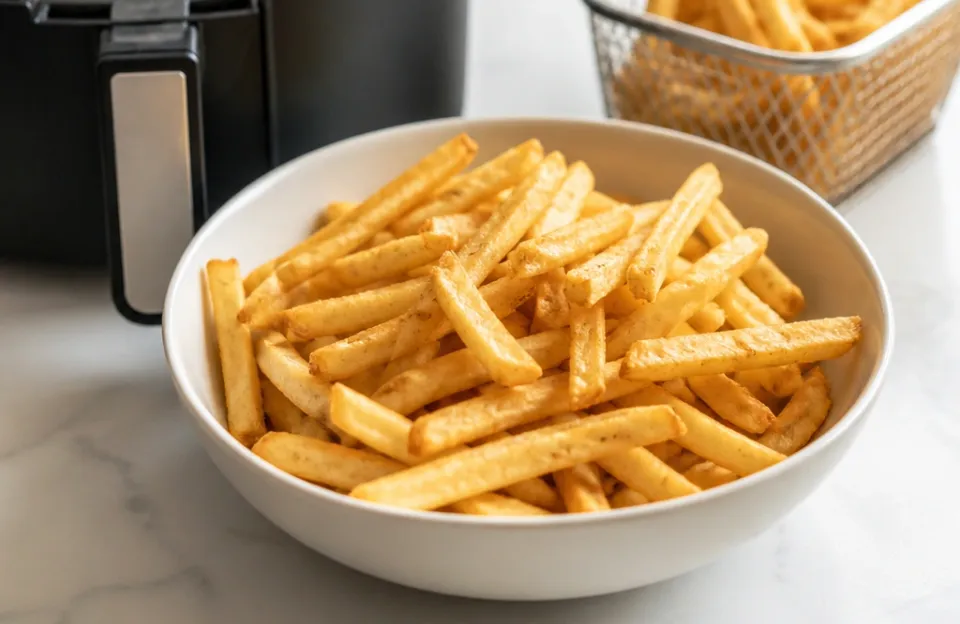
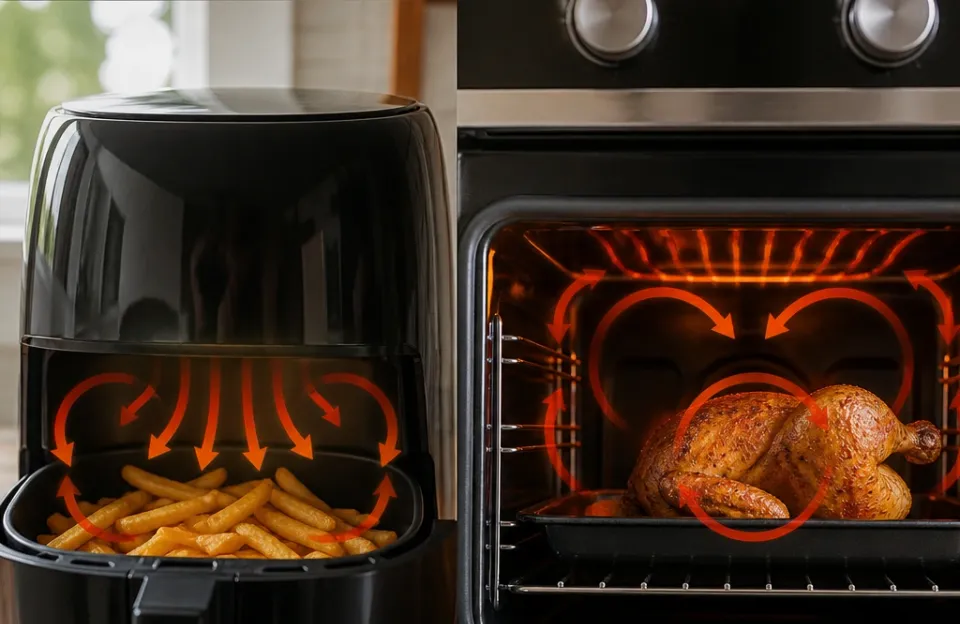
Air fryer sweet potato fries turn out crispy on the outside and tender inside when you cut them evenly, toss them in starch, and avoid overcrowding the basket. Most batches cook in 18 to 22 minutes at 400°F with a shake halfway through. The air fryer’s rapid circulation removes surface moisture faster than a conventional oven, which is why it produces better texture without deep frying.
This guide covers the specific prep steps that prevent sogginess, the seasoning combinations that work best with sweet potatoes, and how to adjust timing for different air fryer models. You will also find storage and reheating methods that preserve texture, plus answers to common problems like burning or uneven cooking. If you are looking for a protein to serve alongside these fries, our garlic parmesan wings pair well with the natural sweetness.
Why Texture Depends on Prep More Than Cook Time
Sweet potatoes have a higher sugar and water content than russet potatoes. This composition makes them prone to steaming rather than crisping if handled incorrectly. The air fryer can overcome this, but only if you manage moisture before the cooking cycle starts.
Skipping prep steps is the primary reason batches fail.
Starch Coating Creates the Crunch Layer
Tossing cut fries in cornstarch or arrowroot powder creates a thin barrier that absorbs surface moisture during cooking. This layer gelatinizes and dries into a crisp shell. Without it, the sugars in the sweet potato caramelize too quickly and burn before the interior softens properly.
Use about one tablespoon of starch per pound of potatoes. Toss in a bowl rather than sprinkling directly in the basket to ensure even coverage.
Uniform Size Prevents Burnt Ends and Raw Centers
Cutting fries to the same thickness ensures they finish cooking simultaneously. Aim for ¼-inch to ⅜-inch batons. Thinner pieces burn before the center cooks.
Thicker pieces stay soggy outside while the inside dries out. A sharp chef’s knife gives more consistent results than a crinkle cutter, which varies thickness. Trim the rounded ends off the potato first to create flat surfaces for stable, even slicing.
Oil Distribution Matters More Than Quantity
You need enough oil to coat every surface, but excess oil pools and prevents crisping. One to two teaspoons per pound is sufficient. Mix the oil with the starch and seasonings in a large bowl before adding the potatoes.
This emulsifies the coating so it adheres instead of sliding off. Avocado oil or refined coconut oil work best because their smoke points exceed 400°F. Extra virgin olive oil can taste bitter at high heat.
Step-by-Step Method for Consistent Results
Follow this sequence to build texture systematically. Each step addresses a specific failure point. Rushing or combining steps reduces quality.
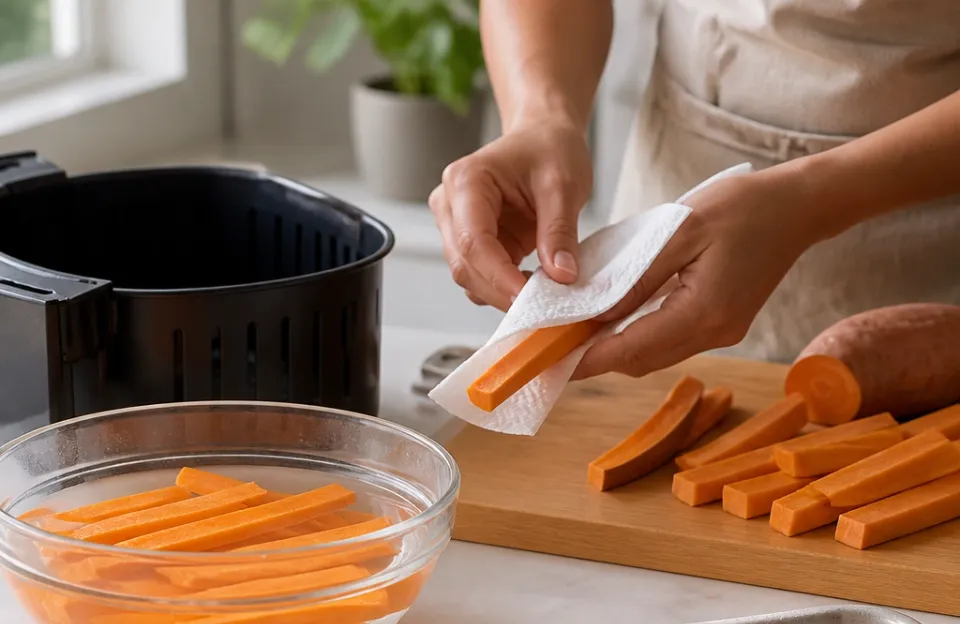
- Peel and cut the sweet potatoes into uniform ¼-inch batons. Soak in cold water for 30 minutes to draw out excess starch. Pat completely dry with paper towels or a clean kitchen cloth. Moisture left on the surface causes steaming.
- Place dried fries in a large bowl. Add one tablespoon cornstarch, one teaspoon salt, and any dry spices. Toss until evenly coated. Drizzle one to two tablespoons of high-smoke-point oil over the top. Toss again until no dry spots remain and each fry has a thin sheen.
- Preheat the air fryer to 400°F for three to five minutes. A hot basket starts crisping immediately upon contact. Arrange fries in a single layer with space between pieces. Work in batches if necessary. Overcrowding traps steam and guarantees sogginess.
- Cook for 18 to 22 minutes. Shake the basket vigorously at the 10-minute mark to redistribute fries and expose all sides to airflow. Check doneness at 18 minutes. Fries should be golden brown and crisp to the touch. Internal temperature should reach at least 205°F for proper tenderness. For accurate readings without guessing, use a reliable digital thermometer inserted into the thickest fry.
- Transfer cooked fries to a wire rack set over a baking sheet. Let rest for two to three minutes before serving. This allows residual steam to escape and the crust to firm up. Serving directly from the basket traps steam underneath and softens the bottom layer.
Adjusting for Basket vs. Oven-Style Models
Basket-style air fryers circulate air more aggressively and typically cook faster. Oven-style models with trays may require rotating pans midway and adding two to four minutes. Always rely on visual cues and internal temperature over timer settings alone.
If your model runs hot, reduce temperature to 375°F after the first batch to calibrate.
Seasoning Pairings That Balance Natural Sweetness
Sweet potatoes benefit from contrast. Salt alone works, but adding acid, heat, or umami prevents flavor fatigue. Apply wet seasonings like vinegar or hot sauce after cooking to maintain crispness.
Dry spices can go on before or after depending on potency.
| Flavor Profile | Dry Spice Blend (Pre-Cook) | Finishing Touch (Post-Cook) | Best Dipping Companion |
|---|---|---|---|
| Smoky & Spicy | Smoked paprika, cumin, cayenne | Lime zest, flaky salt | Chipotle aioli |
| Savory Herb | Rosemary, garlic powder, black pepper | Grated parmesan | Garlic herb yogurt |
| Sweet Heat | Cinnamon, chili powder, brown sugar | Toasted sesame seeds | Sriracha mayo |
| Tangy Umami | Sumac, coriander, sea salt | Fresh cilantro, lemon juice | Tahini drizzle |
Garlic powder burns less readily than fresh minced garlic during high-heat air frying. Reserve fresh aromatics for finishing. If you want to serve these fries as part of a larger spread, consider pairing them with honey garlic wings for a complementary sweet-savory profile.
Troubleshooting Common Texture Failures
Even with good technique, variables like potato variety, humidity, and appliance differences cause issues. Here is how to diagnose and fix them mid-batch.
Soggy or Limp Fries
This usually means overcrowding or insufficient drying. Remove half the batch and cook in two rounds. Increase temperature by 10°F for the second half if needed.
Ensure fries are bone-dry after soaking. Humid kitchens may require longer patting time. Adding an extra minute of cook time rarely fixes sogginess caused by steam.
Only additional surface area exposure will.
Burnt Edges with Hard Centers
Fries were cut too thick or temperature was too high. Lower heat to 375°F and extend time by four to six minutes. Next time, cut thinner or soak longer to hydrate the interior.
Some sweet potato varieties are denser and need lower, slower cooking. Jewel and Beauregard varieties tend to cook more evenly than Japanese white sweet potatoes.
Uneven Browning
The basket wasn’t shaken thoroughly or fries were stacked. Shake more aggressively at multiple intervals, not just once. Rearrange individual fries with tongs if certain spots consistently undercook.
Rotate the basket 180 degrees halfway through if your air fryer has a known hot spot. Documenting your appliance’s quirks saves future batches.
Seasoning Slides Off During Cooking
Oil and starch weren’t mixed before tossing. Always create a slurry in the bowl first. If seasoning still falls off, lightly spray fries with oil after placing them in the basket.
Avoid aerosol non-stick sprays containing lecithin, which can degrade air fryer coatings over time. Use pump sprays filled with pure oil instead.
Storage and Reheating Without Losing Crunch
Leftover air fryer sweet potato fries lose texture within hours due to moisture migration. Proper storage slows this. Reheating requires restoring surface dryness.
Store cooled fries in a single layer on a parchment-lined plate or container. Do not stack. Cover loosely with paper towel, not plastic wrap.
Refrigerate for up to three days. Freezing is possible but changes texture significantly. Flash-freeze on a tray before transferring to bags.
Cook from frozen at 400°F for 12 to 15 minutes without thawing.
Reheat refrigerated fries in the air fryer at 375°F for four to six minutes. Shake once. Do not microwave, as this reintroduces moisture and makes them rubbery.
A toaster oven works but takes longer. Expect reheated fries to be slightly less crisp than fresh. They are best used as salad toppers or hash components rather than standalone snacks.
For meal planning purposes, note that these fries hold up better than regular potato fries when prepped ahead. Our meal prep wing guide includes timing strategies that coordinate well with side dishes like these.
Nutritional Context and Dietary Considerations
Air frying reduces fat compared to deep frying while preserving nutrients. Sweet potatoes provide vitamin A, fiber, and potassium regardless of cooking method. The air fryer’s shorter cook time may retain more heat-sensitive vitamins than boiling or roasting.
According to the USDA FoodData Central, a medium baked sweet potato contains roughly 103 calories and 3.8 grams of fiber. Air-fried versions with minimal oil stay close to this baseline.
For low-sodium diets, replace salt with citrus zest, vinegar powder, or salt-free spice blends. Diabetics should note that air frying does not significantly alter glycemic index compared to baking. Pairing fries with protein or healthy fats moderates blood sugar response.
Those avoiding nightshades should skip paprika and cayenne in seasoning blends. All sweet potato varieties are gluten-free, but verify starch and spice labels for cross-contamination if managing celiac disease.
If monitoring calorie intake closely, remember that oil adds density quickly. Measuring with spoons rather than pouring prevents accidental excess. A kitchen scale provides the most accuracy for tracking.
Understanding portion context helps balance indulgence with nutrition goals, similar to how we break down wing calorie counts for mindful eating.
Frequently Asked Questions
Can I skip the soaking step if I am short on time?
You can, but texture will suffer. Soaking removes surface starch that causes gumminess and uneven browning. If skipping, at minimum rinse cut fries under cold running water for 60 seconds and pat extremely dry.
Expect slightly softer results. For weeknight speed, prep and soak potatoes earlier in the day, then drain and dry just before cooking.
Why do my fries taste bitter even though they look fine?
Bitterness usually comes from burnt spices or oil past its smoke point. Garlic powder, onion powder, and paprika burn above 400°F if exposed directly. Mix spices into the starch-oil coating to buffer heat.
Switch to avocado or refined coconut oil. Taste a single fry at the 15-minute mark to catch off-flavors early. Discard and adjust seasoning for next batch if bitterness is present.
Is it safe to use aluminum foil or parchment in the air fryer for easier cleanup?
Parchment paper designed for air fryers is safe and improves release. Perforated versions allow airflow underneath. Solid foil blocks circulation and causes uneven cooking.
Never line the entire basket bottom. Cut paper to fit only under the food, leaving edges exposed for air movement. Secure lightweight paper with a few fries to prevent it from flying into the heating element.
Check manufacturer guidelines for your specific model.
Can I make these fries ahead for a party and keep them warm?
Yes, but quality declines after 20 minutes. Set air fryer to 200°F or lowest setting. Keep cooked fries in basket with lid open or transfer to wire rack in warm oven.
Stir gently every 10 minutes to prevent steaming. Better strategy: prep and stage raw fries ahead, then cook in small batches as guests arrive. Freshly cooked fries always outperform held ones.
Coordinate timing with proteins that rest well, such as marinated wings that stay juicy during staging.
Do different sweet potato colors require different cook times?
Orange-fleshed varieties like Beauregard cook fastest due to higher moisture. White or purple Japanese sweet potatoes are denser and starchier. Reduce temperature by 10°F and add two to four minutes for these types.
Test doneness by piercing with a fork rather than relying solely on color. Purple varieties may appear darker when done, making visual cues less reliable. Adjust expectations based on variety purchased.
Before You Start Your First Batch
Success with air fryer sweet potato fries comes from respecting their unique chemistry. Treat them differently than russets. Manage moisture deliberately.
Accept that the first batch teaches your specific appliance’s personality. Document what works. Small adjustments in cut size, starch ratio, or shake frequency compound into reliable results.
These fries earn their place as a staple side because they deliver satisfaction without heavy frying. Master the fundamentals here, and you will apply the same principles to other high-moisture vegetables. The air fryer rewards attention to detail.
Give it that, and crispness follows.