Choosing a reusable air fryer liner comes down to three checks before you buy: measure the flat bottom of your basket, verify the liner’s maximum temperature against your air fryer’s operating range, and pick a surface that matches how you cook, with holes for crisping or solid walls for messy foods. Get those three right and the liner protects your basket instead of blocking airflow or sitting dangerously close to the heating element.
This guide walks through each liner material, the trade-offs that actually affect results, and the fit and safety details worth confirming in your own owner’s manual before your first cook. Air fryers are essentially countertop convection ovens that crisp food through rapid hot-air circulation, so anything you place inside the basket interacts with that airflow. If you are still weighing reusable against single-use options, this comparison of disposable air fryer liners covers the trade-offs.
What Actually Makes a Liner Safe and Effective
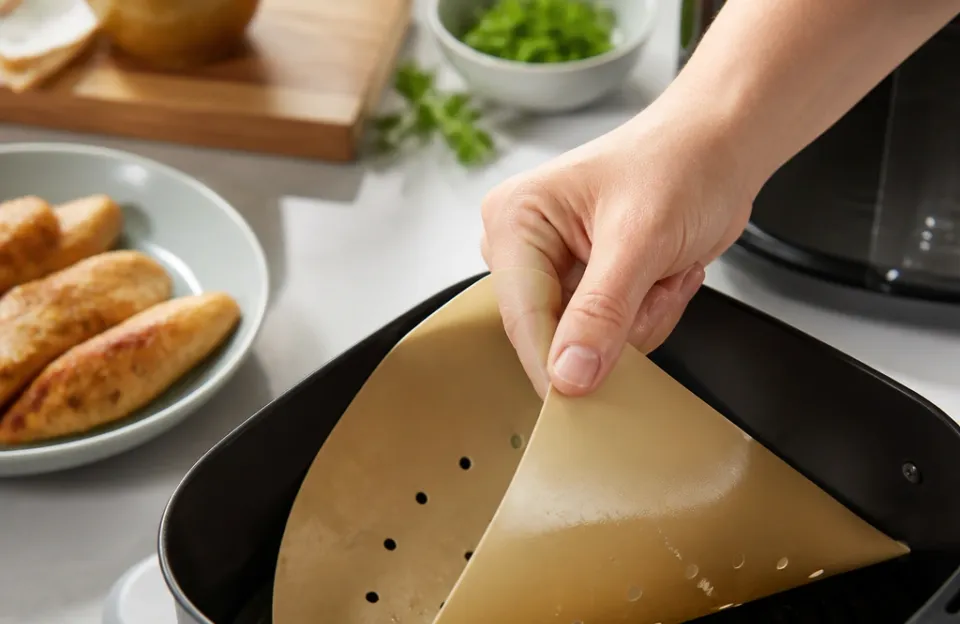
A liner has two jobs: keep food off the basket surface and let hot air do its work. Those goals sometimes conflict, and the resolution depends on your machine and what you’re cooking.
Heat tolerance is the first filter. Air fried foods generally cook at 350 degrees F to 400 degrees F for 5 to 25 minutes, so compare the liner’s stated maximum temperature with the hottest setting you actually use. Ratings vary by product, so read the packaging or listing rather than assuming all silicone or all coated sheets behave the same way.
Fit is the second filter. Air fryers generally don’t have a lot of room inside, and a liner that crowds the basket can restrict circulation. You want the liner to sit flat on the bottom with visible space around the edges and clear headroom above. Check your owner’s manual for any stated clearance between accessories and the heating element.
Material documentation is the third filter. Look for a food-contact statement and a heat rating from the manufacturer, and check your air fryer manual for any restrictions on liners or accessories. Manufacturer instructions take priority over general guidance, whether you’re cooking raw or pre-cooked food.
Why Size and Shape Dictate Performance
Liner sizing is where most buying mistakes happen. “Universal” fits rarely are universal, because basket shapes differ widely between models and between single and dual-basket designs.
Measure the flat bottom of the basket, not the rim. Place a ruler or tape across the widest flat section, then again front to back if the basket is rectangular. For dual baskets, measure each side separately, since they are often different.
Next, note the side height. A bowl-style liner taller than the basket’s straight sides can press against the walls, and in dual-basket models a tall liner can interfere with the divider or prevent the drawer from closing.
Finally, estimate clearance above the food. Air fryers generally don’t have much headroom, and a liner that stacks food higher than you would cook it bare reduces the space hot air needs to circulate. If you routinely fill the basket, size down rather than up.
How Airflow Holes Change Your Cooking Results
Perforated and mesh liners let hot air pass through so the underside of food can crisp. Solid liners block that flow and turn the liner into a shallow pan, which is helpful for sauces and batters but works against browning on the bottom.
The practical consequence is simple: for foods where you want an all-over crunch, such as wings or fries, choose holes or mesh. For a closer look at how airflow affects browning on poultry, see this guide to extra-crispy air fryer chicken wings. For foods that would drip through, such as marinated pieces or anything with a wet coating, choose a solid liner and accept that you may need to flip or extend cooking.
Overcrowding compounds the problem either way. Piling food tightly into the basket can prevent enough air circulation to cook it properly, and a liner that further narrows the usable area makes that more likely. When you’re cooking a large batch, it’s often better to work in batches than to fill the basket to the top.
Whatever liner you use, cook to internal temperature rather than relying on time alone. Air fryer cooking times vary with appliance size and power, but safe internal temperatures stay the same. Poultry, including ground poultry, is safe at 165 degrees F; ground meat products at 160 degrees F; whole cuts of beef, pork, veal and lamb at 145 degrees F with a three-minute rest; and fish at 145 degrees F.
Five Types of Reusable Liners Worth Considering
Each liner type below has a clear best use and a known limitation. None is universally best, and no performance testing data is available here to rank them against one another.
Solid Silicone Bowl Liners
These are flexible, bowl-shaped inserts that catch drips and hold saucier foods. They suit messy recipes, marinated proteins and anything you’d otherwise scrub off the basket, including make-ahead wing batches where marinades drip heavily. Their main limitation is airflow: solid walls restrict circulation compared with perforated designs, so expect to flip food for even browning. Check the stated heat rating against your cooking temperatures before buying.
Perforated Silicone Mats
Flat silicone mats with punched holes balance airflow and easy cleanup, making them a reasonable everyday choice for crisping. The holes let hot air through, though how much crispiness you gain over a solid liner isn’t documented here. Verify the heat rating and confirm the mat lies flat rather than curling at the edges.
PTFE-Coated Fiberglass Sheets
These thin, low-profile sheets fit flat basket bottoms and often come perforated. Their slim profile means less lost headroom, which helps in compact baskets. Do not cut or trim them unless the manufacturer explicitly allows it, since trimming can expose the fiberglass core. Follow the stated heat rating, and replace the sheet if the coating is scratched or flaking.
Stainless Mesh Screens
Mesh screens support food above the basket floor while allowing strong airflow, and they avoid a soft coating altogether. They suit crisping and foods that benefit from drainage, such as a dry-rub baking soda treatment where air needs to move freely around the food. Check the edge finish before buying, since cut metal edges can be sharp, and confirm the screen is sized to sit flat without rocking.
Fabric Rounds
Fabric liners are the least suitable option for air fryer use unless the manufacturer explicitly rates them for it. Lightweight material plus a powerful fan is a combination to treat cautiously, and without a stated heat rating you have no basis for matching it to cooking temperatures. Skip these unless the product documentation is specific about air fryer use and maximum temperature.
| Liner type | Airflow | Best for | Main limitation | Cleanup notes |
|---|---|---|---|---|
| Solid silicone bowl | Low | Saucy, messy, marinated foods | Restricts circulation; flip for browning | Wash per manufacturer instructions |
| Perforated silicone mat | Moderate to high | Everyday crisping | Curling edges on some mats | Wash per manufacturer instructions |
| PTFE-coated fiberglass sheet | Moderate to high (perforated versions) | Flat baskets with limited headroom | Do not trim unless approved | Replace if coating is damaged |
| Stainless mesh screen | High | Foods that benefit from drainage and airflow | Sharp edges possible | Hand wash to protect the mesh |
| Fabric rounds | Not established | Not recommended without a stated rating | No verified heat rating | Not applicable |
Matching the Material to What You Cook
Work backwards from your most common meals rather than from the liner’s marketing copy. If most of your cooking is wings, fries, nuggets and vegetables where crunch matters, a perforated mat or mesh screen is the logical starting point.
If you often cook marinated proteins, saucy dishes or anything with a wet coating, a solid silicone bowl keeps the basket cleaner and contains the mess. Accept that the underside will brown less and plan to flip.
If you bake, roast or reheat in the air fryer, remember these appliances handle all three without making food soggy. A solid liner behaves more like a small pan for these tasks, while a perforated liner behaves more like a rack, so match the shape to the result you want.
For batch cooking and meal prep, buy two liners of the same size so one can soak while the other is in use. This matters more than any single material upgrade, because a liner you avoid using because it’s dirty saves nothing.
Maintenance Habits That Prevent Early Failure
Every reusable liner lasts longer with a few consistent habits, and the manufacturer’s cleaning instructions always take priority over general advice.
Wash according to the product’s own directions. Dishwasher suitability differs by material and brand, so check the label rather than assuming silicone or mesh is machine-safe.
Avoid abrasive tools on coated sheets. Metal scourers and harsh scrapers can damage a PTFE coating, and a damaged coating is a replacement signal rather than something to keep using.
Let liners cool before washing. Sudden temperature changes stress silicone and coatings, so wait rather than plunging a hot liner into cold water.
Store liners flat or loosely rolled. Folding a coated sheet along the same line repeatedly can crease and weaken it, and stacking heavy items on silicone bowls can distort their shape.
Clean and sanitize surfaces before and after food preparation, and wash your hands with soap and water for 20 seconds before and after handling food. These habits matter more than liner choice for overall food safety.
Edge Cases Where Liners Cause More Problems
Some situations call for leaving the liner out entirely or choosing a different approach.
Preheating. Many manuals advise preheating an empty basket. A lightweight liner left in during preheat has nothing weighing it down, and the fan is at full strength. Add the liner with the food, or follow your manual’s guidance.
Bottom heating elements. In some air fryer designs the heating element sits below the basket floor. A solid liner placed directly over it can block heat transfer and overheat the liner, so check your manual’s diagram and any accessory warnings before using a solid liner in that layout.
Wet batters. A perforated liner defeats the purpose when batter will run straight through. Use a solid liner or cook battered foods without one.
Dual baskets. Liners sized for a full basket often don’t fit a divided drawer. Measure each compartment and keep the liner below the divider height.
Trapped fat. A solid liner that collects drippings keeps them in contact with the food. For dishes where you’re watching fat content, pour off drippings partway through cooking rather than letting food sit in them. If you track macros closely, this matters when comparing calorie totals for air fryer wings cooked with and without drainage.
Getting the Right Fit for Your Machine
The buying decision reduces to a short checklist you can run in a few minutes.
- Measure the flat bottom of your basket, front to back and side to side.
- Note the straight-side height and any divider in dual-basket models.
- Check your air fryer’s maximum temperature setting and any manual restrictions on liners.
- Choose holes or mesh for crisping, solid walls for messy or saucy food.
- Confirm the liner’s stated heat rating exceeds your cooking temperature.
- Buy two of the same size if you cook often, so one is always ready.
If you want to compare liner categories more broadly, see this guide to air fryer liners for the wider range of options. Readers leaning toward a soft, reusable surface can check the detailed breakdown of silicone air fryer liners for material-specific buying points.
For most households, a perforated silicone mat or mesh screen covers everyday crisping, with one solid silicone bowl for saucy meals. Buy for fit and heat rating first, and let cooking style decide the shape.
Whichever liner you choose, confirm doneness with a food thermometer rather than the clock. Leftovers should go into the refrigerator within two hours, and cooked food should never return to a plate that held raw meat.