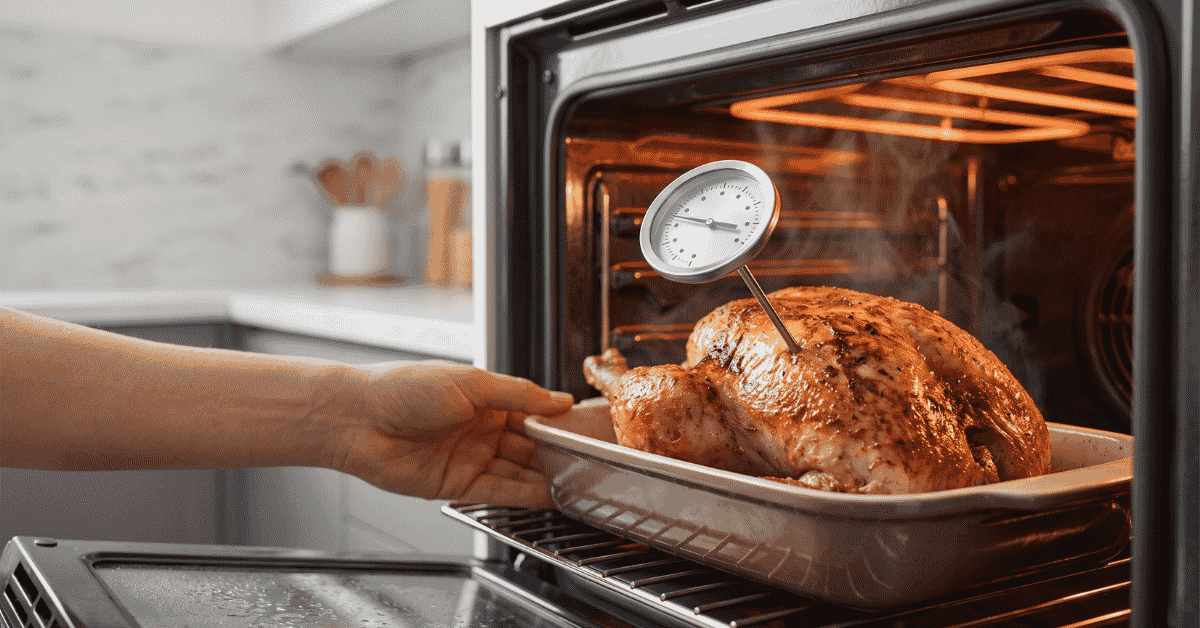
You’ve just slid a heavy prime rib into the oven, the timer is set, and the heat is rising. You reach for your Escali thermometer to keep an eye on the internal temperature, but then you pause. If you leave that plastic screen or those delicate wires inside a 350-degree oven, will they melt into a puddle of grey goo on your roast?
Getting this wrong doesn’t just ruin a dinner; it can destroy your tool and create a safety hazard in your kitchen.
Quick Answer: Whether an Escali meat thermometer is oven safe depends entirely on the specific model. Escali’s analog “leave-in” dial thermometers are oven safe and designed to stay in the meat while it cooks. However, their digital instant-read thermometers and the plastic display units of their digital probe thermometers are not oven safe and will melt if left inside the oven.
The Core Difference in Escali Designs
Not all thermometers do the same job, and Escali builds different tools for different parts of the cooking process. To determine if yours can handle the heat, you have to look at the materials used in its construction. Metal and glass can usually stand up to high heat, while plastic and electronic circuits cannot.
The analog Escali models usually have a stainless steel casing and a high-tempered glass face. These are built to withstand the ambient heat of an oven for hours at a time. They don’t use batteries or sensors that might fry at high temperatures.
Instead, they rely on a bimetallic coil that expands and contracts to move the needle.
Digital models are a different story. These use thermistors and LCD screens. If you’ve ever left a phone in a hot car, you know that electronics and high heat are enemies.
An Escali digital instant-read thermometer is meant to give you a fast result, usually in under five seconds, and then be removed immediately. If you leave it in the oven, the plastic housing will warp, the screen will go black, and the battery could leak or explode.
The Hybrid: Digital Probe Thermometers
There is a middle ground in the Escali lineup. Digital probe thermometers use a stainless steel probe connected to a long, heat-resistant wire. In this setup, the metal probe goes into the meat and stays in the oven.
The wire runs out through the oven door crack to a digital base station that sits on your counter.
In this scenario, only the probe and the wire are oven safe. The base station (the part with the buttons and the screen) stays outside. If you accidentally put the base station inside the oven, it will be destroyed instantly.
It is also vital to check the heat rating for the wire, as even “heat-resistant” wires have a breaking point, often around 482°F (250°C).
Analog Dial Thermometers
Escali’s leave-in dial thermometers are the traditional choice for roasting large birds or joints of meat. These are almost always oven safe. They are designed to sit in the thickest part of the meat from the moment it enters the oven until the moment it comes out.
The glass on these dials is specially treated so it won’t shatter when the temperature jumps from room temp to 400°F. However, you should still avoid “thermal shock.” This happens if you take a scorching hot thermometer and plunge it into ice-cold dishwater. Always let the thermometer cool down on the counter before washing it.
How to Check Your Specific Escali Model
If you aren’t sure which version you have, you can perform a quick visual inspection. Check the body of the device for specific materials and markings. Escali often prints safety information directly on the dial or the back of the digital casing.
- Look for Plastic: If the main body of the thermometer is made of plastic, it is not oven safe. This applies to almost all red, blue, or black handheld digital models.
- Check for a “Leave-In” Label: Many Escali analog thermometers will have “Oven Safe” printed right on the face of the dial.
- Inspect the Probe Wire: For digital units with a cord, look at the texture of the cord. If it is wrapped in stainless steel mesh, it is designed for the oven. If it is a thin plastic-coated wire, it might only be for cold use or room temperature monitoring.
- Identify the Display: Any device with a “Liquid Crystal Display” (LCD) is sensitive to heat. Even if the probe is metal, the screen part must stay out of the heat.
Practical Application: Using Your Thermometer Safely
To get the most out of your Escali tool without breaking it, you need to follow a few specific steps based on the type of cooking you are doing.
- For Roasting Large Meats: Use an analog leave-in thermometer or a digital probe with a cord. Insert the tip into the thickest part of the meat, avoiding bone or heavy fat pockets. If using the corded version, close the oven door gently over the wire to avoid kinking or cutting the metal mesh.
- For Quick Checks (Steaks, Burgers, Chops): Use a digital instant-read thermometer. Open the oven door, pull the rack out slightly, and pock the meat. Read the temp (usually 2, 5 seconds) and pull the thermometer out immediately before closing the door.
- For High-Heat Broiling: Avoid leaving any thermometer in the oven during broiling. The direct infrared heat from the top element can exceed 500°F, which is often higher than the rating for thermometer glass or probe wires. Use an instant-read tool for broiled foods.
Edge Cases and Potential Risks
There are times when even an “oven safe” thermometer might fail. One common issue is exceeding the maximum temperature rating. Most Escali oven-safe dials are rated up to 500°F.
If you are doing a “high-heat blast” for a prime rib at 550°F or using a wood-fired pizza oven, you might exceed the capacity of the thermometer. This can cause the dial to lose calibration or the glass to discolor.
Another risk involves the placement of the wire in digital probe models. If the wire touches the heating element or the red-hot grill grates, the internal insulation can melt despite the stainless steel over-braid. This usually leads to a “HHH” or “LLL” error message on the screen, meaning the sensor is broken.
Grill use is also an edge case. While an Escali dial thermometer might be oven safe, the fluctuating flames of a charcoal grill can create “hot spots” far higher than a kitchen oven. I’ve seen many thermometers ruined because a flare-up licked the side of the dial.
If you use them on a grill, keep them away from direct flame.
Common Mistakes or Misconceptions
Many home cooks ruin their gear because of a few simple misunderstandings about how heat works.
- The “Metal is Metal” Myth: People often assume that because the probe is metal, the whole thing can go in. This leads to people leaving handheld digital thermometers inside a chicken. The electronics inside will fry long before the plastic melts.
- Washing Too Soon: Taking an oven-safe thermometer out of a hot turkey and immediately rinsing it under cold water can crack the glass.
- Closed Lids on Grills: People often think that if the grill lid is closed, it’s just like an oven. Grills often run much hotter than 400°F, which can exceed the safety rating of the dial.
- Leaving the Cord Inside: With digital probe models, some users mistakenly coil the extra wire inside the oven. Only the necessary length of wire should be inside; the rest should stay cool outside.
Escali Model Temperature Limits
| Thermometer Type | Max Temp (Approx) | Oven Safe? | Best Use Case |
|---|---|---|---|
| Analog Leave-In Dial | 500°F (260°C) | Yes | Roasting Turkey, Beef, Pork |
| Digital Instant Read | 392°F (200°C) | No | Testing thin meats, candy |
| Digital Probe (Wire) | 482°F (250°C) | Probe Only | Long-term monitoring/Alarms |
| Infrared (Laser) | 1022°F (550°C) | No | Surface temp of pans/pizza stones |
Frequently Asked Questions
Can I leave my Escali digital thermometer in the meat while it’s on the grill?
Only if it is a probe-style thermometer with a heat-resistant wire leading to an external base. You should never leave a handheld digital thermometer inside a grill or oven, as the plastic and batteries will be destroyed by the heat.
My Escali dial thermometer got foggy inside after being in the oven. Is it broken?
If steam or fog gets trapped behind the glass, the seal may have failed. This often happens if the thermometer is submerged in water during cleaning. Once the seal is gone, the calibration can become inaccurate, and it’s usually time to replace it.
What happens if I accidentally leave a plastic thermometer in the oven?
The plastic will begin to soften and release fumes, and it may eventually drip onto your food. If this happens, the food is likely unsafe to eat because of chemical contamination. You should also turn off the oven and ventilate your kitchen immediately.
Does the USDA have a recommendation for thermometer safety?
According to USDA food safety guidelines, using a food thermometer is the only way to ensure meat has reached a safe minimum internal temperature. They recommend using oven-safe thermometers for large items like roasts to minimize the number of times you have to open the oven door.
Worth Remembering
Before you slide your next meal into the heat, take five seconds to look at your Escali tool. If it’s a solid piece of stainless steel with a glass face and a needle, you’re likely good to go. If it has a battery, a screen, or a power button, keep it on the counter until it’s time for a quick check.
Keeping these rules in mind doesn’t just save you the cost of a new thermometer; it keeps your kitchen running smoothly and your family safe from melted plastic and ruined dinners.
For more technical specs on specific models, you can always check the official Escali website for the exact temperature ratings of your gear.




2 thoughts on “Is Escali Meat Thermometer Oven Safe? 2026: Complete Guide”