The better buy depends on how many cups you brew and how much control you want. A traditional drip coffee maker suits households that fill a carafe most mornings and want to grind their own beans. A Keurig suits readers who want one cup at a time with minimal setup, though the evidence set behind this comparison covers drip brewers in detail and does not document Keurig specifications, so treat the pod side as positioning rather than verified performance. Drip wins on batch capacity, grind and ratio control, and access to independently certified brewers. Keurig’s case rests on single-serve convenience, and because the available certification and specification evidence covers drip brewers only, the two cannot be scored on one shared quality metric.
How Each Machine Brews and What That Means for the Cup
Certified drip brewers are the only side of this comparison with independently tested performance data in the evidence set, so the figures below describe drip models specifically.
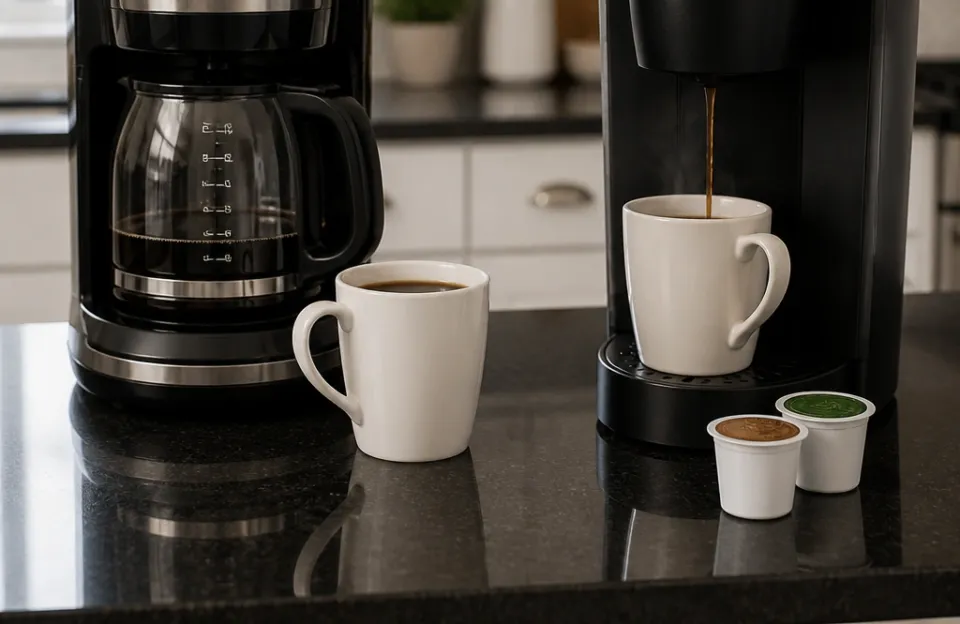
A drip coffee maker heats water, releases it over a bed of ground coffee in a filter basket, and lets the brewed coffee fall into a carafe below. You choose the grind, the dose and often the water-to-coffee ratio, so the machine mostly controls temperature and timing while you control the recipe.
A Keurig forces hot water through a sealed pod of pre-ground coffee into your mug. The pod fixes the dose and grind for you, which removes setup decisions and also removes most of your ability to adjust them. Convenience and control trade off directly here, and the rest of this comparison mostly follows from that trade-off.
For drip brewers, independent testing exists. SCA Certified Home Brewers are coffee makers that meet the Specialty Coffee Association’s standards for brewing quality, consistency and performance. Certification involves third-party testing of the equipment rather than a manufacturer’s own claims. That gives you a verifiable starting point when shopping for a drip machine, and the Specialty Coffee Association’s certified brewer list names the current models. No equivalent certification appears in this evidence set for Keurig brewers, so the pod side of the comparison rests on manufacturer specifications you should check yourself.
Capacity: Match the Machine to Your Household
Capacity is the clearest practical difference. Certified drip models span a wide range, from compact carafes to large batch brewers, as the model examples below show.
The Bonavita 5-Cup Drip Coffee Brewer is SCA certified, uses a 1.0 liter thermal carafe and brews a full carafe in 5 minutes. The Bonavita 8-Cup Drip Coffee Brewer is also SCA certified and delivers a full 40-ounce carafe in under 7 minutes in its glass or thermal carafe version. The Technivorm Moccamaster KBGV Select is SCA certified with a 40 oz (1.25 L) capacity, a glass carafe with hotplate, and a switch that selects a half or full carafe. At the larger end, the Technivorm Moccamaster CDT Grand is SCA certified with a 60 oz (1.8 L) thermal steel carafe and a flat-bottom basket, positioned for offices and gatherings.
The GE Cafe Specialty Drip Coffee Maker is SCA certified with a 10-cup capacity, an insulated thermal or glass carafe, precision heating and a programmable 24-hour timer. The Breville Luxe Brewer is SCA certified with a 1.7 liter capacity, a removable water reservoir with an integrated water filter, and three brew modes.
As a general rule rather than a tested threshold, a single-cup or small-carafe machine fits one or two daily drinkers, while a 10-cup or larger brewer makes sense when three or more people pour from the same pot. If you regularly pour cups at different times, a batch brewer means either reheating coffee or brewing smaller amounts. Keurig capacity figures are not covered by this evidence set, so confirm the reservoir and cup sizes for any specific model before relying on them.
Speed and Morning Routine Convenience
Drip brewers are slower per cycle but faster per cup once you brew in volume. The Moccamaster Cup-One, an SCA certified single-serve brewer for ground coffee, makes one 10 oz cup in about 4 minutes. The Bonavita 5-Cup delivers a full carafe in 5 minutes, and the Bonavita 8-Cup delivers 40 ounces in under 7 minutes.
So a five-cup carafe takes roughly the same time as one cup from a certified single-serve drip brewer, then serves several people. If your household drinks three or more cups at breakfast, batch brewing is the more efficient use of those minutes. If you drink one cup and leave, a single-serve machine avoids brewing coffee you will pour out. Keurig brew times are not documented in this evidence set, so compare them against the manufacturer’s own figures rather than assuming a number.
Two practical notes on timing. First, programmable timers on models such as the GE Cafe let you wake up to a finished pot. Second, the warm-holding time of a glass carafe or hotplate varies by model, so check your specific machine’s documentation rather than assuming a fixed number of hours. Thermal carafes hold heat without a hotplate, but they do not keep coffee at a stable temperature indefinitely. Keurig warm-holding behavior is not covered here, so check the manual for any model you consider.
Taste and Control: Grounds Versus Pods
Drip brewing gives you the variables that most affect flavor: fresh grounds, grind size, dose and ratio. A conical burr grinder and a scale let you adjust all four, and SCA-certified brewers give you a machine that has been independently tested for consistent extraction. Pods fix the dose and grind in advance, which reduces variability but also limits your ability to correct a cup you find too weak or too strong.
Water temperature matters for extraction, and certified drip models document it. The Kismile Precision Drip Coffee Maker is SCA certified and heats water to 197°F–205°F in 3 seconds, a range consistent with the temperatures specialty coffee guidance associates with proper extraction. Whether a given Keurig model reaches a comparable range is not something this evidence set can confirm, so treat any specific Keurig temperature figure you see elsewhere as something to check against the manufacturer’s own specifications. The same caution applies to any claim that one machine type brews hotter or cooler than the other.
Pod freshness is the other variable. Pre-ground coffee in a sealed pod stales more slowly than an open bag, but it cannot match coffee ground immediately before brewing, which is why drip setups with a grinder tend to have a ceiling that pod machines cannot reach. That is a mechanism-based expectation, not a measured taste result.
If you want one-cup convenience without pods, two certified options exist. The OXO Brew 8-Cup Coffee Maker is SCA certified and includes a podless single-serve function alongside its glass carafe. The Moccamaster Cup-One brews a single 10 oz cup from ground coffee. Both give you fresh-ground coffee in a single serving, which is the closest drip equivalent to a pod machine’s portion size.
Cost Over Time: What to Compare Before You Buy
Prices and availability change frequently and are not verified here, so treat machine price and cost per cup as figures to check at purchase rather than settled numbers. No stored source in this evidence set provides current machine prices, pod prices or ground coffee prices for either type, so the comparison below is a framework rather than a set of quoted figures. The right comparison is total cost of ownership:
- Upfront: machine price plus any grinder, scale, reusable filter or initial pod supply.
- Ongoing: ground coffee or pods, paper filters if you use them, and descaling solution.
- Waste: coffee you brew but do not drink. A batch brewer that leaves half a carafe behind every morning can cost more per cup than its sticker price suggests.
Fill in each line with current prices for the specific models you are considering, then divide by the cups you actually drink. That gives you a per-cup figure you can trust more than any general range.
Pods bundle coffee and packaging into one purchase, so the per-cup price you pay includes both. Whether that comes out higher than grinding your own beans depends on the beans and pods you choose, and this evidence set does not include current prices for either. The gap tends to widen in households brewing several cups a day and narrow for someone who drinks one cup and would otherwise dump the rest of a pot, but check current prices before treating that as settled.
Counter Space and Kitchen Fit
Footprint varies considerably within each category, so measure before buying. A compact 5-cup brewer such as the Bonavita takes less counter depth than a 60 oz machine like the Moccamaster CDT Grand. Single-serve brewers are typically narrow but taller, and they need clearance above the unit to lift the handle and insert a pod.
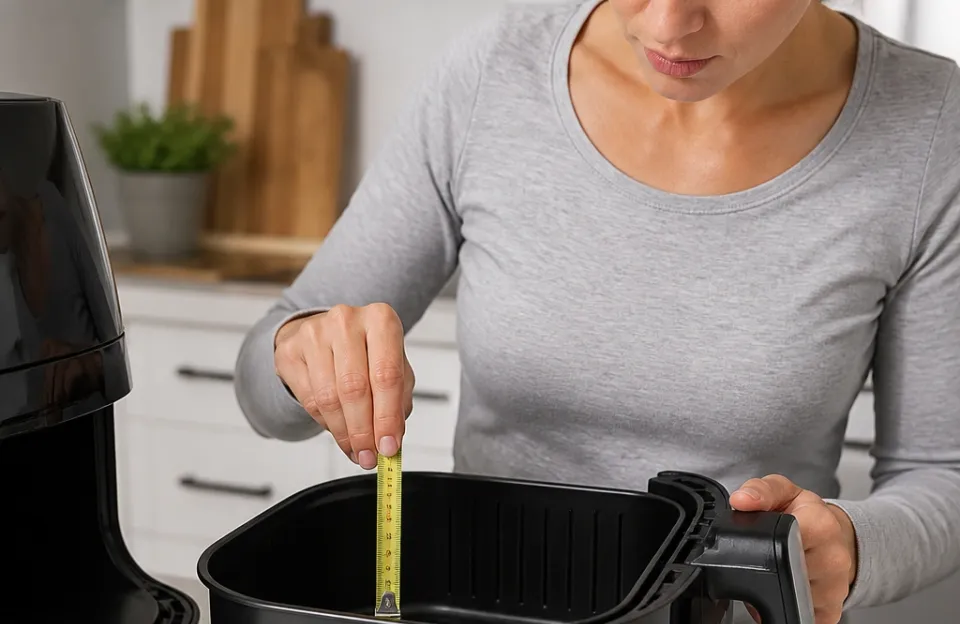
Three measurements to take before ordering: the width and depth of your available counter space, the height from counter to the underside of your upper cabinets, and the clearance in front of the machine for pulling out a carafe or a mug. Also check whether the water reservoir fills from the front or the top, since a top-fill reservoir under a low cabinet can be awkward to refill.
Cleaning and Descaling for Each Type
Both machine types need routine cleaning plus periodic descaling, and both should follow the manufacturer’s own instructions for your model. Manufacturer-recommended descaling intervals are not established in this evidence set, so check your manual instead of relying on a general schedule. The same applies to cleaning products: use what the manual specifies rather than a home remedy.
For a drip brewer, the recurring tasks are removing and rinsing the filter basket, washing the carafe, and descaling the heating element as the manual directs. A step-by-step routine is covered in this guide to cleaning a coffee maker. Machines with a descaling indicator, like some programmable models, simplify the timing decision.
For a Keurig, the pod holder and the exit needle collect coffee residue and need regular rinsing, and the brewer needs descaling when the indicator prompts it. Keurig-specific descaling intervals and reusable filter compatibility are not covered by this evidence set, so confirm both in your model’s manual before buying a reusable pod. If your manual does not list a reusable pod as compatible, do not assume one will fit or brew correctly.
Environmental Impact of Pods and Filters
Pod machines generate a used pod per cup, while drip brewers typically generate a paper filter per batch plus coffee grounds. Pod materials vary by brand and format, and comparative recyclability data and municipal acceptance for K-Cup pods are not established here, so check your local recycling program and manufacturer guidance for the specific pod format you would buy rather than relying on a general claim.
Where the evidence is clear is on the brewers themselves: certified drip models include reusable filter baskets and thermal carafes that eliminate paper filters entirely. That is a materials decision you can make with certainty today, while pod recycling remains something to verify locally.
Who Should Buy a Traditional Drip Coffee Maker
Choose a drip brewer if most of these describe you:
- You brew three or more cups at a sitting and want them ready together.
- You want to grind your own beans and adjust grind, dose and ratio.
- You value independently tested brewing quality and can choose from certified models.
- You prefer the larger capacity range, from 5-cup compact machines to 60 oz batch brewers.
- You want single-cup convenience without pods, as on the Moccamaster Cup-One or the OXO Brew 8-Cup’s podless function.
The main limitation is that batch brewing suits volume and planning, not spontaneous single cups.
Who Should Buy a Keurig, and When Neither Fits
A Keurig fits readers who prioritize one-cup convenience and minimal setup, and who are comfortable with pod-based brewing and the recurring pod cost. Speed and brew-time figures for Keurig models are not documented in this evidence set, so check the manufacturer’s specifications for any model you shortlist. See how the two types stack up on core trade-offs at a glance in this side-by-side comparison of coffee makers and Keurig brewers.
If neither machine matches how you drink coffee, look elsewhere. A pour-over setup gives you manual control in small batches, and this coffee maker versus pour-over comparison covers that trade-off. Espresso is a different drink and a different workflow, as explained in this guide to the types of espresso machines. If you are weighing a pod machine against espresso specifically, this espresso machine versus Keurig breakdown is the closer comparison.
Electrical details, energy use, warranty terms and long-term durability are not covered by this evidence set, so check the manufacturer’s specifications and warranty for any model you shortlist. That gap applies to both machine types equally.
A Final Decision Rule
Count the cups your household drinks in a typical morning. If the answer is three or more and you care about grind and ratio control, buy a certified drip brewer sized to that count. If it is one cup on the way out the door and you want almost no cleanup, a Keurig fits better, provided you have checked its specifications and pod costs for the model you want. If you want one-cup convenience with fresh grounds, look at a certified single-serve drip brewer instead of a pod machine.