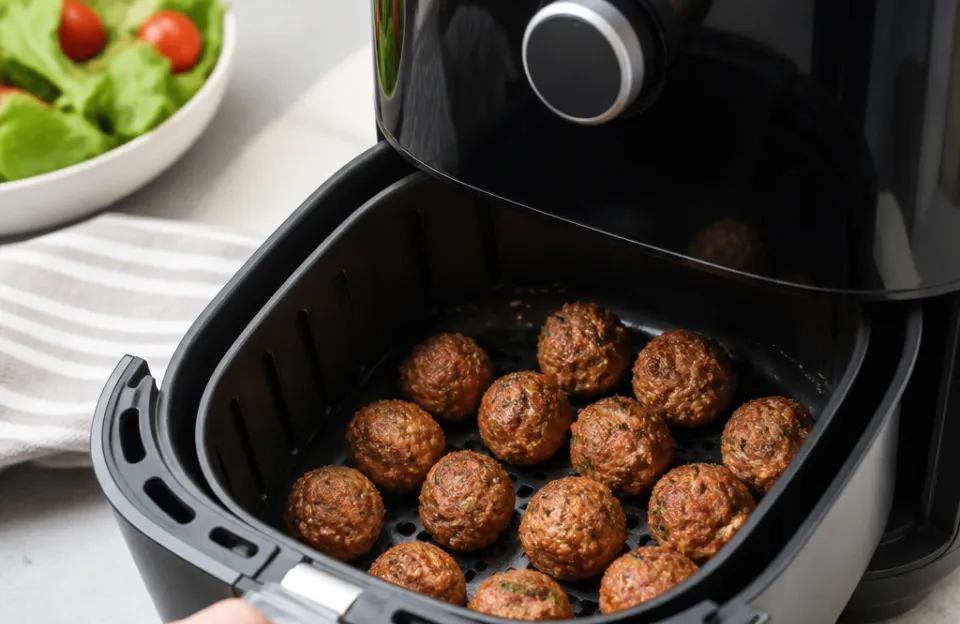
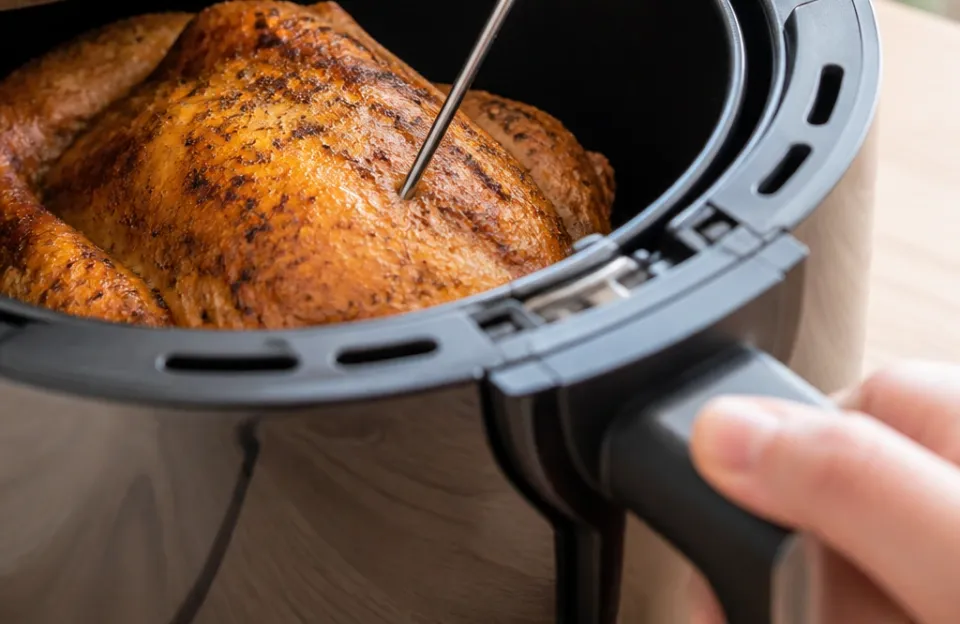
Air fryer sausage cooks fast, stays juicy inside, and gets a browned, snappy casing without the grease splatter of a stovetop pan. Most standard links finish in 8 to 12 minutes at 400°F. You don't need oil, you don't need to stand over the stove, and cleanup takes about thirty seconds if you use a liner or just wash the basket.
This guide covers how long different types take, why some burst open while others stay perfect, and what to do when your specific model runs hotter than average. Whether you're cooking breakfast links for a quick weekday morning or browning thick Italian sausages for a pasta dinner, the method is mostly the same. The timing changes.
Why the air fryer sausage method beats the skillet
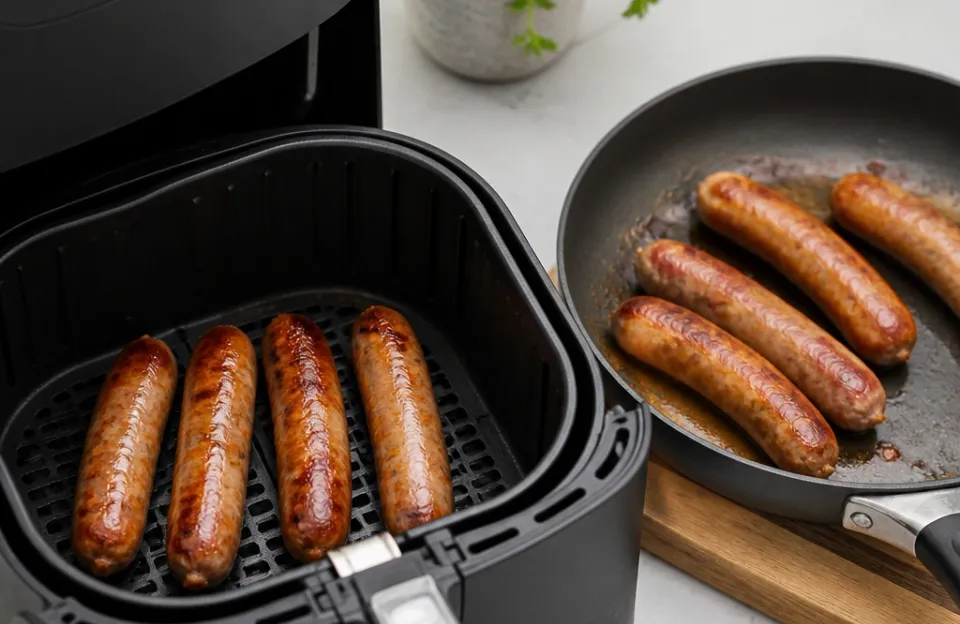
Cooking sausage in a skillet means babysitting it. You have to turn each link constantly so one side doesn't burn while the other stays pale. Grease pops onto your hands and the backsplash.
An air fryer uses rapid convection. A fan pushes superheated air around the food from every angle at once. That constant circulation browns the casing evenly without you touching anything until the timer goes off.
The fat renders out of the meat and drips through the perforated basket into the drawer below. The sausage sits above its own grease instead of frying in it. This gives you a crisper exterior and slightly leaner final product.
If you prefer a lighter protein meal, this approach pairs well with baked poultry cuts using the same basic temperature logic.
You also save time on preheating. A heavy cast iron pan takes several minutes to reach an even searing heat. Most countertop air fryers are ready to cook in three minutes or less.
For busy mornings, that difference matters.
Picking the right sausage for the basket
Almost any raw or precooked sausage works in an air fryer. The shape and thickness dictate your time and temperature more than the meat itself.
Fresh pork or beef links. Standard breakfast sausages are thin and cook very quickly. Thicker bratwursts or Italian links take longer because the heat has to penetrate deeper into the center before the outside burns.
Precooked smoked sausage. Kielbasa, andouille, or hot dogs are already safe to eat. You are only heating them through and crisping the skin. This requires less time and a slightly lower temperature to prevent the casing from splitting violently.
Chicken or turkey sausage. These are leaner. Because they lack the heavy fat content of pork, they can dry out if left in too long. Watch them closely near the end of the cook time.
Plant-based links. Veggie sausages vary wildly by brand. Some contain oils that crisp up nicely; others get mushy if exposed to high heat for too long. Check the package instructions as a baseline and reduce the suggested oven time by about 20 percent.
| Sausage Type | Temperature | Total Time | Target Internal Temp |
|---|---|---|---|
| Thin breakfast links (raw) | 400°F | 7 to 9 minutes | 160°F |
| Thick Italian or bratwurst (raw) | 380°F | 12 to 15 minutes | 160°F |
| Precooked smoked links | 370°F | 5 to 8 minutes | 165°F |
| Chicken or turkey (raw) | 380°F | 10 to 13 minutes | 165°F |
| Plant-based links | 370°F | 6 to 10 minutes | Varies by brand |
Cooking times and temperatures for air fryer sausage
Getting the numbers right prevents burnt casings and raw centers. Set your machine to the temperatures listed above rather than defaulting to 400°F for everything. High heat works for small, thin links.
It scorches large ones.
Place the sausages in a single layer. Leave a little space between each one. If they touch, the sides pressed together will steam instead of brown.
The hot air needs room to circulate around the entire surface of the meat.
Halfway through the total cook time, pull the basket out and flip each link with tongs. This guarantees even color. If you skip the flip, the bottom might stay pale where it rested against the metal grate.
For thicker raw sausages like bratwurst, start at 380°F. If you notice the skins darkening too fast after six minutes, drop the temperature to 360°F for the remainder. You want the internal temperature to rise gradually so the casing doesn't split before the center is done.
If you are batch-cooking for the week, the timing stays consistent. Just don't stack the links. Cook them in batches if your basket is small.
Crowding drops the ambient temperature inside the chamber and leads to uneven results.
Getting a crispy casing without the burst
The biggest complaint people have with air fryer sausage is the casing splitting open. When the skin bursts, all the juices leak out. You end up with a dry interior and a messy basket.
Bursting happens because moisture inside the meat turns to steam faster than it can escape through the casing. The pressure builds up and blows out the weakest point. To prevent this, prick each raw link two or three times with a fork or the tip of a sharp knife before cooking.
These tiny holes give the steam a controlled exit route.
Don't overdo it. Five or six deep punctures will drain too much fat and leave you with a dry sausage. Two or three shallow pokes are plenty.
Another trick is starting at a slightly lower temperature for the first four minutes, then cranking it up. This gentle start lets the proteins set and the fat begin rendering slowly before the intense heat hits the skin.
Patting the links dry with a paper towel before they go into the basket also helps. Surface moisture creates steam immediately upon hitting the hot air. Dry surfaces brown faster.
If you enjoy experimenting with different flavor profiles, applying a dry rub works better on a dry surface than a wet one, similar to how you might prep garlic parmesan coated wings for maximum crust.
Avoid brushing raw sausages with oil unless they are extremely lean, like certain chicken varieties. Pork and beef sausages contain enough internal fat to self-baste as they cook. Adding extra oil just causes excessive smoking.
Checking doneness safely every time
Color is a terrible indicator for sausage. Curing agents, spices like paprika, and smoke flavoring can make raw meat look cooked or cooked meat look pink. The only reliable way to know your air fryer sausage is safe to eat is by measuring the internal temperature.
According to the USDA food safety guidelines, raw pork, beef, and veal sausages must reach 160°F. Poultry sausages made from chicken or turkey require 165°F. Precooked sausages should be reheated to 165°F as well.
Use a digital instant-read thermometer. Insert the probe into the very center of the thickest link, pushing through the end rather than the side if possible to get a deeper reading. Wait for the numbers to stabilize.
A good quick-read kitchen tool makes this step take literally one second per link.
If you don't have a thermometer, cut the thickest sausage in half. The meat should be uniformly gray or brown throughout, with no translucent pink spots. The juices running out should be clear.
Relying on visual checks is risky, though. Ground meats carry higher bacterial loads than whole muscle cuts because the grinding process mixes surface bacteria throughout the mixture. Buy a thermometer.
Let the sausages rest for two or three minutes after pulling them from the basket. The residual heat continues to push the internal temperature up a few degrees, and the juices redistribute. If you bite into them immediately, the hot fat will run out onto your plate.
What goes wrong and how to fix it
Even with simple timing, things occasionally go sideways. Here are the usual culprits.
White smoke pouring from the machine. This happens when rendered fat drips into the bottom drawer and hits the hot heating element or the scorching metal base. To fix it, put a tablespoon of water in the bottom of the drawer beneath the basket before you start cooking. The water catches the dripping grease and keeps it below the smoking point.
You can also place a small piece of bread under the basket to absorb the fat.
Sausages sticking to the grate. Air fryer baskets usually have a non-stick coating, but sugary marinades or maple-flavored breakfast links can fuse to the metal. Lightly spray the basket with cooking oil before adding the meat. Don't spray the sausages directly if they are already fatty.
Uneven browning. Your machine likely has hot spots. Rotating the basket or flipping the links more frequently solves this. If you have a smaller countertop unit, the heating element is very close to the food.
Lower the temperature by 10 or 20 degrees to compensate for the intense direct radiant heat.
Dry, tough texture. You cooked them too long or at too high a temperature. Lean poultry sausages are especially prone to this. Pull them exactly when they hit 165°F.
Don't guess. If you want to monitor temperatures remotely while doing other tasks, a wireless probe setup removes the need to keep opening the basket and losing heat.
Cooking frozen sausage straight from the freezer
You can cook frozen sausage in the air fryer without thawing it first. This is handy when you forget to pull meat out the night before.
Add about 4 to 6 minutes to the standard cook time. Drop the temperature by 20 degrees. If you blast frozen links at 400°F, the outside will char while the center remains a block of ice.
Cooking at 360°F to 380°F allows the heat to penetrate the frozen core gradually.
Separate the links before putting them in the basket if they are stuck together in a clump. Run them under cold water for ten seconds if needed to pry them apart. They must sit in a single layer to cook evenly.
Check the internal temperature diligently when cooking from frozen. The outside often looks perfectly done long before the center reaches a safe temperature. Always verify with a thermometer.
Meal prep and storing leftovers
Air fryer sausage holds up incredibly well in the fridge. It's one of the easiest proteins to batch-cook on a Sunday for the rest of the week.
Let the cooked links cool completely on a wire rack. If you put warm sausages into a sealed container, condensation forms and makes the casings soggy. Once cool, store them in an airtight container lined with a paper towel.
The towel absorbs excess moisture. They stay good in the refrigerator for three to four days.
To reheat, toss them back in the air fryer at 350°F for 3 to 4 minutes. The microwave works, but it turns the casing rubbery. The air fryer restores the crispness.
If you are packing lunches alongside other prepped items, consider how these hold up compared to batch-cooked wing recipes which sometimes lose their crunch faster in plastic containers.
You can also freeze cooked sausages for up to two months. Flash-freeze them on a baking sheet first so they don't stick together, then transfer them to a freezer bag. Reheat straight from frozen at 350°F for 6 to 8 minutes.
Pairing ideas beyond the bun
A plain sausage on a plate gets boring fast. The air fryer handles the main protein easily, leaving you free to build out the rest of the dish.
Slice cooked Italian links on a bias and toss them into a warm potato salad. The rendered fat and spices coat the potatoes.
Chop breakfast sausage into coins after cooking and fold them into scrambled eggs or a breakfast hash. Since the meat is already browned, it won't release raw grease into your eggs.
Serve thick bratwursts on crusty rolls with grain mustard and quick-pickled onions. The snap of the air-fried casing stands up well to crunchy toppings.
If you want a dipping sauce for appetizer-style bites, you can adapt almost any savory dip. Something tangy cuts through the richness of pork sausage beautifully. A sharp mustard sauce or a spicy mayo works perfectly, borrowing concepts from how you might pair a sweet garlic glaze with rich fried foods.
Frequently asked questions
Do I need to add oil to the basket?
No. Sausages contain enough internal fat to brown and crisp on their own. Adding oil usually causes excessive smoking as the fat renders out and pools in the bottom drawer.
Only use a light spray if you are cooking very lean plant-based links that tend to stick.
Can I cook vegetables at the same time?
Yes, provided they have similar cook times. Bell peppers and onions sliced thick work well with Italian sausages at 380°F for about 12 minutes. Cut dense vegetables like potatoes smaller so they finish simultaneously.
Don't overload the basket, or everything will steam.
Why does my air fryer smell like burning plastic the first time?
New heating elements often have factory residues that burn off during the first cycle. Run the machine empty at 400°F for 10 minutes in a ventilated area before cooking food. If the smell persists after several uses, check the manufacturer's manual, as a wiring issue could be present.
Is air fryer sausage healthier than pan-fried?
It is slightly leaner. The perforated basket allows rendered fat to drip away from the meat instead of pooling around it. However, the calorie difference is modest.
The primary health benefit is avoiding the addition of extra cooking oils required to prevent sticking in a skillet.
How do I stop thin breakfast links from drying out?
Thin links cook in under 10 minutes. Overcooking is the main cause of dryness. Check them at the 7-minute mark.
Pricking them with a fork helps release steam pressure, but don't poke them excessively, or the moisture escapes too fast. Use a thermometer to pull them exactly at 160°F.
Can I use aluminum foil in the basket?
You can, but it blocks airflow. If you line the entire bottom, the hot air cannot circulate underneath the food, leading to pale, steamed bottoms. If you must use foil to catch grease, use a small piece that leaves the edges of the basket open, or buy perforated parchment liners designed specifically for air fryers.
Before you fire up the machine
Air fryer sausage comes down to spacing, temperature control, and a reliable thermometer. Give the links room to breathe in the basket, adjust the heat based on thickness rather than guessing, and always verify the internal temp before eating. Once you dial in the timing for your specific machine, you'll rarely go back to standing over a greasy skillet again.