Air fryer meatballs cook in about 10 to 15 minutes at 375°F, giving you a browned exterior and a juicy center without standing over a hot skillet. You can use beef, pork, turkey, chicken, or a mix of ground meats. The circulating hot air does the heavy lifting, browning the outside evenly while keeping the inside tender.
This article covers how to mix, shape, and cook air fryer meatballs from scratch. It also explains why they sometimes fall apart, how to handle frozen ones straight from the bag, and what temperatures keep them safe to eat.
Why Cooking Meatballs in an Air Fryer Works So Well
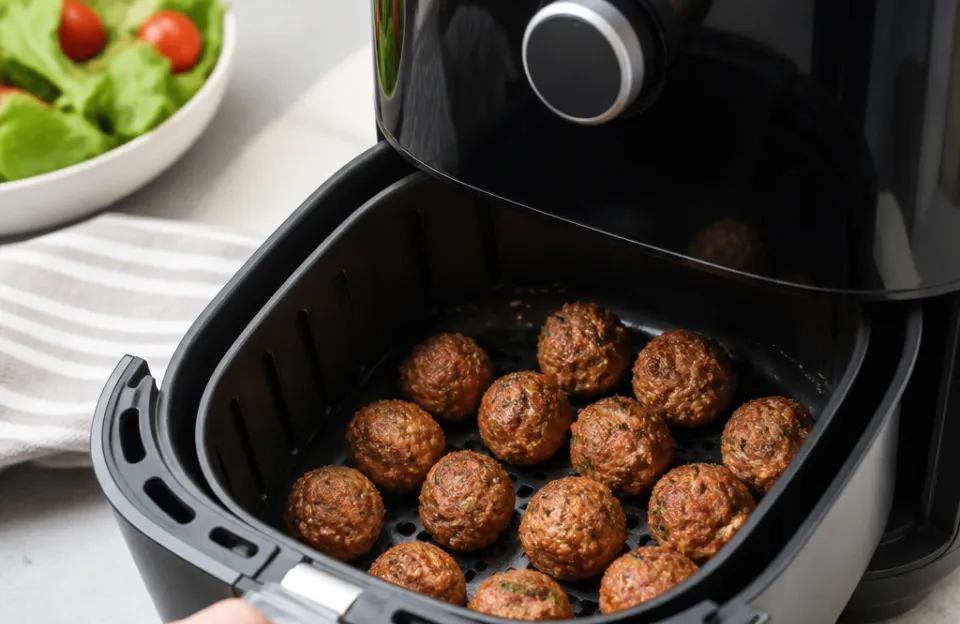
The main reason people switch to this method is the crust. In a standard oven, meatballs sit on a flat sheet pan. The bottom steams against the metal while the top browns.
You have to flip them halfway through to get even color. An air fryer suspends the food in a basket, letting hot air hit every side at once.
That constant airflow mimics shallow frying. You get a firm, caramelized surface without submerging the meat in oil. A light spray or a few drops mixed into the binders is usually enough.
Cooking time drops significantly too. A batch that takes 25 minutes in a conventional oven finishes in 12 to 15 minutes here. That speed matters when you're making dinner on a weeknight.
If you enjoy quick appetizers like garlic parmesan wings, you already know how fast this appliance handles small proteins.
There is one tradeoff. Capacity is limited. You can only fit a single layer in the basket.
Crowding them blocks the airflow, and they end up steaming instead of browning. If you are feeding a crowd, you will need to cook in batches.
Mixing and Rolling Your Meatball Base
A good meatball starts with the right ratio of meat, binder, and moisture. Skip the binder, and they crumble. Add too much, and they turn dense and heavy.
For every pound of ground meat, use about half a cup of breadcrumbs and one large egg. Soak the breadcrumbs in two tablespoons of milk or water for five minutes before mixing. This step, called a panade, keeps the interior soft.
Dry breadcrumbs pull moisture out of the meat as it cooks, leaving you with something closer to a hockey puck.
Season generously. Ground meat absorbs salt quickly. Use about one teaspoon of kosher salt per pound.
Add black pepper, garlic powder, dried oregano, and grated Parmesan if you like. Fresh herbs work too, but chop them very fine so they don't create weak spots in the structure.
Mix everything with your hands or a fork just until combined. Overworking the protein strands makes the final texture tough. Stop as soon as the ingredients look uniform.
Roll them into balls using a tablespoon measure or a small cookie scoop for consistency. One-inch balls cook faster and make great party snacks. Two-inch balls work better for serving over pasta.
Wet your hands slightly with water to stop the mixture from sticking to your fingers.
Cooking Fresh Air Fryer Meatballs Step by Step
Preheat the machine to 375°F for three minutes. Preheating isn't always strictly required, but it gives the meat immediate contact with high heat, which starts the browning process right away.
Lightly coat the basket with cooking spray or brush it with a neutral oil. Place the rolled meatballs inside, leaving about half an inch of space between each one. They shrink slightly as they cook, but they still need room for the air to circulate.
Set the timer for 10 minutes if you made them one inch wide. Set it for 14 to 15 minutes if they are two inches wide. Open the basket halfway through and give it a gentle shake.
This rotates them so the bottom gets exposed to the heating element.
Check the internal temperature before pulling them out. Beef and pork need to reach 160°F. Poultry must hit 165°F.
These are the safe minimums established by the FDA for ground meats. Using a quick-reading kitchen thermometer takes the guesswork out of this step entirely. Insert the probe into the center of the largest one in the batch.
Once they hit the target temperature, transfer them to a plate immediately. Leaving them in the hot basket lets residual heat keep cooking them, drying out the edges.
Handling Frozen Meatballs Straight From the Bag
You don't need to thaw store-bought or homemade frozen meatballs before cooking them. The rapid air circulation thaws and cooks them simultaneously.
Drop the temperature down to 360°F. Frozen items placed in a 400°F environment tend to burn on the outside before the center thaws. Lowering the heat by 15 to 20 degrees fixes this.
Increase the cooking time by about five to seven minutes. A standard frozen one-inch meatball usually takes 12 to 15 minutes total. Shake the basket at the seven-minute mark to break up any ice crystals sticking them together.
If you are making a big batch for meal prep, cook the entire bag, let them cool completely on a wire rack, and store them in airtight containers. They reheat beautifully later.
Always verify the internal temperature on frozen ones too. Because they start solid, the outside often looks done while the middle stays cold. A digital probe prevents serving raw centers.
Choosing Between Beef, Turkey, and Pork
Different meats behave differently under high, dry heat. Knowing how each one reacts helps you adjust your recipe.
| Meat Type | Fat Content | Cook Time (1.5 inch) | Texture Profile |
|---|---|---|---|
| 80/20 Ground Beef | High | 12 to 14 min | Juicy, holds shape well |
| Ground Turkey | Low | 10 to 12 min | Lean, dries out easily |
| Ground Pork | Medium | 12 to 14 min | Tender, mild flavor |
| Half Beef / Half Pork | Medium-High | 12 to 14 min | Balanced fat and flavor |
Ground beef with an 80/20 lean-to-fat ratio is the most forgiving. The fat renders during cooking, basting the meat from the inside out. You rarely need to add extra oil to the mixture.
Ground turkey or chicken requires more attention. Poultry lacks the saturated fat found in red meat. To compensate, add a tablespoon of olive oil directly into the mix, or increase the amount of soaked breadcrumbs.
If you prefer lighter proteins, these adjustments help you keep things balanced without sacrificing moisture.
Pork sits right in the middle. It has enough fat to stay tender but a milder flavor than beef. Many traditional Italian recipes call for a blend of beef and pork to get the best of both.
Regardless of the meat you choose, the USDA recommends cooking all ground poultry to 165°F, while ground beef, pork, and veal are safe at 160°F. You can find detailed safe handling guidelines on the USDA website.
Keeping Them Intact When They Keep Falling Apart
Meatballs falling apart mid-cook is almost always a binder issue. Eggs and starch hold the proteins together. If your mixture feels loose or wet before rolling, it will disintegrate in the basket.
Add another tablespoon of breadcrumbs if the mix is too sticky. Let it rest in the fridge for 15 minutes. Chilling firms up the fat and allows the starch to absorb excess liquid.
Cold mixtures roll easier and hold their shape better under heat.
Another culprit is flipping them too early. When the meat first hits the hot basket, the proteins contract. If you try to shake or move them within the first three minutes, the crust hasn't formed yet, and they tear.
Wait until the halfway point to agitate the basket.
Finally, check your meat-to-filler ratio. If you added too many vegetables, like diced onions or peppers, they release water as they cook. That steam pushes the meat apart.
Sauté watery vegetables first to drive off the moisture before folding them into the raw meat.
Glazes, Marinades, and Dipping Pairings
Plain meatballs are great, but adding a glaze or sauce takes them further. The trick is timing. Sugary sauces burn quickly under intense convection heat.
If you want to coat them in barbecue sauce, teriyaki, or a sweet chili glaze, cook the meatballs plain first. Pull them out when they are about two minutes away from being done. Toss them in the sauce in a separate bowl, then return them to the basket for those final two minutes.
This sets the glaze without charring it.
For tomato-based sauces, it's usually better to simmer the sauce separately on the stove. Drop the finished, dry-cooked meatballs into the pot right before serving. Simmering them in marinara inside the air fryer basket creates a mess and blocks the fan.
If you serve them as appetizers, pair them with a good dip. Something creamy or tangy cuts through the richness of the fried exterior. A bright, acidic pairing works exactly like finding the right dipping sauce for other crispy appetizers.
Ranch, tzatziki, spicy mayo, or warm marinara all work well.
Getting the Browning Right Without Drying Them Out
Browning and drying out happen at the same temperature, which makes this a balancing act. The Maillard reaction, the chemical process that creates that savory brown crust, accelerates rapidly above 300°F. Since we cook at 375°F, browning happens fast.
To prevent the inside from turning to leather, keep the cook time as short as possible. Smaller meatballs brown faster because the distance from the surface to the center is shorter. If you want a deeply browned exterior with a rare-ish center (for beef), roll them smaller and cook them hotter for less time.
Using a wireless probe setup lets you monitor the internal temperature without opening the basket. Every time you open the drawer, the temperature drops by 20 to 50 degrees, forcing the heating element to work harder and extending the total cook time. Extended cook times equal dry meat.
Also, avoid lean meat blends if your primary goal is a dark, crispy crust. Fat conducts heat and promotes browning. A 90/10 beef blend will look pale compared to an 80/20 blend cooked for the exact same duration.
Cleaning Up the Grease Afterward
Ground meat releases fat as it cooks. In an air fryer, that fat drips through the perforated basket into the bottom drawer. If the drawer gets too hot, the grease smokes.
To prevent smoking, add a tablespoon of water to the bottom drawer before you start cooking. The water catches the dripping fat and keeps the overall temperature of the grease below its smoke point. You won't get that acrid smell filling your kitchen.
After cooking, let the basket cool completely. Wash it with warm soapy water and a non-abrasive sponge. Avoid steel wool on non-stick coatings.
If baked-on grease sticks to the grate, soak it in hot water and dish soap for twenty minutes. It wipes away easily after soaking. For stubborn spots, a paste of baking soda and water scrubs them clean without scratching.
Frequently asked questions
Can I put raw meatballs directly in the air fryer?
Yes. Place raw, freshly rolled meatballs directly into the preheated basket. Lightly spray the basket with oil first to prevent sticking.
Cook at 375°F for 10 to 15 minutes depending on their size.
Do I need to add oil to the meat mixture?
It depends on the meat. If you use 80/20 ground beef or pork, the natural fat content is sufficient. For ground turkey or chicken breast, adding a tablespoon of olive oil to the mix prevents the final product from becoming dry and crumbly.
How do I know when they are fully cooked?
Use a digital meat thermometer. Insert the probe into the center of the largest meatball. Beef and pork must read 160°F.
Turkey and chicken must read 165°F. Visual cues alone aren't reliable for ground meat safety.
Why did my meatballs stick to the basket?
Sticking usually happens when the basket isn't greased or the meat is too lean. Spray the basket with cooking oil before adding the meat. Also, wait until the crust forms before shaking the basket.
Moving them too early tears the uncooked surface against the metal grate.
Can I cook them in a sauce inside the machine?
Avoid putting liquid sauces directly in the air fryer basket. The fan blows the liquid around, and it drips onto the heating element, causing smoke and burning. Cook the meatballs dry, then toss them in sauce afterward or simmer them in a pot on the stove.
Is there a difference in texture compared to baking them?
Air fryer meatballs develop a firmer, crispier exterior because the concentrated airflow removes surface moisture faster than a standard oven. The inside remains similar, though the shorter cook time often leaves them slightly juicier since they spend less time exposed to heat.
Before You Start Rolling
Making air fryer meatballs comes down to managing moisture, fat, and space. Keep the mixture cold, leave room between each one in the basket, and trust a thermometer rather than a timer. Once you dial in the ratio for your preferred meat, you can scale the recipe up for meal prep or down for a quick snack.
The appliance handles the rest.