Cook frozen burritos in an air fryer at about 375°F for 12 to 15 minutes, flipping halfway through, and verify the center is hot before eating. Treat that time and temperature as a general starting point, not a verified product-specific value: no supplied source tests frozen burritos at this setting, and the figures sit inside the broad air fryer range of 350°F to 400°F for 5 to 25 minutes that FSIS describes. Always check your burrito’s package instructions first, since times vary by air fryer, burrito size, and filling. When package instructions are available, follow the manufacturer’s directions to ensure the food is safely cooked. Whatever the label says, always confirm the final temperature with a food thermometer rather than relying on looks.
Why the Air Fryer Beats the Microwave for Burritos
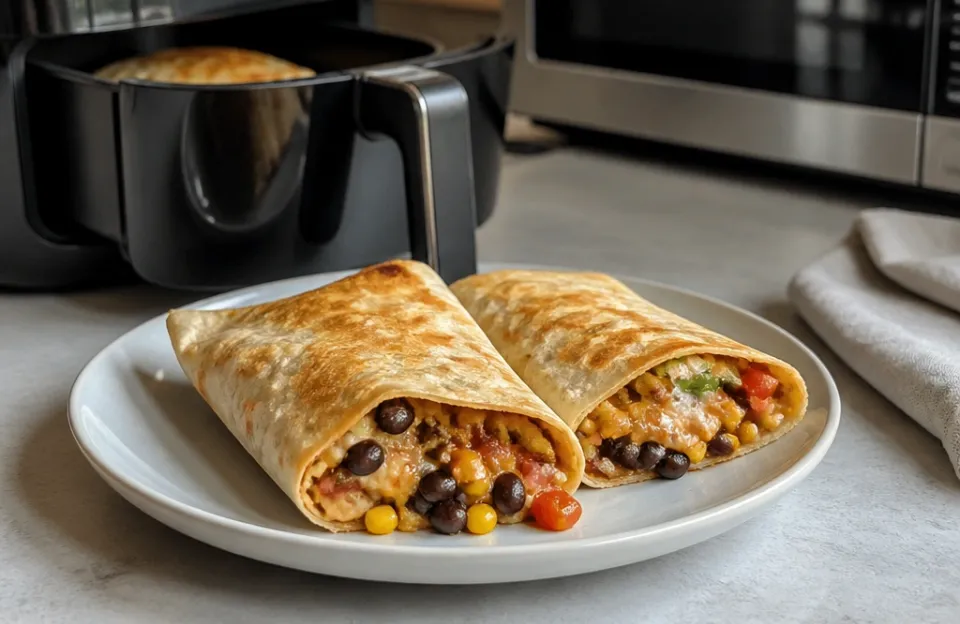
Air fryers are essentially countertop convection ovens that cook food faster and use less energy than full-size ovens. A burrito gets crisp because of the quick circulation of hot air inside an airtight appliance. That moving air pulls moisture off the tortilla surface, so the outside browns and firms up instead of steaming. Air fryers can also be used for reheating food without it becoming soggy, which is exactly the problem a microwave creates. If you cook in batches, meal prep strategies for other air fryer foods follow the same airflow and timing logic.
The microwave heats by exciting water molecules from the inside, which softens the tortilla before the surface can dry. The air fryer works in the opposite direction: hot air hits the outside first, so the shell sets and crisps while heat migrates inward to the filling. That is why the same frozen burrito comes out with a flaky, slightly toasted exterior from the air fryer and a limp, pale exterior from the microwave.
Step-by-Step Method
- Check the package first. Read the label for cooking instructions and whether the burrito is fully cooked, partially cooked, or raw. Package directions take priority over any generic time.
- Do not overcrowd the basket. Overcrowding prevents enough air circulation to properly cook the food, and large amounts may need to be cooked in batches rather than all at once. Overfilling can also cause uneven cooking and undercooking.
- Arrange in a single layer with space between each burrito. Leave gaps at the sides so air can move around the food. If you are cooking more than fits comfortably, run two batches rather than stacking.
- Set the air fryer to 375°F and start at 12 minutes. This is a general starting point, not a fixed rule or a tested value for any specific product. Cooking time varies by air fryer model, wattage, basket size, and burrito size.
- Flip at the halfway point. Around the 6-minute mark, use tongs to turn each burrito so the underside gets exposure to the hot air.
- Check with a thermometer before serving. Remove the burrito and take a reading in the thickest part of the filling.
- If it is not hot enough, return it for 2 more minutes and recheck. Repeat in short increments rather than adding a large block of time that could dry out or burn the shell.
Adjusting for Burrito Size and Filling
Burrito size and filling density change how fast heat reaches the middle. A dense, frozen bean-and-cheese burrito conducts heat more slowly than a loosely packed one, and a thick large burrito takes longer than a compact standard one. These are general principles rather than verified product-specific times:
- Mini or snack-size burritos: start checking at 8 to 10 minutes.
- Standard-size burritos: the 12 to 15 minute window is a reasonable start.
- Large or stuffed burritos: expect 15 to 20 minutes, with a flip at the halfway point.
- Breakfast burritos with egg, potato, and cheese: similar to standard size, but check the center with a thermometer because egg is a higher-risk ingredient.
- Bean-and-cheese burritos: start checking earlier, since a less dense filling may heat through sooner.
Each air fryer will have varying cooking times due to the size and power of the appliance, but the safe internal temperature is always the same.
Verifying Safe Internal Temperatures Without Guesswork
A food thermometer is the only way to confirm the safety of meat, poultry, seafood, and egg products for all cooking methods. Color and texture are unreliable indicators of safety. A fast-response professional digital meat thermometer makes this easier, and an infrared thermometer gun can check surface temperatures of baskets or pans. For broader technique, see these healthy air frying techniques and this guide to crispness with flour coatings.
Slide the probe into the center of the burrito, aiming for the thickest, coldest part of the filling. If the burrito has a mix of ingredients, take a second reading in another spot rather than trusting one number. If the reading looks suspiciously low, push the probe slightly deeper and re-check; a probe sitting against a cold pocket or near the tortilla edge can give a false low reading.
Safe minimum internal temperatures for the fillings you are most likely to find in a frozen burrito:
| Filling | Safe Minimum Internal Temperature |
|---|---|
| Poultry, including ground poultry | 165°F |
| Ground meat products | 160°F |
| Leftovers and casseroles | 165°F |
| Fully cooked ham packaged in USDA-inspected plants | 140°F |
These are general FSIS minimums for the listed food types, not a substitute for the burrito’s own label. If the package gives a target temperature, follow it.
Leftovers should be reheated thoroughly to an internal temperature of 165°F or until hot and steaming. It is safe to reheat frozen leftovers without thawing, and if you thaw leftovers in a microwave, continue heating until they reach 165°F as measured with a food thermometer. The FDA’s safe food handling guidance covers the same reheating principle for previously cooked foods.
When the Burrito Is Not Fully Cooked
Not every frozen burrito is fully cooked before freezing. Some products contain raw or partially cooked fillings, and those require different handling from a fully cooked product. Package instructions matter most here, since a raw product needs to be cooked through, not simply reheated. If the label says the product is raw or must be cooked before eating, treat the air fryer time as a cooking step and verify doneness with a thermometer rather than following a reheating schedule.
Food Safety Basics for Leftover Burritos
Bacteria grow most rapidly between 40°F and 140°F, doubling in number in as little as 20 minutes. This range is what food safety guidance calls the Danger Zone. Never leave food out of refrigeration over 2 hours, and if the room temperature is above 90°F, do not leave it out more than 1 hour. Refrigerate leftover burritos within 2 hours to stay out of that range. Leftovers can be kept in the refrigerator for 3 to 4 days or frozen for 3 to 4 months. These are general FSIS storage limits; a product label may specify shorter windows.
Troubleshooting Soggy, Burnt, or Split Burritos
Soggy tortilla. The usual cause is crowding or a sealed basket that traps steam. Spread the burritos out, cook in a single layer, and let the air move around them. If the filling is very moist, a slightly longer cook at the same temperature may help, though this is a general suggestion rather than a tested fix.
Burnt outside, cold center. The basket was likely too full or the temperature too high for the burrito’s thickness. Try a lower temperature and a longer cook, checking at 2-minute intervals. A dense frozen burrito needs slower heat to reach the middle before the shell scorches. This is a general troubleshooting suggestion, not a verified setting for any specific product.
Splitting or bursting. Tortillas crack when steam builds inside faster than the shell can expand. Overcrowding makes this worse, so keep a gap between burritos. If splitting keeps happening, check the package for any brand-specific guidance before changing how you prepare the burrito.
Uneven browning. Usually a placement issue. Rotate the burritos and swap their positions front to back at the flip. If one area of your basket browns faster, move the burritos away from that spot on the next batch.
Customizing Flavor and Texture After Cooking
Most of the flavor work happens after the burrito is hot and safely cooked. Cut it open, then add cool or room-temperature toppings so you do not undo the crisping: salsa, sour cream, avocado, or a squeeze of lime. If you want a warm sauce or glaze, add it after the burrito is cooked and verified rather than during cooking, since wet sauce softens the shell and defeats the purpose of air frying it in the first place. For sweet-savory inspiration, see these honey garlic glazes.
Before You Start Cooking
Two habits decide whether your air fryer burrito works: leave space in the basket so hot air can move, and verify the center with a thermometer instead of guessing. Follow your package instructions, use 375°F and 12 to 15 minutes as a general starting point, and adjust in short increments until the filling is hot all the way through.