Figuring out which type of meat thermometer is right for your kitchen can feel overwhelming, but it doesn’t have to be. Getting to the perfect internal temperature ensures your food is both safe to eat and unbelievably delicious. Many home cooks struggle with over or undercooked meats, and the tool you use makes a world of difference.
Our research dives into the core differences between thermometer types, helping you pinpoint the best fit for your cooking habits and needs. For instance, USDA food safety guidelines recommend specific internal temperatures for different meats, like 165°F for poultry, which a reliable thermometer helps you hit every time.
Quick Answer
Instant-read thermometers offer speed, while probe thermometers provide convenience for long cooks. Wireless and smart models add app connectivity for remote monitoring and custom alerts. For most home cooks, a good digital instant-read thermometer is ideal for quick checks, supplemented by a leave-in probe for roasts or larger cuts.
Why Temperature is King for Great Meat
Anyone who’s ever pulled a perfectly cooked steak or a safely roasted chicken off the heat knows temperature is everything. It’s not just about guessing; it’s about precision. Hitting that sweet spot ensures your meat is juicy, tender, and flavorful without any lingering food safety concerns.
Undercooked meat, especially poultry and pork, can harbor harmful bacteria. Overcooked meat, on the other hand, becomes dry and tough, a real disappointment after hours of prep. These aren’t just minor annoyances; they directly impact the enjoyment and safety of your meals.
What’s Actually In a Meat Thermometer?
At its heart, a meat thermometer is a sensor designed to measure the internal temperature of food. Most digital versions consist of a metal probe connected to a digital display unit. The probe, usually made of stainless steel, is inserted into the thickest part of the meat, avoiding bone and fat.
This probe contains a thermistor or thermocouple, a component that changes its electrical resistance based on temperature. The display unit reads this signal and converts it into a temperature shown on an LCD screen. Some models include a cable to connect a separate probe to the main unit, offering more flexibility.
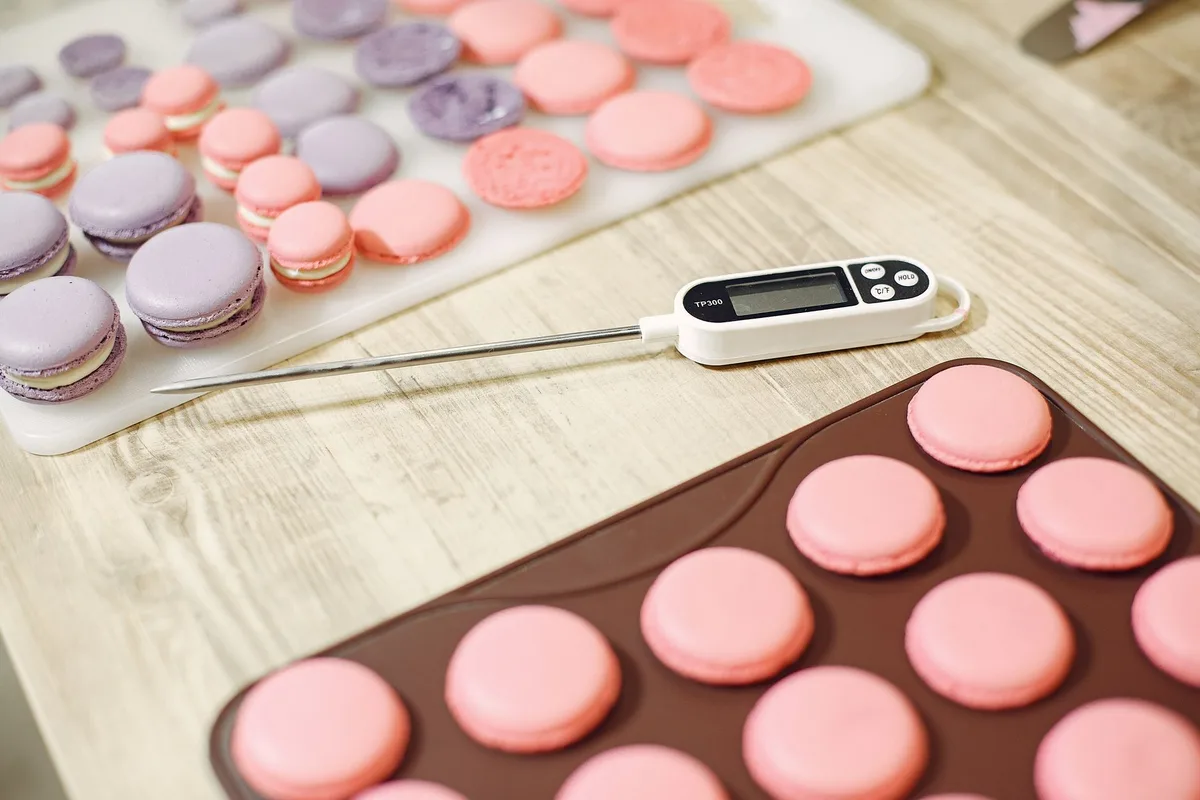
Image source: Pexels / Gustavo Fring (Pexels License)
The Big Players: Types of Meat Thermometers You’ll See
When you’re shopping for a meat thermometer, you’ll quickly notice a few main categories. Each has its own strengths and is better suited for different cooking scenarios. Understanding these distinctions is the first step to making the right choice for your kitchen.
Here’s a quick rundown of the most common types:
- Instant-Read Thermometers: These are designed for quick temperature checks. You insert the probe, read it in a few seconds, and pull it out. They’re perfect for burgers, steaks, or anything where you need a fast measurement.
- Probe Thermometers: These typically have a probe attached by a wire to a base unit. You leave the probe in the meat while it’s cooking, and the base unit sits outside the oven or grill, displaying the temperature. This is ideal for roasts, turkeys, or slow-cooked items.
- Wireless/Smart Thermometers: An evolution of probe thermometers, these use Bluetooth or Wi-Fi to send temperature readings to your smartphone or tablet. This lets you monitor your food from anywhere in your house.
Instant-Read Thermometers: Speed and Simplicity
If you’ve ever wanted to know if your steak is medium-rare in under five seconds, an instant-read thermometer is your go-to tool. These devices are all about speed and ease of use. You simply insert the probe into the thickest part of the meat, and within a few seconds, you get a precise reading on the digital display.
This makes them incredibly versatile. They’re fantastic for quick jobs like checking burgers on the grill, individual chicken breasts, or even making candy when you need a rapid temperature check. Their portability also means you can easily tuck them into a pocket or apron.
Pros & Cons of Instant-Read Thermometers
Our research indicates these thermometers offer significant advantages.
-
Pros:
- Speed: Readings are typically available in 2-5 seconds.
- Ease of Use: Simple to operate, insert and read.
- Portability: Compact and easy to store or carry.
- Versatility: Useful for a wide range of meats and cooking methods.
- Affordability: Generally the most budget-friendly option.
-
Cons:
- Requires Constant Monitoring: You need to be present to take readings.
- Probe Can Be Fragile: Some thinner probes can bend or break if misused.
- Not Always Oven-Safe: Many models cannot be left inside a hot oven.
When to Grab an Instant-Read Thermometer
An instant-read thermometer shines when speed and convenience are top priorities. It’s your best friend for grilling season. Think about those quick-cooking items like fish fillets, pork chops, or checking if a baked potato is tender.
If you’re new to cooking meat, this is often the best starting point. It helps build confidence by providing immediate feedback without complex setups. It’s also invaluable for multitaskers juggling multiple dishes.
Probe Thermometers: The “Set It and Forget It” Style
Probe thermometers completely change how you monitor longer cooking processes. Instead of standing over your roast for hours, you insert a heat-resistant probe into the meat and run a heatproof wire out to a digital display unit. This unit stays outside your oven, smoker, or grill, showing the internal temperature in real-time.
This “set it and forget it” capability is where probe thermometers truly shine. It allows for consistent cooking temperatures without constant interruption, crucial for larger cuts of meat requiring extended cooking times. Many also come with built-in alarms so you don’t have to keep an eye on the display constantly.
Understanding Wired Probe Thermometers
These thermometers feature a stainless steel probe designed to withstand high oven or grill temperatures. A high-heat-resistant wire connects this probe to a base unit that houses the display and controls. The wire is typically long enough to close a grill lid or oven door without pinching.
The base unit often displays the current meat temperature, while some advanced models show the target temperature and an alert indicator. This setup is perfect for understanding the progression of slow-cooked meats without opening the cooking vessel and losing heat.
Pros & Cons of Wired Probe Thermometers
While incredibly useful, wired probe thermometers have their own trade-offs.
-
Pros:
- Continuous Monitoring: Keeps an eye on temperature for hours.
- Convenience: Reduces the need for constant manual checking.
- Alarm Features: Alerts you when the target temperature is reached.
- Oven/Grill Safe: Probe is designed for high-heat environments.
-
Cons:
- Wire Can Be a Hassle: Managing the wire between the probe and base can be tricky.
- Requires Proximity: You still need to be relatively close to the cooking unit to read the display.
- Slower Readings: May not be as fast as instant-read models for quick checks.
- Wire Durability: High-heat wires can eventually fray or degrade.
When a Wired Probe is Your Best Bet
A wired probe thermometer is the ideal choice for anyone regularly cooking large, dense cuts of meat. Think about Thanksgiving turkeys, slow-cooked pork shoulders, beef roasts, or slow-smoked ribs. The ability to leave the probe in place for hours without lifting the lid is invaluable for maintaining consistent cooking temperatures.
This type of thermometer also helps build confidence in achieving perfect results for dishes that require precise internal temperatures over a long period. If you’re aiming for consistency in your BBQs or roasts, a wired probe will become an indispensable tool.
Wireless & Smart Thermometers: The High-Tech Approach
Taking the “set it and forget it” concept a step further, wireless and smart meat thermometers offer unprecedented freedom. These devices replace the physical wire with radio frequency (RF), Bluetooth, or Wi-Fi signals. This means you can monitor your food’s temperature from across the room, or even across the yard.
Smart thermometers often pair with a smartphone app, allowing for remote temperature monitoring, custom alerts for different stages of cooking, and sometimes pre-programmed temperature profiles for various meats. This significantly enhances convenience and control, especially for extended cooking sessions like smoking briskets or whole hogs.

Image source: Pexels / www.kaboompics.com (Pexels License)
How Wireless & Bluetooth Meat Thermometers Work
These thermometers typically come with one or more probes inserted into the meat. These probes transmit temperature data wirelessly to a separate receiver unit or directly to your smartphone via Bluetooth or Wi-Fi. The receiver or app displays the real-time temperature, often alongside target temperatures and cooking progress.
Many wireless systems offer a range of up to 100-300 feet, while Wi-Fi models connect to your home network, allowing monitoring from anywhere with internet access. This technology liberates you from babysitting the grill or oven, letting you mingle with guests or attend to other tasks.
Pros & Cons of Wireless and Smart Thermometers
These advanced thermometers offer cutting-edge convenience, but also come with their own considerations.
-
Pros:
- Remote Monitoring: Check temps from your phone anywhere in range (or with internet for Wi-Fi).
- Custom Alerts: Receive notifications when temps are reached or deviations occur.
- Multiple Probes: Some models support two or more probes for checking different items simultaneously.
- App Features: Often include recipe guides, cooking timers, and temperature history.
- Eliminates Wire Snagging: No physical wire to manage or potentially damage.
-
Cons:
- Higher Cost: Significantly more expensive than basic models.
- Connectivity Issues: Bluetooth or Wi-Fi signals can sometimes be unreliable or drop.
- Battery Dependent: Require regular charging or battery replacement for probes and receiver/phone.
- App Dependency: Functionality relies heavily on a stable app and smartphone.
- Signal Range Limitations: Performance can degrade with distance or obstructions.
Who Needs a Smart Meat Thermometer?
A smart meat thermometer is a game-changer for serious grill masters, backyard pitmasters, and anyone who loves to cook low-and-slow. If you spend hours tending to a smoker or a large roast and want the freedom to step away without losing track, this is for you. It’s also beneficial for tech-savvy home cooks who enjoy integrating smart devices into their kitchen routines.
For those who host frequently or compete in BBQ events, the ability to monitor multiple cuts or manage a long cook remotely provides significant peace of mind and control. If budget isn’t the primary concern and you value convenience and advanced features, a smart thermometer is likely the best investment.
Comparing Thermometer Types Side-by-Side
Choosing the right meat thermometer hinges on understanding how you cook. Each type excels in different situations, and what works for a weeknight chicken breast might not be ideal for a Thanksgiving turkey. Let’s break down the key differences to help you see which one fits your kitchen best.
Your Meat Thermometer Matchmaker: A Quick Guide
We can quickly categorize these tools based on common cooking needs:
| Thermometer Type | Best For | Speed | Convenience for Long Cooks | Price Point (USD) |
|---|---|---|---|---|
| Instant-Read | Quick checks (burgers, steaks, fish) | Very Fast | Low | $15 – $50 |
| Wired Probe | Roasts, turkeys, smoking (leaving in oven/grill) | Slow (Probe) | High | $25 – $75 |
| Wireless/Smart | Smoking, slow roasts (remote monitoring) | Slow (Probe) | Very High | $75 – $200+ |
Instant-Read vs. Probe: Speed vs. Convenience
The core trade-off here is speed versus convenience for longer cooks. An instant-read thermometer tells you the temperature of your steak almost as fast as you can insert it. However, using one for a 6-hour brisket means opening the smoker lid dozens of times, letting out heat and prolonging cook time.
A probe thermometer, on the other hand, lets you insert it once and walk away. You’ll get continuous updates on your roast’s internal temp without intervention. The trade-off is that initial insertion might take a moment longer, and you still need to be somewhat near to read the base unit.
Wired vs. Wireless: Freedom vs. Reliability
The main distinction between wired and wireless probe thermometers is the freedom they offer. A wired probe keeps you tethered by its cable, meaning you usually need to stay within a few feet of your grill or oven to see the temperature. This is perfectly fine for most backyard cooks.
Wireless models, particularly Bluetooth and Wi-Fi enabled ones, completely unshackle you. You can wander into another room, step outside, or check in from the grocery store (with Wi-Fi models). The trade-off is often a higher price tag and potential for signal interference or drops if your connection isn’t stable.
Digital vs. Analog: Accuracy and Ease of Use
While analog dial thermometers are still around, digital models have largely taken over. Analog thermometers are typically less expensive but can be harder to read precisely, and their accuracy can drift over time. They often require calibration, which can be a finicky process.
Digital thermometers offer clear LCD readouts, much faster response times, and generally higher accuracy out of the box. Most manufacturers state their accuracy within ±1°F or ±2°F. While some digital models can be calibrated, they are usually accurate enough for home use without frequent adjustments.
Avoiding Common Thermometer Pitfalls
Even with the best thermometer, mistakes can lead to inaccurate readings or safety risks. One common pitfall is not knowing where to insert the probe. Checking the temperature of a steak too close to the grill grates can give a falsely high reading.
Always aim for the thickest part of the meat, away from bone or fat pockets.
Another issue is using a thermometer not designed for the task, like using a standard instant-read in a smoker for eight hours. Always check if your thermometer’s probe and cable are rated for your cooking environment’s temperature. Manufacturer specifications typically confirm oven-safe or grill-safe capabilities.
Why Accuracy Matters (And What Affects It)
Accuracy is paramount because a few degrees can mean the difference between perfectly cooked and dangerously undercooked meat. For example, poultry needs to reach an internal temperature of 165°F (74°C) to be safe, according to the USDA. If your thermometer is off by 5°F, you might serve undercooked chicken without realizing it.
Factors affecting accuracy include the quality of the thermometer’s sensor, how well it’s calibrated, and your insertion point. Using a thermometer with a ±2°F accuracy rating is standard for most home cooking needs. Higher-end models may offer even better precision.
Always check the manufacturer’s stated accuracy.
Common Mistakes Home Cooks Make with Thermometers
Beyond incorrect probe placement, several other errors crop up. Many people forget to clean the probe between uses, which can transfer bacteria. A quick wipe with a damp cloth or soap and water is usually sufficient.
Another mistake is not allowing enough time for the reading to stabilize. While instant-read thermometers are fast, waiting an extra second or two for the number to stop fluctuating ensures a more accurate final measurement. For probe thermometers, remember that cables can be fragile; avoid kinking them sharply when closing lids.
Ensuring Food Safety: Target Temperatures
Understanding safe internal cooking temperatures is crucial for preventing foodborne illnesses. The USDA provides clear guidelines:
- Poultry (chicken, turkey, duck): 165°F (74°C)
- Ground Meats (beef, pork, lamb): 160°F (71°C)
- Whole Cuts of Beef, Pork, Veal, and Lamb (steaks, roasts, chops): 145°F (63°C) with a 3-minute rest
- Fish: 145°F (63°C) or until flesh is opaque and flakes easily
Always use a thermometer to confirm these temperatures in the thickest part of the food.
Making Your Choice: Which Thermometer is Right for You?
With the different types and features laid out, you can start to narrow down your options. The best thermometer for you isn’t the most expensive or technologically advanced; it’s the one that best matches your cooking style and frequency. Think about what you cook most often and what challenges you face.
If you primarily cook quick-searing meats like steaks and burgers, a reliable and fast instant-read thermometer will serve you well. For those who regularly tackle large roasts or dedicate weekends to smoking meats, a leave-in probe, whether wired or wireless, becomes essential.
Choosing Based on Your Cooking Style
Consider these scenarios:
- The Weeknight Warrior: You need speed and simplicity. An instant-read digital thermometer is perfect for getting dinner on the table without fuss.
- The Weekend Roast Master: You often cook larger cuts like prime rib or whole chickens. A wired probe thermometer offers convenience for continuous monitoring in the oven.
- The BBQ Enthusiast: You spend hours smoking ribs, briskets, or pork butts. A wireless or smart thermometer provides freedom to step away, monitor remotely via an app, and receive alerts, ensuring long cooks are perfect.
- The Cautious Cook: You prioritize food safety above all else. Any accurate digital thermometer, used correctly, gives you the confidence you need.
Budget Considerations: What to Expect Price-Wise
The price of meat thermometers varies significantly based on type, features, and brand. As of 2026, you can expect to pay:
- Basic Analog Thermometers: $10, $20 (least recommended for accuracy)
- Digital Instant-Read Thermometers: $15, $50 (excellent value for most home cooks)
- Wired Probe Thermometers: $25, $75 (good for oven/grill convenience)
- Wireless/Smart Thermometers: $75, $200+ (highly advanced features and remote monitoring)
Invest in a thermometer from a reputable brand known for accuracy and durability. A slightly higher upfront cost for a quality tool often pays off in reliability and better cooking results.
Final Thoughts: Your Perfect Meat Thermometer
Ultimately, the “best” meat thermometer is the one you’ll use and that helps you achieve consistent, safe, and delicious results. For most home cooks, a digital instant-read is a fantastic starting point, offering accuracy and speed for everyday cooking. If you find yourself frequently cooking larger cuts or venturing into smoking, consider adding a wired or wireless probe thermometer to your arsenal.
Don’t underestimate the power of precision temperature control in elevating your cooking. With the right tool in hand, you can say goodbye to guesswork and hello to perfectly cooked meat every single time.