Pouring hot water over uneven coffee grounds leaves you with a bitter, sour cup that ruins your morning. Yes, a burr grinder is worth the money for most home brewers. It crushes beans into even pieces, which pulls better flavor from every scoop.
Why Uneven Grounds Ruin Your Cup
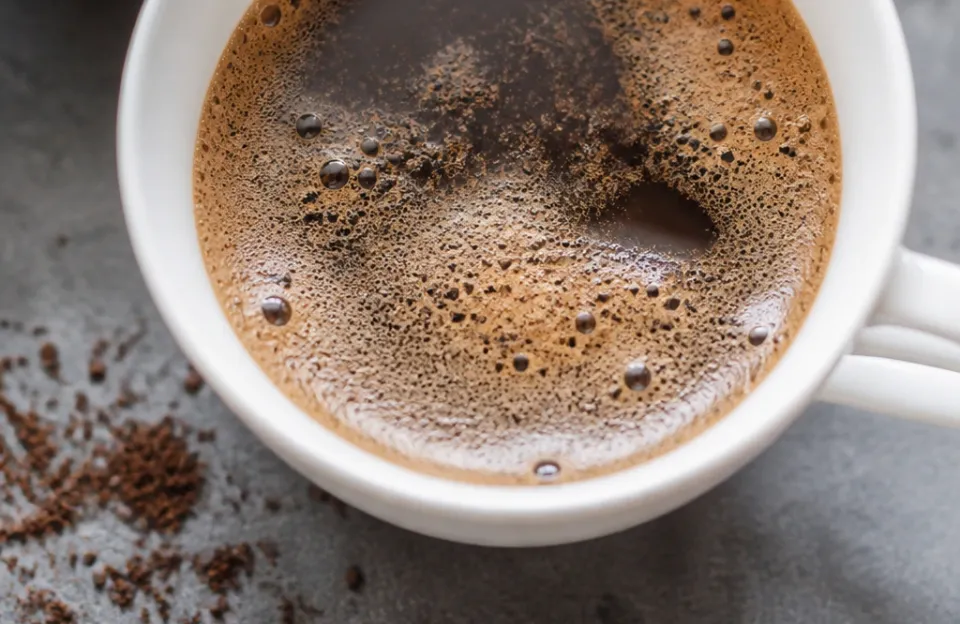
Coffee needs water to pull out its good flavors. Water moves fast through big chunks. It moves slow through fine dust.
A mix of both gives you a bad drink.
Big chunks taste sour and weak. Fine dust tastes harsh and bitter. You get both in the same mug.
That is why your coffee might taste flat one day and sharp the next.
Even grounds fix this problem. Every piece soaks up water at the same speed. The result is a clean, sweet cup.
You taste the actual bean, not just burnt water.
Blade grinders chop beans like a blender. They spin fast and hit the beans at random. Some bits turn to powder.
Others stay as big rocks. You cannot control this mess.
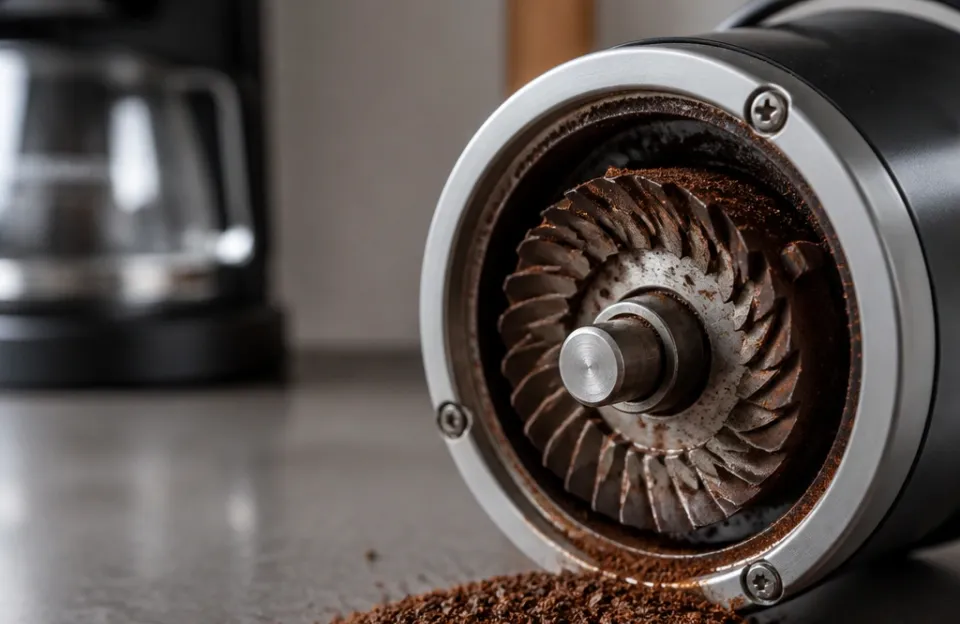
Burr grinders work differently. Two rough plates sit close together. Beans pass between them.
The gap sets the exact size. Every piece comes out the same.
How Burr Plates Actually Work
A burr grinder uses two textured surfaces. One stays still. The other spins.
Coffee beans fall into the gap between them.
The distance between the plates decides the grind size. Move them closer for fine powder. Pull them apart for coarse salt-like chunks.
This gives you total control.
You can set the gap to match your brew method. A French press needs big pieces. Espresso needs tiny ones.
A burr grinder handles both.
Blade grinders lack this control. They just spin until you stop them. Guessing when to stop leads to bad coffee.
You end up with a mix of sizes every time.
The steady crush of a burr grinder also keeps heat down. Spinning blades create friction. Friction creates heat.
Heat cooks the oils inside the bean before you brew. That burns off the good aromas.
Slow crushing protects those oils. Your kitchen smells better. Your coffee tastes fresher.
Choosing the right brewing setup matters just as much as picking your grinder.
Flat Versus Conical Burr Shapes
You will see two main shapes when shopping. Flat burrs look like two thick rings. Conical burrs look like a cone sitting inside a ring.
Both work well. They just act a bit different.
Flat burrs spin very fast. They push out highly uniform grounds. Many cafes use them for espresso.
They cost more to make. They also run hotter if pushed hard.
Conical burrs spin slower. Gravity helps pull the beans down. They run cooler and quieter.
Home kitchens often favor them. They leave a tiny mix of sizes, which some folks prefer for drip coffee.
Neither shape is wrong. Flat burrs give peak clarity. Conical burrs give a heavier body.
Pick the one that fits how you like your morning cup.
Steel Versus Ceramic Grinding Plates
The material of the burrs changes how they feel and last. Most home models use steel. High-end ones sometimes use ceramic.
Steel burrs are sharp right out of the box. They cut beans cleanly. They handle light and dark roasts well.
Over years of daily use, they dull. Dull steel smashes beans instead of cutting them.
Ceramic burrs stay sharp much longer. They do not rust. They are great for oily dark roasts.
But they are brittle. Drop a small stone into the hopper, and a ceramic burr might chip.
For a normal home kitchen, steel is the safe bet. It is cheaper to replace. It cuts fast.
Unless you brew five cups a day for ten years, steel will outlast your need for it.
Manual Hand Crank Models
Not all burr grinders plug into a wall. Hand grinders use a crank. You turn a handle to spin the burrs yourself.
These are small and quiet. You can take them camping or keep them in a drawer. Good ones use real steel or ceramic burrs.
They give you the same even grounds as electric ones.
The catch is effort. Grinding enough beans for one large mug takes about two minutes of hard cranking. Your arm will get tired.
Grinding for a whole pot takes serious patience.
If you only brew one cup a day, a hand grinder saves money and counter space. If you brew for a family, your shoulder will hate you by Friday.
Electric Countertop Grinders
Electric burr grinders do the heavy lifting. You press a button. A motor spins the burrs.
A full dose takes ten seconds.
They range from small units to heavy blocks. A basic model weighs around four pounds. It sits fine on a shelf.
Prosumer models can weigh fifteen pounds or more. At 15 lbs, it feels sturdy on the counter, but you'll need two hands to safely lift it to clean under it.
Noise is the main drawback. Motors hum loudly. Cheap ones whine.
Better ones have heavy cases that muffle the sound. If you wake up before your house, a loud grinder will wake everyone else.
Electric models also offer timed dosing. You set a timer. The machine stops on its own.
This helps you use the exact same amount of coffee every single day.
Dialing In Your Brew Method
Different brew methods need different grind sizes. A burr grinder lets you switch back and forth. Blade grinders cannot do this reliably.
French press needs coarse grounds. Think of sea salt. Big pieces let water flow slowly over four minutes.
Fine dust would clog the metal filter and make the plunger hard to push.
Drip machines need medium grounds. Like regular sand. Water flows through a paper filter in about five minutes.
Too coarse, and the coffee tastes watery. Too fine, and the basket overflows.
Espresso needs very fine grounds. Like powdered sugar. Water gets pushed through at high pressure in under thirty seconds.
Tiny changes in size change the shot completely.
Understanding your specific machine's requirements helps you pick the right setting. A good burr grinder offers clear steps between these sizes. You click a dial to move from coarse to fine.
According to the Specialty Coffee Association, matching particle size to brew time is the core rule of good extraction. A burr grinder is the only tool that lets you follow this rule at home.
The Real Cost of Upgrading
Money is the biggest reason people stick with blade grinders. A cheap blade unit costs twenty dollars. A decent entry-level burr grinder starts around fifty to eighty dollars.
Mid-range electric models run one hundred to two hundred dollars.
Is that jump worth it? Look at what you spend on beans. If you buy twelve-dollar bags of good coffee, a blade grinder wastes that money.
You pay for quality beans but brew them poorly.
An eighty-dollar burr grinder pays for itself. It makes cheap grocery store beans taste better. It makes expensive local roaster beans taste exactly how they should.
Hand grinders start around thirty dollars for basic ones. Good ones with solid burrs cost eighty to one hundred and fifty dollars. You trade money for physical labor.
Think of the grinder as part of the recipe. You would not bake a cake with rotten eggs. Do not brew good beans with uneven grounds.
The grinder matters just as much as the coffee.
Daily Mess and Static Cling
Burr grinders have one annoying habit. Static electricity builds up during grinding. Dry coffee beans rub against plastic parts.
This creates a charge.
When you open the catch bin, fine dust sticks to the sides. It flies onto your counter. Dark roasts do this more than light roasts because they hold more oil.
Some grinders use metal catch bins to fight this. Metal does not hold static like plastic. Other brands add a tiny drop of water trick called RDT.
You stir one drop of water into the beans before grinding. It kills the static.
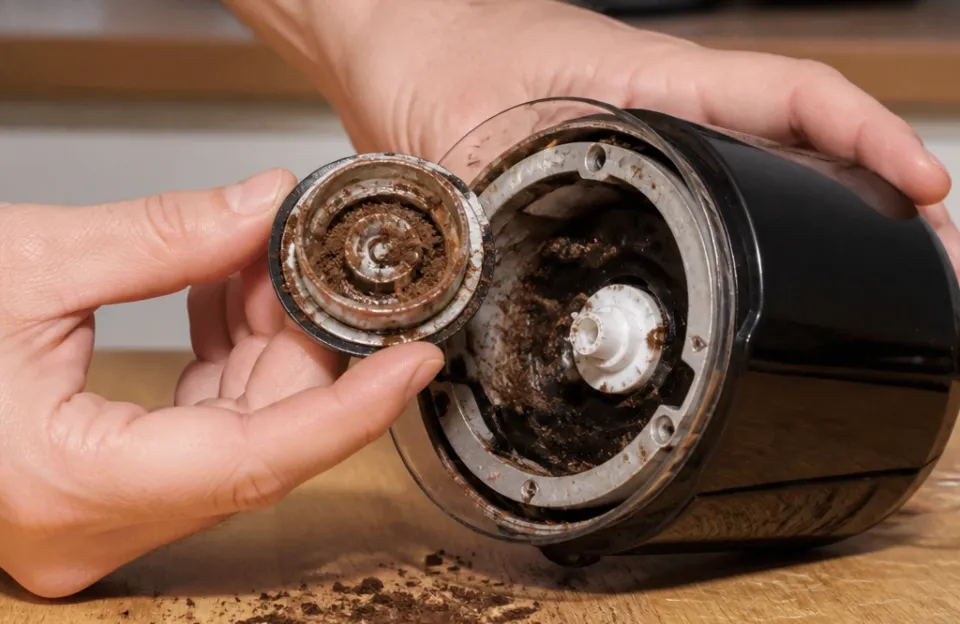
Cleaning takes a few minutes each week. Old oils go rancid. They smell like crayons.
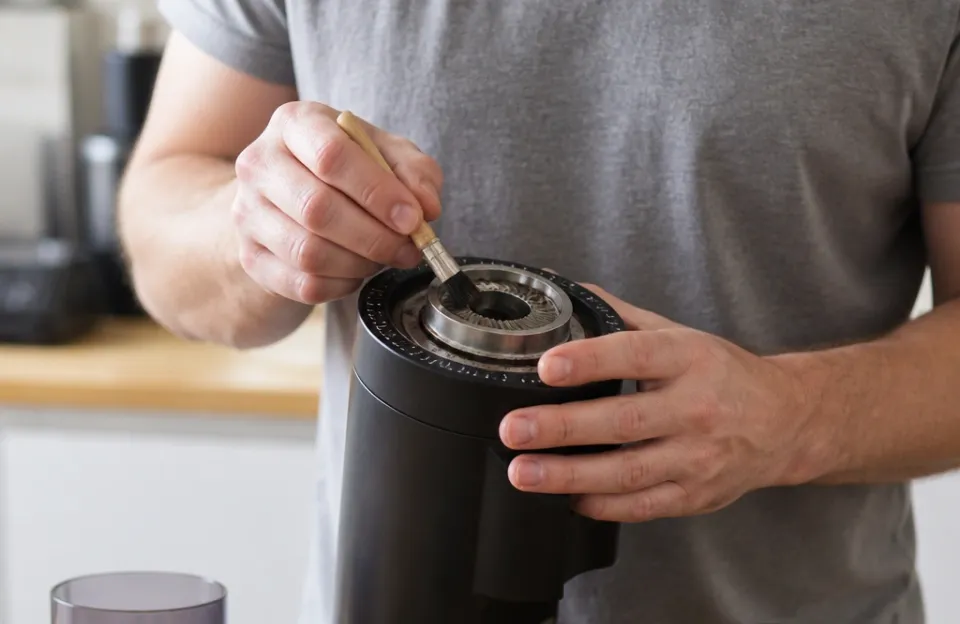
You need to brush out the burrs every few weeks. Some models pop apart easily. Others require a screwdriver.
Check how hard a model is to clean before you buy it. A grinder that is tough to open will stay dirty. Dirty burrs ruin fresh beans.
Keeping your gear clean is just as important as maintaining proper food safety temperatures when handling raw ingredients in the kitchen.
Drawbacks Nobody Mentions
Burr grinders are not perfect. They have real flaws you should know before spending money.
First, cheap burr grinders exist. They use fake burrs made of stamped metal. These act just like blade grinders.
They smash beans instead of cutting them. Buying a forty-dollar "burr" grinder often wastes your money. You must buy one with real machined burrs.
Second, they take up space. A blade grinder hides in a drawer. An electric burr grinder demands permanent counter space.
Small kitchens might struggle to fit one near an outlet.
Third, retention. Some grounds get stuck inside the chute after grinding. If you grind ten grams, maybe nine point five come out.
The rest stays trapped. Next time you brew, old stale grounds mix with fresh ones. High-end models solve this with bellows to blow the chute clear.
Budget models do not.
Fourth, noise. Even good electric burr grinders are loud. They sound like a power drill running for ten seconds.
If you share walls in an apartment, your neighbors will hear it early in the morning.
Finally, weight. Solid burrs and strong motors add mass. Moving the grinder to wipe the counter requires actual effort.
It is not a quick grab-and-go appliance.
Who Should Stick With Blade Grinders
Not everyone needs a burr grinder. Skip the upgrade if you only drink coffee for caffeine. If you load your mug with cream and sugar, you will not notice the difference.
Skip it if you use pre-ground coffee from a can. Those cans are already ground unevenly at a factory. A burr grinder at home only helps if you buy whole beans.
Skip it if you travel constantly and pack very light. A hand burr grinder works, but a tiny electric blade grinder weighs almost nothing. For a hotel room trip where taste does not matter much, the small blade unit wins.
Also skip it if your budget is truly tight. Forty dollars spent on a burr grinder means buying a bad one. Save that money.
Buy a good French press instead. Wait until you can afford a real burr model.
Matching the Grinder to Your Routine
Your daily habits decide which burr grinder fits best. Answer three questions to find your match.
How many cups do you brew at once? One cup means a hand grinder works fine. Four cups means you want an electric motor.
What do you brew? French press and drip coffee are forgiving. Any basic burr grinder handles them.
Espresso is strict. You need a grinder with tiny micro-adjustments to dial in the shot. Standard burr grinders fail at espresso.
How much counter space do you have? Tall grinders might not fit under low cabinets. Measure the height from your counter to the shelf above it.
Check the spec sheet before ordering.
If you brew pour-over coffee every morning, a mid-range conical burr grinder is the sweet spot. It is quiet enough. It gives great clarity.
It lasts for years.
If you pull espresso shots, look for flat burrs and stepless adjustment. Stepless means the dial turns smoothly without clicks. This lets you find the exact size needed for thick crema.
Common Mistakes Buyers Make
People rush into buying grinders and miss key details. The biggest mistake is buying a "burr" grinder that uses false burrs. Always check reviews to confirm the burrs are solid steel or ceramic blocks, not thin stamped wheels.
Another mistake is ignoring the hopper size. Some hoppers hold half a pound of beans. Others hold a quarter pound.
If you buy one-pound bags, a small hopper means you cannot dump the whole bag in at once. You have to store the leftover beans in a separate jar.
Folks also forget to check the warranty. Motors burn out. Burrs wear down.
A one-year warranty is standard. Some brands offer three to five years. A longer warranty saves you from buying a new machine if the motor dies early.
Lastly, buyers ignore the cleaning process. If the top burr does not twist out by hand, cleaning becomes a chore. Look for tool-free removal.
You should be able to brush the burrs in under a minute.
Simple Care for Long Life
A burr grinder lasts a decade if you treat it right. The rules are simple.
Never wash the burrs with water. Steel burrs will rust instantly. Ceramic burrs can crack from temperature shock.
Only use a stiff dry brush to sweep away dust and oils.
Run grinder cleaning pellets through it once a month. These are hard food-safe tablets. They scrub the burrs as they crush.
They absorb old rancid oils. The manufacturer usually suggests a specific brand. Follow their advice.
Keep whole beans in an airtight jar. Do not store beans in the hopper for weeks. Light and air turn beans stale.
Only put what you will grind today into the hopper.
Unplug the machine when brushing it out. The power switch can bump accidentally. Spinning burrs will hurt your fingers badly.
Treat it with the same respect you give any motorized kitchen tool.
The Final Pour
A burr grinder fixes the root cause of bad home coffee. It replaces random chopping with precise crushing. The flavor difference is immediate and obvious.
Yes, it costs more upfront. Yes, it takes up space. But if you care about how your morning cup tastes, the investment pays off on the very first brew.
Stop letting dull blades ruin good beans. Pick a real burr grinder and taste what your coffee actually has to offer.