Yes, you can use silicone in an air fryer. Food-grade silicone handles temperatures up to 428°F (220°C), and most countertop models max out at 400°F. That leaves a safe margin for everyday cooking.
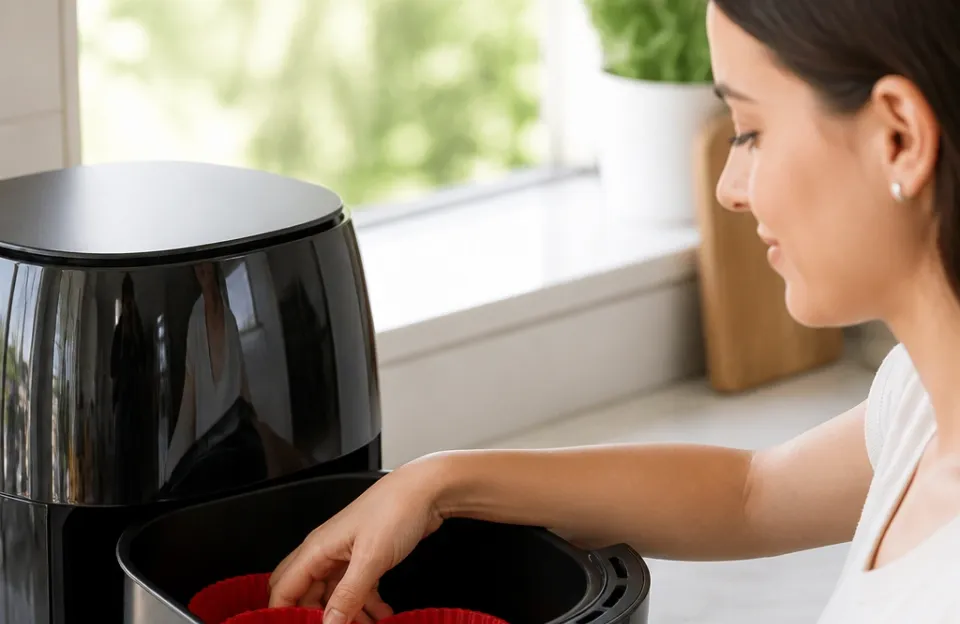
Silicone molds, liners, and baking cups work well inside the basket as long as they don't block the airflow.
If you've been wondering whether you can use silicone in an air fryer without melting it or ruining your dinner, the short answer is yes. The material stays stable at standard cooking temperatures. You still need to pay attention to how you place it, what type of silicone you buy, and whether your specific machine runs hotter than average.
This guide covers the heat limits, the best ways to position silicone accessories, and the situations where you should skip them entirely.
Why Heat Resistance Makes Silicone Safe for Air Frying
Food-grade silicone is a synthetic rubber made from silica, oxygen, carbon, and hydrogen. Manufacturers cure it at high temperatures during production. That curing process gives the finished product its heat tolerance.
Most kitchen-grade silicone carries a maximum continuous-use rating of 428°F (220°C). Some premium grades push slightly higher, but 428°F is the standard benchmark you'll see across the industry.
Air fryers cook by circulating superheated air around food using a top-mounted heating element and a fast-spinning fan. Typical temperature ranges run from 175°F to 400°F. A few larger oven-style models reach 450°F.
Because standard air frying stays below 400°F, silicone remains well within its safe operating window. It won't melt, off-gas, or break down under normal conditions.
The U.S. Food and Drug Administration regulates food-contact materials, including silicone. Products labeled "food-grade" have passed tests confirming they don't leach harmful chemicals into food at intended use temperatures.
Always check for that designation before putting any silicone accessory into a heated appliance. Cheap novelty molds without a food-grade label may contain fillers that degrade or release odors when exposed to sustained heat.
Can You Use Silicone in an Air Fryer Without Blocking the Fan?
You can use silicone in an air fryer safely, provided you leave room for the air to circulate. The entire cooking method relies on moving hot air rapidly over every surface of the food. If a thick silicone mat or a tall mold covers the bottom of the basket completely, the air has nowhere to go.
Food cooks unevenly, and the trapped heat can cause the machine's thermal sensor to shut it down early.
Flat silicone liners with perforated holes solve this problem. The holes allow air to pass through the bottom while catching drips. Solid silicone baking cups work fine too, as long as they only take up part of the basket floor.
Leave at least an inch of open space around the edges so the air current can loop back up toward the heating element.
Tall silicone loaf pans or deep bundt molds restrict vertical clearance. The fan sits just above the basket. If a mold rises too close to the fan housing, it blocks the airflow path and risks touching the heating element.
Measure the interior height of your basket before buying deep silicone bakeware. If you're timing something dense like a small meatloaf, a low-profile silicone pan gives the heat enough room to wrap around the sides properly.
Which Silicone Accessories Actually Work Inside the Basket
Different shapes serve different purposes, and some perform better in a high-speed convection environment than others. Here is how common silicone items hold up during air frying.
Perforated Liners and Mats
These are thin sheets stamped with dozens of small holes. They sit flat against the wire rack or basket floor. Their main job is keeping sticky foods from bonding to the metal mesh while letting hot air flow underneath.
They work perfectly for roasting vegetables or reheating leftovers. Cleanup takes seconds because food doesn't fuse to the non-porous surface. When prepping something quick like zucchini rounds, a perforated liner stops the slices from falling through the grate.
Baking Cups and Muffin Molds
Standard cupcake-sized silicone cups fit neatly into most round or square baskets. You can pour batter directly into them for muffins, egg bites, or small portions of meatloaf. Because they stand up on their own, they don't block lateral airflow the way a solid sheet might.
Just avoid overcrowding. Four to six cups usually fit comfortably in a 4-quart basket. Leaving gaps between each cup allows the fan to push heat evenly across all of them.
Solid Trivets and Sling Straps
Thick silicone rings or cross-shaped trivets lift food off the bottom of the basket. This elevation creates a gap for air to travel beneath whatever you're cooking. Sling straps, which are long strips with handles on both ends, let you lower heavy items into the basket and lift them out without burning your fingers.
Both tools handle the heat easily and improve cooking results by exposing more surface area to the circulating air.
| Accessory Type | Best Used For | Airflow Impact | Max Safe Temp |
|---|---|---|---|
| Perforated Liner | Catching crumbs, preventing sticking | Minimal if holes are clear | 428°F (220°C) |
| Baking Cups | Muffins, egg bites, portioned meals | Low, if spaced apart | 428°F (220°C) |
| Solid Trivet | Elevating meats or dense vegetables | Improves bottom airflow | 428°F (220°C) |
| Deep Loaf Pan | Bread, large meatloaf | High restriction risk | 428°F (220°C) |
| Sling Strap | Lifting heavy items safely | None | 428°F (220°C) |
How to Position Silicone Bakeware for Even Cooking
Placement matters as much as the material itself. An air fryer pushes heat downward from the top element, then forces it around the food via the fan. If you drop a silicone mold directly onto the solid base plate of a drawer-style unit, the bottom of your food will steam rather than crisp.
Always elevate the silicone piece. Put it on top of the included wire rack or crisper plate. If your model lacks a raised rack, place a silicone trivet underneath the mold.
This tiny adjustment lets the hot air sweep under the food, giving you a texture closer to traditional frying.
Center the mold whenever possible. Off-center placement causes one side to sit directly under the fan's strongest downdraft while the other side bakes slower. If you're cooking multiple silicone cups, arrange them in a circle with an empty space in the middle.
That central gap acts as a chimney for the returning air. Getting the positioning right makes a noticeable difference when you're trying to get extra crunch on chicken skin.
Avoid stacking silicone items. Placing one mold inside another, or piling cups on top of each other, traps moisture and blocks heat transfer. Cook in batches if you have more food than fits in a single layer.
Temperature Limits and What Happens When You Exceed Them
Silicone degrades slowly when pushed past its rated limit. At 428°F, it remains stable. Push it to 500°F, and the polymer chains begin to break down.
You'll notice a few warning signs if the material gets too hot.
First, it turns brittle. Fresh food-grade silicone bends easily and snaps back into shape. Overheated silicone loses that elasticity.
It feels stiff, and the edges may start chipping or cracking when you flex it. Second, it discolors. White or light-colored molds turn yellow or brown after prolonged exposure to excessive heat.
Third, it smells. Burning silicone produces a sharp, chemical odor distinct from burning food.
Most home air fryers won't reach these extremes unless they malfunction. However, oven-style air fryers with broil settings sometimes spike above 450°F. If you plan to use the broil function, remove any silicone accessories first.
Broiling relies on intense, direct radiant heat from very close range. That concentrated energy hits the surface of the silicone harder than the circulating ambient air does during standard frying.
For dishes requiring sustained high heat, such as getting bacon perfectly crisp, keep the temperature at or below 400°F if a silicone liner is present. The fat renders fully at that temperature without threatening the material.
Cleaning and Maintaining Your Silicone Air Fryer Tools
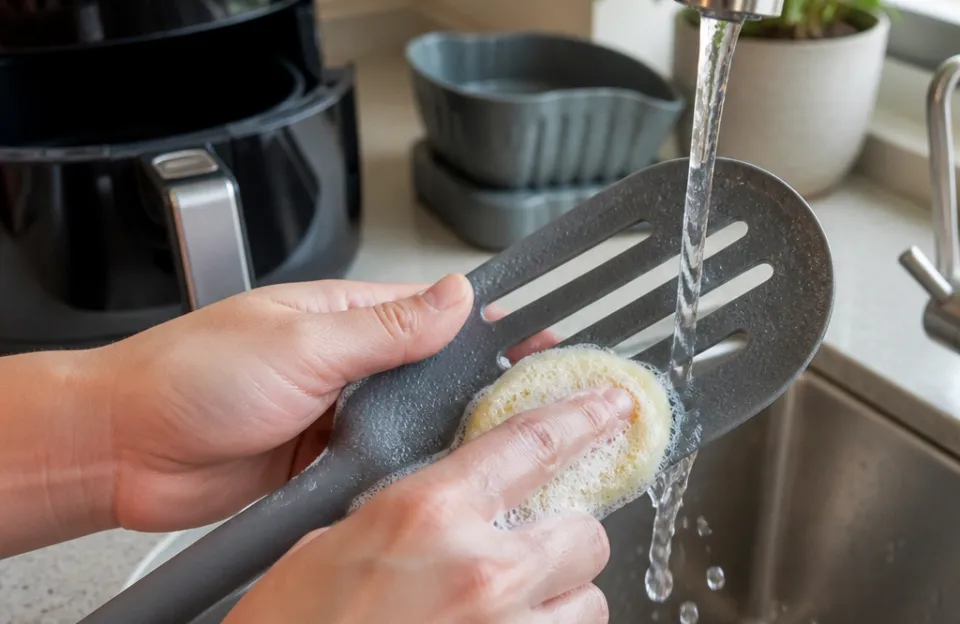
Silicone is naturally non-stick, but air fryer cooking involves oil sprays, rendered fats, and caramelized sugars. Over time, a sticky film builds up on the surface if you don't wash it properly. Soap and water alone often aren't enough to remove baked-on grease from textured silicone.
Wash silicone accessories immediately after they cool down. Letting grease sit overnight allows it to polymerize, forming a hard, tacky layer that resists scrubbing. Use warm water, dish soap, and a soft sponge.
Avoid abrasive scouring pads. They scratch the smooth finish, creating microscopic grooves where future food particles will stick.
For stubborn residue, soak the item in a mixture of warm water and baking soda for thirty minutes. The mild alkalinity breaks down the fats without damaging the silicone. Rinse thoroughly afterward.
You can also run most food-grade silicone pieces through the dishwasher on the top rack. Check the manufacturer's instructions first, as some dyed or printed silicone fades under harsh dishwasher detergents.
Store them flat or hanging. Folding thick silicone mats tightly for long periods can create permanent creases. Those creases trap food during cooking and make cleaning harder later on.
Situations Where Silicone Causes Problems in an Air Fryer
Even though you can use silicone in an air fryer safely under most conditions, certain scenarios invite trouble. Knowing when to leave it out saves you from ruined meals or damaged equipment.
Lightweight silicone liners pose a specific hazard. The fan inside an air fryer generates significant upward force. If you place a thin, empty silicone mat in the basket and turn the machine on before adding food, the draft can suck the mat upward into the heating element.
Once it touches the exposed coil, it scorches instantly. Always weigh down lightweight liners with food before starting the cycle.
Very small baskets struggle with silicone accessories. Compact 2-quart models leave almost no margin for error. Adding a thick-walled silicone mold reduces the usable cooking volume drastically.
The food ends up pressed against the sides, blocking the air channels designed into the basket walls. Stick to bare metal or parchment paper in units smaller than 3 quarts.
High-fat recipes present another edge case. When rendering large amounts of grease, the liquid fat pools at the bottom of the basket. If a solid silicone liner covers the drip tray, the fat has nowhere to drain.
It boils, smokes, and splatters back onto the food. Perforated liners help, but for extremely fatty cuts, cooking directly on the wire rack with the drip pan below is the safer approach.
Finally, older machines with failing thermostats may run hotter than the display indicates. If your air fryer routinely burns the outside of food before the inside cooks, its internal temperature regulation might be off. In that scenario, the actual heat inside the chamber could exceed the 428°F safety threshold for silicone.
Have the appliance checked or replace it before continuing to use silicone inserts. Models known for precise temp control, like this Ninja unit, tend to prevent this issue entirely.
Misconceptions About Cooking With Silicone at High Heat
Plenty of conflicting advice floats around regarding silicone and heated appliances. Clearing up the myths helps you cook with confidence.
- All silicone is heatproof. Only food-grade or platinum-cured silicone carries reliable temperature ratings. Craft-store silicone or industrial sealants lack the purity needed for cooking and will emit toxic fumes when heated.
- Silicone changes the cooking time. The material itself doesn't alter the thermodynamics of the air fryer. However, a thick mold insulates the food touching it, meaning the bottom of a cake or meatloaf browns slower than the top. You may need to add a minute or two compared to cooking directly on bare metal.
- It releases microplastics. Silicone is not plastic. It's a polymer based on silica. It doesn't contain BPA, phthalates, or the petroleum-based compounds found in plastic containers. It remains chemically inert at cooking temperatures.
- You can't spray oil on it. Aerosol cooking sprays containing propellants can leave a gummy buildup on silicone over time. Pump-action oil sprayers or brushing on oil manually prevents this residue. The silicone itself handles the oil perfectly fine.
- Dishwashers ruin it. Standard top-rack dishwasher cycles are safe for food-grade silicone. The heat inside a dishwasher rarely exceeds 160°F, far below the material's limit. Harsh detergent pods may fade colors, but they won't degrade the structural integrity.
Frequently Asked Questions
Will silicone melt if it touches the air fryer heating element?
Yes. The exposed heating coil reaches temperatures far above silicone's 428°F limit. Direct contact causes scorching, melting, and smoke.
Always position silicone accessories low enough in the basket that they cannot rise or blow into the upper heating chamber. Weigh down lightweight mats with food before turning the machine on.
Is it better to use parchment paper or silicone liners in an air fryer?
Both work, depending on the goal. Parchment paper is disposable and ideal for messy, high-sugar glazes that would otherwise require heavy scrubbing. Silicone liners are reusable and better for everyday roasting where you want to catch crumbs without generating waste.
Never use either one without food weighing it down, as the fan can pull loose sheets into the heater.
Can I bake a cake in a silicone mold inside my air fryer?
You can, as long as the mold fits with at least an inch of clearance on all sides and below the top heating element. Lower the temperature by about 25°F compared to a conventional oven recipe, since the compact space and intense fan circulation bake faster. Check for doneness early to avoid drying out the edges.
Does food-grade silicone leach chemicals when heated to 400 degrees?
No. Food-grade silicone remains chemically stable and inert up to 428°F. It doesn't contain plasticizers or petroleum derivatives that break down into harmful compounds at standard cooking temperatures.
Look for products explicitly labeled as food-grade or FDA-compliant to confirm the material meets safety standards.
Why does my silicone liner smell after air frying?
A lingering odor usually means oils or food residues baked into the porous surface during previous uses. Wash the liner with warm water and baking soda, or boil it in plain water for ten minutes to draw out trapped grease. If the smell persists even after deep cleaning, the silicone may have degraded from overheating, and you should replace it.
Do I need to grease a silicone baking cup before air frying?
Usually, no. The non-stick properties of food-grade silicone release most batters and proteins cleanly. For extremely sticky mixtures like melted cheese or heavy sugar syrups, a light brush of neutral oil guarantees easy removal.
Avoid aerosol sprays with added propellants, as they leave a sticky film that builds up over multiple uses.
Before You Start Cooking
Silicone belongs in your air fryer rotation. It handles the heat, simplifies cleanup, and protects delicate foods from falling through the wire grates. The rules are straightforward: verify it's food-grade, keep it away from the top heating coil, and leave enough open space for the fan to do its job.
Whether you're baking egg bites or roasting vegetables, a properly placed silicone liner or mold makes the process cleaner and easier. Just match the size of your accessory to the capacity of your basket, and you won't run into airflow issues.