Air fryer hamburgers cook fast, stay juicy, and skip the mess of a stovetop skillet. You form your patties, drop them in the basket, and walk away. Most standard burgers finish in 10 to 14 minutes at 375°F.
The circulating hot air browns the outside while keeping the inside tender.
If you want dinner on the table quickly without heating up the whole kitchen, this method works well. We will cover how to prep the meat, dial in the right temperature, adjust for different patty sizes, and handle cheese so it melts properly. You will also find answers to common issues like smoke or dry edges.
Why the Air Fryer Changes How Burgers Cook
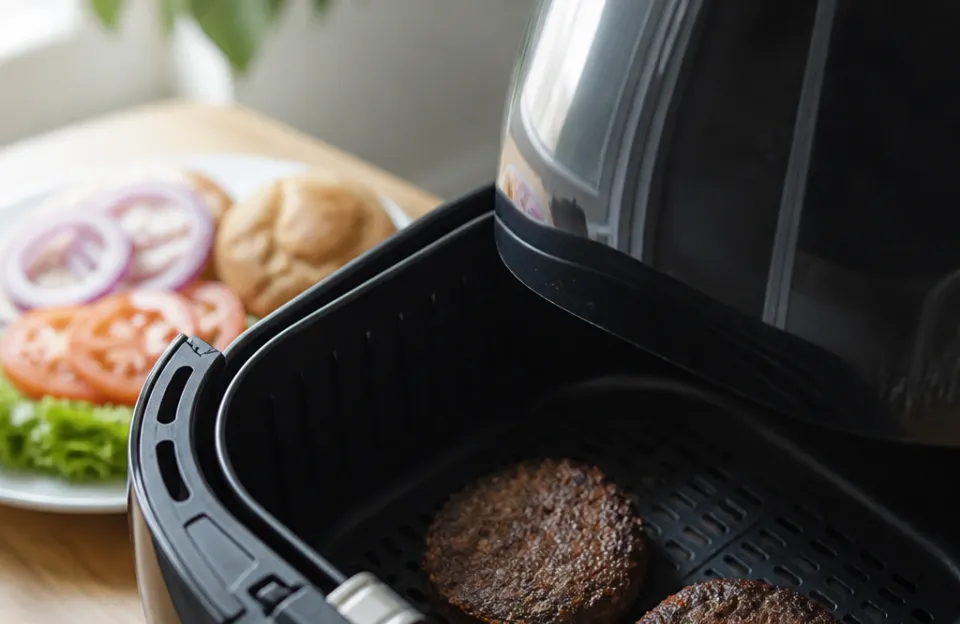
Cooking a burger in an air fryer relies on rapid convection. A fan pushes heated air around the food constantly. This surrounds the patty with even heat from every angle.
On a grill or pan, heat only comes from the bottom unless you flip it.
That constant airflow creates a browned crust through the Maillard reaction. It happens faster than in a standard oven because the moving air strips away the moisture barrier on the surface of the meat. The result is a seared exterior without needing a heavy cast iron pan or an outdoor flame.
Fat also drips away from the meat during cooking. It falls through the basket holes into the drawer below. This means the patty does not sit in its own grease.
If you are watching your intake, checking the nutritional differences between air fried and deep fried foods shows how much oil you can skip.
Picking the Right Fat Ratio for Ground Beef
The fat content of your ground beef dictates how the final burger tastes and feels. Lean meat dries out fast under intense convection heat. An 80/20 blend (80 percent lean, 20 percent fat) is the standard for a reason.
That extra fat bastes the meat from the inside as it cooks.
If you use 90/10 or 93/7 ground turkey or beef, the burger will likely turn out crumbly. You can add a tablespoon of olive oil or Worcestershire sauce to the mix to compensate. But starting with 80/20 removes that guesswork entirely.
Avoid pre-formed frozen grocery store patties if possible. They often contain fillers and extra water that steam instead of browning. Freshly formed patties from the butcher counter give you control over thickness and density.
Shaping Patties That Fit Your Basket
Size matters here. A patty shrinks about 25 percent as the proteins tighten and fat renders. If you start with a flat disc the exact size of your bun, you will end up with a small meatball sitting in the middle of the bread.
Make your raw patties about half an inch wider than your buns. Press them to an even three-quarter inch thickness. Uneven patties cook unevenly.
The thin edges will burn before the thick center hits a safe temperature.
Always press a shallow dimple into the exact center of each patty with your thumb. As the meat heats, the muscle fibers contract and pull inward. Without that dimple, the burger puffs up into a dome.
The indentation keeps it flat so your toppings stay put.
Prepping the Meat Before It Hits the Heat
Seasoning a burger should be simple. Salt and coarse black pepper do most of the work. Mix the seasoning gently into the meat, or apply it directly to the outside of the formed patties right before cooking.
Applying salt too far in advance draws out moisture and changes the texture to something closer to sausage.
Keep the meat cold until the moment it goes into the machine. Warm fat smears when you handle it. Cold fat stays distinct, which creates tiny pockets of steam during cooking that keep the crumb tender.
If you like mixing things into the meat, keep additions minimal. A teaspoon of garlic powder or onion powder per pound works well. Avoid adding raw diced onions or wet ingredients like ketchup directly into the mix.
Extra moisture causes the patty to steam rather than brown. Save those wet toppings for after the cook. For inspiration on flavor pairings, a good marinade guide explains how savory ingredients interact with high heat.
Getting the Temperature and Timing Right
Set your machine to 375°F. This temperature sits in the sweet spot. It is hot enough to brown the outside quickly, but low enough to let the inside cook through without drying out.
Higher temperatures like 400°F often leave the center raw while charring the edges.
Preheating takes about three minutes. Skipping this step means the first few minutes of cook time happen at a lower temperature, which delays browning. Always let the basket get hot first.
For a standard four-ounce patty that is three-quarters of an inch thick, plan on 10 to 14 minutes total. Flip the burgers halfway through. Flipping exposes the bottom to direct airflow and promotes even cooking.
| Doneness Level | Target Internal Temp | Approximate Time at 375°F | Visual Cue |
|---|---|---|---|
| Medium-Rare | 130°F to 135°F | 8 to 10 minutes | Warm red center |
| Medium | 140°F to 145°F | 10 to 12 minutes | Warm pink center |
| Medium-Well | 150°F to 155°F | 12 to 14 minutes | Slightly pink center |
| Well-Done | 160°F+ | 14 to 16 minutes | Brown throughout |
The USDA recommends cooking all ground beef to an internal temperature of 160°F to eliminate harmful bacteria. When meat is ground, surface pathogens get mixed throughout the patty. Follow official USDA safety guidelines if you are serving children, pregnant women, or anyone with a compromised immune system.
If you choose to eat burgers medium-rare, buy whole cuts of beef and grind them yourself at home.
You absolutely need a thermometer to check this. Guessing by color or pressing the meat with your finger is unreliable. A fast digital probe gives you the exact number in seconds.
Keeping a reliable instant-read tool in your kitchen drawer prevents both undercooked meat and dry, overcooked hockey pucks. Insert the probe through the side of the patty into the very center for the most accurate reading.
Melting Cheese Without Making a Mess
Adding cheese requires a slight change in timing. If you put a slice of American or cheddar on the patty at the beginning, the fan will blow it off the meat and onto the heating element. It burns instantly and smells terrible.
Cook the burgers completely first. When they reach your target temperature, open the basket. Place a slice of cheese on each patty.
Close the basket and turn the machine off. Leave the door shut for one to two minutes. The residual heat trapped inside the chamber melts the cheese perfectly without the fan running.
Thicker cheeses like sharp cheddar take slightly longer to melt than processed American slices. If you prefer a heavily melted topping, try shredded pepper jack or mozzarella. Shredded cheese conforms to the shape of the patty and is less likely to slide off when you pull the basket out.
Handling Frozen Patties Straight From the Freezer
You can cook frozen burgers directly in the air fryer without thawing them first. This is useful for quick weeknight meals when you forgot to pull meat from the freezer.
Lower the temperature slightly to 360°F. Frozen meat needs more time to thaw and cook through. If you use 375°F or higher, the outside will burn before the frozen core thaws.
Add about four to six minutes to the total cook time. A frozen quarter-pound patty usually takes 15 to 18 minutes total. Flip it halfway through, just like fresh meat.
Season the patties after the first five minutes of cooking. Once the surface thaws slightly, the salt and pepper will stick. If you season them while they are rock hard, the spices just bounce off.
Always verify the internal temperature with a probe. Frozen patties cook unevenly, and the center might stay cold longer than you expect.
Dealing With Smoke and Splatter
Ground beef releases a lot of fat. When that fat drips into the bottom of the hot drawer, it hits the metal and smokes. Your kitchen might smell like a fast food restaurant, and your smoke detector might go off.
There is a simple fix. Put a tablespoon of water in the bottom of the outer drawer, underneath the perforated basket. The dripping fat lands in the water instead of on the scorching hot metal.
This lowers the temperature of the grease instantly and stops the smoke. Do not put water directly on the food or in the basket itself. It only goes in the catch pan below.
Another option is placing a small piece of bread in the bottom drawer to absorb the grease. The bread soaks up the fat before it can burn. Just remember to throw the soggy bread away immediately after cooking so it does not mold.
If your machine has a smaller capacity, avoid overcrowding. Two patties fit comfortably in most standard baskets. Four patties block the airflow.
When air cannot circulate, the meat steams instead of browning. Cook in batches if you are feeding a crowd.
Toppings and Buns After the Cook
The air fryer handles the meat. Everything else happens on the counter. Toasting your buns adds texture and prevents them from getting soggy from meat juices.
You can place the buns cut-side down in the basket for the last 60 seconds of cooking time, right after you pull the finished burgers out to rest.
Let the cooked patties rest on a plate for three minutes before assembling. Resting allows the muscle fibers to relax and reabsorb some of the juices. If you bite into a burger straight out of the basket, the juice runs out onto the plate.
A short wait keeps that moisture inside the meat.
Layer your condiments strategically. Putting mayonnaise or butter on the bottom bun creates a fat barrier that stops meat juices from soaking into the bread. Add lettuce, tomatoes, pickles, and onions on top of the patty.
If you enjoy experimenting with bold flavors, try borrowing ideas from other recipes. A garlic parmesan coating meant for poultry works surprisingly well sprinkled over a beef patty right after it comes out of the basket. Similarly, a drizzle of sweet honey garlic sauce adds a sticky, savory glaze that pairs nicely with melted provolone.
Adjusting for Different Machines and Sizes
Not every countertop cooker behaves the same way. Basket-style models circulate air differently than oven-style models with racks. Oven-style units often run slightly cooler because the interior volume is larger.
You might need to add two minutes to your cook time or bump the temperature up by 5 degrees.
Patty thickness changes everything. A thick pub-style burger that is one inch tall needs a lower temperature (around 360°F) and a longer time (15 to 18 minutes). High heat will char the outside while leaving the thick center raw.
Thin smash-style patties cook incredibly fast. At 375°F, a quarter-inch thick patty might only need six to eight minutes total. Watch thin patties closely, as they cross the line from done to dry very quickly.
Turkey and chicken burgers require special attention. Ground poultry must always reach 165°F according to food safety standards. Because poultry is leaner, consider brushing the patties lightly with oil before cooking to help them brown.
You can also mix finely diced vegetables into the poultry blend to retain moisture during the longer cook time.
If you cook multiple batches for a family gathering, keep the finished burgers warm in a standard oven set to 200°F. Stacking them on a plate at room temperature causes the bottom patties to steam in their own heat and lose their crust. Using a wireless dual-probe setup lets you monitor the warming oven and the active batch simultaneously without juggling tools.
Troubleshooting Dry or Unevenly Cooked Meat
Dry burgers usually mean the meat was too lean or cooked too long. Stick to 80/20 beef. Check the temperature two minutes before you think they are done.
Pull them out exactly when the thermometer reads your target number. Carryover heat will raise the internal temperature another 2 to 3 degrees while they rest on the plate.
If the edges are burnt but the center is raw, your temperature is too high. Drop it by 15 degrees and extend the time. This gentler heat penetrates the center before scorching the perimeter.
Patties that fall apart when you flip them were handled too roughly or lacked fat. Do not pack the meat tight when forming the balls. Press them together just enough to hold their shape.
Overworking ground beef activates the myosin proteins, turning the texture rubbery and crumbly at the same time.
Sometimes the basket sticks, tearing the bottom of the burger. Lightly spray the basket with cooking oil before preheating. Avoid aerosol non-stick sprays that contain propellants, as these can degrade the non-stick coating on some baskets over time.
Use a pump-style oil mister or wipe the basket with a paper towel dipped in vegetable oil.
Frequently asked questions
Can I cook veggie burgers in the air fryer?
Yes. Veggie patties generally cook faster than beef because you do not need to hit a specific internal temperature for safety. Cook them at 370°F for 8 to 10 minutes, flipping halfway.
Check the package instructions, as bean-based and grain-based patties vary widely in density.
Do I need to flip air fryer hamburgers?
Flipping is highly recommended. While the fan circulates air, the bottom of the patty rests against the metal grate, blocking direct heat from that side. Flipping halfway through guarantees an even crust on both faces and prevents the bottom from steaming.
Why did my burgers shrink so much?
All ground meat shrinks as fat renders and proteins contract. To minimize this, avoid pressing down on the patties with a spatula while they cook. Squeezing them forces out the juices and fat, causing severe shrinkage and a dry texture.
Starting with a slightly oversized patty compensates for normal shrinkage.
Is it safe to cook burgers from frozen?
It is safe as long as the internal temperature reaches 160°F for beef or 165°F for poultry. Cooking from frozen simply requires a lower temperature and a longer duration. Never rely on visual cues alone for frozen meat; always use a thermometer to verify the center is fully cooked.
How do I stop the air fryer from smoking with fatty beef?
Place a tablespoon of water or a small piece of bread in the bottom drawer beneath the basket. This catches the dripping fat before it hits the hot base plate and vaporizes into smoke. Clean the drawer thoroughly after every use, as leftover baked-on grease will smoke during the next preheat cycle.
Can I toast the buns at the same time as the meat?
Do not toast the buns while the raw meat cooks. The meat needs uninterrupted airflow, and the buns will burn in 10 minutes. Instead, remove the finished burgers to rest, then place the buns cut-side down in the hot basket for 60 seconds using the residual heat.
Getting Dinner on the Table Faster
Air fryer hamburgers solve the problem of wanting a classic meal without the heavy cleanup or long prep times associated with grilling. By controlling your fat ratio, shaping the patties correctly, and relying on a thermometer rather than guesswork, you get consistent results every single time. The machine handles the heavy lifting.
You just manage the timing.
Once you have the basic technique down, you can adapt it for sliders, stuffed burgers, or alternative meats. Keep the basket clean, watch your temperatures, and let the meat rest before building your sandwich. If you plan to make these regularly for weekly lunches, treating them like any other batch-cooked protein saves significant time.
Form the raw patties ahead, separate them with parchment paper, and freeze them so they are ready to drop straight into the basket whenever hunger strikes.