Parchment air fryer liners are pre-cut sheets of food-grade parchment paper designed to sit inside an air fryer basket. They catch grease, crumbs, and sticky sauces so the basket stays clean. Most come in flat rounds or bowl shapes with raised edges, and they handle typical air frying temperatures up to about 425°F to 450°F.
If you cook in an air fryer often, these liners save a lot of scrubbing time. This guide covers how they work, when to skip them, the safety risks involved, and how to pick the right shape for your machine. We will also look at common mistakes people make when using parchment air fryer liners for the first time.
How Heat and Airflow Work With Parchment Liners
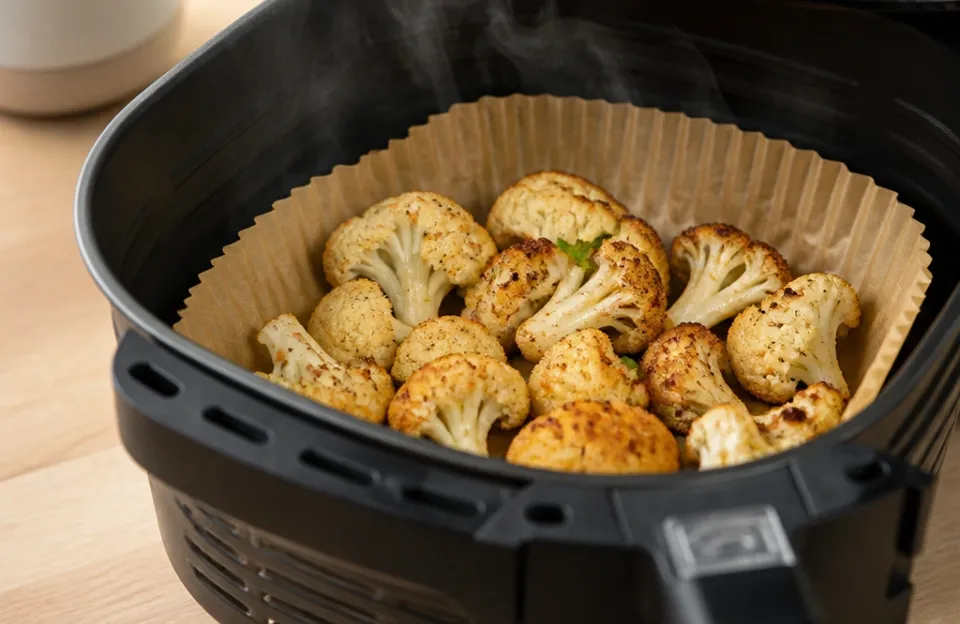
Air fryers cook food by pushing hot air rapidly around the basket. The heating element sits near the top, and a fan forces that heat down through the food and out the bottom vents. Any liner you place inside changes how that air moves.
Parchment paper is thin and porous enough to let some heat pass through. Pre-cut parchment air fryer liners usually have small holes punched across the surface. Those perforations allow hot air to circulate under the food, keeping the cooking process close to what you get without a liner.
Without those holes, the bottom of your food steams instead of crisping.
The paper itself doesn't conduct heat the way metal does. It acts as a barrier between dripping fat and the nonstick coating on your basket. That barrier stops baked-on grease.
It also means the underside of your food won't brown as deeply as it would sitting directly on the metal rack. If you want maximum crunch on something like extra crispy wings, the liner will slightly soften that result.
Perforated versus solid paper sheets
You can buy parchment air fryer liners with holes or without them. Perforated liners are the standard choice for most cooking. The holes keep the airflow moving, which matters for anything breaded or roasted.
Solid liners block all airflow from underneath. You only want a solid sheet when you are baking something that might leak batter through the holes, like a small cake or a wet dough. For everyday roasting, frying, or reheating, stick to the perforated style.
Using a solid sheet for french fries or chicken pieces leaves the bottoms soggy.
Bowl-shaped versus flat round cuts
Flat rounds look like large coffee filters. They lay flush against the bottom of the basket. These work well in toaster-oven-style air fryers where the basket pulls out like a tray.
Bowl-shaped liners have creased, raised edges that go up the sides of the basket by an inch or two. They hold more liquid and catch splashes better. If you cook saucy dishes or marinated meats, the bowl shape keeps the mess contained.
Just check that the raised edges don't touch the heating element above. In smaller basket-style machines, a flat round is usually safer because it stays low.
Safety Rules for Using Parchment Paper in an Air Fryer
Parchment paper catches fire if it touches the heating element or if it flies up into the fan. This is the biggest risk with parchment air fryer liners. The fan inside an air fryer is powerful.
A light piece of paper placed in an empty basket will blow around immediately.
Always put the food on top of the liner before turning the machine on. The weight of the food pins the paper down. Never preheat an air fryer with an unweighted liner inside.
Even during preheating, the fan runs, and loose paper can ignite.
Check the temperature rating printed on the box. Most parchment paper is rated for 428°F (220°C). Some brands push to 450°F.
If your recipe calls for 400°F, you have a safe margin. If you regularly cook at 450°F or higher, parchment might scorch or smoke. According to the FDA guidelines on food contact materials, paper products intended for cooking must meet specific thermal standards, so buying liners labeled specifically for air fryers rather than generic baking paper gives you a tested product.
Keep the edges trimmed. If a piece of parchment hangs over the rim of the basket, the circulating air pushes it upward toward the heating coil. Cut the liner to fit inside the basket walls with no overhang.
Why wax paper is a dangerous substitute
Wax paper looks similar to parchment paper, and people mix them up constantly. Wax paper has a paraffin coating that melts at low heat. Inside an air fryer, that wax melts, smokes, and can catch fire.
Parchment paper gets its nonstick quality from a silicone coating applied during manufacturing. Silicone handles high oven temperatures safely. Never put wax paper in an air fryer.
If you run out of parchment air fryer liners, cook directly on the bare basket until you buy more.
When a Liner Hurts Your Cooking Results
Parchment air fryer liners make cleanup easier, but they change how food cooks. Knowing when to leave them out prevents disappointing meals.
Any food that relies on 360-degree airflow for crispness suffers slightly with a liner underneath. Thick-cut fries, roasted potatoes, and breaded items need air hitting every surface. The liner blocks the bottom vents.
You can fix this partly by shaking the basket halfway through cooking, but the bottom layer still won't crisp as evenly.
When I'm working on batch cooking for the week, I use liners for items with sticky glazes and skip them for dry rubs. Dry seasonings and flour coatings benefit from direct metal contact. Wet marinades and sugary sauces burn onto the basket without a liner, making the trade-off worth it.
Foods with very short cook times, like reheating pizza slices or warming rolls, don't generate enough grease to justify a liner. The extra step just slows you down. Save the parchment for messy jobs: melting cheese, cooking bacon, or roasting vegetables tossed in heavy oil.
| Liner Type | Best Used For | Airflow Impact | Heat Limit |
|---|---|---|---|
| Perforated flat | Toaster-oven styles, dry foods | Moderate reduction | ~428°F |
| Perforated bowl | Basket styles, saucy foods | Moderate reduction | ~428°F |
| Solid flat | Baking, wet batters | Blocks bottom air completely | ~428°F |
| No liner | Maximum crispness, quick reheats | Full circulation | Machine max |
Picking the Right Size for Your Machine
Air fryer baskets vary wildly in size. A liner meant for a 3-quart machine will curl up the sides of a 6-quart model, creating a fire hazard. A liner meant for a 6-quart model will bunch up in a 3-quart basket, blocking airflow entirely.
Measure the bottom of your basket before buying parchment air fryer liners. Measure across the widest point if it's square, or the diameter if it's round. Most packages list dimensions in inches or centimeters.
Common sizes are 6.3 inches, 7.9 inches, and 8.5 inches. Match the liner to the flat bottom area, not the top opening.
Square baskets need square liners. Round liners in a square basket leave the corners exposed to grease. Several brands now sell square perforated liners specifically for popular square-basket models.
If you own a dual-zone machine with two separate drawers, you need liners sized for each individual drawer. Don't try to fold a large liner in half to fit. The folded edge creates a ridge that blocks air and lifts toward the heating element.
For recipes where internal temperature matters most, such as checking poultry doneness, pairing a good liner setup with reliable temperature monitoring tools prevents you from having to lift the paper repeatedly to probe the meat. Every time you pull the basket out and shift the food, the liner can move out of place.
Silicone Mats Versus Disposable Parchment Rounds
Reusable silicone mats are the main alternative to disposable parchment air fryer liners. Both do the same basic job, but they behave differently.
Silicone mats are thicker. They last for hundreds of cycles if washed properly. They usually have larger holes for airflow compared to parchment.
Because they are heavier, they don't fly up into the heating element, which makes them inherently safer during preheating. However, their thickness insulates the bottom of the food more than thin parchment does. Things take slightly longer to crisp on the bottom.
Disposable parchment liners cost less upfront per pack but add up over time. They are thinner, so heat transfers faster. Cleanup involves throwing the paper away rather than washing a sticky mat.
If you cook greasy foods daily, tossing a parchment round is faster than scrubbing a silicone grid.
Some people prefer silicone for dry roasting vegetables and parchment for sticky proteins. Having both on hand lets you choose based on the meal. If you track nutritional details closely, remember that excess grease pooling on either type of liner can reabsorb into the food, affecting things like overall calorie counts if the food sits in the rendered fat too long.
Mistakes That Cause Burnt Paper or Ruined Meals
Using parchment air fryer liners seems simple, but a few habits lead to burnt paper or bad textures.
Preheating with an empty liner. As mentioned, the fan blows unweighted paper into the heating coil. Always weigh it down with food first. If your recipe demands preheating, do it without the liner, then add the liner and food together.
Overlapping multiple sheets. Trying to cover a large basket by overlapping two small liners creates a double-thick layer in the middle and gaps on the edges. Food cooks unevenly, and the overlapping seam traps steam. Buy the correct single size instead.
Leaving the liner in during broil mode. Some advanced air fryers have a top-broil setting that pushes temperatures past 450°F or uses direct radiant heat. Parchment scorches quickly under direct broiler elements. Remove the liner if you switch to a pure broil function.
Reusing heavily soiled sheets. Parchment is meant for single use. Reusing a grease-soaked liner lowers its ignition threshold. The absorbed fats smoke at lower temperatures than the paper itself.
Toss it after one messy cook.
Ignoring the flavor transfer. While rare with high-quality paper, cheap parchment air fryer liners can impart a slight papery taste to delicate foods if cooked at high heat for long periods. If you notice an off flavor, switch brands. Testing different marinades alongside new liners helps isolate whether a strange taste comes from the sauce ingredients or the paper itself.
Caring for Your Basket When Using Liners
A common misconception is that parchment air fryer liners mean you never have to wash the basket again. Grease still splatters up the sides. Fine crumbs escape through the perforations.
Condensation drips down the walls.
Wipe the interior walls of the basket after every use, even if you used a liner. Let the machine cool down first. Use a soft sponge or cloth.
Abrasive scrubbers damage the nonstick coating, which defeats the purpose of using liners to protect it.
Check under the basket drawer. In many models, grease bypasses the basket entirely and pools in the outer drip pan. The liner catches what falls straight down, but the fan circulates fine oil droplets everywhere.
Wash the outer pan regularly to prevent smoking during future cooks.
If you notice the nonstick coating flaking despite using liners, stop using the basket. Exposed base metals shouldn't contact food. Liners reduce wear, but they don't fix a basket that has already degraded.
Frequently asked questions
Can parchment paper catch fire in an air fryer?
Yes, if it touches the heating element or flies up into the fan. Always weigh the parchment down with food before turning the machine on. Never preheat the air fryer with a loose liner inside.
Keep the edges trimmed so they don't curl upward toward the heat source.
Do I really need holes in my air fryer parchment?
You need holes for most cooking tasks. Perforations allow hot air to circulate beneath the food, which is how an air fryer achieves a crispy texture. Solid parchment blocks that airflow and causes food to steam.
Only use solid parchment when baking wet batters that would leak through the holes.
Is it safe to use regular oven parchment cut to size?
Regular oven parchment works as long as it fits inside the basket without hanging over the edges. You will need to punch your own holes in it for proper airflow, which takes time. Pre-cut parchment air fryer liners save effort because they are sized correctly and perforated already.
Check the temperature rating on your oven parchment to confirm it handles your cooking heat.
How many times can I reuse a parchment liner?
Parchment liners are designed for single use. Reusing them allows accumulated grease to smoke or burn at lower temperatures. If you cooked something dry, like plain toast, you might get away with a second use.
For anything involving oil, meat, or sauces, throw the paper away after one session.
Will a liner make my food less crispy?
It reduces crispiness slightly on the bottom surface. The paper blocks direct radiant heat from the metal basket and restricts some airflow, even with perforations. For foods where maximum crunch is the goal, cook directly on the bare basket.
For messy, saucy foods where cleanup is the priority, the minor loss in texture is worth the trade-off.
Are silicone liners better than parchment ones?
Silicone lasts longer and won't fly up into the heating element because of its weight. Parchment transfers heat faster due to its thinness and requires no washing. Silicone is better for safety and long-term cost.
Parchment is better for convenience and slightly faster bottom browning. Many cooks keep both available depending on the meal.
Keeping Your Setup Safe and Clean
Parchment air fryer liners solve the biggest complaint people have about air fryers: the cleanup. They catch the mess so you don't have to scrub baked-on grease off a nonstick surface every night. Getting the most out of them requires matching the right shape to your basket, respecting the temperature limits, and always pinning the paper down with food before the fan starts spinning.
Measure your basket once, buy the right size, and skip the liner entirely when you need maximum crunch. That balance keeps your machine running cleanly without sacrificing the texture you bought an air fryer to get.