Parchment paper liners are best for achieving maximum crispiness and handling messy, sticky glazes because they absorb excess grease and allow superior airflow. Silicone liners are the better choice if your priority is easy cleanup, structural support for delicate items, or reducing long-term waste through reusability. Neither option is universally superior.
The right pick depends entirely on whether you value texture and browning or convenience and durability for a specific cook.
This breakdown covers the functional differences between parchment vs silicone air fryer liners across heat transfer, safety, cost, and maintenance. You will find specific guidance on when to use each type based on what you are cooking, along with critical safety warnings that apply to both. Understanding these distinctions prevents burnt food, damaged appliances, and wasted money on liners that fight against your air fryer’s design rather than working with it.
How Material Composition Changes Cooking Results
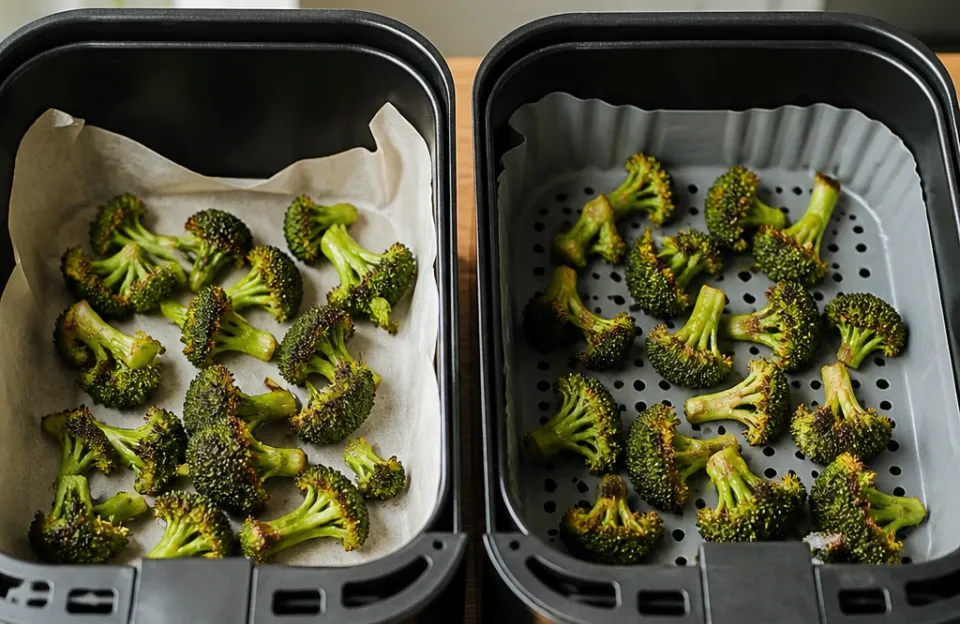
The fundamental difference lies in how each material interacts with hot air and fat. Air fryers cook by circulating superheated air rapidly around food. Any liner placed in the basket alters this physics.
Parchment paper is porous and thin. It allows air to pass through microscopic gaps and absorbs surface moisture and rendered fat. This absorption pulls grease away from the food's contact point, promoting Maillard browning and crisping.
The paper itself provides almost no thermal mass, so it heats up and cools down instantly with the air stream.
Silicone is a solid, non-porous polymer. It creates a complete barrier between the food and the basket mesh. Heat must conduct through the silicone thickness before reaching the food, which slows the initial sear.
Fat pools on top of the silicone instead of draining away, effectively shallow-frying the bottom of the food rather than air-frying it. This results in softer textures and less browning on the underside. However, this same barrier protects delicate items from direct radiant heat scorching and prevents small pieces from falling through the basket grate.
Thermal Conductivity and Browning Potential
Parchment paper typically withstands temperatures up to 425°F to 450°F depending on the brand. Within this range, it transfers heat efficiently without insulating the food. Foods cooked directly on parchment develop crusts comparable to bare-basket cooking, especially when the paper is perforated.
Unbleached parchment may brown slightly at high temperatures but generally remains stable. The lack of insulation means cook times remain consistent with standard recipes.
Food-grade silicone is rated for continuous use up to 480°F or higher according to FDA food contact regulations. Despite the higher temperature rating, silicone acts as an insulator. Bottom-side browning takes longer and often requires flipping food midway or increasing cook time by several minutes.
Thick silicone mats exacerbate this effect. Thin silicone liners perform closer to parchment but still retain enough density to reduce direct heat exposure. If achieving deep golden color on all sides is the goal, parchment has the advantage.
Grease Management and Texture Outcomes
Rendered fat behaves differently on each surface. Parchment wicks moisture and oil into its fibers. For fatty cuts like chicken wings or pork belly, this prevents the food from sitting in a pool of liquid.
The result is drier surface contact and crisper skin. When preparing dishes where rendering fat is part of the process, such as when making extra crispy chicken wings, parchment supports the desired texture outcome. Excess grease that saturates the paper can be discarded after cooking.
Silicone repels oil completely. Fat stays on the surface beneath the food. Lean proteins and vegetables may benefit from this retained moisture, preventing drying.
But for anything meant to be crispy, pooled grease steams the bottom layer. Some silicone liners include raised ridges or drainage channels to mitigate pooling, though effectiveness varies by design. If you notice soggy bottoms despite correct temperature settings, the liner material is likely the cause.
Switching to parchment or removing the liner entirely for the final few minutes can restore texture.
Safety Risks Unique to Each Liner Type
Both materials carry specific hazards that differ from one another. Misuse causes more problems than the materials themselves. Understanding these risks prevents appliance damage and fire hazards.
Parchment paper is combustible. It must never touch the heating element. In basket-style air fryers with top-mounted elements, lightweight parchment can lift during preheating or when the fan cycles at high speed.
Contact with the element causes immediate ignition. Always weigh down parchment with food before starting the appliance. Never use parchment during preheat cycles without food present.
Pre-cut rounds designed for specific models reduce overhang risk compared to trimmed sheets. Bleached versus unbleached parchment does not affect flammability. Both ignite at similar temperatures.
Silicone cannot catch fire under normal air fryer operating temperatures, but it can melt or degrade if it contacts the heating element directly. More commonly, thick silicone restricts airflow so severely that the appliance overheats internally. Blocked circulation forces the motor to work harder and can trigger thermal shutoffs or shorten the unit's lifespan.
Check manufacturer guidelines regarding liner compatibility. Some brands explicitly warn against silicone mats due to airflow obstruction. Even when permitted, ensure the liner does not cover ventilation holes or extend up the basket walls where it blocks lateral air movement.
Chemical Stability at High Temperatures
Unbleached parchment avoids chlorine processing residues. Bleached parchment uses oxygen or hydrogen peroxide whitening agents considered safe for food contact within rated temperatures. Neither releases harmful compounds below their smoke point.
Concerns about silicone leaching typically arise above 400°F with acidic foods, though food-grade platinum-cured silicone remains stable within rated limits. Avoid silicone products lacking explicit food-grade certification. Industrial-grade silicone contains fillers unsuitable for cooking.
Verify packaging states compliance with FDA 21 CFR 177.2600 or equivalent standards.
When tracking internal doneness alongside liner safety, accurate temperature monitoring matters. Using a reliable instant-read thermometer confirms food reaches safe temperatures regardless of liner insulation effects. Relying solely on visual browning through a liner can mislead, especially with silicone’s reduced heat transfer.
Cleanup Effort and Long-Term Cost Breakdown
Convenience drives liner adoption, but the two options deliver different kinds of convenience. Parchment offers zero-cleanup disposal at recurring cost. Silicone eliminates recurring purchases but demands active washing.
| Attribute | Parchment Paper Liners | Silicone Air Fryer Liners |
|---|---|---|
| Upfront Cost | Low ($5-$15 for 100+ sheets) | Moderate ($10-$25 per liner) |
| Per-Use Cost | $0.05-$0.15 per sheet | Negligible after purchase |
| Cleanup Time | Zero (discard after use) | 2-5 minutes hand wash or dishwasher |
| Lifespan | Single use | Hundreds of cycles if undamaged |
| Stain Resistance | N/A (disposed) | Poor (tomato/turmeric stains permanently) |
| Odor Retention | None | Possible with strong spices/oils |
| Storage Needs | Flat box or roll | Rolled or folded (may crease) |
| Environmental Impact | Compostable/biodegradable | Non-recyclable landfill waste at end-of-life |
Parchment wins for cooks who hate washing dishes or prepare highly staining foods. Discarding a greasy sheet takes seconds. There is no scrubbing, soaking, or stain management.
For meal prep sessions involving multiple batches, fresh parchment prevents cross-contamination and flavor transfer between savory and sweet items. When planning weekly chicken wing meal prep, disposable liners streamline workflow significantly.
Silicone pays for itself after roughly 20-30 uses depending on parchment pricing. Over years of regular air frying, savings accumulate. Hand washing with warm soapy water removes most residues.
Dishwasher-safe claims vary by product; top-rack placement prevents warping. Stubborn odors respond to baking soda paste or vinegar soaks. However, silicone degrades eventually.
Cuts from utensils, permanent stains, and loss of non-stick properties signal replacement time. Budget-conscious frequent users gain financially. Occasional users may spend more upfront than they save.
Staining and Odor Management Realities
Silicone absorbs pigments and volatile compounds despite being technically non-porous. Tomato sauce, curry, paprika, and garlic leave lasting marks. These stains do not affect safety or performance but bother users who prefer pristine equipment.
Dedicated liners for strongly flavored foods prevent transfer to neutral dishes. Parchment avoids this issue entirely since each sheet is fresh. If appearance matters or you rotate between diverse cuisines frequently, factor staining tolerance into your decision.
Matching Liner Choice to Specific Foods and Tasks
Neither liner suits every application. Aligning material properties with cooking goals produces better results than defaulting to one option exclusively.
Use Parchment When:
- Crispy skin or exterior texture is the primary goal
- Cooking high-fat proteins that render significant grease
- Applying wet marinades, glazes, or sugary sauces that stick aggressively
- Baking cookies or pastries requiring even bottom browning
- Preparing acidic foods where silicone degradation concerns exist
- Hosting guests and wanting zero visible residue or odor carryover
For glazed wings or sticky teriyaki preparations, parchment handles the mess while supporting caramelization. Checking wing calorie counts becomes simpler when excess grease drains into the paper rather than pooling under the food. Sugary coatings burn less readily on parchment’s breathable surface compared to silicone’s heat-retentive base.
Use Silicone When:
- Cooking delicate fish fillets prone to breaking apart
- Roasting small vegetables that fall through basket grates
- Reheating leftovers where moisture retention prevents drying
- Making egg bites, frittatas, or loose batters needing containment
- Minimizing single-use waste aligns with household values
- Budget constraints favor long-term reuse over per-sheet cost
Silicone’s structural integrity supports foods lacking cohesion. Fish skins release cleanly without tearing. Small diced vegetables stay contained without sifting through mesh.
Liquid batters hold shape until set. These applications exploit silicone’s barrier properties as advantages rather than drawbacks.
Hybrid Approaches for Complex Cooks
Some recipes benefit from switching liners mid-process. Start fatty proteins on parchment to render grease and build crust. Transfer to bare basket or silicone for finishing if additional containment becomes necessary.
Conversely, begin delicate items on silicone for gentle initial cooking, then move to parchment for final crisping. Flexibility beats dogma. Keep both materials accessible and select based on the current batch’s needs rather than committing to one system permanently.
When verifying doneness across different liner types, consistent temperature checking prevents guesswork. A fast-response digital meat thermometer accounts for variable heat transfer between parchment and silicone. Insert the probe through the liner edge or lift food briefly to test.
Accurate readings matter more than assumed timing adjustments.
Common Mistakes That Ruin Food or Damage Equipment
Avoiding errors matters as much as choosing correctly. These mistakes occur frequently with both liner types.
- Preheating with empty parchment inside: The fan lifts unweighted paper into the heating element. Always place food on parchment before starting the cycle. Preheat the empty basket separately if the recipe requires it, then add lined food afterward.
- Using wax paper instead of parchment: Wax paper melts, smokes, and contaminates food. Only use products explicitly labeled "parchment" or "baking paper." Wax coating and silicone coating are chemically distinct.
- Covering entire basket floor with solid silicone: Complete coverage blocks critical airflow. Use perforated silicone or size-specific designs that leave perimeter gaps. Monitor appliance temperature warnings during first uses with new liners.
- Assuming silicone eliminates sticking without preparation: Silicone is non-stick but not stick-proof. Light oil spray helps release stubborn items like cheese or starchy batters. Skipping this step defeats the purpose of using a liner.
- Reusing stained or cut silicone indefinitely: Deep cuts harbor bacteria. Permanent stains indicate material breakdown. Replace liners showing physical damage regardless of age. Safety degrades before visible failure.
- Ignoring model-specific sizing: Generic rounds may overlap basket edges or leave excessive gaps. Measure interior dimensions before purchasing. Ill-fitting liners shift during cooking and create uneven results.
Frequently Asked Questions
Can I use aluminum foil instead of parchment or silicone?
Aluminum foil is safe in air fryers but conducts heat differently than either liner option. It reflects radiant heat upward, potentially burning food tops while shielding bottoms. Foil also reacts with acidic ingredients like tomatoes or citrus, causing metallic taste and pitting.
Use foil only for wrapping or tenting, not as a direct cooking surface liner. Parchment or silicone provide more predictable results for lining applications.
Do perforated parchment liners actually improve crispiness?
Yes. Perforations increase direct airflow contact with food undersides. Solid parchment still outperforms silicone for browning, but perforated versions close the gap further.
Holes allow rendered fat to drain through rather than saturating the paper. For maximum crispiness on wings or fries, perforated parchment delivers results closest to bare-basket cooking while maintaining easy cleanup. Purchase pre-perforated sheets sized for your specific model to avoid manual cutting.
Is silicone safe for air fryers with exposed heating elements?
Silicone is safe only if it cannot physically contact the element during operation. Basket-style units with top elements pose higher risk than oven-style units with rear or shielded elements. Consult your appliance manual for liner compatibility statements.
If the manual prohibits silicone or warns about airflow restriction, follow those instructions over general silicone safety claims. Element proximity varies significantly between models, making universal safety statements unreliable.
Why does my food taste soapy after using silicone liners?
Soap residue trapped in silicone causes this off-flavor. Silicone absorbs detergents more readily than it releases them. Switch to unscented, dye-free dish soap and rinse thoroughly with hot water.
Vinegar rinses help strip detergent buildup. Alternatively, run the clean liner through a hot water-only dishwasher cycle before next use. Prevent recurrence by avoiding heavily fragranced cleaners and ensuring complete rinsing after every wash.
Can I compost used parchment paper liners?
Unbleached parchment is fully compostable in home or municipal systems. Bleached parchment is also biodegradable but breaks down slower due to processing. Remove any food scraps exceeding compost pile capacity before adding paper.
Grease saturation does not prevent composting unless your facility prohibits fats. Silicone is not compostable or recyclable through curbside programs. End-of-life disposal differs substantially between the two materials.
Before You Decide
Your cooking habits determine the better liner more than material specifications alone. Heavy rotation of crispy, fatty foods favors parchment’s breathability and grease absorption. Frequent delicate cooking, budget consciousness, and waste reduction priorities favor silicone’s durability and containment.
Many experienced air fryer users keep both on hand and switch based on the day’s menu rather than declaring a permanent winner.
Test each material with your most common recipes before bulk purchasing. What works for wings may fail for roasted vegetables. Personal texture preferences outweigh generic recommendations.
When experimenting with new techniques like baking soda treatments for wings, liner choice interacts with surface chemistry in ways only hands-on testing reveals. Document results and adjust accordingly. The best liner is whichever consistently delivers the outcome you want for the food you actually cook.