A five dollar thermometer and a fifty dollar one both read temperature. The difference is how fast they get there, how often they’re right, and whether they survive a drop onto tile. When comparing cheap vs expensive thermometers, performance gaps show up in response speed, accuracy consistency, build quality, and long term reliability.
If you cook once a week, a budget model does the job. If you smoke brisket for twelve hours or need exact candy temperatures, spending more buys you tighter tolerances and better sensors. This breakdown covers where the extra money goes, where it doesn’t, and which specs matter most in the kitchen.
The Short Answer: When a Cheap Thermometer Is Enough and When It Is Not
A budget thermometer can be perfectly adequate if you verify its reading and accept a slower response. In one independent review, the ThermoPro TP19H averaged 3.5 seconds to a final reading and held within ±1.5°F of a reference, at about $25. That is accurate enough for occasional roasting and grilling, provided you confirm it against an ice bath before relying on it for poultry.
Pay more when speed and tight tolerance compound over time: checking many pieces on a grill, tracking a long smoke, or working sugar. In the same review, the Lavatools Javelin PRO Duo averaged 2.0 seconds and held within ±0.7°F at about $60, while the Thermapen ONE averaged 1.1 seconds and held within ±0.4°F at about $105. These are one review’s results, not universal specifications, and prices are dated snapshots that change.
The practical rule: a cheap thermometer is enough if you check it and your cooking has wide margins. It is not enough if you never verify it and your dish depends on a narrow temperature window.
Where the Sensor Quality Actually Changes Your Readings
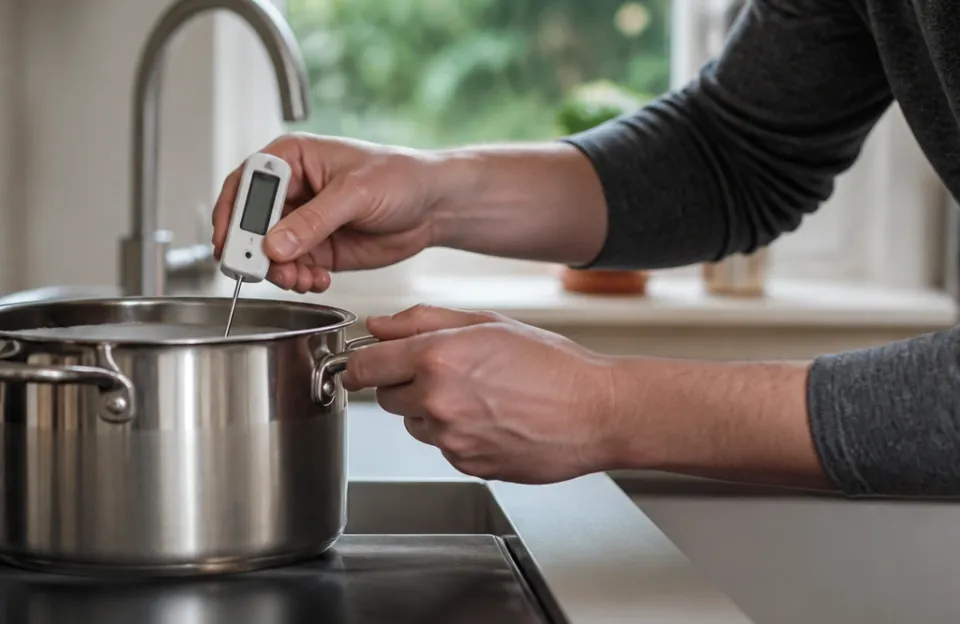
The core of any thermometer is its sensor. Budget models usually use basic thermistors, small resistors that change resistance as heat rises. They work fine for general tasks. Higher end models use higher grade thermistors or thin film RTD sensors, which generally react faster and drift less over time.
The gap shows up in the numbers. In one independent review, budget and premium models differed sharply in both speed and accuracy. That gap matters when you pull a lid off a smoker or check a steak on a hot grill. The longer the probe stays in the food, the more heat escapes, so fast sensors keep your cooking environment stable. We’ve covered rapid reading probes before, and the speed difference is the first thing you notice.
Accuracy is the other factor. The FDA lists 165°F as the safe minimum internal temperature for poultry, including ground, parts, whole birds and stuffing. The agency also states that color and texture are unreliable indicators of safety and that using a food thermometer is the only way to ensure meat, poultry, seafood and egg products are cooked safely.
Tolerance matters because of simple arithmetic. A thermometer reading 5°F low could show 165°F when the food is actually at 160°F, below the safe poultry target. That is an illustration of how error propagates, not a measured failure rate for any model. A tighter tolerance narrows the gap between the display and the true temperature, which is why hitting the right internal temp relies heavily on trusting your tool.
| Specification | Budget Example (ThermoPro TP19H) | Mid-Range Example (Lavatools Javelin PRO Duo) | Premium Example (Thermapen ONE) |
|---|---|---|---|
| Response Time | About 3.5 seconds | About 2.0 seconds | About 1.1 seconds |
| Accuracy vs Reference | Within ±1.5°F | Within ±0.7°F | Within ±0.4°F |
| Water Resistance | IPX6 | IP65 | IP67 |
| Price at Review | About $25 | About $60 | About $105 |
These figures come from a single independent review, which did not disclose its sample size or full test data. Treat them as one review’s results and re-verify current specifications and prices before buying.
Build Materials and Surviving the Kitchen
Price differences show up fast in the housing and the cable. Cheap digital models have thin plastic bodies, and a drop from counter height can crack the battery door or kill the screen. Expensive units use thicker ABS plastic, rubberized grips, or stainless steel housings that absorb impacts better.
Water resistance is a clearer dividing line because it is rated rather than described. The budget ThermoPro TP19H carries IPX6 water resistance, the mid-range Javelin PRO Duo carries IP65 splash resistance, and the Thermapen ONE carries IP67 waterproof construction. Those ratings describe controlled laboratory test conditions, not a guarantee of long-term real-world durability, and IP67 does not cover water jets, saltwater or repeated immersion. If you wash dishes while holding your thermometer, the rating reduces risk, but it does not make the device indestructible.
Probe construction also separates tiers, though the details vary by model rather than following a clean budget-versus-premium rule. Check the specific probe design and replacement policy rather than assuming a price bracket guarantees a thicker gauge.
Wireless Range and Connection Stability
Wireless thermometers split into two camps. Budget options often use basic radio frequency transmitters with a dedicated receiver, while premium setups typically use Bluetooth, WiFi, or both. Spec-sheet range numbers are line-of-sight ratings measured in open conditions, so walls, appliances and interference cut them down in a real kitchen.
Signal drops happen, and fixing those dropped signals during a cook gets old fast. Every WiFi thermometer is really Bluetooth plus WiFi working together rather than a WiFi-only device. Models like dual probe Wi-Fi setups track multiple pieces of meat and send alerts to your phone.
App integration costs money to develop. Budget RF models just beep when the target temperature hits. Smart thermometers send alerts, log temperature curves, and estimate finish times based on thermal mass. That software development adds to the retail price, and it is the main reason a wireless unit costs more than a comparable instant-read.
Probe cables are the most common failure point on wired models, so avoid bending the cable sharply, submerging the transmitter, or letting a lid or grate pinch it.
Calibration and Long Term Accuracy Drift
All sensors drift. NIST notes that even the best instruments may give readings in error, with typical causes including mechanical shock, thermal shock, drift in the sensor or readout over time, and incorrect calibration coefficients.
Cheap thermometers rarely let you correct this. Once the sensor drifts a couple of degrees off, you either do math in your head or buy a new one.
Better thermometers support verification, and the test itself is simple. When ice and water are packed together in an insulated container, the mixture holds nearly 0°C (32°F), which is the ice melting point. For a digital thermometer used over a narrow range, NIST describes a single-point check at the ice melting point or at ambient temperature as sufficient performance verification. If the thermometer is used above 100°C, NIST recommends also checking it at the steam point, about 100°C or 212°F at sea level, with the exact value varying by altitude and pressure.
Factory calibration certificates appear on some professional models, but the more reliable habit is a periodic ice-point check on whatever you own, budget or premium.
Candy making is where drift hurts most. Candy stages run from thread at roughly 110–112°C (230–234°F) to hard crack at roughly 146–160°C (295–320°F), and those ranges shift with recipe, altitude and additives. The hard ball stage forms at about 250°F (121°C). Syrup boiling point drops roughly 1°C per 305 m (1,000 ft) of altitude, so targets need altitude correction. A few degrees separates stages, which is why a dedicated deep frying tool with tight tolerances prevents ruined batches of caramel.
When Paying More Doesn’t Help
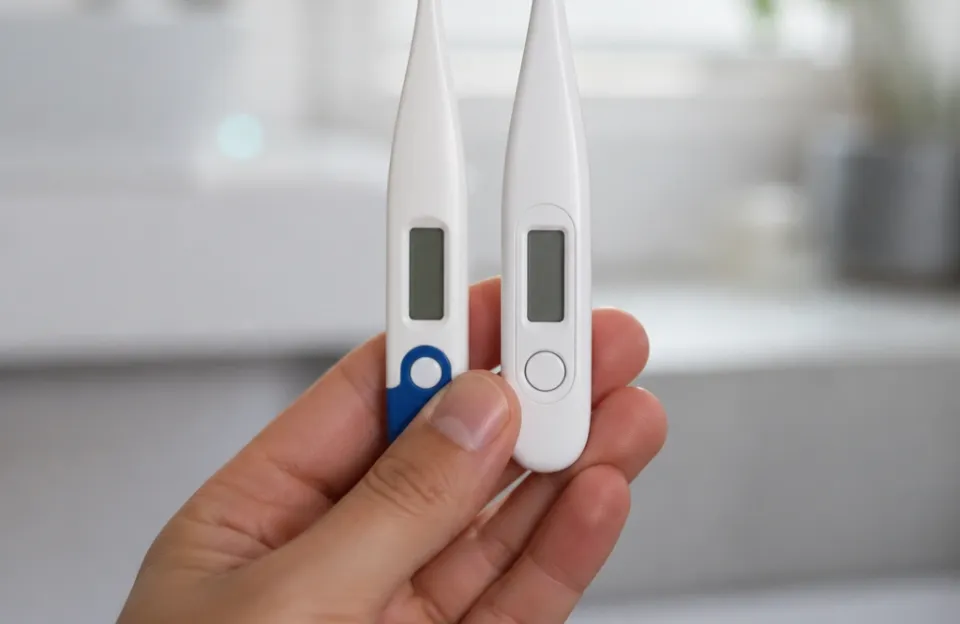
Expensive isn’t always better. If you only check the oven’s ambient air, a simple dial gauge works perfectly. Hanging a basic oven dial inside your stove tells you if your thermostat lies without needing batteries or Bluetooth.
You also don’t need a premium smart probe to check if water is boiling or if milk is warm enough for yeast. Those tasks have wide margins of error, and a basic digital stick handles them easily.
Infrared guns are another case where spending more doesn’t solve the main problem. They measure surface temperature instantly, which is useful for pan heat or a pizza stone, but they cannot measure internal meat temperature. No infrared model replaces a contact probe for food-safety checks.
Overbuying happens when people treat thermometers like phones. More apps and screens don’t improve the actual sensor physics. A mid-range instant read with a good sensor outperforms a cheap smart thermometer with a poor one. Finding long lasting gear usually means prioritizing the probe and its replaceability over the display.
Picking the Right Tier for Your Cooking
Match the tool to the task, and treat the prices below as approximate snapshots from one review rather than current retail prices.
Occasional cooks. If you roast a chicken or grill burgers a few times a month, the budget tier is enough. The ThermoPro TP19H averaged 3.5 seconds and held within ±1.5°F at about $25. Check it in an ice bath before you trust it with poultry, and accept that a slower read means a little more heat escapes.
Regular home cooks. If you cook most days and check several pieces at once, the mid-range tier earns its price. The Lavatools Javelin PRO Duo averaged 2.0 seconds and held within ±0.7°F at about $60, with a 4-year warranty. You get close to premium speed and accuracy for roughly 60% of the premium price, with IP65 rather than IP67 protection.
Daily, competition, or precision-heavy cooks. If speed and tolerance compound across hundreds of readings, or you work sugar and chocolate, the premium tier is justified. The Thermapen ONE averaged 1.1 seconds and held within ±0.4°F at about $105. It is the most expensive option, so loss or breakage costs more.
Commercial kitchens. Professional kitchens need calibration records and durable equipment. The specific standards and record-keeping rules vary by jurisdiction, so confirm local requirements rather than assuming a certification alone satisfies an inspector.
Frequently Asked Questions
Do Cheap Digital Thermometers Give False Readings?
They don’t intentionally lie, but their wider tolerance means the displayed number can be off by several degrees. A thermometer reading 5°F low could show 165°F when the food is actually at 160°F, below the safe poultry target. That error matters most with poultry, where the FDA sets 165°F as the safe minimum.
Which Tier Is Better for Smoking Large Cuts of Meat?
Premium wireless models fit long cooks better. Smoking takes hours, and opening the lid to check with an instant read drops the pit temperature. A leave-in probe with a stable connection keeps the smoker closed and tracks the stall. Spec-sheet range figures are line-of-sight ratings, so expect less range through walls.
Can I Calibrate a Budget Thermometer at Home?
Most budget digitals lack a calibration function. You can still test one in an ice bath, where packed ice and water hold nearly 32°F. If the error is consistent, note the offset and apply it mentally, or replace the unit if the error is large. A single-point ice check is sufficient verification for a thermometer used over a narrow range.
Does a Faster Response Time Mean the Thermometer Is More Accurate?
Speed and accuracy are related but distinct. A fast sensor minimizes the time the probe spends in the food, giving you a truer reading of the meat’s current state. A fast sensor can still be poorly calibrated, so you want both quick response and tight tolerance.
Are Infrared Laser Guns Better Than Contact Probes?
They serve different purposes. Infrared guns measure surface temperature instantly without touching the food, which is useful for checking pan heat or pizza stones. They cannot measure internal meat temperatures, so they never replace a probe thermometer for food safety checks.
What to Remember Before You Buy
The cheap vs expensive thermometer decision comes down to sensor grade, build materials, and software rather than brand prestige. Budget models handle casual cooking fine, especially if you verify them with an ice bath before relying on them for poultry. Expensive ones earn their price through tighter accuracy, faster reads, and better water resistance, though ratings describe laboratory conditions rather than real-world indestructibility.
Buy based on what you cook most often. Occasional cooks can stay budget, regular cooks get most of the benefit at mid-range, and daily or precision-heavy cooks justify premium. Skip the smart features if you only need a quick temperature check.