Yes, you can put glass in an air fryer, provided the dish is made of tempered or borosilicate glass and explicitly rated for oven use. Regular drinking glasses, mason jars, and thin decorative bowls will shatter under the intense heat and rapid airflow inside the appliance. If the bottom of your glass container has an "oven-safe" stamp, it can handle the temperatures an air fryer produces.
The short answer to whether you can put glass in an air fryer comes down to the specific type of glass and how you manage temperature changes. Air fryers cook food by circulating extremely hot air at high speeds. This creates a harsh environment for materials that expand and contract quickly.
Knowing which glass survives this process keeps your food safe and prevents a mess inside your machine.
This guide covers the exact types of glass that work, why certain dishes fail, how thermal shock breaks cookware, and practical steps for testing your own containers before cooking a full meal.
Why Glass Type Dictates Survival Inside the Basket
Air fryers typically operate between 300°F and 400°F. The heating element sits very close to the food, and a powerful fan pushes that heat around the basket constantly. This setup cooks food fast, but it also heats any container inside much more aggressively than a standard conventional oven.
Glass responds to heat by expanding. When the expansion happens unevenly across the surface of a bowl or baking dish, internal stress builds up. Once that stress exceeds the structural limit of the material, the glass cracks or explodes into pieces.
Tempered glass and borosilicate glass are manufactured specifically to handle this stress. Standard soda-lime glass, which makes up most cheap bakeware and drinkware, cannot.
Borosilicate glass contains boron trioxide, which gives it a very low coefficient of thermal expansion. This means it expands very little when heated, making it highly resistant to cracking under temperature swings. Tempered glass undergoes a rapid cooling process during manufacturing that puts the outer surfaces into compression and the interior into tension.
This makes it roughly four times stronger than untreated glass. Both types are safe for air frying as long as they fit inside the basket without touching the heating element.
Spotting Oven-Safe Labels on Your Bakeware
Before placing any glass container into your machine, flip it over and look at the bottom. Manufacturers stamp oven-safe symbols or text directly into the glass or print them on a permanent label. You might see a maximum temperature rating printed next to the symbol, such as 425°F or 450°F.
If the dish lacks any marking, assume it is unsafe for air frying. Pyrex, Anchor Hocking, and similar brands clearly label their tempered and borosilicate lines. Older vintage glassware often lacks these modern safety ratings and may have micro-fractures from decades of use.
Avoid using antique glass dishes for high-heat cooking.
You can verify standards for heat-resistant cookware through organizations like ASTM International, which publishes testing specifications for glass bakeware. Containers meeting these standards undergo rigorous thermal shock testing before reaching store shelves.
How Soda-Lime Glass Fails Under High Heat
Soda-lime glass is the most common glass in the world. It makes up windows, drinking glasses, and inexpensive mixing bowls. It handles room temperature perfectly well and tolerates warm water.
It fails completely under rapid, dry heat.
When you place a soda-lime bowl into a preheated air fryer, the outside surface heats up faster than the thick interior walls. The outer layer tries to expand while the inner layer stays rigid. The resulting shear force causes the glass to snap loudly.
This scatters sharp shards across your food and the non-stick coating of your basket. Cleaning melted plastic or scratched coatings after a glass explosion usually ruins the appliance's drawer.
Thermal Shock and Rapid Temperature Swings
Thermal shock is the primary reason safe glass still breaks during air frying. Even borosilicate glass has limits. Thermal shock occurs when a material experiences a sudden, drastic change in temperature.
The different parts of the glass expand or contract at different rates, creating massive internal pressure.
Air fryers are uniquely prone to causing thermal shock because they heat up almost instantly. A traditional oven takes ten to fifteen minutes to reach 400°F, giving a glass dish time to warm up gradually alongside the ambient air. An air fryer blasts concentrated heat directly onto the container within seconds of turning on.
Placing a cold glass dish straight from the refrigerator into a running air fryer is the fastest way to trigger a break. The temperature delta between a 38°F fridge and a 400°F heating element is too extreme for almost any consumer glass to absorb safely.
Moving Cold Dishes Straight Into the Heat
Always let your glass container sit on the counter until it reaches room temperature before cooking. This usually takes twenty to thirty minutes depending on the thickness of the dish. Touching the glass and feeling no chill means it is ready to go into the basket.
If you are meal prepping and storing raw ingredients inside a glass dish in the fridge, pull the dish out well before you plan to cook. For example, if you are prepping chicken wings in a marinade inside a glass bowl, take the bowl out of the fridge while you prep other items. Let the glass lose its chill naturally.
Never speed up this process by running hot water over the cold glass, as the water itself introduces another rapid temperature shift.
Cooling Hot Glass Safely After Cooking
The danger does not end when the timer goes off. Taking a 400°F glass dish out of the air fryer and setting it directly on a cold granite countertop or into a sink with cool water will cause the same thermal shock in reverse. The outside cools and contracts rapidly while the inside remains expanded.
Place hot glass exclusively on dry silicone trivets, folded kitchen towels, or wooden cutting boards. These materials insulate the bottom of the dish and allow it to cool slowly. Wait at least fifteen minutes before washing the container or placing it in the refrigerator.
Blocking Airflow Changes Cooking Times
Air fryers rely entirely on moving hot air to cook food evenly. The basket design includes holes or a mesh pattern specifically to let air circulate underneath and around whatever you are cooking. Dropping a solid glass dish into that basket fundamentally alters how the machine works.
A glass container blocks all airflow beneath the food. The heat can only reach the top and sides of the dish. This means the bottom of your food will cook significantly slower than the top.
Recipes designed for bare-basket cooking will not translate directly when you introduce a solid barrier.
If you are used to cooking potatoes quickly directly on the mesh, putting those same potatoes inside a glass bowl will require more time. The dense glass absorbs heat first before transferring it to the food, acting as a buffer rather than a conductor. Expect to add several minutes to your usual cook times and check for doneness manually.
| Attribute | Bare Basket Cooking | Cooking Inside Glass |
|---|---|---|
| Airflow | Full 360-degree circulation | Top-down only, blocked underneath |
| Crisping Ability | High, direct hot air contact | Low, acts more like a small oven |
| Cook Time | Fastest method | Slower, requires added minutes |
| Best Used For | Fries, wings, roasted vegetables | Baking, melting cheese, holding liquids |
| Cleanup | Wipe basket or wash tray | Wash separate heavy dish |
Adjusting Temperatures for Dense Containers
Because glass holds heat differently than metal or silicone, you may need to lower the temperature slightly to prevent the top of your food from burning before the center cooks through. Dropping the temperature by 25°F and extending the cook time by a few minutes usually solves this issue.
This adjustment is especially relevant when timing salmon fillets or thicker cuts of meat inside a glass baking dish. The intense top-down heat can dry out the surface of a protein while the bottom remains undercooked. Lowering the heat allows the glass to warm evenly and cook the food gently from all sides.
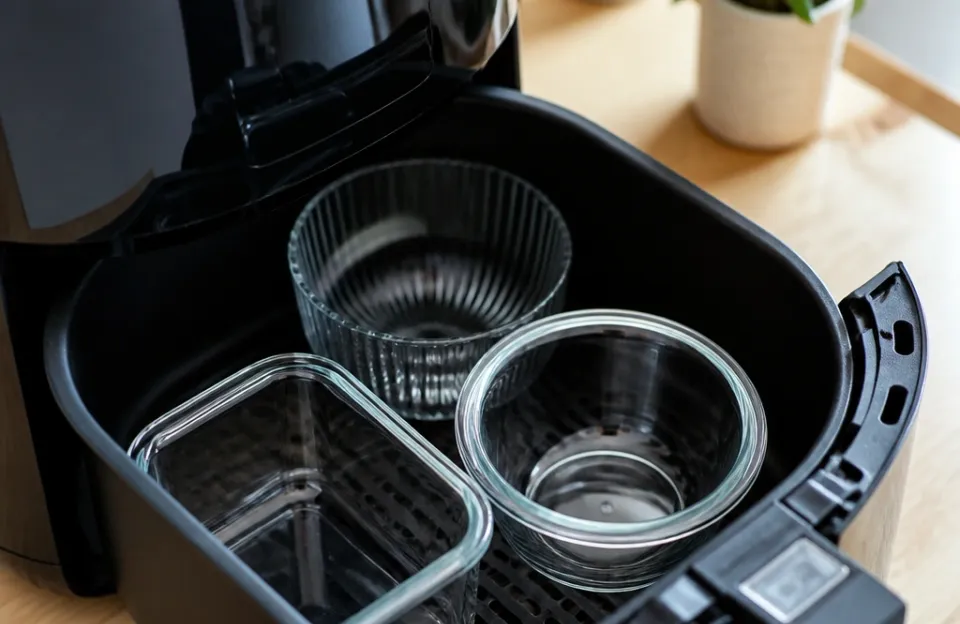
Sizing the Dish to Leave Clearance
Never use a glass dish that fits snugly against the walls of the air fryer basket. You must leave at least half an inch of space on all sides. If the glass touches the basket walls, it restricts the fan's ability to push air down and around the container.
Restricted airflow leads to uneven cooking and forces the machine's motor to work harder.
More importantly, the glass cannot be so tall that it sits close to the heating element at the top of the unit. Most air fryer heating elements are exposed coils located just above the basket. If a glass dish rises too high, the radiant heat directly above it will exceed the glass's maximum temperature rating, causing localized overheating and eventual failure.
Measure the interior height of your specific model before buying glass inserts. Some compact models simply do not have the vertical clearance required for standard ramekins or baking bowls.
Practical Steps for Testing Your Glass Cookware
If you have a glass dish that is marked oven-safe but you feel uncertain about using it in the aggressive environment of an air fryer, run a controlled test first. Do not put expensive ingredients into an untested container.
- Place the empty, room-temperature glass dish into the cold air fryer basket.
- Set the temperature to 350°F and run the machine for five minutes.
- Turn the machine off and open the drawer carefully.
- Inspect the glass visually for any hairline fractures, cloudiness, or pinging sounds.
- If the glass looks perfect and feels uniformly hot, let it cool completely on a towel.
- Repeat the test at 400°F for another five minutes.
If the dish survives both tests without cracking or showing stress marks, it is generally safe to use for cooking. If you hear ticking, popping, or see white stress lines forming in the glass, discard the dish immediately. It cannot handle the concentrated heat.
This testing method applies whether you are using a large multi-quart machine or checking compatibility with a compact countertop model. Smaller units often concentrate heat more intensely due to the reduced distance between the element and the basket floor, making testing even more important.
Foods That Actually Benefit From Glass Inserts
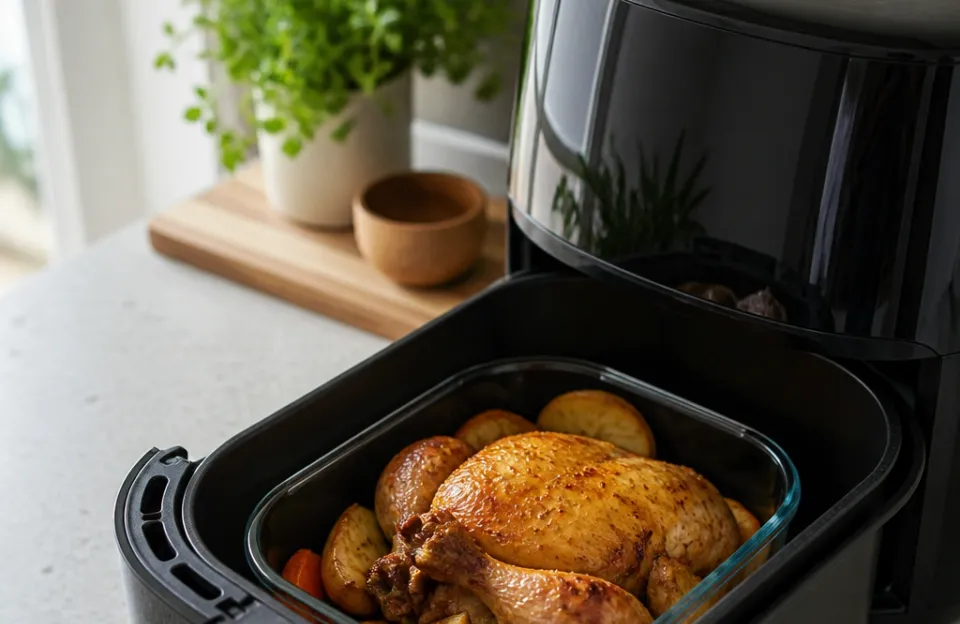
Using glass inside an air fryer limits what you can cook, but it opens up specific techniques that are impossible in a bare basket. Liquid batters, melting cheeses, and loose ingredients that would fall through the mesh all require a solid container.
Baking small batches of brownies, cakes, or egg bites works perfectly in oven-safe glass ramekins. The glass distributes the heat evenly enough to set the batter without burning the edges instantly. Egg bites are a popular breakfast option where pouring whisked eggs directly into the basket would create a disaster.
A small glass mold holds the shape while the hot air sets the proteins.
Melting cheese over nachos or heating up dips like spinach artichoke dip also requires a vessel. Placing a small glass bowl inside the basket keeps the dip contained while the air fryer heats it rapidly. Just remember to account for the blocked airflow when timing your snack.
If you are crisping bacon strips to crumble over that dip, cook the bacon directly on the mesh first, then transfer it to the glass bowl afterward.
Reheating leftovers containing sauces or gravies is another strong use case. Pouring pasta with marinara sauce into a glass container prevents the liquid from dripping through the basket holes and smoking on the bottom heating plate. The air fryer reheats the food much faster than a microwave while keeping the texture intact.
Alternatives When Glass Is Too Risky
If you decide the risk of breaking glass inside your machine is too high, several other materials perform the same function without the threat of shattering.
Silicone molds and liners are the safest alternative. Food-grade silicone handles temperatures well above 450°F, flexes easily for cleanup, and does not crack under thermal shock. Silicone cupcake liners fit perfectly inside most baskets for baking egg bites or muffins.
They block airflow underneath just like glass, so the same cooking time adjustments apply.
Metal pans made of aluminum or stainless steel conduct heat faster than glass. Small cake pans or loaf tins designed for toaster ovens usually fit inside larger air fryers. Metal does not suffer from thermal shock, meaning you can move it from the fridge to the heat with far less risk.
However, metal gets significantly hotter to the touch than glass, requiring heavy-duty oven mitts for removal.
Ceramic dishes rated for oven use behave similarly to glass. They block airflow and hold heat well. Like glass, ceramic must be oven-safe and free of hairline cracks before going into the air fryer.
Unglazed ceramics or decorative pottery will crack under the fan's intensity. Stick to high-fired, glazed stoneware meant for baking.
Parchment paper with raised edges offers a temporary solution for dry foods. While you cannot pour liquids onto parchment, folding the edges up creates a shallow boat that catches grease and prevents small items from falling through the grate. It allows better airflow than a solid bowl, keeping the crisping action mostly intact.
For heavy-duty tasks, some people look toward specialized appliances built specifically for glass containers, like the Ninja Crispi system, which is engineered to accommodate its own proprietary glass vessels safely. Using purpose-built equipment removes the guesswork entirely.
Mistakes That Shatter Oven-Safe Bowls
Even when you start with the correct borosilicate or tempered glass, bad habits will still cause breakage. The material is strong, but it is not indestructible.
Preheating the air fryer empty and then dropping a room-temperature glass dish into the already blazing hot basket is a major error. The sudden blast of 400°F air hitting the cooler glass surface creates instant thermal shock. Always place the glass dish inside the basket before turning the machine on, allowing the glass to heat up simultaneously with the air.
Stacking heavy food on top of thin glass rims causes mechanical stress. If you pack a glass bowl tightly with dense root vegetables or heavy meats, the weight pressing outward against the sides combines with the heat expansion. This dual pressure can pop the rim off the bowl.
Leave headspace in your containers.
Ignoring chips and scratches is another frequent mistake. A tiny chip on the rim of a glass bowl seems harmless at room temperature. Under high heat, that chip becomes a focal point for stress.
The expansion forces concentrate exactly at the flaw, splitting the dish in half. Inspect your glassware closely before every use. If it has visible damage, relegate it to cold storage duties only.
Using glass under the broiler setting on combination air fryer ovens pushes the material past its limits. Broiler elements run significantly hotter than standard bake settings, often exceeding 500°F locally. Most oven-safe glass tops out at 425°F to 450°F.
Check your specific manufacturer's maximum temperature rating and never exceed it.
Frequently Asked Questions
Can I put a Mason jar in an air fryer?
No. Mason jars are made from annealed soda-lime glass designed for boiling water baths and cold storage. They cannot withstand the dry, rapid, high heat of an air fryer.
The glass will likely shatter, sending dangerous shards into your food and damaging the appliance's non-stick coating.
Will Pyrex break in an air fryer?
Pyrex branded bakeware is generally safe for air fryers as long as it is labeled oven-safe and you avoid sudden temperature changes. Modern Pyrex sold in the United States is tempered soda-lime glass, while European Pyrex is borosilicate. Both handle standard air frying temperatures, but neither should go directly from the fridge into a hot basket.
Does glass block the air fryer fan?
Yes, a solid glass dish completely blocks the airflow underneath the food. The fan will continue to spin, but the hot air is forced to travel over the top of the glass and bounce off the walls rather than passing through the food. This changes the cooking dynamic from convection crisping to standard radiant baking.
What is the maximum temperature for glass in an air fryer?
Most oven-safe glass carries a maximum temperature rating of 425°F to 450°F. You should never set your air fryer higher than the specific limit stamped on the bottom of your dish. Because air fryer heating elements sit very close to the food, staying 25°F below the manufacturer's maximum rating provides a safer margin.
Can I use a glass plate instead of a bowl?
You can use a flat glass plate if it is made of tempered or borosilicate glass and rated for oven use. However, flat plates take up significant surface area in the basket, blocking almost all downward airflow. They work best for simply warming up flat foods like pizza slices or tortillas rather than cooking raw ingredients.
Does the glass get hotter than the food?
Glass retains heat longer than the food sitting inside it. During cooking, the glass absorbs energy continuously. When you turn the machine off, the glass stays dangerously hot long after the air inside the basket cools down.
Always use thick silicone gloves or dry cloth pads to remove glass containers, and set them on insulated surfaces.
Before You Start Cooking
Putting glass in an air fryer works perfectly well when you respect the material's physical limits. Stick to borosilicate or tempered glass marked explicitly for oven use, bring the dish to room temperature before turning on the heat, and leave enough space around the container for the fan to push air effectively. Skipping any of these steps turns a convenient baking method into a broken glass hazard.
Treat the glass carefully, adjust your cooking times to account for the blocked airflow, and your air fryer will handle everything from baked egg bites to reheated casseroles without issue.