A coffee maker is worth it for most US households that drink at least two cups of coffee per day. Buying a reliable machine for $100 to $200 typically pays for itself within three to six months compared to daily cafe visits, while giving you control over brew strength and temperature. If you drink coffee only occasionally or prefer complex espresso drinks without the learning curve, the value proposition changes significantly.
The decision rarely comes down to just saving money. It is about matching the appliance to your actual morning routine. A basic drip brewer solves a different problem than a semi-automatic espresso machine.
Understanding which category fits your life prevents buyer remorse and ensures the machine actually gets used instead of gathering dust in a cabinet.
The Real Math Behind Home Brewing
Most people overestimate their cafe spending and underestimate the ongoing cost of home brewing. Getting the numbers right helps you decide if a coffee maker is worth it for your specific budget.
Breaking Down the Cost Per Cup
A standard 12-ounce cup of black coffee at a national chain costs between $3 and $4 in 2026. Specialty lattes run $5 to $7. At home, that same 12-ounce cup using medium-roast whole beans costs roughly 35 to 50 cents.
This includes the bean cost, filter, water, and electricity.
If you buy one cafe coffee five days a week, you spend about $900 annually. A solid mid-range drip coffee maker costs $150. Even adding premium beans at $18 per pound, your first-year home cost sits around $400.
That is a $500 savings in year one alone. Subsequent years drop closer to $250 since the machine is already paid for.
Hidden Costs You Must Factor In
Home brewing has expenses beyond the initial purchase. Filters cost pennies each but add up. Descaling solution runs $10 every few months.
A quality burr grinder, which dramatically improves flavor, adds $100 to $200 upfront. Water filtration may be necessary depending on your local supply.
These costs are real but predictable. They also scale with usage. Heavy drinkers save more absolute dollars despite higher supply costs.
Light drinkers save less but still avoid the premium markup of prepared beverages.
When the Savings Disappear
The math fails if you do not actually use the machine. Unused appliances have an infinite cost per cup. The math also fails if you continue buying cafe drinks out of habit despite owning a brewer.
Many people own excellent equipment yet still stop at the drive-through because they have not built a new routine.
Savings require behavioral change, not just a purchase. Be honest about whether you will commit to brewing at home before calculating return on investment.
Matching Machine Type to Your Actual Routine
Different brewers serve different needs. Picking the wrong type makes even an expensive machine feel worthless. We compared specs, materials, warranty terms, and common complaints across categories to identify who benefits from each style.
For those curious about how different machines extract flavor, understanding the types of espresso machines explained can clarify why certain models suit specific preferences.
| Brewer Type | Best For | Typical Price Range | Time Investment | Learning Curve |
|---|---|---|---|---|
| Automatic Drip | Daily household use, multiple cups | $80 – $300 | Low (set and forget) | Minimal |
| Single-Serve Pod | One person, speed priority, variety | $100 – $250 | Very Low | None |
| Pour Over / Manual | Flavor enthusiasts, single servings | $30 – $80 | High (active brewing) | Moderate to High |
| Semi-Auto Espresso | Milk drinks, hobbyists, cafe quality | $400 – $1,500+ | Medium to High | Steep |
| Cold Brew Maker | Iced coffee lovers, batch prep | $30 – $100 | Low active, long wait | Minimal |
Automatic Drip Brewers
These remain the default choice for good reason. Modern machines with proper showerheads and thermal carafes produce coffee rivaling many cafes. Programmable timers mean coffee is ready when you wake up.
Capacity ranges from 4 to 14 cups, covering singles and families alike.
The limitation is flexibility. Most drip brewers make one style of coffee. They cannot pull espresso or brew single cups efficiently.
Cheap models under $60 often fail to reach proper brewing temperature, leading to sour, underextracted coffee. Stick to SCA-certified models or those explicitly stating 195°F to 205°F brew temps.
Single-Serve Pod Machines
Convenience is the entire selling point. No grinding, no measuring, no cleanup. You get consistent results with zero skill.
Variety is high since pods come in dozens of flavors and roasts.
The trade-offs are significant. Cost per cup runs $0.70 to $1.20, much higher than ground coffee. Environmental waste is substantial unless you use reusable pods or compostable options.
Brew quality caps below what fresh-ground coffee delivers. These make sense only if convenience truly outweighs cost and quality for you.
Manual and Pour Over Methods
These offer maximum control at minimum expense. You dictate water temperature, pour rate, bloom time, and agitation. Skilled users extract exceptional clarity and complexity from specialty beans.
Equipment is cheap and nearly indestructible.
The catch is consistency. Results vary with technique, attention, and even hand steadiness. Morning grogginess leads to bad cups.
This path suits those who view brewing as a ritual rather than a chore. If you want caffeine fast and reliably, look elsewhere.
Espresso Machines
True espresso requires pressure, precise grind, and practice. Home machines let you make lattes, cappuccinos, and americanos identical to cafe versions. The hobby aspect appeals to tinkerers who enjoy dialing in variables.
Entry-level semi-automatics start around $400 but demand a capable grinder too. Total investment often exceeds $700. Mastery takes weeks or months.
Maintenance involves regular backflushing, descaling, and gasket replacement. Skip this category unless you genuinely want a hands-on hobby. Super-automatics reduce labor but increase price and mechanical complexity.
Space, Storage, and Counter Reality
Kitchen footprint matters as much as price. Measure your available space before shopping. A machine that does not fit your lifestyle physically will not fit it functionally either.
Standard drip brewers need about 12 inches of width and 14 inches of height clearance. Leave room above for filling the reservoir and accessing the filter basket. Single-serve machines are narrower but often taller.
Espresso machines vary wildly, with some requiring 18 inches of vertical clearance for portafilter insertion.
Consider workflow too. Do you have counter space next to the machine for grinding, tamping, or staging mugs? Crowded counters lead to spills and frustration.
If your kitchen is tight, a compact brewer or manual method may serve better than a full-sized unit regardless of its other merits.
Storage applies to supplies as well. Whole beans need airtight containers away from light and heat. Pods take up drawer space.
Filters, cleaning tablets, and accessories all need homes. Account for this storage before committing to a system.
Maintenance Requirements That Affect Value
Every coffee maker needs upkeep. Ignoring maintenance ruins flavor and shortens lifespan. Honest assessment of your willingness to maintain equipment should influence your choice.
Daily and Weekly Tasks
All brewers need rinsing after use. Carafes, baskets, and portafilters accumulate oils that turn rancid. Drip machines need weekly washing of removable parts.
Espresso machines require purging steam wands and wiping group heads after every session. Single-serve machines need periodic needle cleaning to prevent clogs.
These tasks take minutes but must happen consistently. If you know yourself to be lax about cleaning, choose a simpler machine with fewer parts. Complex brewers reward diligence but punish neglect harshly.
Descaling and Deep Cleaning
Mineral buildup affects every brewer eventually. Hard water areas need descaling every one to three months. Soft water areas may stretch to six months.
The process takes 30 to 60 minutes and renders the machine unusable during that window.
Espresso machines add backflushing with detergent every few weeks. Group head gaskets need annual replacement. Steam wand tips wear out.
These are manageable tasks but they are non-negotiable. Factor this time commitment into your worth-it calculation.
Longevity Expectations
Build quality varies enormously. Budget drip brewers often last two to four years. Mid-range models with stainless steel internals and thermal carafes frequently reach seven to ten years.
Commercial-grade home machines can last decades with proper care.
Longer-lasting machines cost more upfront but spread that cost over many years. A $300 brewer lasting ten years costs $30 annually. A $80 brewer replaced every three years costs $27 annually but delivers inferior performance throughout.
Sometimes spending more is actually cheaper long-term.
When a Coffee Maker Is Not Worth Buying
Not everyone benefits from owning a brewer. Recognizing these situations saves money and disappointment.
You drink fewer than three cups per week. The setup, cleanup, and maintenance overhead outweighs the savings. Cafe visits or instant coffee remain more practical.
Your primary goal is espresso drinks but you hate tinkering. Entry-level espresso machines frustrate beginners. Super-automatics solve this but cost $800+. Until you are sure about the hobby, stick to cafe visits or pod machines designed for milk drinks.
You move frequently or have unstable housing. Coffee makers are bulky, fragile, and annoying to transport. Renters anticipating moves within a year should delay major appliance purchases.
You dislike cleaning anything. All brewers need maintenance. Neglected machines produce terrible coffee and break prematurely. If upkeep feels like a burden, acknowledge that before buying.
Your current dissatisfaction stems from beans, not equipment. Upgrading from stale pre-ground to fresh whole beans transforms any brewer. Fix the input before replacing the machine.
Frequently Asked Questions
Does a cheaper coffee maker always mean worse coffee?
Not necessarily, but there is a floor. Brewers under $50 often cannot maintain proper temperature, resulting in weak or sour extraction. Between $80 and $150, you find machines meeting SCA standards that brew excellently.
Beyond that, you pay for build quality, capacity, and programming rather than dramatically better flavor.
How long should I expect a home coffee maker to last?
Mid-range automatic drip brewers typically last five to eight years with regular descaling and cleaning. Single-serve machines average three to five years due to internal plastic components and pump wear. Well-maintained semi-automatic espresso machines can exceed fifteen years.
Warranty length often correlates with expected lifespan.
Is a built-in grinder worth the extra cost?
It depends on your current setup. Integrated grinders save counter space and streamline workflow, making daily brewing easier. However, they are harder to clean, louder, and limit upgrade paths.
If you already own a decent standalone grinder, a brewer-only machine offers better value and flexibility.
Can I justify a coffee maker if I already have an air fryer taking up counter space?
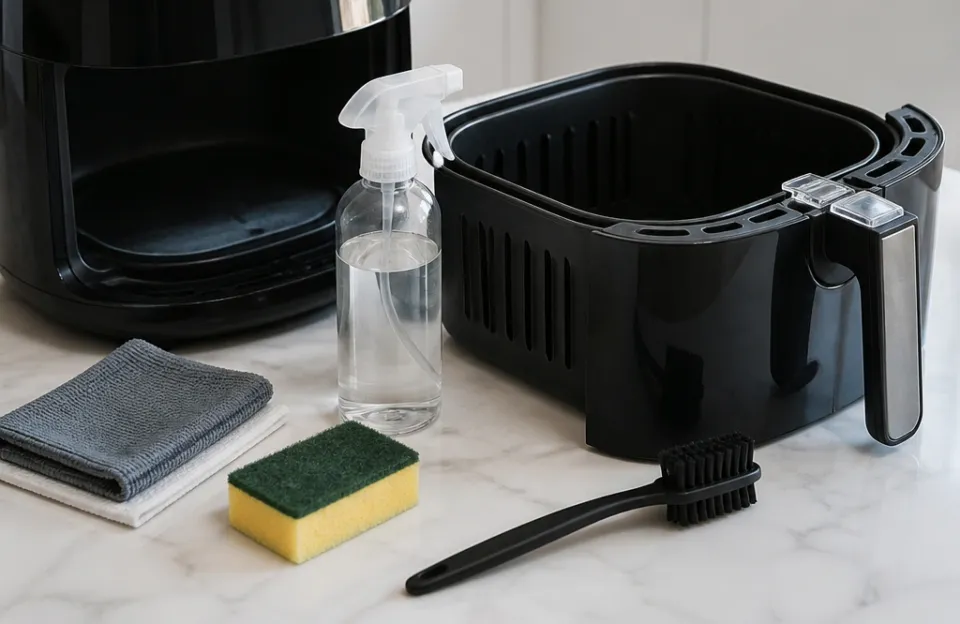
Counter competition is real. Before adding another appliance, evaluate whether both earn their space through regular use. Some readers find that organizing their air fryer accessories compatibility guide frees up enough room for a compact brewer.
Alternatively, consider a smaller-footprint manual brewer that stores easily between uses.
What if my tap water tastes bad?
Water quality directly impacts coffee flavor. Chlorine, hardness, and off-flavors transfer straight to your cup. Use filtered water or install an inline filter rated for coffee brewing.
The National Coffee Association recommends water with 75 to 250 ppm total dissolved solids for optimal extraction. Testing strips cost under $15 and remove guesswork.
Making Your Final Decision
A coffee maker is worth it when the machine matches your consumption habits, available space, and willingness to maintain it. The best choice is not the most expensive or most reviewed option. It is the one you will actually use every morning without resentment.
Start with honest self-assessment about your routine, then select accordingly. The right brewer pays dividends in both savings and daily satisfaction.
As an Amazon Associate, we earn from qualifying purchases.