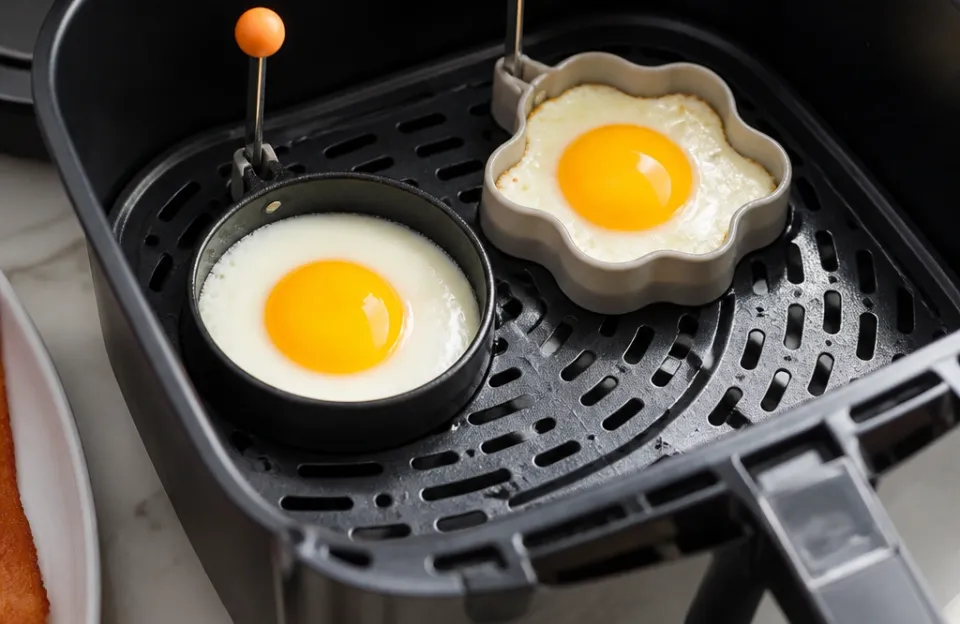
Air fryer accessories are not universal. A pan, rack, or liner that fits perfectly in a 5.8-quart Cosori might block airflow entirely in a 4-quart Ninja or sit crookedly in an oval-shaped Instant Vortex. Compatibility depends on three specific measurements: basket width, basket length, and vertical clearance from the heating element.
Brand names alone do not guarantee a fit, and assuming they do is the most common reason people end up with unusable gear.
This air fryer accessories compatibility guide breaks down exactly how to measure your machine, which accessory types work across different basket shapes, and where manufacturers deviate from standard sizing. You will learn how to verify fit before buying anything, why some "universal" claims fail in practice, and how to adapt accessories safely when exact matches don't exist. Getting this right prevents wasted money, uneven cooking, and potential damage to your appliance's nonstick coating or heating element.
Measuring Your Basket Before Buying Anything
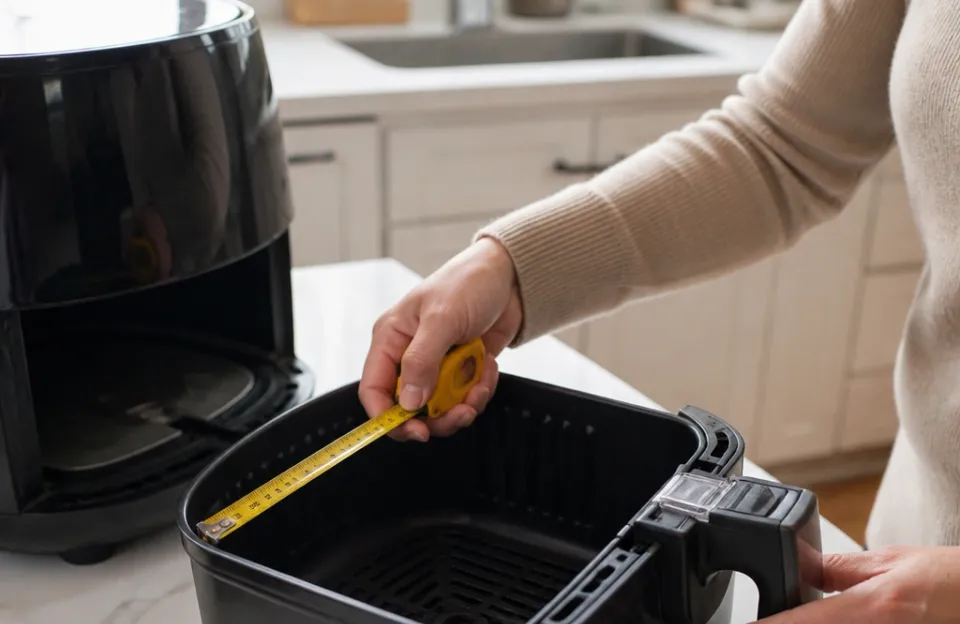
The only reliable way to confirm accessory compatibility is physical measurement. Manufacturer specifications often list external dimensions or total capacity rather than usable interior space. Grab a tape measure and check the basket yourself.
Measure the interior width at the widest point first. For square or rectangular baskets, measure straight across the bottom. For round baskets, measure the diameter at the base, not the rim.
Many baskets taper inward toward the bottom, so the top opening can be half an inch wider than the actual cooking surface. Accessories must fit the narrower bottom dimension to sit flat and allow proper airflow underneath.
Next, measure the interior length for rectangular models or note the shape profile for round ones. Then check vertical clearance. Place a ruler against the inside wall and measure from the basket floor to the lowest point of the heating element or fan guard above.
This number matters more than most people realize. A tall bundt pan might fit the width and length but sit too close to the heating element, causing burning on top while the center stays raw. Leave at least one inch of clearance above any accessory for safe operation.
Write these three numbers down. Keep them handy when shopping online or in stores. Product listings frequently omit interior dimensions, so having your own measurements lets you cross-reference immediately instead of guessing based on quart capacity alone.
Round Versus Square Basket Shape Differences
Basket shape determines which accessories physically fit and how air moves around them. Round and square baskets are not interchangeable even when their stated capacities match.
Round baskets typically have curved walls that reduce usable corner space. Straight-edged square pans will rock or tilt inside a round basket unless specifically designed with curved sides. Round silicone molds, parchment rounds, and circular wire racks align naturally with this shape.
If you own a round-basket model, prioritize accessories marketed for round air fryers or verify that square items have enough flex or curvature to seat properly.
Square and rectangular baskets offer more flat surface area and accommodate straight-sided bakeware better. Standard loaf pans, square cake tins, and rectangular oven-safe dishes usually fit without modification. Wire racks designed for square baskets also provide stable stacking since the edges meet flush against the walls.
The tradeoff is that round items like pizza stones or tart rings waste corner space and may shift during cooking if they aren't centered carefully.
Some newer models use oval or hexagonal baskets. These hybrid shapes complicate compatibility further. Always treat oval baskets as their own category and avoid assuming round or square accessories will work.
Check product descriptions for explicit oval compatibility or measure the minor and major axes separately to compare against accessory dimensions.
Capacity Ratings Don't Predict Physical Fit
Quart capacity is a volume measurement, not a dimensional one. Two 6-quart air fryers can have completely different footprints depending on whether the basket is tall and narrow or short and wide. Relying solely on capacity matching leads to frequent mismatches.
A tall, narrow 6-quart basket might accept deep casserole dishes but reject wide pizza pans that fit easily in a shorter, wider 6-quart model. Similarly, dual-basket air fryers often advertise combined capacity (like 8 quarts total) while each individual basket holds only 4 quarts. Accessories sized for the combined number won't fit either compartment.
Always check per-basket dimensions for dual-zone models rather than the aggregate spec.
Manufacturers sometimes round capacity figures for marketing. A 5.7-quart basket might be labeled as 6 quarts, while another brand's true 6-quart basket has noticeably different proportions. Treat capacity as a rough starting filter, then confirm with actual measurements.
When comparing accessories listed as "fits 6-quart air fryers," look for specific dimension callouts in the product details. If none are provided, contact the seller or skip it.
For reference on how food volume relates to basket size during actual cooking, understanding wing batch sizing helps illustrate why interior footprint matters more than stated capacity when planning meals.
Liner and Parchment Sizing Across Models
Disposable liners and parchment paper are the most commonly purchased air fryer accessories, yet sizing errors happen constantly here too. Pre-cut parchment rounds come in standard diameters like 7, 8, and 9 inches, but basket bases vary by quarter-increments that don't always align with those sizes.
If your basket base measures 8.25 inches, an 8-inch round will leave exposed edges where grease collects directly on the nonstick surface. A 9-inch round will curl up the sides, potentially touching the heating element or blocking perimeter airflow vents. Neither outcome is ideal.
Measure your basket base precisely and choose the closest size that doesn't exceed it. Trimming oversized parchment with scissors is safer than using undersized sheets that defeat the purpose.
Silicone reusable liners follow similar rules but add material thickness to the equation. A silicone liner advertised as 8 inches might effectively reduce usable width by half an inch due to its raised edges. Account for this when checking fit.
Also verify that the liner's edge height doesn't interfere with the basket's sliding mechanism or lid closure. Some baskets have tight tolerances, and thick silicone rims can prevent full insertion.
Perforated versus solid liners affect compatibility differently. Perforated versions maintain airflow patterns closer to bare-basket cooking and tolerate slight size mismatches better because air passes through. Solid liners rely entirely on edge gaps for circulation and demand more precise sizing.
If your basket has unusual vent placement or side-wall perforations, confirm that a solid liner won't cover critical airflow paths.
Rack and Multi-Layer Accessory Clearance Limits
Stacking racks and multi-tier inserts multiply cooking capacity but introduce strict clearance requirements. These accessories fail most often due to insufficient vertical space rather than width issues.
Check both the rack's own height and the remaining gap to the heating element after installation. Most air fryer manuals specify minimum clearance distances for safe operation. Exceeding these limits risks fire hazards or triggers thermal cutoffs that shut the unit off mid-cycle.
Even if the rack technically fits, leaving less than an inch above the top tier causes severe browning on upper-layer foods while lower layers undercook.
Rack stability matters as much as dimensions. Wire racks should rest securely on basket rails or built-in ledges without wobbling. Unstable racks shift when loaded, spilling food into the basket below and creating messes that burn onto the heating element.
Test fit any rack empty before committing to it. If it slides freely or rocks, it's incompatible regardless of stated size.
Dual-basket air fryers present additional complications. Each basket may have different internal geometries despite identical exterior appearances. Verify rack compatibility for each zone independently.
Some brands sell zone-specific racks that aren't cross-compatible between left and right baskets even within the same unit.
When testing doneness across stacked layers, a reliable instant-read thermometer becomes essential since visual cues differ significantly between top and bottom tiers.
Material Safety and Heat Tolerance Standards
Compatibility isn't just about physical dimensions. Materials must withstand air fryer operating temperatures without degrading, leaching chemicals, or damaging the basket coating.
Food-grade silicone rated for at least 450°F is generally safe for air frying. Lower-rated silicone products exist for baking or freezer storage and shouldn't be assumed compatible. Check packaging or manufacturer specs for explicit temperature ratings.
Silicone without certification markings carries unknown risk.
Metal accessories should be uncoated stainless steel, anodized aluminum, or ceramic-coated. Avoid nonstick-coated metal racks unless specifically labeled air-fryer-safe, as high-velocity hot air can degrade cheaper coatings faster than conventional ovens. Bare cast iron works thermally but weighs enough to scratch nonstick basket floors.
Use protective silicone feet or trivets underneath heavy metal pieces.
Glass and ceramic bakeware require extra caution. Air fryers heat faster and circulate air more aggressively than conventional ovens, creating thermal shock risks for materials not designed for rapid temperature changes. Only use glass or ceramics explicitly rated for broiler or convection use.
Standard drinking glasses, decorative ceramics, and non-oven-safe pottery can crack or shatter. The FDA's guidance on cookware safety outlines material standards relevant to heated food contact surfaces.
Plastic accessories should never enter an air fryer unless specifically engineered for high-heat applications. Melting plastic contaminates food and damages appliances permanently. When in doubt about a material's heat tolerance, exclude it.
Adapting Oven-Safe Bakeware for Air Fryer Use
Many home cooks want to repurpose existing oven-safe pans rather than buy dedicated air fryer accessories. This works frequently but requires verification steps beyond simple dimension checks.
Start with the same width, length, and clearance measurements used for purpose-built accessories. Then assess weight. Air fryer baskets use lighter-gauge metal than oven racks and may deform under heavy Dutch ovens or stoneware.
Limit adapted bakeware to lightweight options like aluminum sheet pans, thin ceramic dishes, or silicone molds. Heavy cast iron or thick stoneware risks bending the basket frame over time.
Handle and rim profiles matter too. Pans with extended handles or flared rims may prevent the basket from sliding fully into the housing. Test insertion with the pan empty before preheating.
Forced insertion scratches coatings and can misalign safety interlocks. Trimmed or handle-less versions of standard bakeware often work better than full-sized equivalents.
Dark-colored or matte-finish pans absorb more radiant heat than shiny ones. In an air fryer's concentrated environment, this accelerates bottom browning. Reduce temperature by 25°F or add a parchment buffer underneath when adapting dark bakeware.
Shiny aluminum reflects heat more evenly and typically performs closer to expectations.
For recipes where texture depends heavily on surface contact, such as achieving extra crispy skin, the pan material and finish directly influence results alongside fit.
Brand-Specific Sizing Quirks Worth Knowing
Major air fryer brands don't adhere to shared dimensional standards. Knowing common quirks saves trial-and-error purchases.
Ninja Foodi dual-basket models often have asymmetric compartments despite matching exterior labels. Left and right baskets may differ in depth or rail positioning. Always measure both zones separately and buy zone-specific accessories when available.
Cosori's popular 5.8-quart square basket has become a de facto reference point for third-party accessory makers. Many "universal" items actually target Cosori dimensions specifically. Owners of other brands should verify rather than assume compatibility based on generic marketing language.
Instant Vortex models frequently use oval baskets that fall between standard round and square accessory sizes. Dedicated Vortex accessories exist but selection is smaller. Oval silicone molds and custom-cut parchment offer better results than forcing round or square alternatives.
Philips Airfryer XXL models have larger footprints than most competitors' XL offerings despite similar capacity claims. Their unique starfish-patterned basket floor also affects how flat-bottomed accessories seat. Philips-branded accessories guarantee fit but carry premium pricing.
Third-party options require careful dimension matching.
Bella, GoWISE, and budget brands often share similar basket molds, making cross-compatibility more likely within this tier. Still, verify measurements rather than assuming interchangeability based on price bracket alone.
Frequently Asked Questions
Can I use regular oven pans in my air fryer?
Yes, if they fit physically and are rated for convection or broiler temperatures. Check width, length, and vertical clearance first. Lightweight aluminum or thin ceramic works best.
Avoid heavy stoneware or cast iron that could bend the basket. Reduce temperature slightly for dark-colored pans to prevent over-browning.
Do silicone accessories need to be air-fryer-specific?
They need to be food-grade silicone rated for at least 450°F. Generic silicone baking molds without temperature ratings carry unknown safety risks. Purpose-labeled air fryer silicone products simplify verification but aren't strictly necessary if independent heat tolerance documentation exists.
Thickness and edge design still affect fit regardless of rating.
Why does my universal rack wobble even though it fits?
Wobbling indicates poor rail alignment or incorrect width despite nominal compatibility. Universal racks often target average dimensions that miss specific basket geometries. Return it and seek a model-specific rack or one with adjustable feet.
Unstable racks create uneven cooking and spill hazards. Never prop or shim a wobbling rack with foil or other materials.
Are parchment liners safe at maximum air fryer temperatures?
Unbleached parchment rated for 425-450°F is safe at typical air fryer maximums. Bleached parchment has lower heat tolerance and shouldn't be used above 400°F. Never let parchment touch the heating element directly.
Secure it with food weight to prevent lifting into the element during fan operation. Replace if discoloration or brittleness appears.
How do I know if an accessory blocks airflow?
Observe cooking performance. Foods taking longer than expected, browning unevenly, or steaming instead of crisping signal restricted airflow. Remove the accessory and retest.
Visible vent coverage when installed is another indicator. Perforated accessories maintain circulation better than solid ones. When uncertain, consult your appliance manual's accessory guidelines or contact the manufacturer.
Getting Fit Right the First Time
Compatibility comes down to measurement, not marketing. Take three minutes with a tape measure before purchasing anything. Record your basket's interior width, length, and vertical clearance.
Cross-reference every accessory against those numbers rather than capacity claims or brand names. Prioritize materials with verified heat ratings over convenience features.
When exact matches don't exist, adaptation is possible with careful testing. Start with lightweight, high-heat-rated bakeware. Verify insertion and clearance before cooking.
Monitor early uses closely for signs of airflow restriction or coating stress. Document what works for your specific model to streamline future purchases.
Your air fryer performs best when accessories complement its design rather than fight it. Properly fitted liners, racks, and pans improve results and extend appliance life. Ill-fitting ones waste money and create frustration.
The upfront effort of measuring pays off every time you cook.