Digital air fryers use electronic screens and push buttons to set exact temperatures and times. Analog air fryers rely on physical dials that you turn by hand. The main difference between digital vs analog air fryers comes down to precision, price, and how much control you want over your cooking.
Digital models give you exact numbers. Analog models give you a simpler machine with fewer parts that can break.
If you cook the same few meals every week and don't care about hitting exactly 375 degrees, an analog dial works fine. If you follow recipes closely or cook things like fish that need specific timing, the digital screen matters. This breakdown covers how each type controls heat, what they cost, how long they last, and which one fits different kitchens.
How the Controls Actually Change Your Cooking
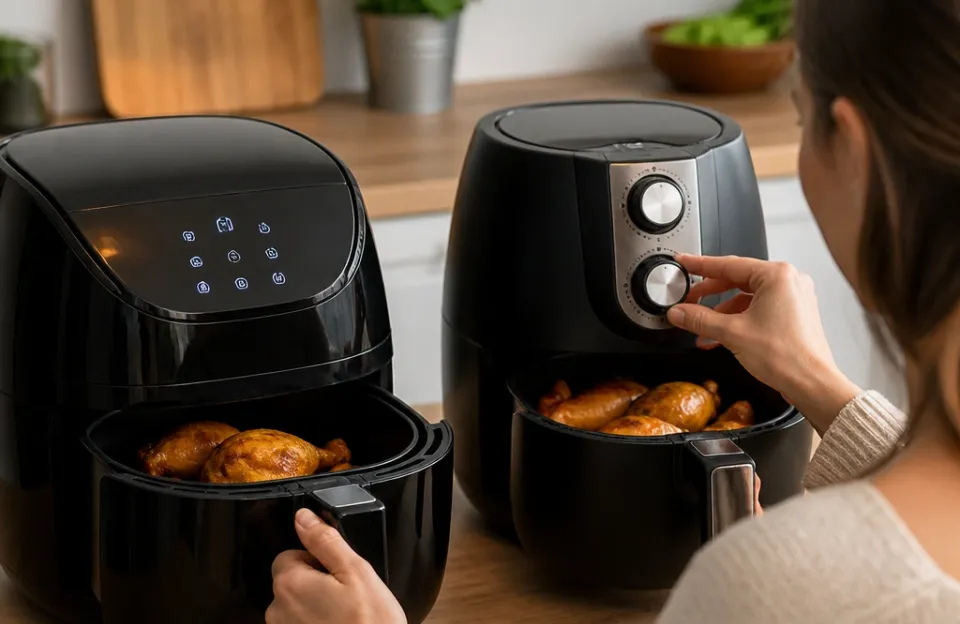
The heating element and the fan inside both types of machines do the exact same job. They circulate hot air around your food. The difference is entirely in how you tell the machine what to do.
That interface changes how repeatable your results are from one night to the next.
A digital control panel uses a microchip to regulate the heating element. You press a button for 400 degrees, and the chip cycles the power on and off to hold that number. A mechanical thermostat in an analog unit relies on a bimetallic strip that bends as it heats up.
It clicks the power off when it gets hot enough and clicks it back on when it cools down.
This means a digital display holds a tighter temperature range. An analog dial has a wider swing. The oven might hit 410 degrees before the switch trips, then drop to 380 before it kicks back on.
For thick potato wedges, that swing doesn't matter much. For delicate items, knowing how long fish stays in the basket depends heavily on steady heat.
Temperature accuracy between the two styles
Digital panels let you pick exact numbers. You can set 375 degrees or 390 degrees. Analog dials usually have printed marks every 25 or 50 degrees.
You guess where 360 falls between the lines. In practice, turning a dial slightly past a line makes it hard to replicate a recipe exactly the next time you cook it.
Mechanical thermostats also drift as they age. After a year or two of daily use, the "400" mark on a dial might actually produce 385 degrees. Digital sensors stay accurate longer because they rely on solid-state electronics rather than moving metal parts that wear out.
Timer differences that affect your food
Analog timers use a spring mechanism. You twist the dial clockwise to wind it up. As it unwinds, it ticks down and shuts off the machine with a bell or click.
These mechanical clocks are notoriously imprecise for short intervals. Setting an exact four minutes for reheating fries is difficult because the markings are too close together.
Digital keypads let you punch in exact minutes and seconds. Some units go down to the single minute. Others allow thirty-second increments.
When you are trying to get extra crunch on poultry skin, pulling the basket out at exactly the right moment prevents burning. A ticking spring dial forces you to stand nearby and listen for the bell.
| Control Aspect | Digital Air Fryers | Analog Air Fryers |
|---|---|---|
| Temperature Selection | Exact degree increments via buttons | Estimated position between printed marks |
| Timer Precision | Exact minutes and sometimes seconds | Spring-wound dial, imprecise under 5 minutes |
| Heat Regulation | Microchip cycles power tightly | Bimetallic strip allows wider temperature swings |
| Preset Programs | One-touch buttons for common foods | None, requires manual time and temp setting |
| Audible Alerts | Electronic beeps when time ends | Mechanical bell or click when spring unwinds |
Price Differences Across Both Types
Analog models are cheaper to build. They skip the circuit boards, LED screens, and touch sensors. That lower manufacturing cost passes directly to you.
You can find basic mechanical dial units for significantly less than their electronic counterparts.
Digital models carry a premium for the screen and the processor behind it. Entry-level touchscreens start higher than the most expensive dial models. Mid-range and high-end digital units push the price up further by adding Wi-Fi connectivity, dual zones, or specialized preset menus.
You pay for the convenience of exact numbers. If your budget is tight and you just want hot air circulating around your dinner, the mechanical version saves money upfront. But consider what you plan to cook.
Spending more on a precise machine pays off if you frequently roast dense vegetables where timing root vegetables correctly requires stable temperatures.
Sales events often shrink the gap. Older digital models get discounted heavily when new ones arrive, sometimes bringing them close to analog prices. Check current retail pricing before assuming the dial version is always the cheapest route.
Longevity and Repair Realities
Fewer parts usually mean fewer failures. Analog units have a simple wiring path: plug, timer switch, thermostat, heating element, fan motor. If the timer spring breaks, it's a straightforward mechanical failure.
If the heating element burns out, the whole unit is usually replaced because the repair costs more than buying a new one.
Digital units have complex printed circuit boards. Moisture from cooking steam can eventually corrode traces on the board. Touchscreens can become unresponsive if grease builds up over the sensor areas.
When a digital control board fails, the machine is effectively dead. Replacement boards are rarely sold to consumers, and labor costs exceed the value of the appliance.
However, the mechanical timer in an analog unit is its weakest link. Springs lose tension over thousands of windings. The dial might stop returning all the way to zero, meaning the machine won't shut off automatically.
Digital keypads don't suffer from spring fatigue.
Consumer protection standards tracked by agencies like the Consumer Product Safety Commission apply equally to both. Neither type is inherently safer regarding fire risk if used properly. The automatic shutoff on both types is a critical safety function, whether triggered by a digital chip or a mechanical clock reaching zero.
Cleaning Around the Interface
Grease splatters and steam happen every time you cook. How the front panel handles that mess differs greatly between the two styles.
Flat glass or plastic touchscreens wipe down quickly. A damp cloth clears oil spots in one pass. There are no crevices for grime to hide in.
The smooth surface resists buildup, making daily maintenance fast.
Physical dials create gaps. Grease settles around the base of the knob and inside the grooves of the timer ring. Over months, this sticky residue makes the dial harder to turn.
Cleaning requires working a cloth into the tight spaces around the protruding knobs.
Some brands design removable analog knobs that pop off for washing. Others are fixed permanently to the shaft. Before buying a mechanical model, check if the dials pull straight off.
That small detail changes how easily you can keep the front panel sanitary.
Preset Menus Versus Manual Cooking
Many digital interfaces include programmed buttons labeled for specific foods. You press the icon for frozen fries, and the machine sets a predetermined temperature and time automatically. Some units adjust the heat halfway through the cycle.
These presets save time if you cook the same packaged foods repeatedly. They remove the guesswork for beginners who haven't learned how fast convection air cooks compared to a traditional oven. Manufacturers base these settings on average portions.
If you overload the basket, the preset won't cook the center properly.
Analog machines force you to learn your food. You decide the heat. You decide the duration.
There is no shortcut button. This sounds like extra work, but experienced cooks often prefer it. Packaged food instructions rarely match the actual needs of a specific countertop oven anyway.
Learning to manually dial in the right settings for getting bacon perfectly crisp gives you better control than trusting a generic factory button.
If you rely heavily on presets, a digital panel is necessary. If you view presets as gimmicks that rarely match your portion sizes, an analog dial keeps things honest.
Noise Levels During Operation
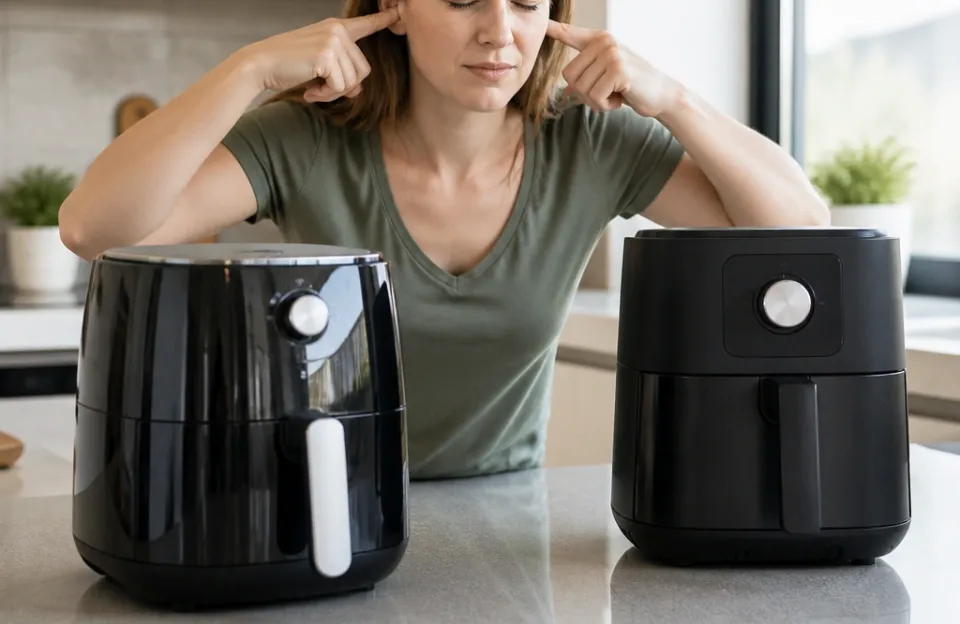
Both types use identical fans and heating elements, so the baseline hum of moving air is the same. The difference lies in the control mechanisms.
Analog timers tick audibly. It sounds like a loud kitchen clock winding down. Some people find this rhythmic clicking annoying in an open-concept living space.
Others appreciate the constant audio reminder that the machine is running. When the timer hits zero, a physical bell rings loudly.
Digital units operate silently during the countdown. The only sound is the fan. When the cycle ends, they emit electronic beeps.
Most models let you mute these alerts or change the volume. If you cook late at night while others sleep, the silent countdown and adjustable beep volume make electronic panels much less disruptive.
Power Draw and Electrical Needs
The wattage required to heat the coil and spin the fan dictates power consumption. The control panel itself draws negligible electricity. A glowing LED screen uses slightly more standby power than a blank plastic faceplate, but the difference won't noticeably impact your utility bill.
Both types typically plug into standard 120-volt kitchen outlets. Larger capacity digital ovens sometimes require dedicated circuits due to high-wattage heating elements, but this relates to the cooking chamber size, not the control type. Always check the manufacturer's rating plate on the back of the unit before plugging it in.
Which Style Fits Your Kitchen Routine
Choosing between digital vs analog air fryers depends entirely on your habits and priorities. Neither style cooks food better than the other; they simply offer different ways to manage the process.
Go with a digital panel if you follow online recipes closely. Exact temperatures matter when baking or dehydrating. The ability to set precise times down to the minute prevents overcooking delicate proteins.
Muting the alarm helps in shared living spaces. If you want consistency without memorizing dial positions, the electronic interface removes the guesswork.
Pick an analog dial if you want simplicity and durability against electrical surges. Mechanical controls don't glitch when the power flickers. They are easier for older adults who dislike navigating layered touchscreen menus.
If you mostly reheat leftovers or cook sturdy items like sausages where rough estimates work fine, the lower price point and straightforward operation make sense.
Consider your household size too. Families cooking large batches benefit from the repeatable precision of digital controls. Single users tossing in a handful of veggies might prefer the speed of twisting a dial and walking away.
Think about what you actually cook most days. If you frequently prepare breaded items where using a light flour coating requires watching the browning progress, the pause-and-check nature of manual dials works well. If you set it and leave the room, the reliable auto-shutoff beep of a digital screen offers peace of mind.
Frequently asked questions
Do analog air fryers cook food slower than digital ones?
No. The heating element and fan speed determine cooking time, not the control panel. A 1500-watt mechanical unit heats up just as fast as a 1500-watt electronic one.
Any perceived difference in speed usually comes from inaccurate temperature dials causing you to set the heat lower than intended.
Is a digital air fryer better for baking than an analog model?
Yes, generally. Baking requires steady, precise temperatures to rise properly. The microchip regulation in digital panels maintains tighter heat tolerances than the swinging bimetallic strips found in mechanical dials.
If you plan to bake cakes or muffins in your countertop oven, the electronic controls yield more consistent results.
Can I replace a broken analog timer dial myself?
Sometimes. If the knob itself cracks, replacement plastic caps slide onto the metal shaft easily. If the internal spring mechanism fails, repairing it requires opening the housing and dealing with mains voltage wiring.
Unless you have appliance repair experience, replacing the entire unit is safer and often cheaper than fixing the internal clock.
Do digital touchscreens stop working if my hands are wet?
Capacitive touchscreens rely on the electrical properties of your skin. Water droplets on your fingers or the screen can confuse the sensors, causing missed presses or accidental inputs. Wiping your hands dry before touching the panel prevents this issue.
Physical analog dials work perfectly fine regardless of moisture on your fingers.
Which type lasts longer with daily use?
Analog models often survive longer because they lack sensitive circuit boards that fail from heat exposure or steam corrosion. However, their mechanical timers are prone to wearing out after years of daily winding. Digital units avoid spring fatigue, but a single power surge or moisture intrusion on the motherboard can end the appliance's life instantly.
Are there health differences between cooking with digital or analog controls?
The control panel does not touch your food or alter the cooking chemistry. Both types circulate hot air identically. Whether your meal retains nutrients or avoids excess oil depends on the temperature you select and the cooking duration, not whether you selected those parameters using a screen or a dial.
Understanding how convection affects fat content applies equally to both machine types.
Picking the Right Panel for Your Counter
The debate over digital vs analog air fryers comes down to how you interact with your appliances. Screens give you exact numbers and quiet operation. Dials give you rugged simplicity and a lower purchase price.
Think about your worst cooking habits. If you constantly burn things because you guess the time wrong, buy the digital keypad. If you hate reading manuals and just want to twist a knob until it feels right, grab the mechanical version.
Both will crisp your food using the same rapid air technology. Choose the interface that matches your patience level and your budget, and you'll use it far more often.