Buying a coffee grinder feels hard because the burr shape changes your whole cup. Flat burrs give you exact, even grounds for bright, clear espresso shots. Conical burrs are quieter, cheaper, and much more forgiving for daily drip coffee.
The Quick Verdict On Burr Shape
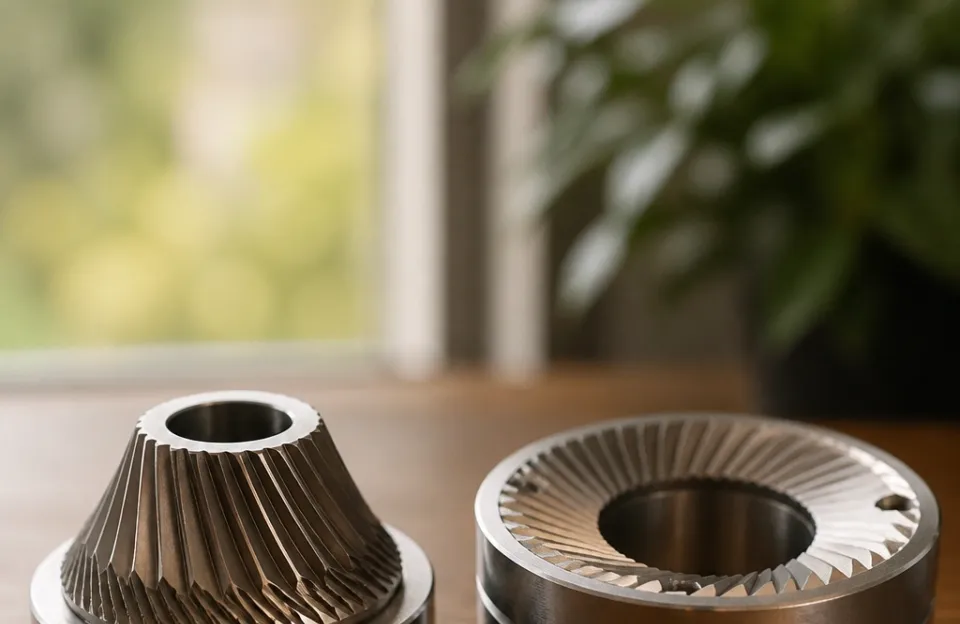
Pick flat burrs if you drink mostly espresso. They cut beans into very uniform pieces. This gives you total control over your shot time.
Pick conical burrs if you brew drip or pour-over coffee every day. They run cooler, make less noise, and cost less money. Both shapes work well, but they serve different habits.
Your daily cup decides the winner.
Side By Side Grinder Specs
| Spec | Conical Burrs | Flat Burrs |
|---|---|---|
| Shape | Cone inside a ring | Two flat rings |
| Grind Uniformity | Good, with mixed sizes | Very high, exact sizes |
| Noise Level | Low to medium | Medium to loud |
| Heat Output | Stays very cool | Can get warm fast |
| Motor Speed (RPM) | Slow (400-600 RPM) | Fast (1200+ RPM) |
| Price Range | $50 to $300 typical | $150 to $800+ typical |
| Cleaning Needs | Brush out weekly | Take apart monthly |
| Best Brew Method | Drip, French press, pour-over | Espresso, precise filter |
How The Beans Actually Break Down
The shape of the metal changes how the bean snaps. A conical setup uses a cone shape inside an outer ring. Gravity pulls the beans down through the gap.
The motor spins slow. The beans crush and snap at the same time. This makes some big pieces and some small pieces.
Coffee folks call this a bimodal grind. It sounds complex, but it just means two main sizes exist in your basket.
A flat setup uses two rings that face each other. One ring stays still. The other one spins fast.
The beans shear between the sharp edges. Every piece ends up the exact same size. This is a unimodal grind.
You get one uniform size.
Why does size matter? Water moves through small grounds fast. It moves through large grounds slow.
Mixed sizes give you a thick body and sweet taste. Exact sizes give you a clear, bright taste. Neither way is wrong.
They just taste different in your mug. If you want to understand how water pressure interacts with these grounds, knowing the right brewing hardware helps you match your grinder to your setup.
Taste Differences In Your Mug
Your tongue will notice the burr shape right away. Conical grinders leave behind tiny dust particles along with larger chunks. The dust extracts fast.
It adds heavy chocolate notes and deep sweetness. The big chunks extract slow. They add fruity acids.
You get a cup with a lot going on. It tastes rich, thick, and full. Most home drinkers love this style for morning drip coffee.
Flat grinders remove almost all the dust. Every ground is the same size. Water flows through them evenly.
No part overcooks. No part undercooks. You taste exactly what the roaster intended.
Expect bright citrus notes, clean floral scents, and zero muddy aftertaste. Specialty shops use flat burrs for this exact reason.
If you pull espresso, flat burrs let you dial in the shot time by single seconds. Conical burrs give you a wider window. A five-second swing won't ruin a conical espresso shot.
That same swing might turn a flat burr shot sour or bitter. Beginners do better with cones. Experts prefer flats.
Motor Speed And Heat Transfer
Friction creates heat. Heat kills fresh coffee flavor. Roasted beans hold delicate oils.
Hot metal cooks those oils before the water ever touches them.
Conical burrs spin slow. Many home models run around 500 RPM. The slow speed keeps the metal cool.
Your grounds stay near room temp. The natural cone shape also helps gravity do the work. The motor pushes less.
Less force means less friction.
Flat burrs must spin fast to push beans through the narrow gap. Home models often hit 1400 RPM or higher. Commercial ones go faster.
This speed builds heat quickly. High-end flat grinders solve this by adding heavy metal mass to absorb the warmth. Some add fans.
Budget flat grinders lack these parts. Their grounds can get warm during long grinding sessions.
For a quick morning cup, heat rarely ruins the brew. But if you grind for ten people back-to-back, a cheap flat burr will bake the beans. According to the Specialty Coffee Association, keeping grounds cool preserves the volatile aromas that define specialty coffee.
Noise Levels On The Counter
Grinders wake up sleeping houses. The burr shape dictates how loud the machine gets.
Conical setups run quiet. The slow motor hums instead of screams. The crushing action muffles the sound.
You can usually grind at six in the morning without waking the next room. At about 70 decibels, it sounds like a normal conversation.
Flat setups whine. The fast motor spins a heavy metal plate. The shearing action cracks the beans loudly.
Cheap flat grinders sound like power drills. Even expensive ones reach 80 decibels or more. You hear a sharp, high-pitched grind.
If you live in a small apartment, pick a conical model. Your neighbors will thank you. If you have a separate kitchen door, the noise matters much less.
Counter Space And Physical Size
Look at your counter before you buy. Flat burr grinders take up more room. The plates sit side by side.
This forces the housing to stretch wide. A standard home flat grinder spans six to eight inches across. It demands a solid footprint.
Conical grinders stack their parts top to bottom. The hopper sits above the cone. The chute drops below it.
This builds a tall, narrow tower. Most fit inside a five-inch square. They slide easily between a toaster and a wall.
Weight matters too. Flat burrs need heavy motors to spin the plates. They often weigh 10 to 15 pounds.
You need two hands to move them for cleaning. Conical models weigh closer to 5 to 8 pounds. You can lift them with one hand to wipe the counter underneath.
Always check the spec sheet for exact dimensions before ordering.
Dialing In For Espresso
Espresso needs fine powder. Water pushes through it at nine bars of pressure. The grind size controls the flow rate.
Flat burrs excel here. Because every piece is identical, water finds no easy paths. It pushes through the whole puck evenly.
You get a balanced extraction. Changing the dial one click makes a clear difference in the cup. Baristas rely on this precision.
Conical burrs work for espresso too. The mixed sizes actually help pack the basket tight. The small bits fill the gaps between the large bits.
This stops channeling. But adjusting the dial feels less exact. One click might change nothing.
The next click might choke the machine. It takes patience to find the sweet spot.
You don't need a commercial flat burr for good home espresso. A quality conical grinder handles most home machines perfectly. Just expect to spend a few days learning its dial.
Filter Coffee And Pour Over Habits
Pour-over brewers like V60s and Chemex pots need medium grounds. The water drips through slowly by gravity.
Conical burrs shine for manual brewing. The bimodal grind adds body to thin paper-filtered coffee. Paper removes all the oils.
Without oils, coffee can taste weak. The mix of fine and coarse grounds from a cone puts that richness back. You get a heavier mouthfeel.
Flat burrs make a very clean pour-over. If you buy light roast African beans, a flat burr shows off the blueberry and jasmine notes. The clarity is stunning.
But dark roasts might taste hollow or flat when ground this uniformly. Match your burr to your favorite roast level. Dark roasts love cones.
Light roasts love flats.
Daily Cleaning And Upkeep
Old coffee oil goes rancid. Rancid oil makes fresh beans taste stale. You have to clean your grinder.
Conical burrs trap fewer fines. The steep angle lets grounds fall straight into the bin. Still, brush the chute out once a week.
Once a month, take the inner cone out. Wipe the burrs with a dry brush. Never use water on steel burrs unless the manual says so.
Rust will ruin them fast.
Flat burrs trap more dust. The horizontal plates let fines sit in the grooves. You must unscrew the top plate to clean them properly.
This takes more time. You might need a specific wrench. Some brands sell cleaning tablets you grind through the plates.
These absorb old oils. Run them every few weeks to keep the taste pure.
Expect to spend five minutes cleaning a cone. Expect to spend fifteen minutes cleaning flat plates. Factor this effort into your choice.
If you hate taking things apart, stick to the cone. Regular upkeep keeps any appliance running longer, much like maintaining proper fluid levels extends the life of other countertop gear.
Steel Versus Ceramic Burrs
The material matters as much as the shape. Most home grinders use steel. Steel cuts sharp.
It snaps beans cleanly. But steel dulls over years of use. A dull burr crushes instead of cuts.
Crushed beans taste bitter.
Ceramic burrs stay sharp much longer. They resist wear. They also never rust.
But ceramic is brittle. Drop a spoon into the hopper while it runs, and the ceramic might chip. Replacing chipped ceramic costs more than replacing worn steel.
Conical grinders offer both steel and ceramic options. Flat grinders almost always use steel. The fast spinning would shatter ceramic plates.
For daily home use, steel is fine. It lasts five to ten years before needing replacement. If you run a busy office breakroom, ceramic cones save money over time.
Just watch out for rocks hiding in cheap coffee beans. One stone can crack a ceramic cone instantly.
Static Cling And Messy Counters
Static electricity makes coffee grounds jump out of the bin. They stick to the chute. They fly onto your counter.
It makes a huge mess.
Flat burrs create more static. The fast friction builds a charge. Fine grounds cling to everything.
Many users tap the bin three times to knock the dust loose. Some spray a single drop of water on the beans before grinding. This trick is called RDT (Ross Droplet Technique).
It kills the static instantly.
Conical burrs build less charge. The slow speed generates less friction. Grounds drop cleaner.
You still might see a little dust on the rim, but it rarely covers the counter.
If you hate wiping the counter every morning, a conical grinder saves you frustration. If you choose flat, keep a small damp cloth nearby. Or learn to dose your beans with one drop of water.
Also, consider where you place the machine; having the right fit for your space applies to all bulky countertop tools.
Retention Left Inside The Chute
Retention means old grounds stuck inside the machine. You grind 18 grams of coffee. Only 16 grams fall into your cup.
Two grams stay trapped in the burrs or chute. Tomorrow, those two grams fall into your fresh cup. They taste terrible.
Flat burrs hold more retention. The wide surface area traps fines in the threads and grooves. Single-dosing (weighing exact beans for one cup) is hard with cheap flat grinders.
You have to purge a gram or two first.
Conical grinders naturally sweep themselves clean. Gravity pulls the grounds down the steep cone walls. Retention stays very low.
Many conical models hold less than half a gram. This makes them perfect for single-dosing. You weigh 15 grams.
You get 15 grams out.
If you only brew one cup at a time, retention should guide your purchase. A high-retention grinder wastes expensive specialty beans.
Budget Tiers For Home Brewers
Money often decides the shape. Conical burrs cost less to manufacture. The motor can be smaller.
The tolerances are looser. You can buy a great conical electric grinder for $100 to $200. Manual hand grinders use conical burrs too.
A $50 hand grinder beats a $50 blade grinder every single time.
Flat burrs demand precision machining. The plates must align perfectly. If they tilt even slightly, one side grinds fine and the other grinds coarse.
This engineering costs money. Entry-level flat burr grinders start around $200. Good ones sit in the $400 to $600 range.
Commercial ones pass $2,000.
Don't buy a cheap flat burr grinder just to own one. A $100 flat burr performs worse than a $100 conical burr. The manufacturer had to cut corners to fit flat plates into a low price.
Buy a premium conical before buying a budget flat.
Picking Based On Your Morning Routine
Choose a conical burr grinder if you drink drip coffee, use a French press, or brew pour-overs. Pick it if you share walls with light sleepers. Pick it if you want easy cleanup and low retention.
It fits relaxed morning routines. It forgives slight dial mistakes. It costs less upfront.
Choose a flat burr grinder if you pull espresso daily. Pick it if you chase bright, clear flavors from light roasts. Pick it if you don't mind louder noise and weekly deep cleaning.
It fits exact, scientific brewing habits. It rewards patience with incredible clarity.
Think about your worst mornings. When you are tired and rushing, which machine will you actually use? The quieter, simpler conical model usually wins for everyday survival.
The flat model wins for weekend hobby brewing.
Common Questions About Burr Shapes
Do flat burrs really taste better?
They taste clearer. Better depends on your preference. If you like thick, chocolatey coffee, flat burrs might taste weak to you.
If you like tea-like brightness, they taste amazing.
Can I use a conical burr for espresso?
Yes. Many popular home espresso grinders use conical burrs. They offer a wider sweet spot.
This helps beginners avoid sour or bitter shots. You just lose some exact control over the flow rate.
How long do the burrs last?
Steel burrs handle about 500 to 1000 pounds of coffee. For a home user grinding daily, that equals five to ten years. Ceramic burrs last twice as long but risk chipping if a hard object enters the hopper.
Why are manual grinders always conical?
Conical burrs require less force to turn. A human hand can spin them easily. Flat burrs need high-speed motors to shear the beans effectively.
Hand-cranking flat plates would exhaust your arm quickly.
Does RPM affect the flavor?
Yes. High RPM creates heat and static. Heat bakes the oils.
Static causes uneven clumping. Lower RPM keeps the grounds cool and fluffy. This protects the delicate flavors roasted into the bean.
Should I switch from blades to conical or flat?
Switch to conical first. Any burr grinder destroys a blade grinder in taste. Blade machines chop randomly.
Burrs crush uniformly. Start with a basic conical model to taste the difference before spending more on flat plates. Finding compatible accessories for your broader kitchen setup follows the same logic of matching parts to your daily routine.
As an Amazon Associate, we earn from qualifying purchases.